
As the global shift toward sustainable transportation accelerates, electric vehicles (EVs) have become a cornerstone of this transformation. In particular, China has emerged as a dominant player in the EV market, with China EV battery systems representing a critical component that directly influences vehicle performance, safety, and longevity. The EV power battery, often referred to as the heart of an electric vehicle, stores and delivers energy to propel the vehicle. However, with prolonged usage, these batteries are prone to various faults that can compromise efficiency and safety. In this article, I will explore the composition, working principles, common faults, and diagnostic methods for EV power batteries, with a focus on applications in the China EV battery sector. I will incorporate tables and formulas to summarize key concepts, ensuring a comprehensive understanding of maintenance strategies. The growing adoption of EVs worldwide, especially in China, underscores the importance of robust fault diagnosis—according to industry reports, battery-related issues account for a significant portion of EV recalls, highlighting the need for advanced diagnostic techniques.
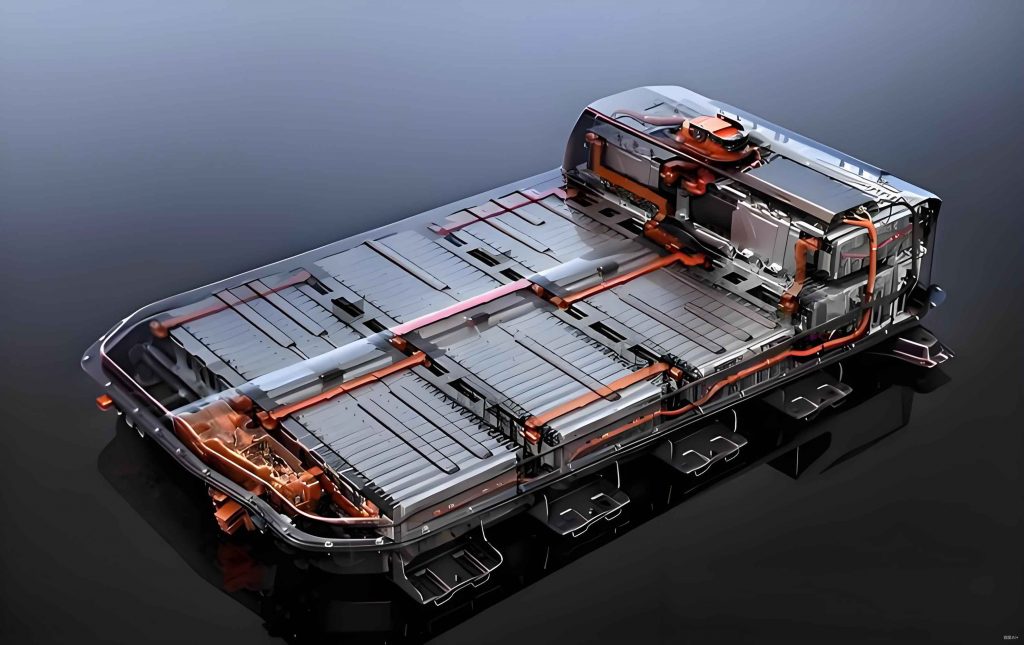
The EV power battery is a complex system comprising multiple components that work in tandem to ensure reliable energy storage and delivery. At its core are the individual cells, which can be based on lithium-ion, nickel-metal hydride, or other chemistries. In a typical China EV battery setup, these cells are arranged into modules, and the entire assembly is managed by a Battery Management System (BMS). The fundamental working principle involves electrochemical reactions during charge and discharge cycles. For instance, in a lithium-ion cell, lithium ions move between the anode and cathode through an electrolyte, facilitated by a separator. The overall reaction can be represented by the following equation, which describes the energy storage process:
$$ \text{LiCoO}_2 + \text{C} \rightleftharpoons \text{Li}_{1-x}\text{CoO}_2 + \text{Li}_x\text{C} $$
This reaction highlights the reversible intercalation of lithium ions, where energy is stored during charging and released during discharging. The voltage of a single cell, denoted as \( V_{\text{cell}} \), typically ranges from 3.0 V to 4.2 V, depending on the state of charge (SOC). The total voltage of an EV power battery pack, often used in China EV battery systems, is the sum of series-connected cells, given by:
$$ V_{\text{pack}} = n \times V_{\text{cell}} $$
where \( n \) is the number of cells in series. Additionally, the capacity \( C \) of the battery, measured in ampere-hours (Ah), determines the energy storage capability, with the total energy \( E \) calculated as:
$$ E = V_{\text{pack}} \times C $$
To better illustrate the composition, Table 1 summarizes the key components of an EV power battery and their functions, emphasizing aspects relevant to China EV battery designs.
| Component | Description | Role in China EV Battery Systems |
|---|---|---|
| Cell | Basic unit storing electrical energy; includes anode, cathode, electrolyte, and separator. | Determines energy density and cycle life; often lithium-ion based for high performance. |
| Module | Group of cells connected in series/parallel with thermal management. | Ensures uniform temperature distribution and scalability in large packs. |
| BMS | Electronic system monitoring voltage, current, temperature, and state of charge. | Critical for safety and longevity; implements balancing and protection algorithms. |
| Thermal System | Cooling/heating mechanisms (e.g., liquid cooling, air cooling) to maintain optimal temperature. | Prevents overheating in high-demand scenarios, common in China’s diverse climates. |
Despite advancements, EV power batteries are susceptible to various faults that can arise from manufacturing defects, aging, or environmental factors. In China EV battery applications, these faults are often categorized into cell-level, module-level, and BMS-related issues. Cell faults include capacity fade, where the usable capacity decreases over time due to electrode degradation. This can be modeled using an empirical formula for capacity loss:
$$ C_{\text{loss}} = C_0 \times e^{-k \cdot N} $$
where \( C_0 \) is the initial capacity, \( k \) is a degradation constant, and \( N \) is the number of cycles. Internal resistance increase is another common cell fault, leading to reduced efficiency and increased heat generation. The internal resistance \( R_{\text{int}} \) can be expressed in terms of voltage drop under load:
$$ R_{\text{int}} = \frac{V_{\text{ocv}} – V_{\text{load}}}{I} $$
where \( V_{\text{ocv}} \) is the open-circuit voltage, \( V_{\text{load}} \) is the voltage under load, and \( I \) is the current. Leakage of electrolyte is a severe safety hazard, often caused by seal failure or mechanical stress. Module faults typically involve voltage imbalance among cells, which accelerates aging and can lead to thermal runaway. The imbalance can be quantified by the standard deviation of cell voltages:
$$ \sigma_V = \sqrt{\frac{1}{N} \sum_{i=1}^{N} (V_i – \bar{V})^2} $$
where \( V_i \) is the voltage of the i-th cell, and \( \bar{V} \) is the average voltage. Thermal management failures in modules, such as inadequate cooling, can cause localized hotspots, further exacerbating faults. BMS faults include sensor inaccuracies, communication errors, and software glitches, which misrepresent battery states and compromise safety. For instance, a faulty temperature sensor might report incorrect values, leading to improper thermal control. Table 2 provides a detailed overview of common fault types in China EV battery systems, along with their causes and impacts.
| Fault Type | Common Causes | Impact on China EV Battery Performance |
|---|---|---|
| Cell Capacity Fade | Electrode material degradation, electrolyte decomposition. | Reduced range and accelerated aging; increases maintenance frequency. |
| Internal Resistance Increase | Aging, contamination, poor connections. | Lower efficiency, higher heat output, and potential safety risks. |
| Electrolyte Leakage | Seal failure, physical damage, overpressure. | Risk of short circuits, fires, or explosions; requires immediate attention. |
| Module Voltage Imbalance | Cell inconsistencies, faulty balancing circuits. | Uneven aging, reduced pack capacity, and increased failure rates. |
| Thermal Management Failure | Coolant leaks, fan malfunctions, sensor errors. | Overheating or overcooling, leading to performance drops and hazards. |
| BMS Sensor Fault | Calibration drift, hardware damage, electromagnetic interference. | Inaccurate state estimation, false alarms, and compromised protection. |
| BMS Communication Error | Wiring issues, software bugs, network congestion. | Data loss, delayed responses, and system shutdowns. |
To address these faults, various diagnostic methods have been developed and applied in the context of China EV battery maintenance. Voltage detection is a fundamental approach that involves monitoring cell voltages in real-time to identify abnormalities. For example, if a cell’s voltage deviates beyond a threshold, it may indicate overcharge or undercharge. The BMS continuously measures voltages and can trigger alarms or corrective actions. The voltage-based state of charge (SOC) estimation can be refined using a lookup table or model-based methods, such as the combined model:
$$ \text{SOC} = \text{SOC}_0 – \frac{1}{C_n} \int I \, dt $$
where \( \text{SOC}_0 \) is the initial SOC, \( C_n \) is the nominal capacity, and \( I \) is the current. Internal resistance testing is another key method, often performed using AC impedance spectroscopy or DC internal resistance (DCIR) measurements. The DCIR approach applies a constant current pulse and measures the voltage response, with resistance calculated as:
$$ R_{\text{DCIR}} = \frac{\Delta V}{\Delta I} $$
This helps in detecting aging cells early, as internal resistance tends to increase with cycle life. Thermal imaging detection utilizes infrared cameras to capture temperature distributions across the battery pack. Hotspots indicate potential faults like internal shorts or cooling failures. The temperature gradient \( \nabla T \) can be analyzed to identify anomalies, and in severe cases, Fourier’s law of heat conduction can be applied:
$$ q = -k \nabla T $$
where \( q \) is the heat flux, and \( k \) is the thermal conductivity. BMS data analysis leverages historical data from the BMS to perform trend analysis and fault prediction. For instance, machine learning algorithms can process voltage, current, and temperature data to forecast failures. A simple linear regression model for capacity fade might be:
$$ C_{\text{pred}} = a \cdot N + b $$
where \( a \) and \( b \) are coefficients derived from data fitting. Leakage detection employs sensors to identify electrolyte leaks, often through gas sensing or conductivity measurements. The presence of volatile organic compounds (VOCs) from electrolytes can be detected using electrochemical sensors, with the concentration \( C_{\text{gas}} \) related to the leak rate. Table 3 summarizes these diagnostic methods, their principles, and applications in China EV battery systems.
| Method | Principle | Application in China EV Battery Context |
|---|---|---|
| Voltage Detection | Real-time monitoring of cell voltages to detect imbalances or abnormalities. | Widely used in BMS for preventive maintenance; helps in balancing cells in large packs. |
| Internal Resistance Testing | Measuring resistance changes to assess cell health and aging. | Applied in routine checks to identify weak cells before failure; supports recycling decisions. |
| Thermal Imaging | Infrared imaging to visualize temperature variations and hotspots. | Non-invasive inspection for thermal management issues; crucial for safety in high-temperature regions. |
| BMS Data Analysis | Analyzing historical data for trend analysis and predictive maintenance. | Integrates with cloud-based systems in smart EVs; enables remote diagnostics and updates. |
| Leakage Detection | Using sensors to detect electrolyte leaks via gas or conductivity changes. | Prevents hazardous events; often combined with sealing integrity tests in manufacturing. |
In practical applications, these diagnostic methods are often combined to enhance accuracy and reliability. For example, in a China EV battery scenario, voltage detection and internal resistance testing might be integrated into a comprehensive health monitoring system. The overall effectiveness can be evaluated using metrics like the fault detection rate \( FDR \), defined as:
$$ FDR = \frac{\text{Number of Correctly Detected Faults}}{\text{Total Number of Faults}} \times 100\% $$
Additionally, the use of advanced algorithms, such as Kalman filters for state estimation, improves the precision of SOC and state of health (SOH) calculations. The SOH, representing the battery’s condition relative to its original state, can be estimated as:
$$ \text{SOH} = \frac{C_{\text{current}}}{C_{\text{new}}} \times 100\% $$
where \( C_{\text{current}} \) is the current capacity, and \( C_{\text{new}} \) is the capacity when new. As the EV industry evolves, especially in China, the adoption of artificial intelligence and big data analytics is revolutionizing fault diagnosis. These technologies enable predictive maintenance, reducing downtime and costs while improving safety. For instance, neural networks can learn from vast datasets to predict failures before they occur, making China EV battery systems more resilient.
In conclusion, the diagnosis and maintenance of EV power battery faults are critical for ensuring the safety, efficiency, and longevity of electric vehicles. The China EV battery market, with its rapid growth and innovation, serves as a key area for applying these methods. By leveraging a combination of voltage detection, internal resistance testing, thermal imaging, BMS data analysis, and leakage detection, technicians can effectively identify and address common faults. The integration of formulas and tables, as discussed, provides a structured approach to understanding these processes. Looking ahead, advancements in smart diagnostics and sustainable practices will further enhance the reliability of EV power batteries, supporting the global transition to clean transportation. As I reflect on the importance of these techniques, it is clear that continuous research and development will play a vital role in shaping the future of electric mobility.