
As we continue to promote the widespread adoption of new energy vehicles, there is increasing societal focus on the operational stability and safety of these vehicles. Ensuring controllable management of vehicle faults requires strict control over the power batteries, especially under complex working conditions where issues such as capacity attenuation and internal short circuits can arise, impacting vehicle safety and fault controllability. Therefore, it is essential to implement more reasonable and standardized technical promotion plans to foster the sustainable development of the new energy vehicle industry. In this context, the performance and reliability of China EV battery systems are critical, and addressing potential faults through advanced diagnostic techniques is paramount for maintaining high safety standards.
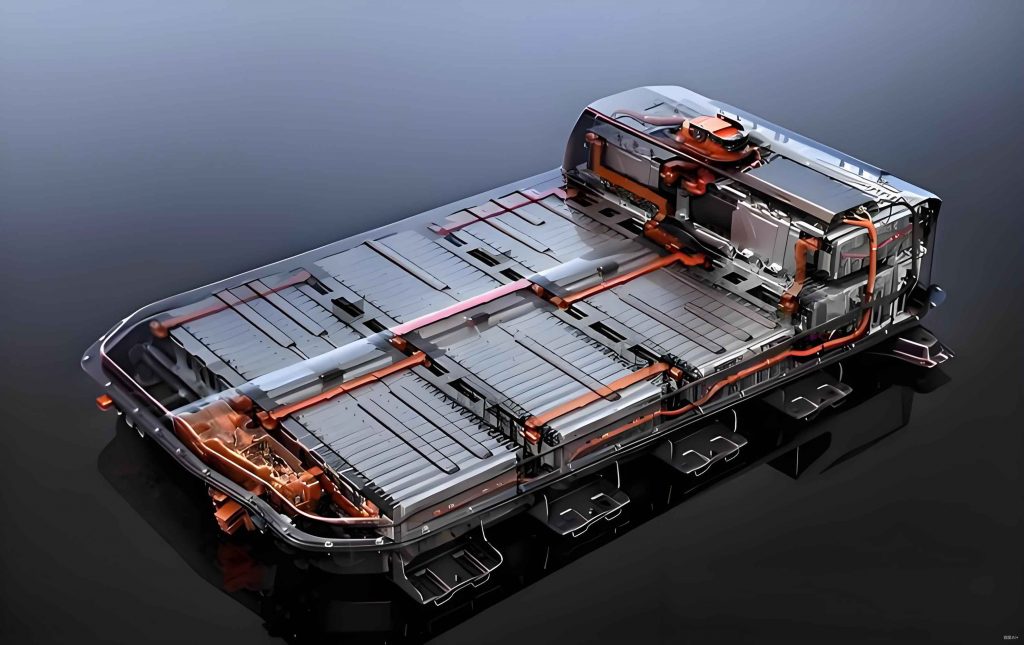
In my analysis, I will delve into the common types of faults in EV power batteries and explore the application of diagnostic technologies. The China EV battery market has seen rapid growth, and understanding these faults is crucial for enhancing operational efficiency. By establishing a comprehensive life-cycle management system and employing intelligent diagnostic algorithms, we can calibrate operating modes in a timely manner, thereby improving the safety performance levels of new energy vehicles. This article provides a detailed examination of fault types and diagnostic methods, supported by tables and formulas to summarize key points.
The EV power battery is a complex system involving multiple disciplines such as electrochemistry, materials science, and thermodynamics. Common faults include battery capacity attenuation, internal short circuits, insulation failures, and battery management system (BMS) faults. Each of these can significantly affect the safety and longevity of China EV battery systems. For instance, capacity attenuation leads to reduced driving range, while internal short circuits can cause thermal runaway, potentially resulting in fires or explosions. Therefore, accurate fault diagnosis is essential for preventive maintenance and risk mitigation.
To illustrate the factors influencing battery capacity attenuation, I have compiled a table that summarizes the internal and external factors contributing to this issue. This table highlights how materials, manufacturing processes, temperature, and charging rates interact to cause irreversible capacity loss in EV power batteries.
| Factor Type | Specific Factors | Impact on Capacity | Mitigation Strategies |
|---|---|---|---|
| Internal | Electrode material degradation | High; causes structural collapse | Use stable materials; optimize design |
| Internal | Manufacturing defects | Medium; leads to inconsistent performance | Implement quality control processes |
| External | High temperature environments | High; accelerates side reactions | Improve thermal management systems |
| External | High charging rates | Medium; induces lithium plating | Adopt smart charging protocols |
Battery capacity attenuation is a gradual process that involves the degradation of active materials due to repeated lithium-ion intercalation and deintercalation during charge-discharge cycles. The capacity fade can be modeled using empirical formulas that account for various stress factors. For example, the capacity loss over time can be expressed as:
$$ C(t) = C_0 \cdot e^{-kt} $$
where \( C(t) \) is the capacity at time \( t \), \( C_0 \) is the initial capacity, and \( k \) is the decay constant that depends on factors like temperature and charge rate. In China EV battery applications, we often use more complex models that incorporate multiple variables to predict capacity trends accurately. For instance, a multi-factor model might include:
$$ \Delta C = \alpha \cdot T + \beta \cdot I + \gamma \cdot N $$
where \( \Delta C \) is the capacity loss, \( T \) is temperature, \( I \) is current, \( N \) is the number of cycles, and \( \alpha \), \( \beta \), \( \gamma \) are coefficients derived from experimental data. Such models help in developing proactive maintenance strategies for EV power batteries.
Internal short circuits and insulation failures are severe faults that can lead to thermal runaway in China EV battery systems. Internal short circuits occur when the positive and negative electrodes are shorted due to reasons like separator damage, manufacturing defects, or external mechanical stress. Insulation failures often result from electrolyte leakage, causing abnormal insulation resistance and localized hot spots. To diagnose these issues, we rely on techniques that detect anomalies in current, voltage, and temperature signals. The relationship between short-circuit current and fault severity can be described by:
$$ I_{sc} = \frac{V}{R_{internal}} $$
where \( I_{sc} \) is the short-circuit current, \( V \) is the voltage, and \( R_{internal} \) is the internal resistance. Monitoring these parameters allows for early detection and prevention of catastrophic failures in EV power batteries.
Battery management system (BMS) faults are another critical area, as the BMS is responsible for monitoring and controlling the battery’s operation. Common BMS issues include voltage measurement errors, State of Charge (SOC) estimation deviations, and temperature sensor failures. These can lead to overcharging, over-discharging, and accelerated aging. SOC estimation is particularly important, and we often use algorithms based on Kalman filters or machine learning to improve accuracy. The SOC can be defined as:
$$ SOC = \frac{Q_{remaining}}{Q_{max}} \times 100\% $$
where \( Q_{remaining} \) is the remaining capacity and \( Q_{max} \) is the maximum capacity. Inaccurate SOC estimates can cause significant problems, so we implement data-driven approaches to correct errors and ensure reliable operation of China EV battery systems.
To summarize the common fault types and their characteristics, I have created a table that provides an overview of these issues, their causes, and potential impacts on EV power batteries.
| Fault Type | Primary Causes | Potential Impacts | Diagnostic Methods |
|---|---|---|---|
| Capacity Attenuation | Material degradation, high temperatures, cycling | Reduced range, irreversible capacity loss | EIS, capacity testing, model-based analysis |
| Internal Short Circuit | Separator damage, manufacturing defects, mechanical stress | Thermal runaway, fire, explosion | Current monitoring, thermal imaging, EIS |
| Insulation Failure | Electrolyte leakage, contamination, aging | Localized heating, insulation breakdown | Resistance measurement, thermal analysis |
| BMS Faults | Sensor failures, software errors, calibration issues | Inaccurate monitoring, safety risks | Data validation, machine learning, redundancy checks |
Moving on to diagnostic techniques, electrochemical impedance spectroscopy (EIS) is a powerful method for analyzing the internal state of China EV battery systems. EIS measures the impedance of a battery over a range of frequencies, providing insights into electrochemical processes such as charge transfer, diffusion, and interface reactions. The impedance data can be fitted to an equivalent circuit model, such as the Randles circuit, which includes elements like resistance and capacitance. The general form of the impedance \( Z \) is given by:
$$ Z(\omega) = R_s + \frac{1}{j\omega C_{dl} + \frac{1}{R_{ct}}} $$
where \( R_s \) is the series resistance, \( C_{dl} \) is the double-layer capacitance, \( R_{ct} \) is the charge transfer resistance, and \( \omega \) is the angular frequency. By analyzing changes in these parameters, we can detect faults like capacity fade or short circuits in EV power batteries. For example, an increase in \( R_{ct} \) may indicate electrode degradation, while anomalies in the Nyquist plot can reveal internal short circuits.
Thermal imaging detection is another vital technique for fault diagnosis in China EV battery systems. It uses infrared cameras to capture the temperature distribution on the battery surface, identifying hot spots that may indicate internal faults. The heat generation in a battery can be modeled using the energy balance equation:
$$ \frac{dT}{dt} = \frac{I^2 R}{m C_p} – \frac{h A (T – T_{ambient})}{m C_p} $$
where \( T \) is temperature, \( t \) is time, \( I \) is current, \( R \) is resistance, \( m \) is mass, \( C_p \) is specific heat capacity, \( h \) is heat transfer coefficient, \( A \) is surface area, and \( T_{ambient} \) is ambient temperature. Thermal imaging allows for early detection of issues like internal short circuits or insulation failures, which are critical for preventing thermal runaway in EV power batteries. By integrating this with data analytics, we can automate fault localization and improve response times.
Intelligent diagnostic techniques, driven by data and machine learning, have revolutionized fault management for China EV battery systems. These methods leverage large datasets from historical operation to identify patterns and predict faults. For instance, we can use support vector machines (SVM) or neural networks to classify fault types based on features like voltage, current, and temperature. The general form of a machine learning model for fault diagnosis can be represented as:
$$ y = f(X; \theta) $$
where \( y \) is the fault label, \( X \) is the feature vector (e.g., voltage, temperature), \( \theta \) are model parameters, and \( f \) is the function learned from data. Techniques like deep learning enable the analysis of multi-parameter couplings, enhancing the accuracy of fault detection in EV power batteries. Additionally, digital twin technology can create virtual replicas of batteries, allowing for real-time monitoring and proactive maintenance.
To illustrate the application of these diagnostic techniques, I have prepared a table that compares their advantages, limitations, and suitability for different fault types in China EV battery systems.
| Technique | Advantages | Limitations | Suitable Fault Types |
|---|---|---|---|
| Electrochemical Impedance Spectroscopy (EIS) | High sensitivity to internal changes, non-destructive | Requires specialized equipment, time-consuming | Capacity attenuation, internal short circuits |
| Thermal Imaging Detection | Real-time monitoring, early hot spot detection | Surface-only measurement, affected by environment | Internal short circuits, insulation failures |
| Intelligent Diagnostic Techniques | Adaptive learning, handles complex data | Requires large datasets, computational resources | BMS faults, multi-fault scenarios |
In practice, we often combine multiple techniques to achieve comprehensive fault diagnosis for China EV battery systems. For example, EIS can be used for detailed internal analysis, while thermal imaging provides quick surface scans, and machine learning algorithms integrate data from both for holistic assessment. This multi-modal approach enhances the reliability and safety of EV power batteries, supporting the sustainable growth of the new energy vehicle industry.
Furthermore, the integration of Internet of Things (IoT) and 5G technologies enables real-time data transmission and remote monitoring of China EV battery systems. This facilitates continuous fault diagnosis and predictive maintenance, reducing downtime and risks. For instance, we can deploy sensors that stream data to cloud platforms, where algorithms analyze trends and trigger alerts for potential faults. The overall system can be modeled as a closed-loop control process, where diagnostic outcomes feed back into management strategies to optimize battery performance.
In conclusion, the fault diagnosis of EV power batteries is a critical aspect of ensuring the safety and efficiency of new energy vehicles. By understanding common fault types such as capacity attenuation, internal short circuits, insulation failures, and BMS issues, and by applying advanced diagnostic techniques like EIS, thermal imaging, and intelligent algorithms, we can effectively manage risks and enhance the longevity of China EV battery systems. The continuous improvement of these methods, supported by empirical data and technological innovations, will contribute to the sustainable development of the electric vehicle ecosystem. As we move forward, it is essential to foster collaboration between industry and academia to refine these techniques and address emerging challenges in EV power battery management.
Finally, I emphasize that the evolution of fault diagnosis technologies will play a pivotal role in the future of China EV battery applications. With ongoing research and development, we can expect more robust and scalable solutions that ensure the reliability of EV power batteries under diverse operating conditions. This, in turn, will drive the adoption of new energy vehicles and support global efforts toward environmental sustainability.