
The rapid expansion of China’s new energy vehicle (NEV) market, driven by the “dual carbon” policy goals, has positioned the country as a global leader in electric mobility. With NEV sales surpassing 12.8 million units in 2024 and cumulative power battery installations exceeding 1,652.5 GWh, a massive wave of retired EV power batteries is imminent. Projections indicate that by 2030, China will face over 350,000 tons of retired EV power batteries, creating a recycling market valued at more than 140 billion yuan. Accelerating the development of the China EV battery recycling industry is crucial for resource circularity, environmental protection, and economic growth. This article analyzes the current state of EV power battery recycling globally and in China, proposes a development direction centered on resource restoration, and outlines optimization paths based on the RESE framework (Recycle, Environmentally Friendly, Security, Economy).
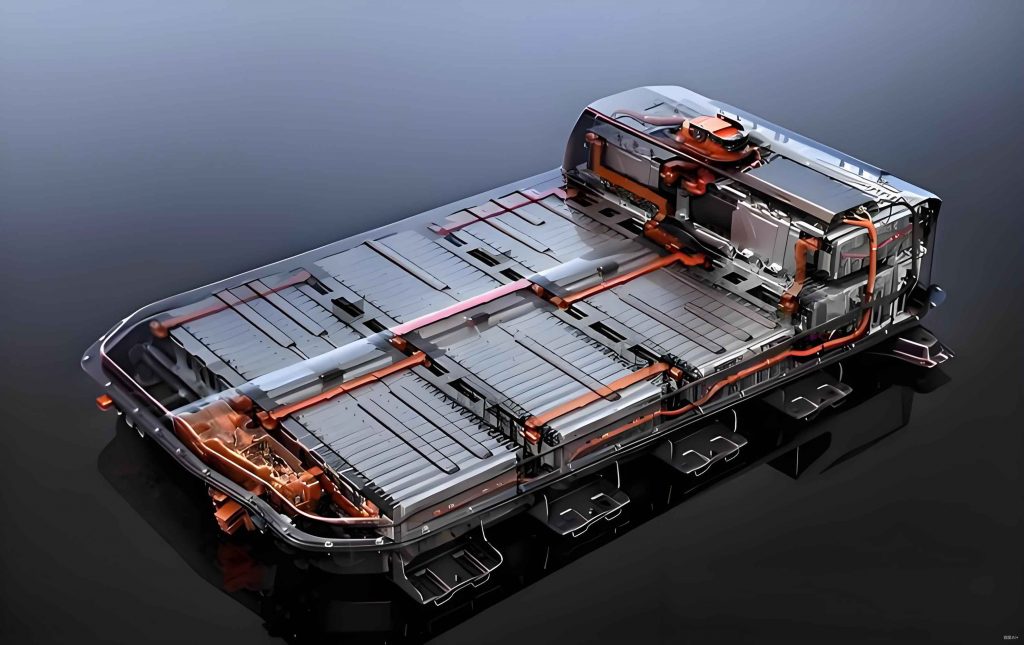
Globally, the transportation sector accounts for approximately 26% of CO₂ emissions, prompting nations to prioritize NEV adoption. In 2024, worldwide NEV sales reached 18.236 million units, with China dominating 70.5% of the market. The widespread use of lithium-ion batteries in EVs, particularly lithium iron phosphate (LFP) and ternary lithium batteries, has intensified focus on recycling technologies. Key recycling methods include pyrometallurgy, hydrometallurgy, bioleaching, and direct recycling, each with distinct advantages and limitations. For instance, hydrometallurgy offers high metal recovery rates but generates significant wastewater, while direct recycling minimizes energy consumption but remains cost-prohibitive for large-scale application. The efficiency of these processes can be expressed using the recovery rate formula:
$$ \text{Recovery Rate} = \frac{\text{Mass of Recovered Material}}{\text{Total Mass of Material in Spent Batteries}} \times 100\% $$
International policies shape recycling practices. The United States emphasizes funding and tax incentives under laws like the Bipartisan Infrastructure Law, while the European Union enforces stringent regulations through the EU Battery Regulation, mandating high recycling rates and recycled content usage. Japan’s circular economy laws, such as the Promotion of Effective Utilization of Resources Act, foster a culture of resource recovery. In contrast, China has implemented a producer responsibility extension system and issued guidelines like the “Technical Policy for the Recycling and Utilization of Electric Vehicle Power Batteries,” yet lacks specialized legislation. The table below compares key policy elements across regions:
| Region | Key Policies | Recycling Rate Targets | Recycled Content Requirements |
|---|---|---|---|
| United States | Bipartisan Infrastructure Law, Inflation Reduction Act | No federal mandates; incentivized via tax credits | 80% critical minerals from North America or recycling by 2026 |
| European Union | EU Battery Regulation (2023/1542/EU) | Li ≥ 90%, Co, Cu, Pb, Ni ≥ 95% by 2031 | Co ≥ 16%, Li ≥ 6%, Ni ≥ 6% by 2031 |
| Japan | Act on Promotion of Effective Utilization of Resources | Li 70%, Ni, Co 95% by 2030 (planned) | Under development via carbon footprint disclosure |
| China | New Energy Vehicle Power Battery Recycling Management Measures (Draft) | Ni, Co, Mn ≥ 98%, Li ≥ 85% (draft) | Encouraged but not mandatory |
In China, the EV power battery recycling industry is nascent, with over 170,000 registered recycling enterprises but only 156 included in the Ministry of Industry and Information Technology’s “white list” of compliant operators. Informal “workshop-style” recyclers dominate the market, leading to safety risks and environmental pollution. Current recycling modes include manufacturer-led, automotive OEM-led, third-party, and industrial alliance models. For example, CATL leverages its subsidiary Brunp Recycling’s hydrometallurgical processes to achieve lithium recovery rates above 91%, while GEM employs intelligent dismantling to enhance efficiency. Despite technological advancements, the actual recycling rate for China EV batteries remains below 25%, hampered by inadequate regulations and market fragmentation.
The development direction for the China EV battery recycling industry should prioritize resource restoration, aiming to reintegrate metals, graphite, electrolytes, and other components into new battery production cycles. This approach aligns with the RESE framework, which encompasses four dimensions: Recycle, Environmentally Friendly, Security, and Economy. Each dimension contributes to the holistic benefits of EV power battery recycling:
Recycle: Maximizing the recovery of valuable materials from spent China EV batteries reduces reliance on primary resources. The recovery efficiency for key metals can be modeled as:
$$ \text{Material Circularity} = \sum_{i=1}^{n} \left( \frac{R_i}{P_i} \right) \times 100\% $$
where \( R_i \) is the mass of recycled material \( i \) and \( P_i \) is the mass used in new battery production. For instance, recycling 1 ton of ternary batteries can yield 120 kg of nickel, 50 kg of cobalt, and 12 kg of lithium. Graphite recovery, though underdeveloped, holds potential due to its 12–21% mass share in batteries. Direct recycling technologies, such as those pioneered by Chinese research institutions, can reduce energy consumption by 50% and emissions by 85% compared to virgin material production.
Environmentally Friendly: Recycling mitigates the ecological impact of landfilling or incinerating EV power batteries, which contain heavy metals and toxic electrolytes. The carbon footprint reduction through recycling can be quantified as:
$$ \Delta C = C_{\text{virgin}} – C_{\text{recycled}} $$
where \( C_{\text{virgin}} \) and \( C_{\text{recycled}} \) represent the carbon emissions from virgin and recycled material production, respectively. Life cycle assessments indicate that direct recycling can cut emissions by 51.8%, compared to 33.4% for hydrometallurgy and 4.8% for pyrometallurgy. Implementing carbon footprint accounting and adopting green processes, such as low-temperature pyrolysis or solvent-free methods, are essential for minimizing secondary pollution.
Security: Safe handling of retired China EV batteries prevents hazards like thermal runaway and toxic leakage. Standardizing collection, transportation, and dismantling processes through digital tracing systems (e.g., battery passports) enhances safety. The risk mitigation can be expressed as:
$$ \text{Safety Index} = 1 – \frac{\text{Number of Incidents}}{\text{Total Batteries Processed}} $$
Strengthening regulatory oversight and promoting inherently safer battery designs, such as solid-state batteries, further reduce risks.
Economy: Recycling offers economic advantages by lowering raw material costs and creating market opportunities. The cost savings from using recycled materials can be calculated as:
$$ \text{Cost Savings} = \sum (P_{\text{virgin}} – P_{\text{recycled}}) \times Q $$
where \( P \) denotes price and \( Q \) is quantity. For example, recycled lithium carbonate costs 10% less than mined lithium. The China EV battery recycling market is projected to grow from 15.4 billion yuan in 2022 to over 100 billion yuan by 2030. However, low utilization rates (15.5% in 2024) and high operational costs impede profitability, necessitating efficiency improvements.
To optimize the development path, China should focus on four strategic areas: policy enhancement, network standardization, technological innovation, and international collaboration. First, enacting specialized laws with clear mandates and penalties, similar to the EU Battery Regulation, will formalize the industry. Incentives like tax reductions for compliant recyclers can divert spent EV power batteries from informal channels. Second, establishing a closed-loop ecosystem requires uniform standards for battery design, dismantling, and carbon footprint disclosure. Industrial alliances can integrate stakeholders—from manufacturers to recyclers—to streamline operations. The table below summarizes key recommendations:
| Strategic Area | Actions | Expected Outcomes |
|---|---|---|
| Policy and Regulation | Enact recycling-specific laws; set recycled content targets; implement carbon footprint rules | Increased formal recycling rates; reduced environmental impact |
| Network Standardization | Develop technical standards; promote battery passport systems; enhance traceability | Improved safety and efficiency; better resource circulation |
| Technological Innovation | Advance direct recycling; optimize hydrometallurgy; recover graphite and electrolytes | Higher recovery rates; lower costs and emissions |
| International Collaboration | Align with global standards; joint R&D on recycling tech; expand market access | Enhanced competitiveness; technology transfer |
Technologically, advancing direct regeneration methods for cathode materials (e.g., LFP and NMC) is critical. Research should address impurity removal and scalability to achieve recovery rates exceeding 90% for lithium. For graphite, developing low-energy thermal processes and composite materials can restore anode functionality. Electrolyte recovery, though challenging, must be prioritized to prevent pollution and valorize lithium salts. Additionally, exploring next-generation batteries like sodium-ion or solid-state systems could alleviate resource pressures. The economic viability of recycling processes depends on optimizing parameters such as energy input and reagent use, which can be modeled as:
$$ \text{Net Benefit} = \text{Revenue from Recycled Materials} – \text{Operational Costs} $$
International cooperation is vital for aligning China’s practices with global norms. Participating in standard-setting organizations and forming partnerships with overseas entities can facilitate technology exchange and market expansion. For instance, collaborative projects on closed-loop supply chains could strengthen the resilience of the China EV battery industry.
In conclusion, the China EV battery recycling industry stands at a pivotal juncture. By adopting a resource restoration approach and addressing RESE dimensions through robust policies, standardized networks, innovative technologies, and global engagement, China can transform the challenge of retired EV power batteries into an opportunity for sustainable development. This path not only secures critical mineral supplies but also positions China as a leader in the circular economy for electric mobility.