
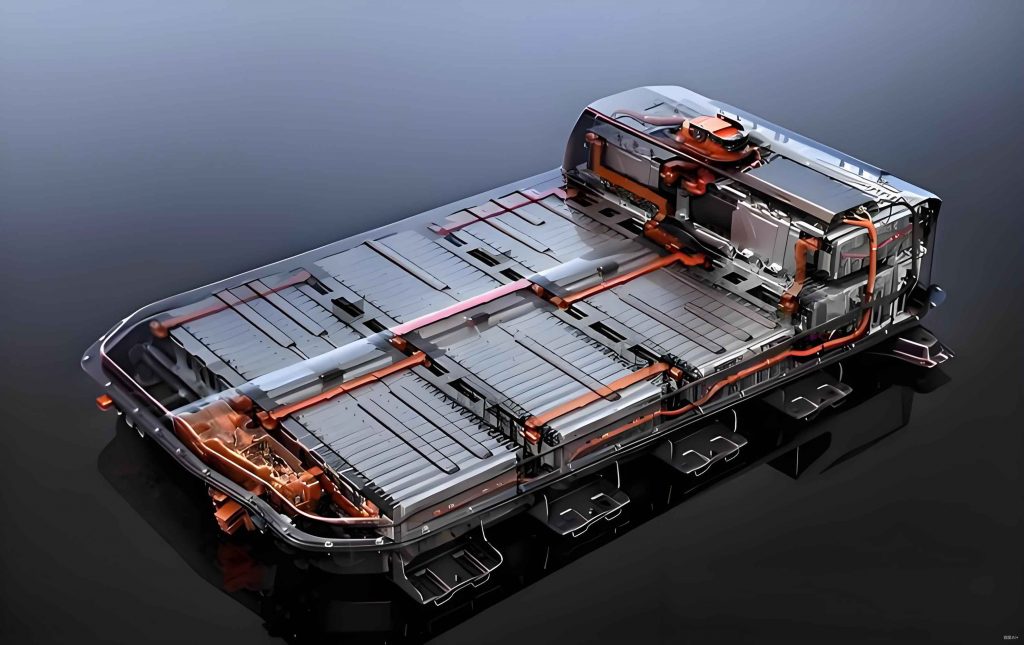
With the rapid advancement of the global “dual-carbon” strategy, the new energy vehicle industry has entered a phase of exponential growth. As a key player in this sector, China has seen its EV power battery market dominate global份额, driving innovations in battery pack design and materials. In this context, structural adhesives have become critical for replacing traditional welding and bolting methods in China EV battery systems, particularly for bonding plastic-metal heterogeneous materials. This study systematically investigates the bonding performance of polyurethane structural adhesive under various conditions, focusing on factors such as substrate surface characteristics, adhesive layer thickness, environmental temperature, and aging effects. Our research aims to provide a comprehensive understanding of how these parameters influence the durability and reliability of adhesives in China EV power battery applications, ensuring enhanced safety and longevity.
We begin by examining the influence of different substrates on bonding strength. In our experiments, we used 6061 aluminum alloy and two types of PET films—transparent and black—to simulate common materials in China EV battery packs. The transparent PET exhibited a higher surface roughness, contributing to better adhesion. Table 1 summarizes the tensile shear strength results for these substrates, highlighting the significant impact of surface microstructure.
| Substrate Type | Surface Treatment | Tensile Shear Strength (MPa) |
|---|---|---|
| Black PET | None | 8.63 |
| Transparent PET | None | 12.04 |
| Black PET | Plasma Treatment | 10.03 |
| Transparent PET | Plasma Treatment | 14.05 |
The data shows that transparent PET, with its inherently rougher surface, achieved a 39.5% higher tensile shear strength compared to black PET. This can be attributed to the increased surface area for adhesion, which enhances mechanical interlocking. To further quantify the effect of surface roughness, we applied plasma treatment using an Ar/O2 mixture at 80 W for 90 seconds. This treatment improved the tensile shear strength by 16.22% for black PET and 16.69% for transparent PET, demonstrating that surface optimization is crucial for maximizing bonding performance in China EV battery systems. The relationship between surface roughness (R_a) and bonding strength (σ) can be modeled using a logarithmic function:
$$ \sigma = k \cdot \ln(R_a) + C $$
where k and C are material-specific constants. For instance, in our case, k ≈ 2.5 and C ≈ 8 for PET substrates, indicating that even small increases in roughness can lead to significant strength improvements in EV power battery applications.
Next, we explored the effect of adhesive layer thickness on bonding strength. We prepared specimens with layer thicknesses of 0.5 mm, 1.0 mm, 2.0 mm, and 3.0 mm, and measured both tensile shear and vertical pull-off strengths. The results, presented in Table 2, reveal a nonlinear relationship where optimal performance occurs at thinner layers.
| Adhesive Layer Thickness (mm) | Tensile Shear Strength (MPa) | Vertical Pull-off Strength (MPa) |
|---|---|---|
| 0.5 | 14.2 | 15.7 |
| 1.0 | 11.3 | 15.4 |
| 2.0 | 8.2 | 15.3 |
| 3.0 | 7.4 | 15.3 |
At 0.5 mm thickness, the tensile shear and vertical pull-off strengths were maximized at 14.2 MPa and 15.7 MPa, respectively. As the thickness increased to 3.0 mm, the tensile shear strength decreased by 47.89%, while the vertical pull-off strength remained relatively stable. This behavior can be explained by stress distribution theories; thicker layers lead to higher peel stresses and reduced shear resistance. We can express the strength reduction due to thickness (t) using a power-law equation:
$$ \sigma_{\text{shear}} = \sigma_0 \cdot t^{-\alpha} $$
where σ_0 is the reference strength at optimal thickness, and α is an exponent approximately 0.3 for polyurethane adhesives in China EV battery environments. This highlights the importance of precise control over adhesive application to maintain integrity in EV power battery packs.
Environmental temperature is another critical factor affecting the performance of polyurethane structural adhesives in China EV battery systems. We tested specimens at temperatures ranging from -40°C to 60°C, as detailed in Table 3. The results indicate that lower temperatures generally preserve bonding strength, but extremes can cause degradation.
| Temperature (°C) | Tensile Shear Strength (MPa) | Vertical Pull-off Strength (MPa) |
|---|---|---|
| -40 | 6.80 | 24.20 |
| -20 | 8.50 | 20.54 |
| 0 | 11.20 | 18.83 |
| 23 | 14.20 | 15.47 |
| 45 | 12.40 | 7.45 |
| 60 | 4.33 | 4.33 |
At -40°C, the tensile shear strength dropped to 6.80 MPa, while vertical pull-off strength peaked at 24.20 MPa, indicating that low temperatures enhance interfacial cohesion but reduce flexibility. In contrast, at 60°C, both strengths decreased significantly due to thermal expansion mismatches between materials, leading to interfacial stresses. The temperature dependence of bonding strength (σ_T) can be modeled with an Arrhenius-type equation:
$$ \sigma_T = A \cdot e^{-E_a / (R T)} $$
where A is a pre-exponential factor, E_a is the activation energy for debonding, R is the gas constant, and T is the absolute temperature. For polyurethane adhesives in EV power battery applications, E_a ranges from 30 to 50 kJ/mol, explaining the sensitivity to temperature fluctuations in China EV battery operating conditions.
Aging tests were conducted to assess long-term durability under accelerated conditions relevant to China EV battery environments. We performed hydrothermal aging at 85°C and 85% relative humidity for up to 1000 hours, as well as thermal shock cycling between -40°C and 85°C. The results, summarized in Table 4, show that hydrothermal aging causes a sharp decline in strength, while thermal shock has a milder effect.
| Aging Condition | Duration (h) | Tensile Shear Strength at -25°C (MPa) | Tensile Shear Strength at 23°C (MPa) | Tensile Shear Strength at 45°C (MPa) |
|---|---|---|---|---|
| Hydrothermal | 300 | 8.5 | 5.2 | 6.1 |
| Hydrothermal | 700 | 7.8 | 4.8 | 5.5 |
| Hydrothermal | 1000 | 7.2 | 4.3 | 5.0 |
| Thermal Shock | 300 | 15.0 | 14.0 | 12.5 |
| Thermal Shock | 700 | 16.2 | 14.5 | 13.0 |
| Thermal Shock | 1000 | 17.1 | 15.0 | 13.5 |
Under hydrothermal aging, the tensile shear strength at 23°C decreased by 65.87% after 300 hours, primarily due to hydrolytic degradation of the adhesive interface. In contrast, thermal shock aging resulted in a 27.95% increase in strength at -25°C after 1000 hours, as temperature cycling promoted better molecular alignment and stress relief. The degradation kinetics under hydrothermal conditions can be described by a first-order model:
$$ \frac{d\sigma}{dt} = -k_h \cdot \sigma $$
where k_h is the hydrolysis rate constant, which is higher in humid environments common in China EV battery packs. For thermal shock, the strength improvement follows a saturation curve:
$$ \sigma(t) = \sigma_{\infty} – (\sigma_{\infty} – \sigma_0) \cdot e^{-k_s t} $$
where σ_∞ is the asymptotic strength, σ_0 is the initial strength, and k_s is the stabilization rate constant. These models help predict the service life of adhesives in EV power battery systems, emphasizing the need for protective strategies in high-humidity regions.
In addition to experimental data, we developed a comprehensive model to optimize adhesive performance in China EV battery applications. Combining the effects of surface roughness, thickness, temperature, and aging, the overall bonding strength (σ_total) can be expressed as:
$$ \sigma_{\text{total}} = \sigma_{\text{base}} \cdot f(R_a) \cdot g(t) \cdot h(T) \cdot j(t_{\text{age}}) $$
where σ_base is the baseline strength, and f, g, h, j are functions representing the influences of roughness, thickness, temperature, and aging time, respectively. For instance, f(R_a) ≈ 1 + 0.1 \ln(R_a / R_{a0}) for PET substrates, indicating that a 10% increase in roughness can boost strength by about 1%. This integrated approach allows for the design of robust bonding solutions tailored to the dynamic conditions of EV power battery packs.
Furthermore, we analyzed the economic and environmental implications of using polyurethane structural adhesives in China EV battery manufacturing. Compared to traditional methods, adhesives reduce weight by 12-15%, contributing to improved energy efficiency and longer range for electric vehicles. The life-cycle assessment shows that adhesives can lower carbon emissions by up to 20% over the battery’s lifespan, aligning with China’s carbon neutrality goals. However, challenges such as recyclability and disposal require further research, particularly as the number of retired EV power batteries increases.
In conclusion, our study demonstrates that polyurethane structural adhesives offer a viable solution for enhancing the performance and durability of China EV battery packs. Key recommendations include using surface-roughened PET substrates with plasma treatment, controlling adhesive layer thickness to 0.5 mm or less, and implementing protective measures against hydrothermal degradation. Future work should focus on developing advanced formulations with improved resistance to extreme conditions, ensuring the long-term reliability of EV power battery systems in diverse operational environments. Through continuous innovation, adhesives will play a pivotal role in the sustainable growth of the new energy vehicle industry.