
As an expert in the field of electric vehicle (EV) technology, I have extensively studied the critical role of power batteries in ensuring the efficiency and sustainability of modern transportation. In China, the rapid growth of the EV industry has placed significant emphasis on the development and maintenance of China EV battery systems. These batteries, which serve as the heart of electric vehicles, are complex electrochemical devices that require meticulous care to maximize their lifespan and safety. In this article, I will delve into the structure, common faults, and maintenance strategies for EV power battery systems, drawing on my firsthand experience and research. I will incorporate tables and mathematical formulas to summarize key points, ensuring a comprehensive understanding for readers. The widespread adoption of EVs hinges on the reliability of these batteries, making it essential to address issues like capacity fade, thermal management failures, and improper charging practices. By exploring these aspects, I aim to provide actionable insights that can enhance the performance of China EV battery technologies and contribute to the global shift toward clean energy.
The EV power battery is a multifaceted system composed of three primary layers: the cell layer, the management layer, and the structural layer. The cell layer consists of individual battery cells connected in series or parallel to form the basic energy storage unit. These cells can be categorized into cylindrical, prismatic, and pouch types, each with distinct advantages and limitations. For instance, cylindrical cells offer high mechanical stability, while pouch cells provide better energy density. The predominant materials used in China EV battery production include NCM (nickel-cobalt-manganese) and LFP (lithium iron phosphate), which influence factors such as energy density, cost, and safety. The management layer encompasses the Battery Management System (BMS), thermal management systems (e.g., liquid or air cooling), and high-voltage control units. The BMS is crucial for monitoring parameters like voltage, temperature, and current, and it performs functions such as State of Charge (SOC) estimation and overcharge protection. The structural layer includes the module housing, fire-resistant materials, and high-voltage wiring, which provide mechanical support and safety. The underlying working principle of an EV power battery involves electrochemical reactions, where ions move between the anode and cathode during charge and discharge cycles. For example, in a ternary lithium battery, the process is based on the intercalation and deintercalation of Li+ ions between the positive electrode (e.g., LiNi0.5Co0.2Mn0.3O2) and the negative electrode (graphite). The SOC can be estimated using formulas that account for factors like current integration and open-circuit voltage, as shown in Equation 1:
$$ SOC(t) = SOC_0 – \frac{1}{C_n} \int_0^t \eta I(\tau) d\tau $$
where \( SOC_0 \) is the initial state of charge, \( C_n \) is the nominal capacity, \( \eta \) is the coulombic efficiency, and \( I(\tau) \) is the current at time \( \tau \). This equation highlights the importance of accurate BMS calibration to prevent issues like over-discharging. To better illustrate the components, Table 1 summarizes the key layers of an EV power battery system.
| Layer | Components | Functions |
|---|---|---|
| Cell Layer | Cylindrical, Prismatic, Pouch Cells; NCM/LFP Materials | Energy storage via electrochemical reactions |
| Management Layer | BMS, Thermal Management, High-Voltage Control | Monitoring, protection, and thermal regulation |
| Structural Layer | Module Housing, Fireproof Materials, High-Voltage Wiring | Mechanical integrity and safety |
In my analysis of China EV battery systems, I have observed that common faults can be broadly classified into cell-level, pack-level, thermal management, and charging-related issues. Cell-level faults include capacity fade, increased internal resistance, and excessive self-discharge. Capacity fade refers to the gradual reduction in the battery’s ability to hold charge, primarily due to irreversible electrochemical degradation. This can be modeled using Equation 2, which describes capacity loss over time:
$$ Q_{loss} = A \cdot e^{-\frac{E_a}{RT}} \cdot t^n $$
where \( Q_{loss} \) is the capacity loss, \( A \) is a pre-exponential factor, \( E_a \) is the activation energy, \( R \) is the gas constant, \( T \) is the temperature, \( t \) is time, and \( n \) is the time exponent. Factors such as frequent fast charging can accelerate this process by promoting lithium dendrite growth, which pierces the separator and leads to internal short circuits. Increased internal resistance results in higher Joule heating during charge and discharge, potentially causing thermal runaway. The internal resistance \( R_{int} \) can be expressed in terms of voltage drop and current, as in Equation 3:
$$ R_{int} = \frac{V_{oc} – V}{I} $$
where \( V_{oc} \) is the open-circuit voltage, \( V \) is the terminal voltage, and \( I \) is the current. Self-discharge, while normal to some extent, becomes problematic when rates are abnormally high due to manufacturing defects or internal leaks. Pack-level faults involve deformation, short circuits, and electrolyte leakage, often resulting from mechanical stress or poor sealing. For example, in CTP (Cell-to-Pack) designs, although the compressive strength may exceed 100 kN, insufficient underbody protection can lead to casing deformation and internal shorts. Thermal management faults arise from cooling system failures, such as leaks in liquid cooling plates, which prevent effective heat dissipation and increase the risk of thermal runaway. Similarly, charging management faults include overcharging or undercharging, which can cause electrolyte decomposition and gas generation, leading to swelling or even explosion. Table 2 provides a summary of these common faults and their root causes in EV power battery systems.
| Fault Category | Specific Issues | Root Causes |
|---|---|---|
| Cell-Level Faults | Capacity Fade, Increased Internal Resistance, Self-Discharge | Material degradation, SEI layer growth, manufacturing defects |
| Pack-Level Faults | Deformation, Short Circuits, Electrolyte Leakage | Mechanical impact, sealing failures, poor welding |
| Thermal Management Faults | Overheating, Inadequate Cooling/Heating | Coolant leaks, PTC heater failures, sensor inaccuracies |
| Charging Management Faults | Overcharging, Undercharging, Inappropriate Charging Rates | BMS errors, incompatible chargers, user negligence |
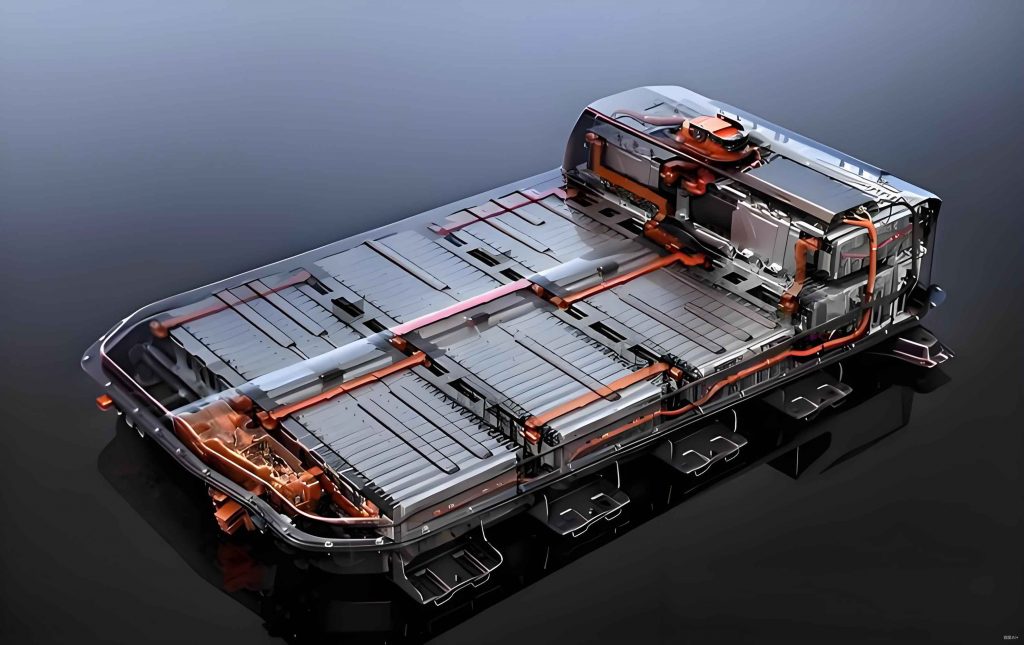
From my perspective, maintaining China EV battery systems requires a proactive approach that combines regular inspections, professional repairs, and user education. I recommend implementing a monthly inspection routine that includes visual checks for pack deformation (e.g., deviations greater than 3 mm warrant immediate testing), seal aging, and wire harness wear. Electrical parameter monitoring is equally important; for instance, using diagnostic tools to measure cell voltage imbalances. If the voltage deviation exceeds ±20 mV, balancing procedures should be performed to prevent localized stress. Temperature sensor calibration is critical and should be done at intervals not exceeding 20,000 km to avoid BMS misjudgments that could lead to overcharging or thermal events. The relationship between temperature and battery aging can be described by the Arrhenius equation, as shown in Equation 4, which emphasizes the need for precise thermal control:
$$ k = A e^{-\frac{E_a}{RT}} $$
where \( k \) is the rate constant of degradation, \( A \) is the frequency factor, \( E_a \) is the activation energy, \( R \) is the universal gas constant, and \( T \) is the absolute temperature. Professional maintenance should be conducted by authorized service centers or qualified third-party agencies, focusing on fault diagnosis, module replacement, and system validation. For example, when replacing modules, only those with a State of Health (SOH) below 70% should be swapped, and mixing different batches or models must be avoided to maintain consistency. Post-repair tests, such as full charge-discharge cycles, should confirm that temperature variations within the pack are within 3°C. User behavior plays a pivotal role in extending battery life; I advise avoiding frequent fast charging, especially when SOC exceeds 80%, and preheating the battery in cold conditions to improve charging efficiency. For long-term storage, maintaining SOC between 50% and 60% helps prevent irreversible damage from over-discharge. Table 3 outlines a systematic maintenance schedule for EV power battery systems, based on my recommendations.
| Maintenance Activity | Frequency | Key Actions |
|---|---|---|
| Visual Inspection | Monthly | Check for deformation, seal integrity, wire damage |
| Electrical Parameter Check | Every 20,000 km | Measure voltage deviations, calibrate sensors |
| Professional Diagnosis | As needed (e.g., after incidents) | Use OEM tools for BMS code reading and module testing |
| User Practice Adherence | Daily | Avoid fast charging, maintain optimal SOC, use compatible chargers |
In conclusion, the evolution of China EV battery technology is ongoing, and addressing faults through diligent maintenance is essential for sustainable EV adoption. As I have discussed, understanding the intricate layers of EV power battery systems—from cell chemistry to management protocols—enables effective fault prevention and resolution. By adhering to structured maintenance plans and promoting user awareness, we can mitigate risks such as thermal runaway and capacity degradation, thereby enhancing the longevity and safety of these critical components. The future of electric mobility relies on continuous improvement in battery design and care, and I am committed to advancing this field through research and practical insights. Through collective efforts, the reliability of EV power battery systems will undoubtedly support the global transition to renewable energy sources.