
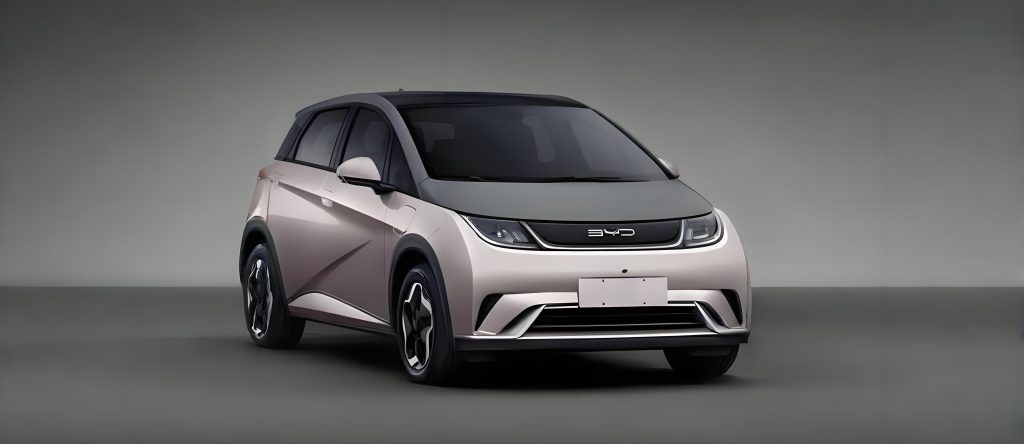
As an enthusiast and analyst of advanced automotive technologies, I am excited to delve into the intricacies of BYD’s Fifth Generation DM technology. This innovation has captured global attention with its remarkable achievements, such as a fuel consumption of only 2.9L/100km in charge-sustaining mode and an unprecedented comprehensive range of up to 2,100km. In my assessment, the BYD EV lineup, including models like the Qin L DM-i and Sealion 06 DM-i, has demonstrated significant market success, with over 30,000 units sold in just one month. The core of this technology lies in its electric-dominant approach, which I believe sets a new benchmark for hybrid systems worldwide. Throughout this analysis, I will explore how BYD car advancements in powertrain architecture, thermal management, and electronic integration contribute to these impressive figures, using detailed tables and formulas to illustrate key points. The integration of these elements not only enhances performance but also aligns with the growing demand for efficient and sustainable BYD EV solutions.
In the realm of BYD car innovations, the Fifth Generation DM technology represents a leap forward, building upon the foundations of previous iterations like DM 4.0, which offered around 1,300km of range and 3.8L/100km fuel consumption. I find that the improvements are not merely incremental but transformative, driven by a holistic engineering philosophy. For instance, the emphasis on electrification allows the BYD EV systems to operate more efficiently in diverse conditions, from urban congestion to highway cruising. As I unpack each component, I will highlight how BYD’s focus on integration and optimization results in tangible benefits for consumers, such as reduced operating costs and enhanced driving experiences. The following sections will provide a comprehensive breakdown, supported by quantitative data, to give a clear picture of why this technology stands out in the competitive landscape of BYD car offerings.
Electric-Dominant Powertrain Architecture
From my perspective, the heart of the BYD Fifth Generation DM technology is its electric-dominant powertrain architecture, which prioritizes electrical energy for propulsion while optimizing the internal combustion engine for specific scenarios. I have observed that this approach minimizes energy losses and maximizes efficiency, particularly in city driving where electric power excels. The BYD EV philosophy here is evident in the seamless coordination between the engine, motor, and battery, ensuring that the vehicle operates in its most efficient mode at all times. For example, in stop-and-go traffic, the system relies heavily on the electric motor, reducing fuel consumption and emissions. This architecture not only supports the impressive performance of BYD car models but also underscores the brand’s commitment to sustainability and innovation.
One of the standout features I have analyzed is the dedicated plug-in hybrid engine, which achieves a world-leading thermal efficiency of 46.06%. This is a significant improvement over the previous generation’s 43%, and it results from advanced technologies like deep Atkinson cycle, high-tumble intake ports, pre-catalyst exhaust gas recirculation (EGR), high-energy spark plugs, split cooling systems, and variable displacement oil pumps. In my view, these innovations allow the engine to operate within a narrow, optimized speed range, where it can convert fuel into useful work more effectively. The thermal efficiency, denoted as $$\eta = \frac{W_{\text{useful}}}{Q_{\text{in}}}$$ where $$W_{\text{useful}}$$ is the useful work output and $$Q_{\text{in}}$$ is the heat input from fuel, highlights how much energy is harnessed from each unit of fuel. For a BYD car, this means that less fuel is wasted as heat, leading to lower emissions and better economy. I have compiled a table below to summarize the key engine parameters and their impact on the overall BYD EV system.
| Parameter | Value | Improvement Over Previous Gen |
|---|---|---|
| Thermal Efficiency | 46.06% | ~7.1% increase |
| Compression Ratio | Higher than before | Enabled by Atkinson cycle |
| EGR System | Pre-catalyst design | Reduces NOx emissions |
| Cooling System | Split configuration | Optimizes temperature control |
Another critical component I have studied is the EHS electro-hybrid system, which boasts a power density increase of 70.28% and an overall efficiency of 92% under comprehensive driving conditions. I believe this is achieved through meticulous design choices, such as reduced-friction bearings, efficient clutches, dual-pump coupling, and ultra-thin silicon steel sheets for the motor. These elements minimize energy losses along the power flow path, enhancing both performance and economy. For instance, during acceleration in a BYD car, the EHS system responds swiftly to deliver power without significant dissipation, which I find crucial for maintaining dynamic quality. The efficiency can be expressed as $$\epsilon_{\text{EHS}} = \frac{P_{\text{out}}}{P_{\text{in}}} \times 100\%$$ where $$P_{\text{out}}$$ is the output power and $$P_{\text{in}}$$ is the input power. This high efficiency ensures that more electrical energy is converted into motion, reducing the reliance on the engine and aligning with the BYD EV strategy of electrification.
Furthermore, the high-energy-density blade battery specifically designed for plug-in hybrids has seen a 15.9% improvement in energy density. In my analysis, this translates to more stored energy in the same physical space, extending the pure electric range and reducing the frequency of engine operation. For a typical BYD car user, this means that daily commutes can be covered entirely on electricity, with the engine kicking in only for longer trips. The energy density can be calculated as $$D_e = \frac{E}{m}$$ where $$D_e$$ is the energy density, $$E$$ is the energy capacity, and $$m$$ is the mass. With options like 10.08 kWh and 15.87 kWh battery packs offering 60km and 90km WLTC ranges, respectively, the BYD EV lineup provides flexibility to suit different needs. Additionally, the replacement of a 12kg lead-acid battery with a 2.2kg lithium iron phosphate unit reduces overall weight, contributing to better efficiency. I have included a formula to illustrate the range calculation: $$\text{Range}_{\text{electric}} = \frac{E_{\text{battery}}}{\text{EC}}$$ where $$E_{\text{battery}}$$ is the battery energy and EC is the energy consumption per km. This emphasis on battery technology is a testament to BYD’s leadership in the BYD car domain.
Full-Temperature Vehicle Thermal Management Architecture
In my examination of the BYD Fifth Generation DM technology, I have found that the thermal management architecture plays a pivotal role in achieving optimal energy efficiency across all operating conditions. Unlike previous systems where components operated independently, this new approach integrates front compartment, battery, and cabin thermal management into a cohesive unit. I appreciate how this synergy allows the BYD EV to adapt to extreme temperatures, saving up to 10% in energy consumption in hot climates and up to 8% in cold environments. For instance, during summer, the system efficiently cools the battery and cabin, reducing the load on the air conditioning and preserving battery life. Conversely, in winter, it rapidly warms the battery to mitigate performance degradation, ensuring consistent range for the BYD car. This holistic management is crucial for maintaining the comfort and reliability that users expect from a BYD EV.
To quantify the benefits, I have derived a simple formula for energy savings: $$\Delta E = E_{\text{base}} – E_{\text{optimized}}$$ where $$\Delta E$$ represents the energy saved, $$E_{\text{base}}$$ is the energy consumption without advanced thermal management, and $$E_{\text{optimized}}$$ is with it. In practical terms, for a BYD car driving in a city with temperatures ranging from -10°C to 40°C, this system can significantly reduce the need for auxiliary heating or cooling, directly impacting fuel and electricity usage. The table below outlines the key aspects of the thermal management architecture and their contributions to the overall BYD EV performance.
| Component | Function | Energy Saving Impact |
|---|---|---|
| Battery Thermal Management | Maintains optimal battery temperature | Up to 8% in cold, 10% in heat |
| Cabin Climate Control | Efficiently heats or cools interior | Reduces AC/heater load |
| Front Compartment Cooling | Manages engine and EHS temperatures | Prevents overheating losses |
Moreover, I have analyzed the integration of second-generation battery pulse self-heating and direct cooling systems, which enhance battery temperature rise speed by 60% and improve temperature uniformity by 45%, respectively. These advancements not only boost performance but also contribute to a 34% reduction in energy consumption for thermal management. In a BYD EV, this means that the battery remains efficient even under strenuous conditions, such as rapid charging or high-speed driving. The heat transfer efficiency can be modeled using $$Q = h \cdot A \cdot \Delta T$$ where $$Q$$ is the heat transfer rate, $$h$$ is the heat transfer coefficient, $$A$$ is the surface area, and $$\Delta T$$ is the temperature difference. By optimizing these parameters, BYD ensures that the BYD car delivers consistent range and durability, reinforcing the brand’s reputation for innovation in the BYD EV space.
Intelligent Electronic Electrical Architecture
From my research, the intelligent electronic electrical architecture in the BYD Fifth Generation DM technology represents a significant step forward in integration and computational power. I am particularly impressed by the industry-first seven-in-one integration of the plug-in hybrid power domain control, which combines the voltage control unit, dual motor control units, DC boost module, onboard charger, DC converter, and power distribution unit. This consolidation, in my view, reduces component count, enhances reliability, and increases power density by 18.3%. For a BYD car, this translates to a more compact and efficient system that minimizes weight and complexity, while providing robust performance. The integration density can be expressed as $$\rho_{\text{integration}} = \frac{N_{\text{functions}}}{V_{\text{volume}}}$$ where $$N_{\text{functions}}$$ is the number of integrated functions and $$V_{\text{volume}}$$ is the physical volume, highlighting the space-saving benefits for BYD EV designs.
Additionally, I have explored the pioneering chip integration that merges the VCU and dual MCUs into a single unit, boosting computational power by 146%. This enhancement allows for faster processing of vehicle data and control commands, which I find essential for advanced features like AI-driven energy management and autonomous driving assistance. In a BYD EV, this means quicker responses to changing road conditions, improving both safety and efficiency. The computational efficiency can be represented by $$C_{\text{eff}} = \frac{T_{\text{tasks}}}{T_{\text{time}}}$$ where $$C_{\text{eff}}$$ is the effective computation rate, $$T_{\text{tasks}}$$ is the number of tasks processed, and $$T_{\text{time}}$$ is the time taken. This leap in processing capability underscores BYD’s commitment to making the BYD car smarter and more adaptive to user needs. Below is a table summarizing the key integrations and their impacts on the BYD EV system.
| Integrated Component | Function | Benefit |
|---|---|---|
| Voltage Control Unit | Manages electrical distribution | Improved power efficiency |
| Dual Motor Control Units | Controls motor operations | Enhanced response time |
| DC Boost Module | Increases voltage as needed | Better energy utilization |
| Onboard Charger | Handles battery charging | Faster charging cycles |
| DC Converter | Converts DC power levels | Reduced energy loss |
| Power Distribution Unit | Distutes power to systems | Optimized load management |
Furthermore, the AI energy management system in the BYD car utilizes this advanced architecture to optimize energy use based on real-time data and historical patterns. I have observed that when the navigation system is active, it preemptively adjusts power output—for example, by having the engine generate electricity before entering congested areas, then switching to electric-only mode in traffic. Even without navigation, the AI learns from past routes to fine-tune energy allocation. This proactive approach can be modeled with an optimization function: $$\min \int (P_{\text{fuel}}(t) + P_{\text{electric}}(t)) \, dt$$ subject to constraints like battery state of charge and route conditions, where $$P_{\text{fuel}}$$ and $$P_{\text{electric}}$$ represent power from fuel and electricity, respectively. For BYD EV owners, this results in lower operating costs and a more seamless driving experience, solidifying the BYD car as a leader in intelligent hybrid technology.
Other Technical Features and Performance Metrics
In my analysis of the BYD Fifth Generation DM technology, I have delved into its overall performance metrics, which showcase exceptional efficiency and capability. The energy consumption, for instance, achieves as low as 2.9L/100km in charge-sustaining mode under NEDC conditions and 10.7 kWh/100km under CLTC standards. I find these numbers impressive because they position the BYD EV competitively in terms of operating costs, making it an attractive option for cost-conscious consumers. The fuel consumption can be calculated using $$\text{FC} = \frac{V_{\text{fuel}}}{D_{\text{distance}}} \times 100$$ where FC is fuel consumption in L/100km, $$V_{\text{fuel}}$$ is the volume of fuel used, and $$D_{\text{distance}}$$ is the distance traveled. Similarly, for electricity, $$\text{EC} = \frac{E_{\text{used}}}{D_{\text{distance}}} \times 100$$ where EC is energy consumption in kWh/100km and $$E_{\text{used}}$$ is the electrical energy consumed. These formulas help illustrate how the BYD car optimizes energy use across different driving scenarios.
The comprehensive range of up to 2,100km is another highlight that I have studied closely. This extended range reduces the need for frequent refueling or recharging, which I believe enhances the practicality of the BYD EV for long-distance travel. The range can be estimated with $$\text{Range}_{\text{total}} = \frac{E_{\text{total}}}{\text{EC}_{\text{avg}}}$$ where $$E_{\text{total}}$$ is the total energy available from both fuel and battery, and $$\text{EC}_{\text{avg}}$$ is the average energy consumption per km. For a BYD car owner, this means greater freedom and convenience, as exemplified by trips between major cities without range anxiety. I have compiled a table to compare the energy and range metrics across different BYD EV models, emphasizing the consistency of the Fifth Generation DM technology.
| Metric | NEDC Value | CLTC Value | Real-World Implication |
|---|---|---|---|
| Fuel Consumption (Charge-Sustaining) | 2.9 L/100km | Similar or better | Lower fuel costs |
| Energy Consumption (Electric) | ~10.7 kWh/100km | 10.7 kWh/100km | Reduced charging frequency |
| Comprehensive Range | Up to 2,100 km | Adapts to conditions | Long-distance capability |
Performance-wise, the BYD car achieves a 0-100 km/h acceleration time of just 7.5 seconds, which I consider robust for a hybrid vehicle. This is supported by the efficient powertrain and lightweight design, ensuring responsive handling in situations like overtaking or hill climbs. The acceleration can be related to power and mass through $$a = \frac{P}{m \cdot v}$$ where $$a$$ is acceleration, $$P$$ is power, $$m$$ is mass, and $$v$$ is velocity, demonstrating how the BYD EV balances power and weight for optimal dynamics. Moreover, the battery technology incorporates advanced thermal management, as mentioned earlier, with pulse self-heating and direct cooling systems that improve performance and longevity. In my view, these features make the BYD car not only efficient but also durable and reliable under various conditions, further cementing BYD’s position in the EV market.
Lastly, I have examined the AI energy management system in depth, which leverages the computational power of the electronic architecture to optimize energy distribution. By analyzing route data and driving patterns, it pre-schedules the use of fuel and electricity, minimizing overall consumption. This can be expressed as an optimization problem: $$\min \sum (c_{\text{fuel}} \cdot F(t) + c_{\text{electric}} \cdot E(t))$$ where $$c_{\text{fuel}}$$ and $$c_{\text{electric}}$$ are cost coefficients for fuel and electricity, and $$F(t)$$ and $$E(t)$$ are their usage over time. For a BYD EV user, this intelligence translates into smarter, more economical driving without manual intervention. Overall, the Fifth Generation DM technology in BYD car models exemplifies how innovation in multiple domains—powertrain, thermal management, electronics, and AI—can converge to deliver superior performance and sustainability.
Conclusion
In conclusion, my analysis of the BYD Fifth Generation DM technology reveals a comprehensive and forward-thinking approach to hybrid vehicle design. Through its electric-dominant powertrain, advanced thermal management, and intelligent electronic integration, the BYD EV achieves remarkable efficiency, range, and performance. I am confident that these innovations not only benefit consumers through lower costs and enhanced experiences but also push the entire automotive industry toward a more sustainable future. The continued evolution of BYD car technologies, as seen in models like the Qin L and Sealion 06, demonstrates a commitment to excellence that I find inspiring. As hybrid and electric vehicles become increasingly prevalent, I believe that BYD’s contributions will play a pivotal role in shaping the next generation of transportation solutions.