
In modern automotive systems, keyless entry and start functionalities have become integral features, particularly in electric vehicles like the BYD EV. As a technician specializing in BYD car diagnostics, I encountered a case involving a 2019 BYD EV model exhibiting keyless entry failure and an inability to power up the low-voltage system. This article delves into the underlying principles, fault phenomena, diagnostic procedures, and resolution of this issue, emphasizing the interplay between the smart key control system and the body control module (BCM). The analysis incorporates mathematical models, signal waveform comparisons, and systematic troubleshooting tables to provide a detailed reference for automotive professionals working with BYD EV systems.
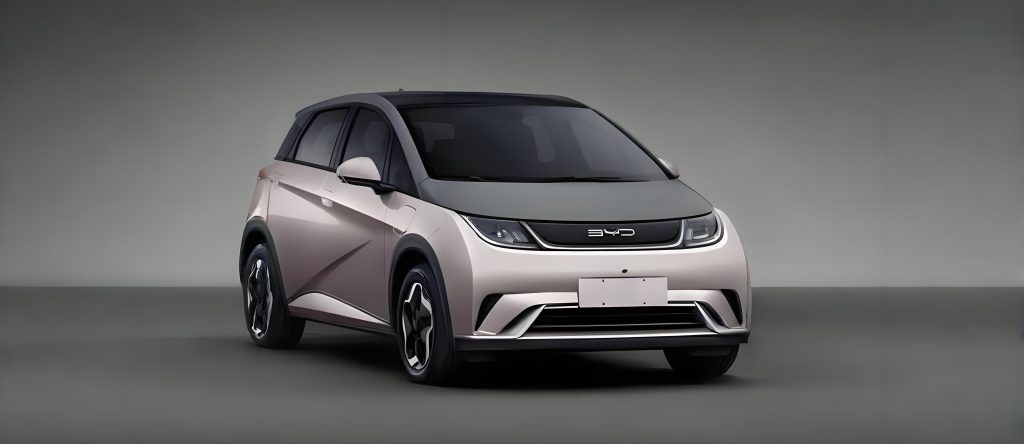
The keyless entry system in a BYD car relies on a sophisticated communication network between various components. When a user presses the micro-switch on the door handle, the smart key control system detects this signal and activates external antennas to transmit a low-frequency signal of 125 kHz. This signal searches for the vehicle’s smart key, which responds by sending a high-frequency signal at 434 kHz. The smart key control system, equipped with a high-frequency receiver module, validates the data. Upon successful authentication, it communicates with the BCM via a Controller Area Network (CAN) to unlock the doors. The entire process can be modeled using signal transmission equations. For instance, the low-frequency signal propagation can be represented as:
$$ S_{LF}(t) = A \sin(2\pi f_{LF} t) $$
where \( S_{LF}(t) \) is the low-frequency signal, \( A \) is the amplitude, and \( f_{LF} = 125 \text{ kHz} \). Similarly, the high-frequency response from the key is:
$$ S_{HF}(t) = B \cos(2\pi f_{HF} t + \phi) $$
with \( f_{HF} = 434 \text{ kHz} \), \( B \) as the amplitude, and \( \phi \) as the phase shift. The CAN communication between the smart key control system and BCM involves differential signaling, where the voltage difference between CAN-H and CAN-L lines determines data integrity. The differential voltage \( V_{diff} \) is given by:
$$ V_{diff} = V_{CAN-H} – V_{CAN-L} $$
In a functional BYD EV, \( V_{diff} \) typically ranges between 2V and 3V during dominant bits, ensuring reliable data exchange. However, any disruption in this communication, such as a fault in the CAN-H line, can lead to system failures, as observed in this case.
The fault manifested through multiple symptoms: keyless entry and remote key functions were inoperative, though the mechanical key could unlock the doors. The vehicle’s key indicator light illuminated normally when the micro-switch was pressed, but the brake pedal activation did not trigger the key indicator flash. Additionally, the one-touch start system failed to initiate the vehicle, with the dashboard displaying “key not detected” and the low-voltage system remaining unpowered. Diagnostic scans revealed a fault code U021487 in the BCM, indicating loss of communication with the smart key system. To systematically analyze these phenomena, I categorized the signal paths and potential failure points, as summarized in the table below:
| Signal Path | Normal Function | Observed Fault | Potential Cause |
|---|---|---|---|
| Micro-switch to Smart Key System | Activates antenna transmission | Key light normal, no door unlock | Path intact, fault downstream |
| Smart Key to BCM via CAN | Sends authentication data | No communication (U021487) | CAN-H line fault |
| BCM to Door Locks/Flash | Executes unlock command | No response | BCM not receiving data |
| Brake Pedal to Key Indicator | Triggers flash via BCM | No flash | Communication break |
From this analysis, the common fault point was identified as the communication link between the smart key control system and the BCM. The key indicator’s normal operation suggested that the micro-switch to key authentication path was functional, ruling out issues with the antennas or the key itself. Similarly, the simultaneous failure of multiple outputs (e.g., door locks and flashes) indicated a centralized problem rather than individual component failures. The absence of key detection during start-up, coupled with the U021487 code, pointed to a CAN bus anomaly. In BYD EV models, the CAN bus operates at a nominal speed of 500 kbps, with message frames following the standard format:
$$ ID + DLC + Data + CRC $$
where \( ID \) is the identifier, \( DLC \) is the data length code, and \( CRC \) is the cyclic redundancy check. A break in the CAN-H line would disrupt the differential voltage, leading to communication errors. The theoretical voltage on CAN-H during transmission can be expressed as:
$$ V_{CAN-H} = V_{common} + \frac{V_{diff}}{2} $$
and for CAN-L:
$$ V_{CAN-L} = V_{common} – \frac{V_{diff}}{2} $$
Here, \( V_{common} \) is the common-mode voltage, typically around 2.5V. If CAN-H is open-circuited, \( V_{diff} \) approaches zero, causing the BCM to misinterpret signals or fail to receive them entirely.
To diagnose the issue, I performed a step-by-step procedure focusing on the CAN communication lines. First, I connected an oscilloscope to the BCM connectors corresponding to the CAN-H (G2K/2) and CAN-L (G2K/3) lines, with the ground reference. Under normal conditions, the CAN waveform should show a symmetrical differential signal. However, the captured waveform exhibited an abnormal pattern on the CAN-H line, characterized by a flatline or noise, while CAN-L appeared relatively intact. The normal and faulty waveforms are compared below:
| Parameter | Normal Waveform | Faulty Waveform |
|---|---|---|
| CAN-H Voltage | Oscillates between 2.5V and 3.5V | Constant low or noisy signal |
| CAN-L Voltage | Oscillates between 2.5V and 1.5V | Near normal with slight distortions |
| Differential Voltage | Stable 2V swing | Near zero or erratic |
| Signal Integrity | Clean transitions | Frequent dropouts |
The mathematical representation of the normal differential signal is a square wave with:
$$ V_{diff}(t) = V_{high} – V_{low} \quad \text{for bit periods} $$
where \( V_{high} \approx 3.5V \) and \( V_{low} \approx 1.5V \). In the faulty case, \( V_{diff}(t) \approx 0 \), indicating an open circuit. To confirm this, I used a calibrated multimeter to measure the resistance of the CAN-H line between the smart key control module and the BCM. The expected resistance for a intact wire is approximately 0Ω, but the measurement showed an infinite resistance, confirming a break in the CAN-H line. This break prevented the smart key system from sending authentication data to the BCM, resulting in the observed failures.
The root cause was traced to a physical break in the CAN-H wiring harness, possibly due to wear or manufacturing defect. After repairing the line, I retested the system: keyless entry and remote functions resumed, the brake pedal activated the key indicator, and the one-touch start powered the low-voltage system successfully. The fault code U021487 was cleared and did not reappear. This case highlights the critical role of CAN communication in BYD EV keyless systems. The overall reliability of the system can be quantified using the signal-to-noise ratio (SNR) for CAN signals:
$$ SNR = 10 \log_{10} \left( \frac{P_{signal}}{P_{noise}} \right) $$
where \( P_{signal} \) is the power of the differential signal and \( P_{noise} \) is the noise power. A broken CAN-H line drastically reduces \( P_{signal} \), leading to a low SNR and communication failure. For future prevention, regular inspections of CAN wiring in BYD car models are recommended, especially in high-vibration areas.
In conclusion, this diagnostic journey underscores the importance of a methodical approach when dealing with keyless entry failures in BYD EV vehicles. By leveraging waveform analysis, resistance measurements, and an understanding of CAN protocols, technicians can efficiently isolate and resolve such issues. The integration of mathematical models and empirical data, as demonstrated, provides a robust framework for troubleshooting complex automotive systems in BYD EV and other electric vehicles.