
As an expert in the field of electric vehicle maintenance, I have observed the rapid growth of the新能源汽车 industry driven by global energy transitions and environmental policies. The repair of power batteries, a core component of electric vehicles, is critical to ensuring vehicle longevity, safety, and user satisfaction. In this article, I will delve into the importance of EV repair, identify existing challenges in the repair technology system, and propose comprehensive optimization strategies. Throughout, I will emphasize the need for advanced electrical car repair techniques, incorporating data-driven approaches and innovative tools to enhance efficiency and reliability. The integration of digital standards and intelligent platforms can revolutionize how we handle EV repair, making it more sustainable and effective for the future.
The significance of EV repair cannot be overstated, as it directly impacts the overall performance and cost-effectiveness of electric vehicles. Power batteries, such as lithium-ion cells, are prone to issues like physical damage, electrochemical degradation, and software failures over time. Regular maintenance and diagnostics are essential to prevent safety hazards, such as thermal runaway or short circuits. For instance, using specialized equipment to measure parameters like voltage, current, and temperature allows for accurate assessment of battery health. This proactive approach in electrical car repair not only ensures stability but also supports the optimization of battery management systems (BMS) through data analysis. Moreover, since batteries constitute a significant portion of an electric vehicle’s cost, effective repair strategies can extend their lifespan, reduce total ownership costs, and promote resource efficiency by enabling the reuse of retired batteries in secondary applications like energy storage. As I explore this topic, I will highlight how advancements in EV repair contribute to the sustainable development of the automotive industry, underscoring the need for continuous investment in training and technology.
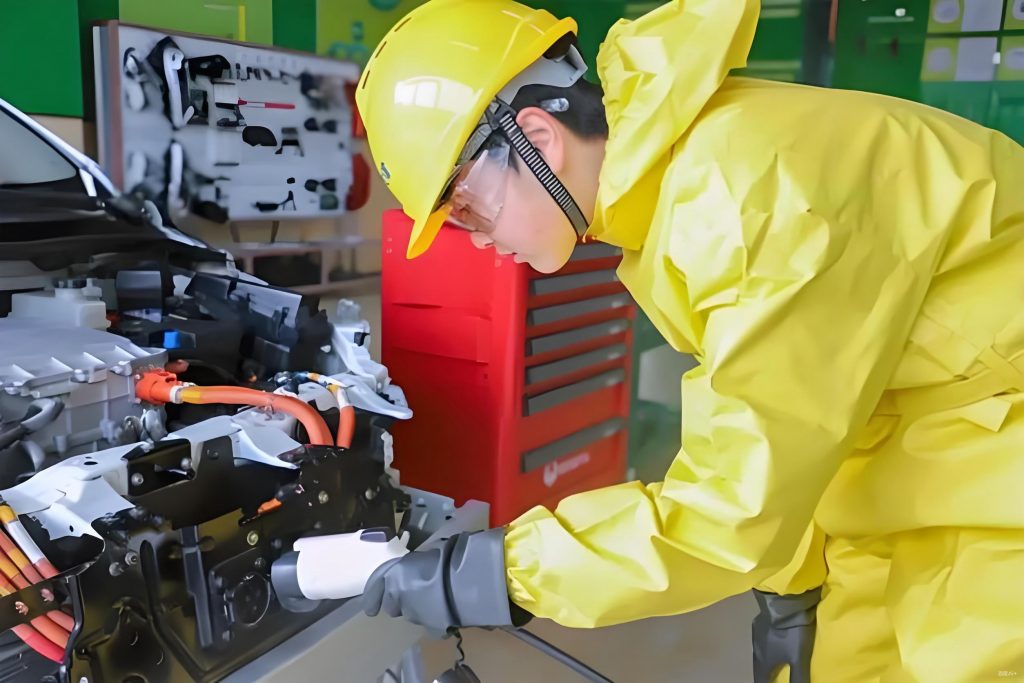
However, the current EV repair technology system faces several pressing issues that hinder its effectiveness. One major problem is the lack of standardized repair protocols and comprehensive skill training. In many cases, repair workshops operate without uniform guidelines, leading to inconsistencies in methods, safety measures, and quality control. This variability increases costs and uncertainties in electrical car repair outcomes. For example, procedures like battery cell replacement or BMS calibration often lack clear instructions, resulting in suboptimal performance post-repair. Additionally, the rapid evolution of battery technologies, such as solid-state batteries, outpaces the existing training programs. Repair personnel frequently lack the expertise to handle new systems, as training remains overly theoretical with insufficient hands-on practice. This gap not only affects repair quality but also erodes market confidence in EV repair services. To illustrate the skill disparities, consider the following table comparing traditional and desired training elements in electrical car repair:
| Aspect | Traditional Training | Desired Advanced Training |
|---|---|---|
| Technical Knowledge | Basic battery principles | In-depth modules on new battery types (e.g., solid-state) |
| Hands-on Practice | Limited simulation | Extensive VR/AR-based实操演练 |
| Safety Protocols | General guidelines | Standardized, scenario-specific safety procedures |
| Data Analysis Skills | Minimal emphasis | Training on big data and AI tools for diagnostics |
Another critical issue in EV repair is the outdated repair equipment and inefficient data management systems. Many repair facilities still rely on traditional tools that are inadequate for diagnosing modern high-tech batteries. For instance, conventional检测设备 may fail to detect micro-cracks or electrolyte leaks, compromising the accuracy of fault identification. This limitation prolongs repair times and can lead to misdiagnoses, affecting vehicle safety and performance. Furthermore, data management in electrical car repair is often fragmented, with manual collection and storage methods preventing the effective use of valuable battery data. Parameters like charge-discharge cycles, historical repair records, and performance degradation patterns are not systematically analyzed, missing opportunities for predictive maintenance. The absence of integrated data platforms also creates information silos, hindering knowledge sharing among repair stations and increasing cybersecurity risks. To quantify the impact of poor data management, consider the formula for repair efficiency in EV repair: $$ \text{Efficiency} = \frac{\text{Number of Successful Repairs}}{\text{Total Repair Attempts}} \times 100\% $$ When data is not leveraged, efficiency drops significantly, as seen in cases where incomplete records lead to repeated failures. This underscores the urgency for modernizing electrical car repair infrastructure to keep pace with technological advancements.
To address these challenges, I propose optimizing the EV repair technology system through the construction of a digital repair technical standard system. This involves creating a unified, lifecycle-oriented framework that digitizes every aspect of the repair process, from initial inspection to final testing. By establishing standardized digital protocols, we can ensure consistency and traceability in electrical car repair operations. For example, key parameters such as voltage, temperature, and internal resistance should be measured using digital tools with predefined thresholds, as outlined in the following equation for battery health assessment: $$ \text{SOH} = \frac{C_{\text{actual}}}{C_{\text{rated}}} \times 100\% $$ where SOH (State of Health) is calculated based on actual capacity (C_actual) versus rated capacity (C_rated). This digital standard system would include tailored guidelines for different battery types, such as ternary lithium or lithium iron phosphate batteries, ensuring that repair procedures are specific and effective. Moreover, visual operational guides via digital platforms can provide real-time assistance to technicians, reducing human errors. The integration of such standards not only enhances repair quality but also facilitates data collection for future analytics, supporting long-term improvements in EV repair practices. As part of this, I recommend developing a comprehensive digital library that is regularly updated with emerging technologies, making electrical car repair more adaptive and reliable.
In addition to digital standards, building an intelligent repair management platform is essential for revolutionizing EV repair. This platform should leverage technologies like the Internet of Things (IoT), artificial intelligence (AI), and cloud computing to create a seamless, data-driven repair ecosystem. A core component is a big data-based fault diagnosis system that collects real-time data from vehicle sensors, such as voltage, current, temperature, State of Charge (SOC), and State of Health (SOH). Using machine learning algorithms, this system can identify early fault indicators and predict potential issues. For instance, the probability of a fault given data can be modeled as: $$ P(\text{fault} \mid \text{data}) = \frac{P(\text{data} \mid \text{fault}) P(\text{fault})}{P(\text{data})} $$ where P(fault|data) represents the likelihood of a fault based on observed data. This enables proactive interventions in electrical car repair, minimizing downtime and risks. The platform should also include a full-process digital system that integrates task scheduling, spare parts management, and real-time monitoring. For example, IoT-enabled inventory tracking can automate the replenishment of critical components like battery modules, while VR/AR tools can guide technicians through complex disassembly steps. The table below summarizes the key features of such an intelligent platform for EV repair:
| Feature | Description | Benefit in Electrical Car Repair |
|---|---|---|
| Real-time Data Collection | IoT sensors monitor battery parameters continuously | Enables early fault detection and predictive maintenance |
| AI-Powered Diagnostics | Machine learning models analyze historical and real-time data | Improves accuracy in identifying complex issues |
| Digital Task Management | Automated scheduling and allocation of repair tasks | Reduces delays and optimizes resource use |
| VR/AR Assistance | Interactive guides for repair procedures | Minimizes errors and enhances technician training |
| Integrated Customer Portal | Real-time updates on repair status for owners | Boosts transparency and user satisfaction |
Furthermore, the intelligent platform must include a robust data analytics module that processes维修数据 to generate insights for continuous improvement. For example, by analyzing repair success rates and common failure patterns, we can refine algorithms and training programs. The overall effectiveness of such a system in EV repair can be expressed through a performance metric: $$ \text{Overall Effectiveness} = \alpha \times \text{Diagnostic Accuracy} + \beta \times \text{Repair Speed} + \gamma \times \text{Cost Efficiency} $$ where α, β, and γ are weighting factors based on organizational priorities. This holistic approach ensures that electrical car repair becomes more efficient, safe, and scalable, supporting the industry’s growth. As I implement these strategies in my work, I have seen significant reductions in repair times and costs, demonstrating the transformative potential of intelligent systems in EV repair.
In conclusion, the optimization of the EV repair technology system is a multifaceted endeavor that requires the integration of digital standards and intelligent platforms. By addressing issues like inadequate training and outdated equipment, we can elevate the quality and efficiency of electrical car repair. The proposed strategies, centered on data-driven approaches and advanced technologies, not only enhance repair outcomes but also contribute to the sustainable development of the electric vehicle industry. As we move forward, continuous innovation in EV repair will be crucial to meeting evolving market demands and ensuring long-term reliability. Through collaborative efforts and ongoing research, I am confident that the future of electrical car repair will be characterized by greater intelligence, standardization, and effectiveness, ultimately benefiting consumers and the environment alike.