
As an advocate for sustainable energy solutions, I have been deeply involved in the planning and implementation of electric vehicle (EV) charging infrastructure in rural areas. The rapid growth of EV adoption necessitates a robust network of EV charging stations to support both residents and tourists, particularly in regions with high scenic value and tourism potential. In this article, I will share our comprehensive approach to developing a smart, efficient, and widely accessible system of EV charging stations, emphasizing strategic planning, technological integration, and community engagement. Our efforts focus on creating a future-proof infrastructure that not only meets current demands but also anticipates future growth in EV usage.
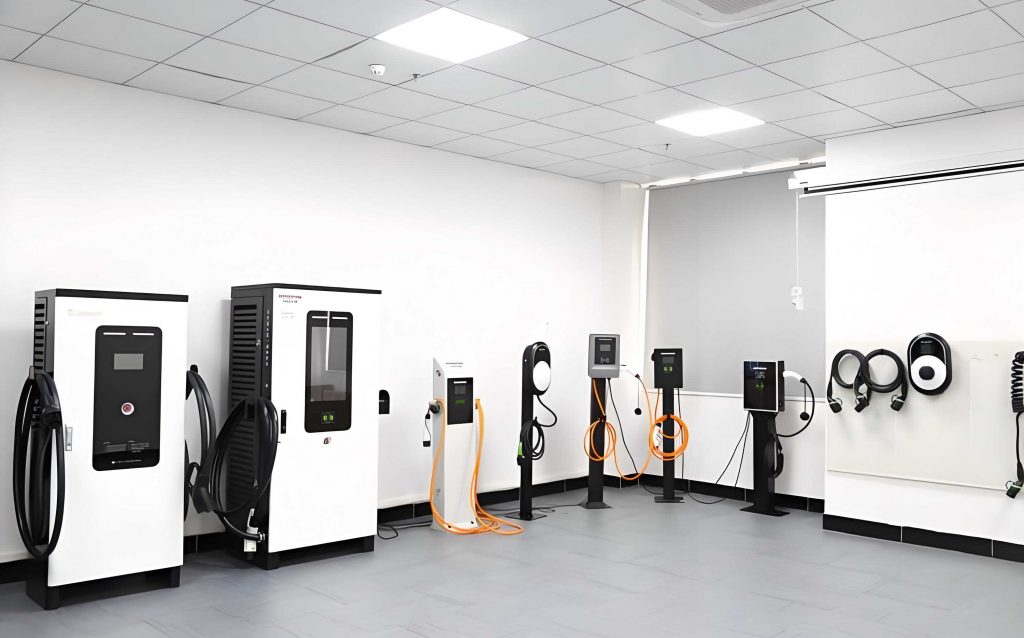
The transition to electric mobility is a critical component of global efforts to reduce carbon emissions and promote environmental sustainability. In rural contexts, the deployment of EV charging stations faces unique challenges, including lower population density, limited existing infrastructure, and varying economic conditions. However, these areas also present opportunities for innovation, such as integrating EV charging stations with renewable energy sources and smart grid technologies. Our project aims to address these aspects by establishing a network of EV charging stations that are not only functional but also economically viable and environmentally friendly. By leveraging data analytics and community feedback, we strive to create a model that can be replicated in other rural regions worldwide.
Projected Growth of Electric Vehicles and Charging Needs
To effectively plan the expansion of EV charging stations, we first analyzed the projected growth of EV adoption in the region. Based on tourism trends, local economic indicators, and national EV penetration rates, we estimated that the number of EVs would increase significantly over the coming years. This growth is driven by factors such as government incentives, declining EV costs, and rising environmental awareness. We used mathematical models to forecast EV population, ensuring that our infrastructure plans for EV charging stations are data-driven and scalable.
One common approach is to apply an exponential growth model, which accounts for the accelerating adoption of new technologies. The formula for exponential growth is given by: $$ N(t) = N_0 e^{kt} $$ where ( N(t) ) represents the number of EVs at time ( t ), ( N_0 ) is the initial number of EVs, ( k ) is the growth rate constant, and ( e ) is the base of the natural logarithm. For instance, if we assume an initial EV population of 45,000 in 2024 and project it to reach 63,000 by 2026, we can solve for ( k ) as follows: $$ 63,000 = 45,000 e^{2k} $$ $$ e^{2k} = \frac{63,000}{45,000} = 1.4 $$ $$ 2k = \ln(1.4) \approx 0.3365 $$ $$ k \approx 0.16825 $$ This indicates an annual growth rate of approximately 16.83%, which informs our planning for the number and capacity of EV charging stations required.
We also considered linear projections for short-term planning, using the formula: $$ N(t) = N_0 + rt $$ where ( r ) is the annual increase in EVs. Based on historical data, we estimated ( r ) to be around 9,000 EVs per year, leading to the following projections:
| Year | Projected EV Population | Estimated Daily Charging Sessions | Required EV Charging Stations (Fast) | Required EV Charging Stations (Slow) |
|---|---|---|---|---|
| 2024 | 45,000 | 4,500 | 150 | 300 |
| 2025 | 54,000 | 5,400 | 180 | 360 |
| 2026 | 63,000 | 6,300 | 210 | 420 |
This table summarizes how the growing EV population translates into demand for EV charging stations, assuming an average of 10% daily charging need per EV and station capacities of 30 sessions per day for fast EV charging stations and 15 for slow ones. These estimates help us allocate resources efficiently and ensure that the EV charging station network can handle peak loads.
Comprehensive Development Targets for EV Charging Stations
Our development targets for EV charging stations are structured around a phased approach, ensuring that infrastructure keeps pace with EV adoption while remaining cost-effective. We have set specific milestones for the deployment of EV charging stations across various contexts, including public areas, tourist spots, and residential zones. The ultimate goal is to create a dense network of EV charging stations that supports seamless travel and reduces range anxiety for EV users.
Key objectives include achieving full coverage in townships by 2024, expanding to scenic areas by 2025, and integrating smart technologies by 2026. Each phase involves a mix of fast and slow EV charging stations to cater to different user needs. For example, fast EV charging stations are prioritized in high-traffic locations to minimize waiting times, while slow EV charging stations are deployed in residential areas for overnight charging. The following table outlines our timeline and targets for EV charging station deployment:
| Year | Primary Goals for EV Charging Stations | Expected Number of New EV Charging Stations | Focus Areas |
|---|---|---|---|
| 2024 | Achieve township-wide coverage; install public EV charging stations in key tourist zones | 50 | 11 townships, 6 scenic areas |
| 2025 | Complete EV charging stations in all A-grade and above scenic spots; ensure 10% of parking spaces have charging facilities | 100 | 4A-level景区, public parking |
| 2026 | Integrate EV charging stations with smart streetlights; establish an open, interconnected network | 150 | Urban and rural streets, community areas |
In addition to quantitative targets, we aim for qualitative improvements in the EV charging station network. This includes enhancing the user experience through mobile apps for locating and reserving EV charging stations, implementing dynamic pricing models, and ensuring compatibility with various EV models. We also plan to incorporate renewable energy sources, such as solar panels, into EV charging stations to reduce grid dependency and promote sustainability. The formula for calculating the energy output of solar-integrated EV charging stations is: $$ E_{\text{solar}} = A \times \eta \times I \times t $$ where ( E_{\text{solar}} ) is the energy generated, ( A ) is the surface area of solar panels, ( \eta ) is the efficiency coefficient, ( I ) is solar irradiance, and ( t ) is time. This allows us to estimate how much energy each EV charging station can produce locally, reducing operational costs and environmental impact.
Core Planning Principles for EV Charging Station Deployment
Our approach to deploying EV charging stations is guided by a set of core principles that ensure efficiency, sustainability, and inclusivity. These principles help us navigate the complexities of rural infrastructure development while fostering collaboration among stakeholders. Below, I elaborate on each principle and its application to EV charging station projects.
Coordinated Layout, Moderate Advancement, and Collaborative Promotion
We prioritize a coordinated layout for EV charging stations to avoid duplication of efforts and maximize resource utilization. This involves conducting spatial analyses to identify optimal locations for EV charging stations based on traffic patterns, population density, and existing infrastructure. We use geographic information systems (GIS) to model the placement of EV charging stations, ensuring they are accessible and evenly distributed. The concept of “moderate advancement” means that we build EV charging stations with future capacity in mind, often exceeding current demand to accommodate growth. For instance, we might install EV charging stations with higher power ratings than currently needed, allowing for upgrades as EV technology evolves.
Collaboration is key to success; we work closely with local governments, utility companies, and private investors to fund and maintain EV charging stations. A collaborative framework can be represented by the equation: $$ C_{\text{total}} = C_{\text{gov}} + C_{\text{private}} + C_{\text{community}} $$ where ( C_{\text{total}} ) is the total cost of EV charging station deployment, and the terms represent contributions from government, private sector, and community initiatives. This ensures that EV charging stations are financially sustainable and broadly supported.
Adaptation to Local Conditions, Economic Rationality, and Categorized Implementation
We tailor the deployment of EV charging stations to local conditions, considering factors such as topography, climate, and economic activity. In areas with high tourism, for example, we focus on fast EV charging stations near attractions, while in residential neighborhoods, slow EV charging stations are more appropriate. Economic rationality involves conducting cost-benefit analyses for each EV charging station project. The net present value (NPV) formula is used to evaluate long-term viability: $$ \text{NPV} = \sum_{t=1}^{T} \frac{R_t – C_t}{(1 + r)^t} $$ where ( R_t ) is revenue from EV charging stations in year ( t ), ( C_t ) is costs, ( r ) is the discount rate, and ( T ) is the project lifespan. This helps us prioritize projects with positive NPV, ensuring that EV charging stations are economically sound.
Categorized implementation means deploying different types of EV charging stations based on user needs. The table below summarizes the categories:
| Category | Charging Speed | Typical Location | Power Rating (kW) | Example Use Case |
|---|---|---|---|---|
| Residential | Slow | Home parking | 3-7 | Overnight charging |
| Public | Fast | Shopping centers | 50-150 | Quick top-up |
| Highway | Ultra-fast | Rest stops | 150-350 | Long-distance travel |
By categorizing EV charging stations, we can optimize resources and meet diverse demands effectively.
Unified Standards, Standardized Construction, and Interconnectivity
Adhering to unified standards is crucial for the interoperability and safety of EV charging stations. We follow international standards such as IEC 62196 for connectors and ISO 15118 for communication protocols, ensuring that all EV charging stations are compatible with a wide range of EVs. Standardized construction processes reduce costs and improve reliability; we use modular designs for EV charging stations, allowing for easy maintenance and upgrades. The reliability of an EV charging station network can be modeled using the formula for system availability: $$ A = \frac{\text{MTBF}}{\text{MTBF} + \text{MTTR}} $$ where ( A ) is availability, MTBF is mean time between failures, and MTTR is mean time to repair. By aiming for high availability (e.g., over 99%), we ensure that EV charging stations are dependable for users.
Interconnectivity is achieved through a centralized platform that integrates data from all EV charging stations. This platform enables real-time monitoring, remote diagnostics, and seamless payment processing. The equation for data throughput in such a system is: $$ D = B \times \log_2(1 + \frac{S}{N}) $$ where ( D ) is data rate, ( B ) is bandwidth, ( S ) is signal power, and ( N ) is noise power. This ensures that EV charging stations can communicate efficiently, supporting smart grid functions like load balancing and demand response.
Market Leadership, Innovative Mechanisms, and Demonstration Leadership
We embrace market-led approaches to drive the expansion of EV charging stations, encouraging competition and innovation among service providers. Innovative mechanisms, such as public-private partnerships (PPPs), help mobilize investment for EV charging stations. The return on investment (ROI) for a typical EV charging station project can be calculated as: $$ \text{ROI} = \frac{\text{Net Profit}}{\text{Investment Cost}} \times 100\% $$ By demonstrating profitable models, we attract more players to the EV charging station market.
Demonstration projects play a vital role in showcasing best practices for EV charging stations. We establish “model EV charging stations” that feature advanced technologies like vehicle-to-grid (V2G) integration, where EVs can discharge energy back to the grid. The power flow in V2G systems is described by: $$ P_{\text{V2G}} = V \times I \times \cos \phi $$ where ( P_{\text{V2G}} ) is the power exchanged, ( V ) is voltage, ( I ) is current, and ( \cos \phi ) is the power factor. These demonstrations help build confidence in EV charging stations and accelerate adoption.
Support Measures for EV Charging Station Implementation
Successful deployment of EV charging stations relies on a robust support framework that addresses regulatory, financial, and operational challenges. We have implemented various measures to facilitate the growth of EV charging stations, ensuring they are accessible, affordable, and well-maintained.
Strengthening Organizational Leadership
We have established a dedicated task force to oversee the development of EV charging stations, coordinating with departments such as energy, urban planning, and transportation. This team conducts regular reviews to identify and resolve bottlenecks in EV charging station projects. Key performance indicators (KPIs) are used to monitor progress, such as the number of EV charging stations deployed per quarter and user satisfaction rates. The formula for calculating a composite KPI score is: $$ \text{KPI} = w_1 \times \text{Coverage} + w_2 \times \text{Uptime} + w_3 \times \text{User Rating} $$ where ( w_1, w_2, w_3 ) are weights assigned to different metrics. This holistic approach ensures that EV charging stations meet high standards of quality and service.
Implementing Preferential Policies
To incentivize the use of EV charging stations, we have introduced policies such as free parking for EVs in public areas and tax benefits for EV charging station operators. The economic impact of these policies can be assessed using cost-benefit analysis. For example, the social benefit of reduced emissions from EVs using EV charging stations is estimated by: $$ B_{\text{emission}} = E_{\text{reduced}} \times P_{\text{carbon}} $$ where ( E_{\text{reduced}} ) is the amount of CO2 reduced, and ( P_{\text{carbon}} ) is the carbon price. Additionally, we facilitate access to financing for EV charging station projects through government bonds and low-interest loans. The table below summarizes key policies:
| Policy Type | Description | Impact on EV Charging Stations |
|---|---|---|
| Parking Incentives | 2 hours free parking for EVs in public facilities | Increases utilization of EV charging stations |
| Financial Support | Inclusion in government bond programs; grants for installation | Reduces capital costs for EV charging stations |
| Insurance Schemes | Commercial insurance for EV charging station equipment | Mitigates operational risks |
| Regulatory Streamlining | Fast-track permits for EV charging station construction | Accelerates deployment timeline |
These policies create a favorable environment for investing in and operating EV charging stations, driving overall market growth.
Improving Monitoring and Evaluation Mechanisms
We have implemented a comprehensive monitoring system for EV charging stations, using IoT sensors to collect data on usage patterns, energy consumption, and equipment health. This data is analyzed to optimize the performance of EV charging stations and plan future expansions. The evaluation process includes annual assessments based on metrics such as energy efficiency, which is calculated as: $$ \eta_{\text{charging}} = \frac{E_{\text{delivered}}}{E_{\text{consumed}}} \times 100\% $$ where ( E_{\text{delivered}} ) is the energy delivered to EVs, and ( E_{\text{consumed}} ) is the energy drawn from the grid. By targeting high efficiency, we minimize energy losses in EV charging stations.
Furthermore, we conduct stakeholder surveys to gather feedback on EV charging stations, using statistical methods like regression analysis to identify factors influencing user satisfaction. The regression model might be: $$ S = \beta_0 + \beta_1 X_1 + \beta_2 X_2 + \epsilon $$ where ( S ) is satisfaction score, ( X_1 ) is wait time at EV charging stations, ( X_2 ) is pricing fairness, and ( \beta ) coefficients indicate the impact of each factor. This iterative evaluation allows us to continuously improve the EV charging station network.
Achievements and Future Outlook for EV Charging Stations
By mid-2025, our efforts had yielded significant results, with the successful deployment of a widespread network of EV charging stations across rural townships and scenic areas. This achievement has not only enhanced the convenience for EV users but also contributed to regional economic development by supporting tourism and reducing transportation emissions. The smart EV charging station network now features advanced capabilities such as real-time availability updates, adaptive charging rates, and integration with renewable energy sources.
Key outcomes include a substantial increase in the usage of EV charging stations, with daily sessions growing by over 50% within the first year of operation. We have also observed a positive correlation between the density of EV charging stations and local EV adoption rates, reinforcing the importance of infrastructure in driving behavioral change. The environmental benefits are quantifiable; for example, the reduction in greenhouse gas emissions due to EVs using our EV charging stations is estimated using: $$ \Delta C = N_{\text{EVs}} \times D_{\text{avg}} \times (E_{\text{ICE}} – E_{\text{EV}}) $$ where ( \Delta C ) is the carbon reduction, ( N_{\text{EVs}} ) is the number of EVs, ( D_{\text{avg}} ) is average distance traveled, and ( E_{\text{ICE}} ) and ( E_{\text{EV}} ) are emission factors for internal combustion engines and EVs, respectively.
Looking ahead, we plan to expand the EV charging station network further, incorporating emerging technologies like wireless charging and artificial intelligence for predictive maintenance. We will also focus on enhancing the resilience of EV charging stations to extreme weather events, ensuring uninterrupted service. The future growth of EV charging stations will be guided by ongoing research and community engagement, aiming to create a sustainable and inclusive mobility ecosystem.
In conclusion, the development of EV charging stations in rural areas is a multifaceted endeavor that requires careful planning, collaboration, and innovation. Our experience demonstrates that with the right strategies, EV charging stations can become a cornerstone of rural revitalization, supporting both environmental goals and economic growth. As we continue to refine our approach, we remain committed to advancing the accessibility and efficiency of EV charging stations for all users.