
As I reflect on the past decade, the transformation in the electric vehicle (EV) landscape has been nothing short of revolutionary. Back in 2015, the global focus was on kickstarting the adoption of new energy vehicles, with sales hovering around a modest figure. Fast forward to today, and we are witnessing an era where EVs have become mainstream, supported by an ever-expanding infrastructure of EV charging stations. This shift isn’t just about numbers; it’s about the quality and efficiency of these charging points, which are now pivotal to the sustainable mobility ecosystem. In this article, I will delve into how EV charging stations have evolved from a mere quantitative race to a qualitative leap, exploring the data, trends, and future prospects that define this dynamic industry.
The journey began with a surge in EV adoption, driven by environmental concerns and technological advancements. I recall when the sales of new energy vehicles were just starting to gain traction, but today, the figures are staggering. For instance, from early 2015 to the first three quarters of 2025, the global sales of EVs have multiplied exponentially, highlighting a rapid scale-up in production and consumer acceptance. This growth wouldn’t have been possible without the parallel development of EV charging stations, which have transitioned from being sparse amenities to ubiquitous necessities. Initially, the emphasis was on deploying as many charging points as possible to address range anxiety, but now, the focus has shifted to enhancing their reliability, speed, and integration into broader energy systems.
To put this into perspective, let’s examine the quantitative milestones. During the “14th Five-Year Plan” period, the expansion of EV charging stations reached unprecedented levels, establishing the largest charging network globally. A key metric that stands out is the ratio of vehicles to charging piles, which has improved dramatically. By mid-2025, the total number of charging piles surpassed a remarkable threshold, with public and private installations contributing to a near-balanced vehicle-to-pile ratio. This achievement marks a critical turning point, as it signifies that the infrastructure is catching up with demand, paving the way for a more seamless EV experience. However, this quantitative success has unveiled new challenges, such as the need for higher efficiency and safety standards, which I will explore in detail.
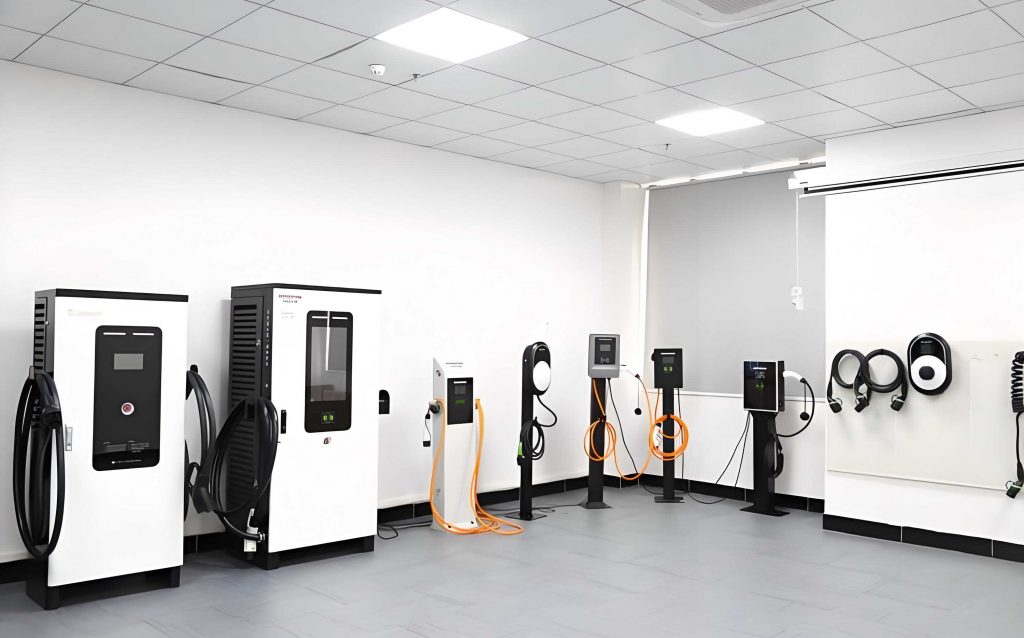
As I analyze the current state, it’s evident that the proliferation of EV charging stations has outpaced traditional refueling points. For example, the number of public charging stations now dwarfs that of gasoline stations, providing a robust backbone for long-distance travel and urban mobility. This isn’t just a statistic; it’s a testament to how EV charging stations have become integral to our daily lives. But with this growth comes the imperative to focus on quality. The early days were characterized by a rush to install basic chargers, often leading to issues like slow charging speeds and inconsistent performance. Today, the industry is prioritizing innovations like high-power charging, which can reduce charging times to mere minutes, akin to refueling a conventional car. In cities like Beijing and Chongqing, ambitious projects are underway to deploy supercharging stations that promise to redefine convenience.
The qualitative evolution of EV charging stations is driven by several factors, including technological iterations, optimized application scenarios, and the refinement of related standards. I’ve observed that what started as a niche market dominated by a few players has blossomed into a diverse ecosystem involving local governments, private enterprises, and international collaborations. This collaboration is crucial for pushing the boundaries of what EV charging stations can achieve. For instance, they are no longer just energy replenishment points; they are becoming smart nodes that connect vehicles to the grid, enabling functions like virtual power plants. This integration into the national power system highlights their role in stabilizing energy supply and promoting renewable sources, which I find particularly exciting for the future of low-carbon transportation.
To better understand the quantitative backdrop, let’s look at some key data points in the form of tables. The following table summarizes the growth in EV sales and the corresponding expansion of EV charging stations over the past decade, illustrating the correlation between vehicle adoption and infrastructure development.
| Year | EV Sales (Millions) | Cumulative EV Charging Stations (Millions) | Annual Growth Rate of Charging Stations (%) |
|---|---|---|---|
| 2015 | 0.0331 | ~0.1 | — |
| 2020 | ~3.0 | ~5.0 | ~40% |
| 2025 (Jan-Sep) | 11.228 | 14.4 | ~50% |
From this table, it’s clear that the number of EV charging stations has grown exponentially, mirroring the rise in EV sales. The annual growth rate, calculated using the formula for compound annual growth rate (CAGR), can be expressed as: $$ \text{CAGR} = \left( \frac{\text{Ending Value}}{\text{Beginning Value}} \right)^{\frac{1}{n}} – 1 $$ where \( n \) is the number of years. For instance, from 2015 to 2025, the CAGR for EV charging stations exceeds 30%, underscoring the rapid infrastructure rollout.
Another critical aspect is the distribution between public and private EV charging stations. As of 2025, the split reveals a dominance of private installations, which cater to home and workplace charging, while public stations support broader accessibility. The following table breaks down this distribution, highlighting the role of each type in achieving a balanced vehicle-to-pile ratio.
| Type of EV Charging Station | Number (Millions) | Percentage of Total (%) |
|---|---|---|
| Public EV Charging Stations | 4.08 | ~28.3% |
| Private EV Charging Stations | 10.32 | ~71.7% |
| Total | 14.4 | 100% |
The vehicle-to-pile ratio, a key indicator of infrastructure adequacy, can be modeled using the formula: $$ \text{Vehicle-to-Pile Ratio} = \frac{\text{Number of EVs}}{\text{Number of Charging Piles}} $$ In 2025, this ratio approached 1:1, indicating that for every EV, there is nearly one charging pile available. This is a significant milestone, as it reduces waiting times and enhances user convenience. However, achieving this ratio required substantial investments and policy support, which I will discuss later.
As the industry shifts from quantity to quality, the focus is on improving the efficiency and intelligence of EV charging stations. I’ve seen how technological advancements, such as high-power charging and bidirectional charging, are transforming these stations into multifunctional hubs. For example, the power output of modern EV charging stations can be described by the formula: $$ P = V \times I $$ where \( P \) is power in kilowatts (kW), \( V \) is voltage, and \( I \) is current. High-power stations now deliver over 350 kW, enabling charging sessions that last less than 10 minutes. This is a game-changer for adoption, as it addresses one of the biggest pain points: time. Moreover, the integration of EV charging stations with smart grids allows for demand response, where they can feed energy back into the grid during peak hours, acting as distributed energy resources.
The policy landscape has been instrumental in this evolution. Recently, a joint action plan by national authorities set ambitious targets for the next few years, aiming to double the service capacity of EV charging stations by 2027. This plan, backed by substantial investments, is not just about numbers; it emphasizes quality upgrades, such as standardizing connectors and enhancing cybersecurity. As I interpret these policies, they signal a broader industrial revolution, where EV charging stations will play a central role in the energy transition. The following table outlines the key targets and their implications for the market.
| Indicator | 2025 Baseline | 2027 Target | Expected Impact |
|---|---|---|---|
| Total EV Charging Stations (Millions) | 14.4 | 28.0 | Near-universal access |
| Supercharging Stations (Units) | ~2,000 | ~10,000 | Reduced charging times |
| Investment (Billion USD) | ~20 | ~40 | Market expansion and innovation |
The growth in EV charging stations is not without its challenges. As a observer, I’ve noted that market dynamics are shifting, with increased competition among manufacturers and service providers. The influx of investment, estimated at over 200 billion USD, is driving a restructuring of the industry, where only those focusing on quality and innovation will thrive. For instance, the efficiency of an EV charging station can be evaluated using metrics like uptime and energy loss, which can be quantified as: $$ \text{Efficiency} = \frac{\text{Useful Energy Output}}{\text{Energy Input}} \times 100\% $$ In high-quality stations, this efficiency exceeds 95%, minimizing waste and operational costs. Additionally, the lifecycle cost of EV charging stations, including maintenance and upgrades, is becoming a critical factor for stakeholders.
Looking ahead, the future of EV charging stations is intertwined with broader trends in digitalization and sustainability. I envision a world where these stations are not just points for refueling but hubs for data exchange and community engagement. For example, the concept of virtual power plants, where multiple EV charging stations aggregate to provide grid services, can be modeled using optimization algorithms. One such formula for maximizing grid stability is: $$ \max \sum_{t=1}^{T} \left( P_{\text{grid},t} – P_{\text{charge},t} \right) $$ where \( P_{\text{grid},t} \) is grid power at time \( t \), and \( P_{\text{charge},t} \) is the charging power. This approach highlights how EV charging stations can contribute to a resilient energy system.
In conclusion, the evolution of EV charging stations from a quantitative pursuit to a qualitative transformation is a testament to human ingenuity and collaborative effort. As I reflect on this journey, it’s clear that we are only at the beginning. The next decade will likely see even more innovations, such as wireless charging and AI-driven management, making EV charging stations smarter and more integrated. For consumers, this means a future where charging an EV is as effortless as using a smartphone, and for the planet, it signifies a major step toward decarbonization. The data, formulas, and tables presented here only scratch the surface, but they underscore the importance of continuous improvement in this vital sector.
Ultimately, the story of EV charging stations is one of adaptation and growth. From humble beginnings to becoming the backbone of electric mobility, they have proven that quantity alone is not enough; quality is the true enabler of progress. As policies and technologies converge, I am optimistic that EV charging stations will continue to evolve, driving us toward a cleaner, more efficient future. The journey may have started with a race for numbers, but it is culminating in a quest for excellence that benefits everyone.