
As the global energy landscape shifts towards sustainability and environmental consciousness, electric vehicles (EVs) have emerged as a pivotal component of future transportation due to their zero emissions and low noise characteristics. The widespread adoption of EVs relies heavily on a robust charging infrastructure, and the EV charging station serves as the core energy supply point. In my analysis, the intelligent management of these EV charging stations is critical to enhancing user experience and operational efficiency. I will explore the key technologies, user interface designs, and effective strategies that underpin intelligent management systems for EV charging stations. By integrating advanced technologies, these systems can achieve efficient and smart management, providing a foundation for the continued growth of the EV industry. Throughout this discussion, I will emphasize the importance of EV charging station optimization, incorporating tables and formulas to summarize key concepts and relationships.
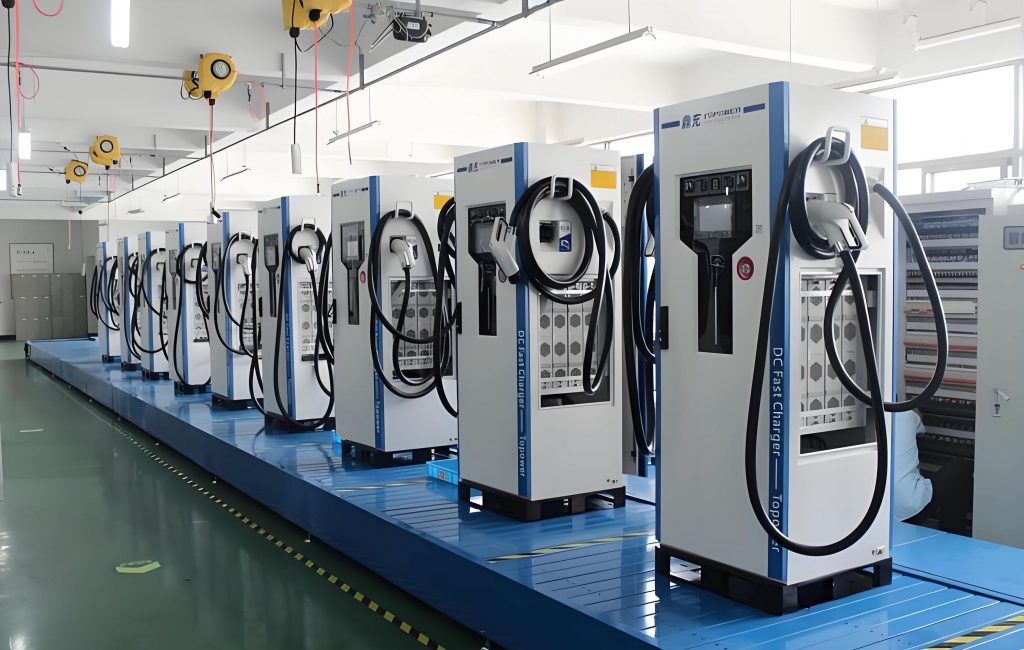
In my view, the research background for intelligent management of EV charging stations stems from the rapid increase in EV ownership, which demands higher reliability and efficiency from charging facilities. I believe that intelligent systems are essential for monitoring the operational status of EV charging stations in real-time, enabling remote diagnostics and maintenance, which significantly improves reliability. Moreover, by leveraging data analytics and algorithms, these systems can accurately predict charging demand, optimize charging rates, and reduce user wait times. This not only enhances service quality but also lowers operational costs. From a user perspective, intelligent management offers personalized services such as smart payments, reservation capabilities, and real-time feedback, thereby increasing user loyalty and satisfaction. Ultimately, I see the intelligent management of EV charging stations as a key driver for sustainable transportation development.
I will now delve into the core technologies that form the backbone of intelligent management systems for EV charging stations. These technologies include IoT-based management, big data analytics, and intelligent charging algorithms, each playing a vital role in ensuring the efficiency and reliability of EV charging stations.
Key Technologies for Intelligent Management of EV Charging Stations
In my examination, IoT technology is fundamental to the remote monitoring and management of EV charging stations. By connecting EV charging stations to cloud servers via IoT sensors, real-time data on parameters such as current, voltage, and charging speed can be collected and transmitted. This allows for continuous monitoring and proactive maintenance, reducing downtime. For instance, IoT-enabled EV charging stations can adjust charging strategies based on grid load fluctuations, ensuring stability. I have summarized the key IoT parameters in the table below to illustrate the data flow in an intelligent EV charging station system.
| Parameter | Description | Impact on Management |
|---|---|---|
| Current (I) | Measured in amperes (A), indicates the flow of electricity | Helps in load balancing and preventing overloads |
| Voltage (V) | Measured in volts (V), represents electrical potential | Ensures safe charging conditions and equipment longevity |
| Charging Speed | Rate of energy transfer in kW | Optimizes user wait times and energy efficiency |
| Temperature | Sensor data in degrees Celsius | Prevents overheating and potential hazards |
Furthermore, I consider big data analytics to be crucial for extracting insights from the vast amounts of data generated by EV charging stations. By analyzing historical charging data, patterns in usage and user behavior can be identified, enabling predictive maintenance and demand forecasting. For example, big data techniques can detect anomalies like frequent overcharging, which may signal equipment issues. This analysis supports dynamic adjustments in charging strategies, enhancing safety and efficiency. I often use mathematical models to represent these relationships; for instance, the charging demand prediction can be modeled using a time-series formula: $$ D(t) = \alpha \cdot \sum_{i=1}^{n} C_i(t) + \beta \cdot W(t) $$ where \( D(t) \) is the demand at time \( t \), \( C_i(t) \) represents the charging events, \( W(t) \) is external factors like weather, and \( \alpha \), \( \beta \) are coefficients derived from data analysis. This approach allows for precise management of EV charging stations.
In addition, intelligent charging algorithms are a key component that I have studied extensively. These algorithms optimize charging processes by adjusting power and time based on real-time conditions, battery characteristics, and user preferences. For instance, an algorithm might minimize charging time while maximizing battery life. I represent this optimization problem mathematically: $$ \min_{P(t)} \int_{0}^{T} [P(t) – P_{\text{opt}}]^2 \, dt $$ subject to constraints such as \( P_{\min} \leq P(t) \leq P_{\max} \), where \( P(t) \) is the charging power at time \( t \), \( P_{\text{opt}} \) is the optimal power level, and \( T \) is the total charging time. This ensures that EV charging stations operate efficiently, adapting to user needs and grid conditions. The table below compares different charging strategies enabled by these algorithms.
| Strategy | Description | Benefits | Limitations |
|---|---|---|---|
| Fast Charging | High-power charging for short durations | Reduces wait times; ideal for busy EV charging stations | May degrade battery life if overused |
| Smart Scheduling | Dynamically allocates charging based on demand | Balances grid load; improves efficiency of EV charging stations | Requires complex algorithms and real-time data |
| Adaptive Learning | Uses historical data to optimize future sessions | Enhances user experience; prolongs EV charging station lifespan | Dependent on data quality and volume |
Moving on, I will discuss the user interface design aspects of intelligent management systems for EV charging stations. This includes both the user-facing interfaces and the operational management tools, which are essential for seamless interaction and control.
User Interface Design for EV Charging Station Management
From my perspective, the user-end interface, whether through a mobile app or web platform, is vital for ensuring a positive experience with EV charging stations. It should be intuitive, providing features like real-time status updates, charging progress monitoring, payment processing, and reservation options. I emphasize that a well-designed interface can significantly boost user satisfaction and loyalty towards EV charging stations. For example, users should be able to view available EV charging stations, estimate charging times, and receive notifications. I have summarized the core functionalities in the table below to highlight the user-end features.
| Functionality | Description | User Benefit |
|---|---|---|
| Real-Time Status | Displays availability and current parameters of EV charging stations | Helps users locate and plan charging sessions efficiently |
| Charging Progress | Shows time remaining and energy delivered | Provides transparency and reduces anxiety |
| Payment Integration | Supports multiple payment methods seamlessly | Enhances convenience and trust in EV charging stations |
| Personalization | Allows users to set preferences and receive alerts | Improves engagement with the EV charging station system |
On the operational side, I find that the management-end interface is equally important for overseeing EV charging stations. It should offer comprehensive tools for monitoring performance, handling faults, and analyzing data. Operators can use this interface to remotely configure EV charging stations, adjust pricing, and generate reports. For instance, integrating data from multiple EV charging stations into a dashboard enables quick decision-making. I often model the operational efficiency using formulas like the overall equipment effectiveness (OEE) for EV charging stations: $$ \text{OEE} = \text{Availability} \times \text{Performance} \times \text{Quality} $$ where Availability is the uptime ratio, Performance relates to charging speed, and Quality reflects error-free operations. This helps in maintaining high standards across EV charging stations.
Next, I will outline effective strategies for enhancing the intelligent management of EV charging stations, focusing on technological advancements and security measures.
Effective Strategies for Intelligent Management of EV Charging Stations
In my opinion, strengthening technology research and standardization is a key strategy for advancing EV charging stations. I advocate for increased investment in R&D to improve charging efficiency, safety, and remote capabilities. For example, developing unified standards ensures interoperability between different EV charging stations, facilitating data exchange and user convenience. This can be represented through a compatibility matrix, as shown in the table below, which illustrates how standards impact EV charging station networks.
| Aspect | Without Standards | With Standards |
|---|---|---|
| Data Exchange | Fragmented; limited integration | Seamless; enables smart management of EV charging stations |
| User Experience | Inconsistent across EV charging stations | Uniform and reliable |
| Maintenance | High costs due to proprietary systems | Reduced costs and easier updates for EV charging stations |
Additionally, I consider cybersecurity and emergency response strategies to be critical for protecting EV charging stations. As these systems become more connected, they are vulnerable to attacks that could disrupt services. I recommend implementing robust security measures, such as encryption and intrusion detection, along with regular audits. The risk can be quantified using a formula for security resilience: $$ R = 1 – \frac{\text{Number of Incidents}}{\text{Total Attempts}} $$ where \( R \) represents the resilience index for EV charging stations. A higher \( R \) indicates better protection. Furthermore, emergency protocols should include rapid response plans to mitigate damages, ensuring the continuous operation of EV charging stations.
In conclusion, I have analyzed the intelligent management system for EV charging stations, covering its technologies, interfaces, and strategies. I am convinced that such systems are indispensable for the future of electric mobility, as they enhance efficiency, user satisfaction, and sustainability. Through continuous innovation and adherence to best practices, EV charging stations will play a central role in the global transition to clean energy. I foresee further advancements in AI and machine learning that will make EV charging stations even smarter and more adaptive to evolving needs.