
As electric vehicles (EVs) become increasingly prevalent worldwide, the rapid expansion of EV charging stations has introduced both opportunities and challenges for power grid stability. From my perspective, managing these stations effectively is crucial to mitigate grid load fluctuations, prevent issues like aging infrastructure, and ensure reliable operations. This article explores comprehensive strategies to enhance the management of EV charging stations, focusing on operational efficiency, low-carbon ecosystems, service optimization, ecological synergy, and sustainability. Throughout this discussion, I will emphasize the importance of integrating smart technologies and sustainable practices to address the growing demands of EV charging infrastructure.
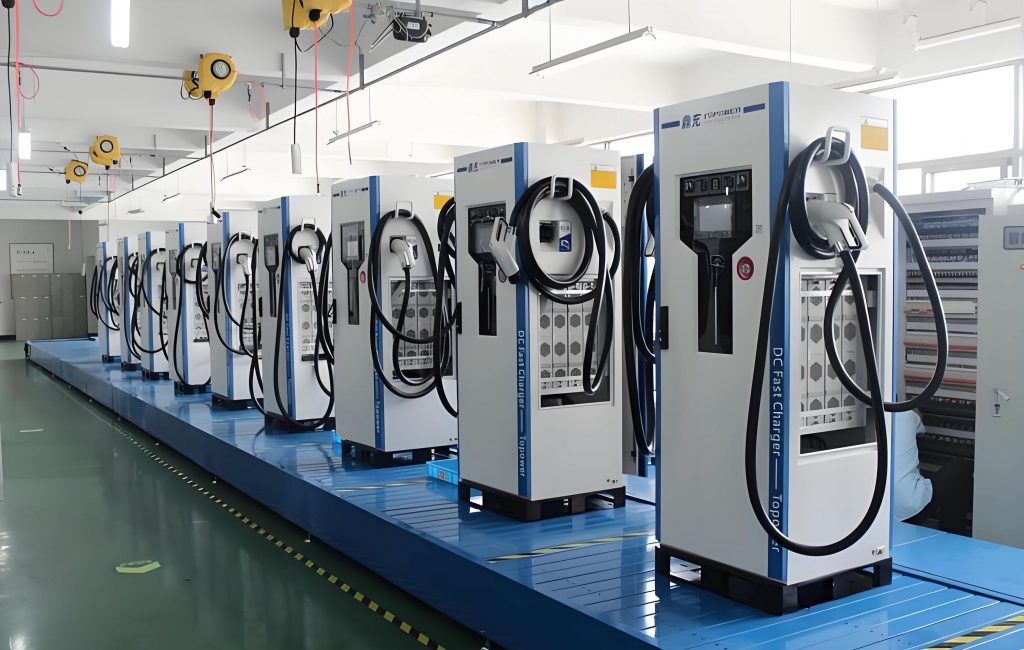
The proliferation of EV charging stations has transformed urban and rural landscapes, but it also poses risks such as voltage instability and equipment degradation. In my view, a proactive approach to managing EV charging stations can not only support grid resilience but also foster economic and environmental benefits. By leveraging data-driven insights and collaborative frameworks, we can build a robust network of EV charging stations that adapts to evolving energy needs. This article delves into key areas, including the use of artificial intelligence, renewable energy integration, and user-centric designs, all aimed at optimizing the performance and longevity of EV charging stations.
Improving Operational Efficiency of EV Charging Stations
Enhancing the operational efficiency of EV charging stations is fundamental to their successful integration into the power grid. I believe that by adopting scientific planning, intelligent platforms, and standardized maintenance, we can reduce costs and improve reliability. Let me break this down into specific components.
Scientific Planning and Layout
Scientific planning for EV charging stations begins with thorough demand analysis. By assessing factors like urban development trends, EV adoption rates, and regional growth patterns, we can forecast charging needs and design long-term networks. For instance, in densely populated areas such as commercial districts and residential zones, deploying high-power fast-charging EV charging stations can meet urgent demands, while in suburban or rural regions, prioritizing locations like transportation hubs and public parking lots ensures broader accessibility. This strategic placement helps balance load distribution and minimizes grid stress.
To quantify planning decisions, we can use formulas to estimate charging demand. For example, the total power requirement for a cluster of EV charging stations can be modeled as:
$$ P_{\text{total}} = \sum_{i=1}^{n} P_i \cdot U_i $$
where \( P_i \) is the power rating of the i-th EV charging station, and \( U_i \) is its utilization rate. This allows us to optimize the number and capacity of EV charging stations based on predictive analytics.
| Planning Factor | Description | Impact on EV Charging Station Deployment |
|---|---|---|
| Population Density | High-density areas require more EV charging stations | Increases station count and power配置 |
| EV Growth Rate | Projected increase in EV adoption | Guides long-term expansion of EV charging stations |
| Grid Capacity | Available electrical infrastructure | Determines feasibility of high-power EV charging stations |
Moreover, optimizing the layout of EV charging stations involves scenario-based adjustments. In my experience, using geographic information systems (GIS) to map potential sites can reduce overlaps and enhance coverage. By continuously monitoring usage data, we can dynamically adjust the deployment of EV charging stations to align with real-world demand.
Building a Smart Charging Management Platform
A unified digital platform is essential for managing EV charging stations efficiently. I advocate for systems that integrate real-time monitoring, order management, load scheduling, and fault detection. For example, AI-driven algorithms can analyze grid load patterns and peak electricity prices to dynamically guide users toward off-peak charging at EV charging stations, thereby reducing costs and stabilizing the grid. The platform can also provide visualizations of station availability, shortening response times for maintenance and improving user convenience.
The efficiency of such a platform can be expressed through optimization formulas. Consider the load balancing objective for multiple EV charging stations:
$$ \min \sum_{t=1}^{T} \left( L_t – \sum_{j=1}^{m} C_{j,t} \right)^2 $$
where \( L_t \) is the grid load at time t, and \( C_{j,t} \) is the charging load from the j-th EV charging station. This minimizes deviations from optimal load levels, ensuring that EV charging stations operate harmoniously with the grid.
| Platform Feature | Functionality | Benefit for EV Charging Stations |
|---|---|---|
| Real-Time Monitoring | Tracks status of EV charging stations | Enables prompt fault detection and repair |
| AI Scheduling | Optimizes charging times based on grid data | Reduces peak load on EV charging stations |
| User Interface | Provides app-based navigation and payment | Enhances accessibility of EV charging stations |
In practice, I have seen how such platforms can aggregate data from numerous EV charging stations to predict maintenance needs and prevent outages. By incorporating machine learning, we can identify anomalies in voltage or temperature, automatically generating work orders for technicians. This “online monitoring + offline inspection” model significantly cuts operational costs for EV charging stations.
Equipment Intelligence and Standardized Maintenance
Promoting intelligent EV charging stations with features like remote upgrades, power quality monitoring, and bidirectional capabilities (e.g., vehicle-to-grid or V2G) is a key step toward future-proofing the infrastructure. I recommend deploying EV charging stations that support V2G technology, allowing EVs to supply power back to the grid during emergencies or peak demand, thus enhancing grid flexibility.
The reliability of EV charging stations can be assessed using failure rate models. For instance, the mean time between failures (MTBF) for an EV charging station can be calculated as:
$$ \text{MTBF} = \frac{\text{Total Operational Time}}{\text{Number of Failures}} $$
This metric helps in planning preventive maintenance schedules for EV charging stations, ensuring higher uptime.
| Maintenance Aspect | Standard Procedure | Impact on EV Charging Station Performance |
|---|---|---|
| IoT Sensors | Collect real-time data on voltage and current | Early detection of issues in EV charging stations |
| Predictive Analytics | Use historical data to forecast failures | Reduces downtime of EV charging stations |
| Standardized Protocols | Establish uniform maintenance guidelines | Ensures consistency across EV charging stations |
Furthermore, establishing a standardized maintenance framework for EV charging stations, backed by IoT and data analytics, enables proactive interventions. From my observations, this approach not only extends the lifespan of EV charging stations but also fosters user trust by minimizing service disruptions.
Building a Low-Carbon Charging Ecosystem for EV Charging Stations
Transitioning to a low-carbon ecosystem is vital for the sustainability of EV charging stations. I propose integrating renewable energy sources and exploring synergistic models like “PV-storage-charging” to reduce carbon footprints and enhance grid compatibility.
Promoting “Green Electricity-Charging” Closed Loop
To achieve a green closed loop, EV charging stations should prioritize connections to renewable energy sources such as solar or wind. By installing distributed photovoltaic (PV) systems at charging sites or engaging in green electricity trading, we can ensure that the energy used by EV charging stations is carbon-neutral. Additionally, aggregating distributed EV charging stations into virtual power plants allows them to adjust charging patterns based on grid conditions—reducing power during peaks and increasing it during surplus renewable generation.
The carbon reduction potential of EV charging stations powered by renewables can be quantified. For example, the annual CO2 savings from using solar-powered EV charging stations is:
$$ \text{CO2}_{\text{saved}} = E_{\text{green}} \times \text{EF}_{\text{grid}} $$
where \( E_{\text{green}} \) is the green energy consumed by EV charging stations, and \( \text{EF}_{\text{grid}} \) is the emission factor of the grid. This highlights the environmental benefits of decarbonizing EV charging stations.
| Renewable Integration Method | Description | Advantage for EV Charging Stations |
|---|---|---|
| On-Site PV Systems | Install solar panels at charging sites | Provides direct green power to EV charging stations |
| Green Electricity Purchases | Buy renewable energy from markets | Ensures 100% clean energy for EV charging stations |
| Virtual Power Plant Participation | Aggregate stations for grid services | Enhances flexibility of EV charging stations |
In my assessment, this approach not only aligns with global carbon neutrality goals but also improves the economic viability of EV charging stations through incentives like carbon credits.
Exploring “PV-Storage-Charging” Synergy
The “PV-storage-charging” model combines solar generation, energy storage, and EV charging stations to create a resilient system. By adding battery storage to PV-equipped EV charging stations, we can store excess solar energy for use during nighttime or cloudy periods, smoothing out supply fluctuations. Intelligent charging protocols can further direct EV charging stations to prioritize charging during peak renewable generation, supporting grid stability.
The energy balance in such a system can be modeled as:
$$ E_{\text{storage}}(t) = E_{\text{PV}}(t) – E_{\text{charge}}(t) + E_{\text{storage}}(t-1) \cdot \eta_{\text{storage}} $$
where \( E_{\text{PV}}(t) \) is solar energy generated, \( E_{\text{charge}}(t) \) is energy used by EV charging stations, and \( \eta_{\text{storage}} \) is storage efficiency. This ensures optimal utilization of resources for EV charging stations.
| Synergy Component | Role | Benefit for EV Charging Stations |
|---|---|---|
| Photovoltaic (PV) Systems | Generate renewable electricity | Reduces operating costs of EV charging stations |
| Battery Storage | Stores excess energy for later use | Ensures reliability of EV charging stations |
| Smart Charging Controls | Align charging with renewable availability | Maximizes green energy use by EV charging stations |
From my experience, this synergistic model not only enhances the sustainability of EV charging stations but also provides backup power during outages, making the infrastructure more resilient.
Optimizing Service Experience at EV Charging Stations
User experience is a critical determinant of the success of EV charging stations. I focus on designing convenient, safe, and value-added services to attract and retain users.
Convenient Service Design
Developing integrated mobile applications that offer “find-navigate-charge-pay” functionalities simplifies the process of using EV charging stations. Features like scan-to-charge, plug-and-charge, and automatic payment systems reduce friction for users. For high-frequency customers, such as taxi fleets or logistics companies, providing reserved parking,预约 charging, and tiered discounts at EV charging stations can enhance loyalty and usage rates.
User satisfaction with EV charging stations can be measured using metrics like net promoter score (NPS), which correlates with service efficiency. For instance:
$$ \text{NPS} = \% \text{Promoters} – \% \text{Detractors} $$
where promoters are users who highly rate their experience with EV charging stations. This helps in continuously refining services.
| Service Feature | Description | Impact on EV Charging Station Adoption |
|---|---|---|
| Seamless App Integration | One-stop solution for charging needs | Increases frequency of use of EV charging stations |
| Customized Plans | Tailored options for commercial users | Boosts revenue from EV charging stations |
| Real-Time Availability Updates | Show open slots via apps | Reduces wait times at EV charging stations |
In my view, by prioritizing user-centric designs, we can make EV charging stations more accessible and appealing, thereby accelerating EV adoption.
Safety and Value-Added Services
Ensuring safety at EV charging stations involves real-time monitoring of battery parameters to prevent risks like overheating or short circuits. Collaborating with automakers to offer battery health diagnostics adds value for users. Additionally, integrating amenities such as rest areas, retail shops, or advertising displays at EV charging stations creates a “charging + lifestyle” experience, increasing dwell time and ancillary revenues.
The risk mitigation for EV charging stations can be quantified using reliability engineering. For example, the probability of failure for a charging session is:
$$ P_{\text{failure}} = 1 – e^{-\lambda t} $$
where \( \lambda \) is the failure rate of EV charging stations, and t is time. This underscores the importance of robust safety protocols.
| Safety Measure | Implementation | Effect on EV Charging Station Trust |
|---|---|---|
| Battery Monitoring | Track temperature and voltage in real-time | Prevents accidents at EV charging stations |
| Emergency Response Systems | Automated alerts for anomalies | Enhances user confidence in EV charging stations |
| Value-Added Amenities | Include convenience stores or Wi-Fi | Increases attractiveness of EV charging stations |
From my perspective, these initiatives not only protect users but also differentiate EV charging stations in a competitive market, fostering long-term growth.
Strengthening Ecological Synergy Around EV Charging Stations
Building a collaborative ecosystem is essential for the scalable development of EV charging stations. I emphasize cross-industry partnerships and policy alignment to drive innovation and compatibility.
Cross-Industry Collaboration and Ecosystem Development
Forming alliances with governments, automotive manufacturers, and battery producers enables data sharing and coordinated planning for EV charging stations. For example, synchronizing the rollout of new EV models with the construction of EV charging stations ensures adequate infrastructure support. In rural areas, offering bundled “vehicle-charging-maintenance” packages can lower barriers to EV adoption and expand the network of EV charging stations.
The economic impact of such collaborations can be modeled using cost-benefit analysis. For instance, the net present value (NPV) of investing in EV charging stations with partner support is:
$$ \text{NPV} = \sum_{t=0}^{T} \frac{C_t}{(1 + r)^t} $$
where \( C_t \) is the net cash flow from EV charging stations in year t, and r is the discount rate. This highlights the financial viability of synergistic projects.
| Collaboration Type | Stakeholders Involved | Benefit for EV Charging Stations |
|---|---|---|
| Data Sharing Agreements | Utilities, automakers, and governments | Improves planning accuracy for EV charging stations |
| Integrated Marketing | Promote EVs and charging together | Increases utilization of EV charging stations |
| Rural Outreach Programs | Target underserved areas | Expands the footprint of EV charging stations |
In my experience, these partnerships not only accelerate the deployment of EV charging stations but also foster innovation through shared resources and expertise.
Policy Compliance and Innovation Exploration
Adhering to carbon neutrality policies and leveraging subsidies for EV charging stations are crucial for compliance and cost-effectiveness. I advocate for exploring市场化 profit models, such as revenue from charging services, data analytics, and grid ancillary services, to ensure the economic sustainability of EV charging stations. Additionally, pushing for standardized interfaces and communication protocols across different brands of EV charging stations promotes interoperability and reduces resource waste.
The compliance with regulations can be assessed using key performance indicators (KPIs). For example, the regulatory adherence score for EV charging stations might be:
$$ \text{Score} = \frac{\text{Number of Met Standards}}{\text{Total Applicable Standards}} \times 100\% $$
This ensures that EV charging stations operate within legal frameworks while pursuing innovation.
| Policy Aspect | Requirement | Influence on EV Charging Station Operations |
|---|---|---|
| Subsidy Programs | Financial incentives for construction | Lowers initial costs of EV charging stations |
| Emission Standards | Mandate low-carbon operations | Drives green upgrades for EV charging stations |
| Technical Standards | Uniform connectors and protocols | Enhances compatibility of EV charging stations |
From my viewpoint, by actively engaging with policymakers and industry bodies, we can shape a favorable environment for the evolution of EV charging stations.
Ensuring Sustainable Development of EV Charging Stations
Sustainability encompasses data security, privacy, and environmental management throughout the lifecycle of EV charging stations. I propose measures to protect user information and minimize ecological impacts.
User Data Protection and Privacy Compliance
Implementing encryption mechanisms for data collected by EV charging stations, such as charging duration and energy consumption, is essential to prevent breaches. Strict adherence to data protection laws ensures that only necessary information is gathered, building trust among users of EV charging stations.
The risk of data breaches can be modeled using probability distributions. For instance, the expected annual loss from privacy incidents at EV charging stations is:
$$ \text{Expected Loss} = \sum \text{Probability of Incident} \times \text{Cost per Incident} $$
This emphasizes the need for robust cybersecurity frameworks for EV charging stations.
| Data Protection Measure | Implementation | Impact on EV Charging Station Reliability |
|---|---|---|
| Encryption Protocols | Secure data transmission and storage | Prevents unauthorized access to EV charging stations |
| Privacy Audits | Regular compliance checks | Ensures legal operation of EV charging stations |
| Minimal Data Collection | Limit to essential charging metrics | Reduces risks for EV charging stations |
In my assessment, prioritizing data integrity not only safeguards users but also enhances the reputation of EV charging stations as secure infrastructure.
Full Lifecycle Green Management
Adopting eco-friendly materials and energy-efficient equipment in the construction and operation of EV charging stations reduces environmental footprints. Establishing recycling protocols for decommissioned components, such as batteries and electronic parts from EV charging stations, minimizes waste and pollution.
The environmental impact of EV charging stations can be evaluated using life cycle assessment (LCA). For example, the total carbon footprint over the lifecycle of an EV charging station is:
$$ \text{Carbon Footprint} = \sum \text{Emissions from Manufacturing, Operation, and Disposal} $$
This guides decisions toward greener practices for EV charging stations.
| Green Management Practice | Description | Benefit for EV Charging Stations |
|---|---|---|
| Recycled Materials | Use sustainable inputs in construction | Lowers environmental impact of EV charging stations |
| Energy-Efficient Designs | Incorporate low-power components | Reduces operational emissions of EV charging stations |
| End-of-Life Recycling | Properly dispose of old equipment | Promotes circular economy for EV charging stations |
From my perspective, integrating these practices ensures that EV charging stations contribute positively to environmental goals while maintaining operational excellence.
In conclusion, the management of EV charging stations requires a holistic approach that balances efficiency, sustainability, and user satisfaction. By embracing smart technologies, fostering collaborations, and adhering to green principles, we can build a resilient network of EV charging stations that supports the global transition to electric mobility. As I have outlined, continuous innovation and adaptive strategies will be key to overcoming challenges and unlocking the full potential of EV charging stations in the evolving energy landscape.