
As a power supply enterprise, we are at the forefront of facilitating the installation of EV charging stations in old residential areas, which present unique challenges due to their outdated infrastructure and limited public spaces. The rapid adoption of electric vehicles has intensified the demand for reliable EV charging station installations, placing us in a complex legal and operational environment. In this analysis, we outline our responsibilities, the disputes we encounter, and the strategies we employ to mitigate risks while promoting sustainable energy solutions. Our focus is on ensuring that every EV charging station integration adheres to legal standards, enhances safety, and meets community needs.
The proliferation of EV charging stations in aging neighborhoods requires a meticulous approach to contractual, statutory, and administrative obligations. We must navigate issues such as limited electrical capacity, shared ownership of spaces, and regulatory compliance to avoid legal pitfalls. For instance, when deploying an EV charging station, we assess the existing power load and infrastructure conditions to prevent overloads and ensure safety. This involves calculating the additional demand using formulas like the total power requirement: $$ P_{total} = P_{existing} + \sum_{i=1}^{n} P_{EV,i} $$ where \( P_{existing} \) is the current load and \( P_{EV,i} \) represents the power draw of each EV charging station. By integrating such evaluations, we can better plan for upgrades and avoid system failures.
| Obligation Type | Key Aspects | Common Risks |
|---|---|---|
| Contractual Duties | Clarifying terms in agreements with stakeholders; ensuring proper authorization for public space use. | Disputes over unauthorized installations or delays due to unclear responsibilities. |
| Statutory Requirements | Adhering to safety standards under national laws; conducting load assessments and infrastructure checks. | Potential penalties for non-compliance or safety hazards from overloaded systems. |
| Administrative Compliance | Coordinating with government bodies for permits; facilitating community consultations. | Project delays from incomplete approvals or public opposition to EV charging station placements. |
| Tort Prevention | Implementing safety measures during construction; overseeing third-party contractors to prevent accidents. | Liability for damages or injuries if protocols are not followed in EV charging station setups. |
In fulfilling our contractual duties, we emphasize the importance of clear agreements that define the scope of our involvement in EV charging station projects. For example, when partnering with property management or residents, we specify that our role is limited to power supply接入, not the installation or maintenance of the EV charging station hardware itself. This distinction helps prevent misunderstandings and legal disputes. Moreover, we include clauses that address scenarios where external factors, such as community objections or regulatory hurdles, impede progress. By documenting these aspects, we safeguard against claims of breach of contract and ensure that all parties understand their roles in supporting EV charging station deployments.
Our statutory obligations compel us to prioritize safety and reliability in every EV charging station integration. Under relevant electricity laws, we are required to evaluate the technical feasibility of adding EV charging stations to old grids, which often suffer from aging transformers and cables. We use risk assessment models, such as calculating the probability of failure: $$ R = P_{f} \times C $$ where \( R \) is the risk level, \( P_{f} \) is the probability of an incident (e.g., overload), and \( C \) is the consequence (e.g., power outage). This allows us to prioritize upgrades and educate residents on safe usage patterns, like off-peak charging for EV charging stations to reduce strain on the network. Through these efforts, we aim to balance growing demand with infrastructural constraints.
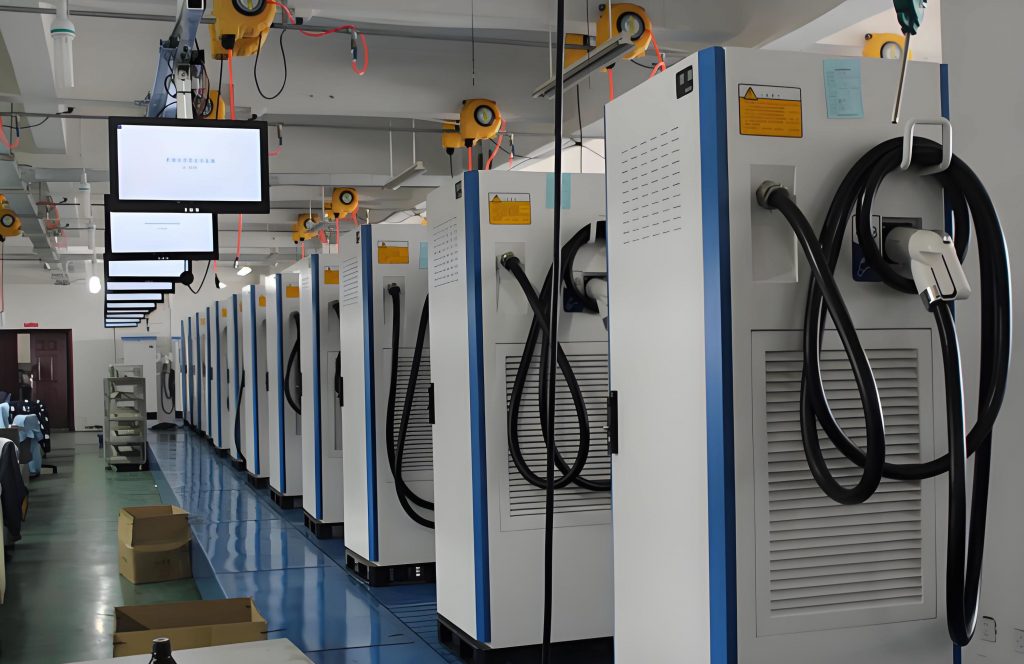
Administrative compliance is another critical area where we proactively engage with local authorities to streamline EV charging station approvals. In many jurisdictions, regulations mandate that we assist in obtaining permits for land use, environmental impact, and fire safety. We have developed internal checklists to ensure that every EV charging station project meets these requirements, reducing the likelihood of legal challenges. Additionally, we facilitate public consultations to address community concerns, such as the impact of EV charging station installations on parking availability or aesthetics. By fostering transparency, we build trust and minimize opposition, which is essential for the successful rollout of EV charging stations in densely populated areas.
Disputes often arise from the practical difficulties of installing EV charging stations in old residential zones. One major issue is power capacity expansion, where existing systems cannot handle the additional load from multiple EV charging stations. We encounter scenarios where transformers are already operating near capacity, and adding EV charging stations could lead to frequent blackouts. To quantify this, we use capacity formulas like: $$ C_{available} = C_{rated} – L_{current} $$ where \( C_{available} \) is the remaining capacity, \( C_{rated} \) is the transformer’s rated capacity, and \( L_{current} \) is the current load. If \( C_{available} < P_{EV} \) for a new EV charging station, we must initiate upgrades, which can be costly and time-consuming. This often triggers conflicts with residents who are unwilling to bear the costs or endure construction disruptions.
| Dispute Type | Root Causes | Mitigation Approaches |
|---|---|---|
| Power Capacity Issues | Insufficient transformer capacity; aging lines unable to support EV charging station loads. | Conduct pre-installation audits; propose phased upgrades; use load-sharing techniques among EV charging stations. |
| Space and Resource Conflicts | Limited public areas for EV charging station equipment; opposition from residents over绿地 or parking loss. | Opt for centralized EV charging station hubs; engage in community dialogue to find compromises. |
| Regulatory Delays | Slow permit approvals for EV charging station sites; lack of clarity in local guidelines. | Establish early communication with regulators; create standardized submission templates for EV charging station projects. |
| Third-Party Liability | Contractors failing to meet safety standards during EV charging station installations. | Implement rigorous vendor screening and onsite supervision for all EV charging station work. |
Another frequent source of tension involves the placement of EV charging station infrastructure, such as cables and transformers, in shared spaces. Residents may oppose these installations if they perceive them as encroaching on their quality of life. For instance, laying cables for an EV charging station across common areas can lead to complaints about noise, dust, or reduced accessibility. We address this by employing conflict resolution models, such as calculating a community acceptance score: $$ A = \frac{S_{positive}}{S_{total}} \times 100 $$ where \( A \) is acceptance percentage, \( S_{positive} \) is the number of supportive stakeholders, and \( S_{total} \) is the total involved. By monitoring this, we can adjust our strategies, such as relocating EV charging stations to less contentious areas or offering incentives to affected parties.
To enhance our operational framework, we have developed a series of legal and procedural recommendations centered on EV charging station deployments. First, we prioritize comprehensive risk assessments before initiating any EV charging station project. This includes evaluating the electrical infrastructure’s condition, identifying potential legal hurdles, and estimating costs. We use decision matrices to weigh options, such as whether to proceed with a分散式 or centralized EV charging station approach. For example, the cost-benefit analysis might involve: $$ NPV = \sum \frac{B_t – C_t}{(1 + r)^t} $$ where \( NPV \) is net present value, \( B_t \) and \( C_t \) are benefits and costs in year \( t \), and \( r \) is the discount rate. This helps us justify investments in EV charging station upgrades and secure stakeholder buy-in.
Second, we refine our user接入 processes to ensure clarity and efficiency in EV charging station installations. By standardizing contracts and service protocols, we delineate our responsibilities from those of residents or third-party operators. For instance, in agreements related to EV charging station access, we explicitly state that we are not liable for issues arising from the charging equipment itself, only the power supply. This reduces our exposure to lawsuits and fosters a collaborative environment. We also implement digital tools to track each EV charging station project’s progress, from application to commissioning, ensuring that all legal checkpoints are met.
Third, we advocate for centralized EV charging station solutions in old residential areas, as they offer economies of scale and reduced legal complexities. By consolidating multiple EV charging stations into a single hub, we minimize the need for extensive wiring and individual approvals. This approach aligns with our goal of optimizing resource use and enhancing safety. We often calculate the optimal number of EV charging stations in a centralized setup using formulas like: $$ N_{optimal} = \frac{D_{total}}{U_{average}} $$ where \( N_{optimal} \) is the ideal number of EV charging stations, \( D_{total} \) is the total demand in kWh, and \( U_{average} \) is the average usage per EV charging station. This allows us to design systems that meet demand without overburdening the grid.
| Action Area | Specific Measures | Expected Outcomes |
|---|---|---|
| Risk Management | Conduct pre-project audits for EV charging station viability; use predictive models to assess load impacts. | Reduced legal disputes and smoother EV charging station integrations. |
| Process Standardization | Develop uniform contracts for EV charging station access; clarify roles in service agreements. | Enhanced accountability and faster EV charging station deployment cycles. |
| Centralized Solutions | Promote shared EV charging station hubs; collaborate on funding and maintenance plans. | Lower costs and fewer space-related conflicts for EV charging station projects. |
| Staff Training | Train employees on legal aspects of EV charging station work; improve community engagement skills. | Higher compliance rates and better public reception of EV charging station initiatives. |
Lastly, we invest in continuous legal education for our staff to handle the nuances of EV charging station projects effectively. This includes workshops on property laws, contract management, and public consultation techniques. By empowering our team, we reduce the likelihood of errors that could lead to litigation over EV charging station installations. We also engage in outreach to educate communities about the benefits of EV charging stations, such as reduced carbon emissions and improved convenience. Through these efforts, we aim to transform challenges into opportunities, ensuring that EV charging stations become a sustainable part of urban infrastructure.
In conclusion, as a power supply enterprise, we recognize that the deployment of EV charging stations in old residential areas is fraught with legal risks, but it is also essential for advancing green mobility. By adhering to a structured approach that combines technical assessments, legal diligence, and community collaboration, we can overcome obstacles and expand the network of EV charging stations safely and efficiently. Our commitment to innovation and compliance ensures that each EV charging station project not only meets regulatory standards but also serves the broader goal of environmental sustainability. Moving forward, we will continue to refine our strategies, leveraging data and stakeholder feedback to optimize EV charging station implementations across diverse communities.