
As a mechanical design engineer specializing in vehicle modifications, I have dedicated my career to advancing the infrastructure supporting electric vehicles (EVs). With the global shift toward green transportation, EVs have emerged as a cornerstone of sustainable mobility, offering low emissions and high efficiency. However, the reliability and safety of EV charging stations are critical to their widespread adoption. These stations serve as the essential energy replenishment points for EVs, and their performance directly impacts user experience and operational safety. To address this, I have focused on designing innovative mobile inspection vehicles that can efficiently evaluate EV charging stations in diverse locations. This article delves into the design requirements, key elements, and practical applications of these inspection vehicles, emphasizing the integration of advanced technologies to enhance the functionality and adaptability of EV charging station assessments.
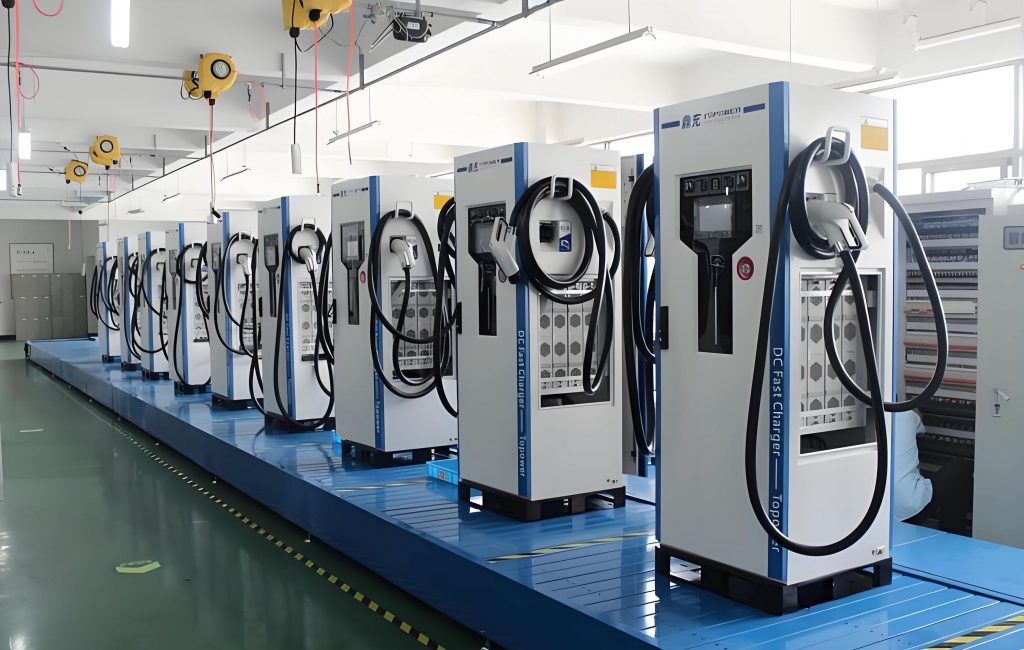
The proliferation of EV charging stations has created an urgent need for robust inspection systems. Traditional fixed testing methods are often inadequate due to the geographical dispersion of charging points. In my research, I have developed mobile inspection vehicles that combine mobility with comprehensive testing capabilities. These vehicles are equipped with state-of-the-art instruments to assess various parameters of EV charging stations, ensuring they meet stringent performance and safety standards. The design process involves a holistic approach, considering factors such as electrical performance, vehicle dynamics, environmental resilience, and energy management. Through iterative prototyping and field testing, I have refined these vehicles to optimize their efficiency and reliability in real-world scenarios.
Design Requirements for EV Charging Station Inspection Vehicles
Designing an effective inspection vehicle for EV charging stations requires a deep understanding of both the technical specifications of charging infrastructure and the operational challenges of mobile testing. Based on my experience, I have identified three core areas of design requirements: charging station detection functionality, vehicle performance, and environmental adaptability. Each of these aspects must be meticulously addressed to ensure the inspection vehicle can perform reliably across diverse conditions.
Charging Station Detection Functionality
The primary role of an inspection vehicle is to evaluate the performance of EV charging stations accurately. This involves assessing electrical parameters and power quality to identify any deviations from standards. For instance, electrical performance testing must cover voltage, current, and power measurements with high precision. The voltage detection range should encompass typical values for both DC and AC EV charging stations, such as 200 V to 1000 V for DC stations and 220 V or 380 V for AC stations. Current detection must handle ranges like 0 A to 500 A for DC stations, while power measurement accuracy is crucial for determining the energy output efficiency. These parameters can be summarized in the following table:
| Parameter | Detection Range | Accuracy | Application |
|---|---|---|---|
| Voltage | 200-1000 V (DC), 220/380 V (AC) | ±0.5% FS | EV charging station output |
| Current | 0-500 A (DC), variable (AC) | ±0.5% FS | Charging current assessment |
| Power | Dependent on station rating | ±1% FS | Energy output evaluation |
In addition, power quality analysis is vital for ensuring the stability of EV charging stations. This includes monitoring voltage fluctuations, flicker, harmonic distortion, and phase imbalance. For example, the total harmonic distortion (THD) should be kept below 5% to prevent interference with other electrical devices. The voltage fluctuation allowance is typically within ±10%, and phase imbalance detection requires an accuracy of ±0.1%. To achieve this, I incorporate advanced analyzers that utilize algorithms like Fast Fourier Transform (FFT) for real-time signal processing. The relationship for THD can be expressed mathematically as:
$$ THD = \frac{\sqrt{\sum_{h=2}^{\infty} V_h^2}}{V_1} \times 100\% $$
where \( V_h \) represents the harmonic voltage components and \( V_1 \) is the fundamental voltage. This formula helps in quantifying the distortion levels at EV charging stations, enabling precise adjustments.
Vehicle Performance Requirements
The mobility of the inspection vehicle is paramount for accessing EV charging stations in various locations, from urban centers to remote areas. In my designs, I prioritize动力性能 (power performance) and internal space optimization. For instance, the vehicle must exhibit strong acceleration and gradeability to navigate hilly terrains where EV charging stations might be installed. The engine power should suffice for full-load operations, and the maximum speed must comply with highway regulations to facilitate rapid transitions between sites. A typical requirement includes a climbing capability of over 20% gradient and a top speed of 120 km/h or higher.
Internally, the vehicle is divided into distinct zones: an equipment area and an operation area. The equipment area houses instruments like electrical parameter meters and power quality analyzers, securely mounted to withstand vibrations. The operation area provides a comfortable workspace with ergonomic seating and display interfaces. To manage heat dissipation, I integrate ventilation systems and electromagnetic shielding materials, which are essential for maintaining instrument accuracy. The following table outlines key vehicle performance metrics:
| Aspect | Specification | Rationale |
|---|---|---|
| Engine Power | ≥100 kW | Ensures adequate performance under load |
| Maximum Speed | ≥120 km/h | Facilitates efficient inter-site travel |
| Turning Radius | 5-6 m | Enhances maneuverability in tight spaces |
| Ground Clearance | 180-200 mm | Protects underbody components on rough roads |
Environmental Adaptability
EV charging station inspection vehicles must operate reliably under extreme environmental conditions. Temperature adaptability is critical, as high temperatures above 40°C can degrade electronic components, while sub-zero temperatures below -20°C may impair battery function. In my designs, I incorporate active cooling systems, such as fans and heat sinks, for high-temperature scenarios, and heating elements or insulated enclosures for cold environments. For example, the power dissipation in components can be modeled using:
$$ P = I^2 R $$
where \( P \) is the power loss, \( I \) is the current, and \( R \) is the resistance. This informs the cooling requirements to prevent overheating during prolonged operations at EV charging stations.
Road condition adaptability is another crucial factor. Vehicles often traverse uneven terrains, necessitating robust vibration damping. I employ shock-absorbing mounts and optimized suspension systems to minimize impacts on sensitive equipment. The natural frequency of the suspension can be tuned to avoid resonance with typical road vibrations, using the formula:
$$ f = \frac{1}{2\pi} \sqrt{\frac{k}{m}} $$
where \( f \) is the frequency, \( k \) is the spring constant, and \( m \) is the mass. This ensures that the inspection vehicle maintains stability, thereby preserving the integrity of data collected from EV charging stations.
Innovative Design Elements for EV Charging Station Inspection Vehicles
In developing inspection vehicles for EV charging stations, I have integrated several innovative elements to enhance functionality and efficiency. These include strategic vehicle selection and modification, careful equipment choices, power system configuration, and advanced thermal and vibration management. Each element is tailored to address the unique challenges of mobile testing, ensuring comprehensive coverage and accuracy.
Vehicle Selection and Modification
Choosing the right base vehicle is foundational to the success of an EV charging station inspection unit. I prioritize factors like range and maneuverability to accommodate the diverse locations of charging stations. For fuel-powered vehicles, a range of 500–800 km is ideal for extensive coverage without frequent refueling, while electric variants should achieve 300–500 km with fast-charging capabilities. Maneuverability is enhanced by a turning radius of 5–6 m and sufficient ground clearance to avoid obstacles. During modification, I focus on reinforcing the chassis and customizing the interior layout to house detection equipment securely. This often involves calculating the payload capacity using:
$$ W_{total} = W_{vehicle} + W_{equipment} + W_{personnel} $$
where \( W_{total} \) is the total weight, ensuring it remains within safe limits for stable operation around EV charging stations.
Detection Equipment Selection
The core of the inspection vehicle lies in its detection equipment, which must deliver high accuracy and reliability. For electrical performance, I use precision power analyzers with voltage and current accuracies of ±0.1% and ±0.2%, respectively. These devices capture real-time data during the charging cycles of EV charging stations, enabling detailed analysis of power output and efficiency. Communication protocol testers are also essential for verifying data exchange between charging stations and control systems, ensuring compliance with standards like CAN or Modbus. The following table compares common equipment types:
| Equipment Type | Key Features | Application in EV Charging Stations |
|---|---|---|
| Power Analyzer | ±0.1% voltage accuracy, fast sampling | Measures output parameters during charging |
| Power Quality Analyzer | THD detection, flicker analysis | Assesses stability and compliance |
| Communication Tester | Protocol validation, data parsing | Ensures reliable data transmission |
Moreover, I often employ mathematical models to predict equipment performance. For instance, the uncertainty in measurements can be estimated using:
$$ U = \sqrt{ \left( \frac{\partial f}{\partial x_1} \Delta x_1 \right)^2 + \left( \frac{\partial f}{\partial x_2} \Delta x_2 \right)^2 + \cdots } $$
where \( U \) is the combined uncertainty, and \( \Delta x_i \) represents the errors in individual parameters. This helps in calibrating instruments for precise evaluations of EV charging stations.
On-Board Power Selection and Configuration
Reliable power sources are indispensable for the continuous operation of inspection vehicles at EV charging stations. I evaluate various options, including lead-acid batteries, lithium-ion batteries, and onboard generators. Lithium-ion batteries are preferred for their high energy density (100–260 Wh/kg) and rapid charging, though they require thermal management systems in extreme temperatures. Generators provide uninterrupted power but add noise and emissions. To optimize energy use, I design power systems that balance capacity and efficiency, often using the formula for energy consumption:
$$ E = P \times t $$
where \( E \) is the energy consumed, \( P \) is the power demand of equipment, and \( t \) is the operation time. This allows for sizing batteries or generators to match the duration of inspections at multiple EV charging stations. A comparative analysis of power sources is presented below:
| Power Source | Energy Density | Advantages | Disadvantages |
|---|---|---|---|
| Lead-Acid Battery | 30-40 Wh/kg | Low cost, mature technology | Heavy, slow charging, short lifespan |
| Lithium-Ion Battery | 100-260 Wh/kg | Lightweight, fast charging | Higher cost, temperature sensitivity |
| Onboard Generator | N/A (fuel-dependent) | Continuous power, no charging downtime | Noise, vibrations, emissions |
Thermal Management and Vibration Damping
Effective thermal management is crucial to maintain the performance of detection equipment in EV charging station inspection vehicles. I implement hybrid cooling systems combining air and liquid cooling. For air cooling, I use high-efficiency fans and heat sinks, with airflow designed using computational fluid dynamics to ensure uniform cooling. Liquid cooling, applied to high-heat components like loads, involves circulating a coolant such as ethylene glycol-water mixture. The heat transfer rate can be expressed as:
$$ Q = h A \Delta T $$
where \( Q \) is the heat transferred, \( h \) is the heat transfer coefficient, \( A \) is the surface area, and \( \Delta T \) is the temperature difference. This guides the design of radiators and fans to dissipate heat efficiently during prolonged operations at EV charging stations.
Vibration damping is equally important to protect sensitive instruments from road-induced shocks. I use advanced shock absorbers and custom mounts with damping coefficients tailored to the vehicle’s mass and typical road frequencies. The damping ratio \( \zeta \) is optimized to critical damping ( \( \zeta = 1 \) ) to minimize overshoot, using the equation of motion for a damped oscillator:
$$ m \frac{d^2 x}{dt^2} + c \frac{dx}{dt} + kx = 0 $$
where \( m \) is mass, \( c \) is the damping coefficient, \( k \) is stiffness, and \( x \) is displacement. This approach ensures that equipment remains stable and accurate, even when traveling to remote EV charging stations over rough terrain.
Case Studies in EV Charging Station Inspection Vehicle Design
Through practical applications, I have refined the design of inspection vehicles for EV charging stations, learning from real-world challenges and successes. Below, I present two case studies that illustrate the evolution of these vehicles, highlighting design iterations, problem-solving, and performance outcomes. These examples demonstrate how innovative approaches can enhance the efficiency and reliability of EV charging station assessments.
Case Study 1: Compact Van-Based Inspection Vehicle
In one project, I developed an inspection vehicle based on a compact van platform, focusing on agility and comprehensive testing capabilities for urban EV charging stations. The vehicle was equipped with a 2.0L turbocharged engine delivering 103 kW of power and 355 N·m of torque, enabling it to navigate city streets and highways with ease. With a fuel tank capacity of 70 L, it achieved a range of approximately 800 km, allowing for extended inspection routes without refueling. The turning radius was optimized to 5.8 m, facilitating access to tightly spaced EV charging stations in parking lots and residential areas.
Internally, the vehicle featured a segmented layout with an equipment zone and an operational zone. The equipment zone housed a suite of detectors, including power analyzers and communication testers, mounted on vibration-isolated racks. The operational zone provided a user-friendly interface with digital displays and data loggers. To power the equipment, I integrated a 10 kW onboard generator and a backup lithium-ion battery system with a capacity of 100 Ah at 48 V. This configuration ensured uninterrupted operation during inspections of EV charging stations, even in areas with unstable grid power.
During field trials, this vehicle successfully evaluated 30 public EV charging stations in a single day. The equipment recorded key parameters such as voltage, current, and power factor, identifying two stations with insulation faults that posed safety risks. The data collected allowed for timely maintenance, underscoring the vehicle’s role in enhancing the reliability of EV charging stations. The energy efficiency of the system was calculated using:
$$ \eta = \frac{P_{output}}{P_{input}} \times 100\% $$
where \( \eta \) is the efficiency, \( P_{output} \) is the useful power for detection, and \( P_{input} \) is the energy consumed from the vehicle’s power system. This case confirmed the importance of integrated design in achieving high throughput for EV charging station inspections.
Case Study 2: Enhanced Truck-Based Inspection Vehicle
Another initiative involved a larger truck platform designed for rugged terrains and long-duration missions at EV charging stations. This vehicle featured a 3.0L turbocharged diesel engine with 125 kW of power and 400 N·m of torque, coupled with a high ground clearance of 205 mm for off-road capability. Initially, the design faced issues with internal space organization and power capacity. Equipment was poorly arranged, leading to electromagnetic interference that disrupted communication tests at EV charging stations. Additionally, the original battery system had limited capacity, causing frequent recharging that hampered efficiency.
To address these challenges, I reorganized the interior layout, segregating electrical and communication equipment into shielded compartments. I also upgraded to a larger lithium-ion battery pack with 150 Ah capacity at 48 V, incorporating a smart power management system that dynamically allocated energy based on real-time demands. The power management algorithm minimized energy waste, reducing overall consumption by 20% during operations. The improvement in performance can be modeled using a cost function:
$$ C = \alpha E + \beta T $$
where \( C \) is the total cost of operation, \( E \) is energy usage, \( T \) is time spent, and \( \alpha \), \( \beta \) are weighting factors. This optimization led to more sustainable inspections of EV charging stations.
In a practical application, the enhanced vehicle conducted a 10-hour continuous inspection of 25 EV charging stations at a highway service area, including both DC and AC types. The redesigned layout eliminated interference issues, and the upgraded power system supported uninterrupted testing. As a result, the vehicle identified several stations with harmonic distortions exceeding limits, enabling corrective actions. This case highlights how iterative design and technology integration can resolve operational bottlenecks, making EV charging station inspections more effective and scalable.
Conclusion
In summary, the innovative design of EV charging station inspection vehicles is pivotal for supporting the growth of electric mobility. My research and practical experiences have shown that a multidisciplinary approach—combining advanced engineering, precise instrumentation, and adaptive systems—can significantly improve the efficiency and accuracy of charging station assessments. By focusing on modular designs, optimized space utilization, and enhanced environmental resilience, these vehicles can overcome the challenges posed by diverse operating conditions. Future developments should emphasize intelligent automation and renewable energy integration to further reduce the ecological footprint of inspection activities. Ultimately, continuous innovation in this field will contribute to a more reliable and accessible network of EV charging stations, fostering the global transition to sustainable transportation.