
As a key player in the automotive supply chain, I see our mission centered on pioneering components that power the future of mobility. With uncertainties surrounding regulatory frameworks like the Corporate Average Fuel Economy (CAFE) standards, our commitment to advancing hybrid electric vehicle and electric vehicle technologies remains unwavering. We believe that the automotive industry is at a pivotal juncture, where investments in electrification, powertrain refinements, and weight reduction will define the next decade. In this narrative, I will delve into our strategies, market insights, and technical innovations, emphasizing our focus on hybrid electric vehicle solutions. The transition to electrified transportation is not just a trend but a fundamental shift, and we are poised to lead through relentless innovation and strategic growth.
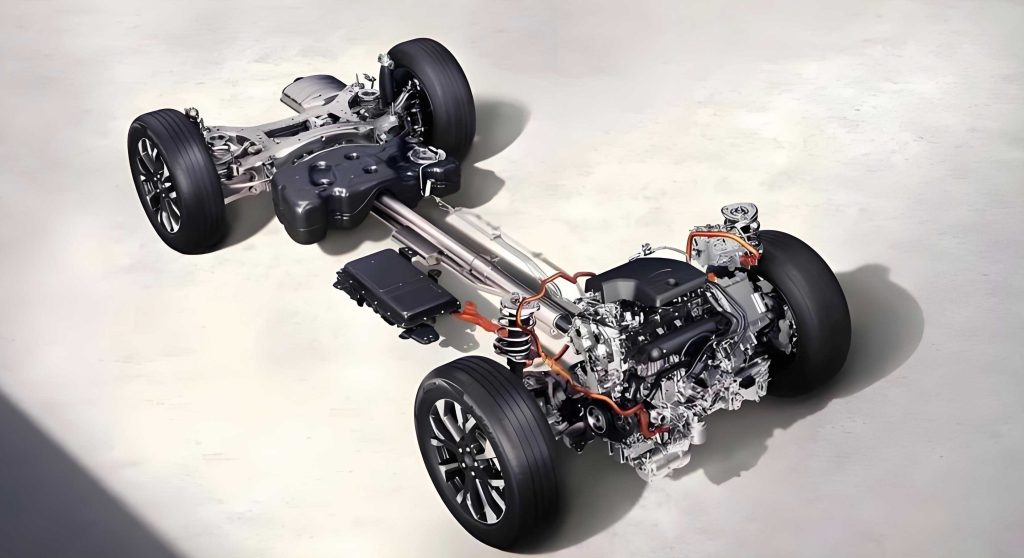
The importance of turbocharging in modern engines cannot be overstated. As one of the global leaders in turbocharger production, we view this segment as critical to enhancing fuel efficiency and performance. The trend toward downsized powertrains has propelled turbocharger adoption worldwide, with sales expected to surge. However, our vision extends beyond traditional internal combustion engines. We are actively developing powertrain and transmission components specifically for hybrid electric vehicle platforms. These efforts are anticipated to become significant profit drivers as the market for electrified vehicles expands. For instance, the integration of turbocharging with hybrid systems can optimize energy recovery and boost overall efficiency, making hybrid electric vehicle more appealing to consumers.
To quantify the market trajectory, let’s examine projected production volumes for hybrid electric vehicle and electric vehicles. According to industry analyses, global annual production of hybrid electric vehicle is set to skyrocket from 3 million units in 2016 to 18 million units by 2023, representing a substantial growth rate. Similarly, electric vehicle production is forecasted to rise from 500,000 units to 2.3 million units over the same period. This growth underscores the accelerating demand for components tailored to hybrid electric vehicle architectures. We estimate that sales of parts for hybrid electric vehicle and electric vehicles will account for approximately 16% of our total sales by 2023, a leap from around 1% in 2016. This shift necessitates a robust portfolio of technologies, from advanced thermal management systems to power electronics.
| Vehicle Type | 2016 Production (Millions of Units) | 2023 Projection (Millions of Units) | Compound Annual Growth Rate (CAGR) |
|---|---|---|---|
| Hybrid Electric Vehicle | 3 | 18 | $$ \text{CAGR} = \left( \frac{18}{3} \right)^{\frac{1}{7}} – 1 \approx 0.244 \text{ or } 24.4\% $$ |
| Electric Vehicle | 0.5 | 2.3 | $$ \text{CAGR} = \left( \frac{2.3}{0.5} \right)^{\frac{1}{7}} – 1 \approx 0.238 \text{ or } 23.8\% $$ |
The rising stringency of fuel economy standards globally exerts considerable pressure on automakers. In regions like China and Europe, regulatory bodies are tightening emissions norms, compelling manufacturers to invest heavily in hybrid electric vehicle and electric vehicle technologies. Major automotive groups, including those in Europe, have allocated substantial resources to electrification, and North American manufacturers are following suit to remain competitive. This regulatory push, coupled with consumer demand for cleaner transportation, drives innovation. We recognize that the impetus for improving fuel economy isn’t solely dependent on policies; automakers themselves are proactively advancing hybrid electric vehicle development to meet sustainability goals and market expectations. For example, the integration of regenerative braking systems in hybrid electric vehicle enhances energy efficiency, which can be modeled as:
$$ E_{\text{recovered}} = \eta \cdot \int_{t_1}^{t_2} P_{\text{braking}} \, dt $$
where \( E_{\text{recovered}} \) is the energy recovered during braking, \( \eta \) is the efficiency of the recovery system, and \( P_{\text{braking}} \) is the braking power over time. Such technologies are crucial for maximizing the benefits of hybrid electric vehicle platforms.
To bolster our competitiveness, we pursue strategic acquisitions that enhance our expertise in power electronics and other key areas. Acquiring specialized firms allows us to integrate cutting-edge technologies into our hybrid electric vehicle component offerings. For instance, a past acquisition focused on products like alternators, starters, and power transmission systems, aligning with our vision for the expanding hybrid electric vehicle market. We allocate significant funds annually for such investments, ensuring we can seize opportunities even if it requires assuming debt. This approach enables us to provide comprehensive solutions for pure electric vehicles, hybrid electric vehicle, and internal combustion vehicles, positioning us as a versatile supplier. The synergy from acquisitions can be expressed through a growth model:
$$ \text{Synergy Gain} = \alpha \cdot \text{Technology Integration} + \beta \cdot \text{Market Access} $$
where \( \alpha \) and \( \beta \) are coefficients representing the impact of technology and market factors on overall performance. By strengthening our capabilities, we aim to capture a larger share of the hybrid electric vehicle component market.
Looking ahead, the automotive landscape is poised for transformative change. Despite potential regulatory shifts in some regions, such as relaxed fuel economy standards, we remain confident in the global momentum toward electrification. Markets like China and Europe continue to enforce stringent norms, driving demand for hybrid electric vehicle technologies. Moreover, automakers’ internal commitments to sustainability ensure ongoing investments in hybrid electric vehicle development. We anticipate that by 2025, hybrid electric vehicle production could reach 18 million units annually, with electric vehicles hitting 2.3 million units, further solidifying the need for advanced components. Our R&D efforts focus on innovations like high-efficiency inverters and battery thermal management systems, which are vital for hybrid electric vehicle performance. The efficiency of these systems can be optimized using formulas such as:
$$ \eta_{\text{overall}} = \eta_{\text{motor}} \times \eta_{\text{inverter}} \times \eta_{\text{battery}} $$
where \( \eta_{\text{overall}} \) represents the total efficiency of a hybrid electric vehicle powertrain, highlighting the interdependency of components.
| Year | Percentage of Total Sales from Hybrid Electric Vehicle and EV Components | Key Drivers |
|---|---|---|
| 2016 | 1% | Early-stage adoption, regulatory incentives |
| 2020 | 6% | Increased hybrid electric vehicle production, technology maturation |
| 2023 | 16% | Mainstream hybrid electric vehicle integration, global emissions standards |
The proliferation of hybrid electric vehicle is not merely a response to regulations but a reflection of technological advancement and consumer preference. We observe that hybrid electric vehicle offer a balanced solution, combining the range of conventional vehicles with the efficiency of electrification. This makes hybrid electric vehicle particularly attractive in markets where charging infrastructure is still developing. Our components, such as advanced transmission systems for hybrid electric vehicle, enable seamless transitions between electric and combustion modes, enhancing drivability and fuel economy. The mathematical representation of this mode switching can be given by:
$$ P_{\text{total}} = P_{\text{engine}} + P_{\text{motor}} – P_{\text{loss}} $$
where \( P_{\text{total}} \) is the total power output, and \( P_{\text{loss}} \) accounts for energy losses during conversion. By minimizing \( P_{\text{loss}} \), we improve the efficacy of hybrid electric vehicle systems.
In terms of geographic diversification, we derive only about 30% of our global sales from North America, mitigating risks associated with regional policy changes. The bulk of our growth is anchored in Asia and Europe, where hybrid electric vehicle adoption is accelerating due to robust regulatory frameworks. For example, European emissions targets for 2030 mandate significant reductions, spurring automakers to expand their hybrid electric vehicle lineups. Similarly, China’s New Energy Vehicle (NEV) policy promotes hybrid electric vehicle as part of its strategy to curb pollution. These trends underscore the global nature of the hybrid electric vehicle revolution, and we are scaling our operations accordingly through localized production and R&D centers.
Our innovation pipeline includes next-generation technologies for hybrid electric vehicle, such as silicon carbide power modules that enhance inverter efficiency, and integrated drive modules that reduce weight and complexity. These advancements are critical for meeting the evolving demands of hybrid electric vehicle architectures. We also explore partnerships with battery manufacturers to co-develop thermal management solutions, ensuring optimal performance in diverse climates. The heat dissipation in hybrid electric vehicle batteries can be modeled using Fourier’s law:
$$ q = -k \nabla T $$
where \( q \) is the heat flux, \( k \) is the thermal conductivity, and \( \nabla T \) is the temperature gradient. By improving materials and designs, we boost the reliability and longevity of hybrid electric vehicle components.
Furthermore, the economic viability of hybrid electric vehicle is improving as scale economies drive down costs. We project that the total cost of ownership for hybrid electric vehicle will become competitive with conventional vehicles within the next decade, fueled by advancements in battery technology and component integration. Our role is to supply cost-effective, high-performance parts that enable this transition. For instance, our turbochargers for hybrid electric vehicle applications are designed to operate efficiently across a wide range of conditions, supplementing electric propulsion during high-load scenarios. This synergy can be quantified through performance metrics like:
$$ \text{Fuel Savings} = \int_{0}^{T} \left( \text{Fuel Rate}_{\text{baseline}} – \text{Fuel Rate}_{\text{hybrid}} \right) dt $$
where \( T \) is the driving cycle duration, and the integral captures cumulative benefits over time.
In conclusion, the future of mobility is inextricably linked to the rise of hybrid electric vehicle and electric vehicles. As a dedicated supplier, we are investing in technologies that power this evolution, from turbocharging to power electronics. The market data affirms robust growth for hybrid electric vehicle, and we are aligning our strategies to capture this opportunity through innovation and strategic acquisitions. Despite regulatory uncertainties in some quarters, the global push for cleaner transportation ensures that hybrid electric vehicle will remain at the forefront of automotive development. We are committed to delivering components that enhance efficiency, performance, and sustainability, driving progress in the hybrid electric vehicle ecosystem for years to come. Our journey is fueled by a belief that hybrid electric vehicle represent a pivotal step toward a zero-emission future, and we are proud to contribute to this transformative era.