
In the pursuit of sustainable transportation, the evolution of internal combustion engines remains pivotal, especially within the context of hybrid electric vehicles. As we navigate the global shift toward carbon neutrality, the integration of advanced gasoline engines in hybrid electric vehicles represents a critical pathway to reducing emissions and improving fuel economy. This article delves into the technological advancements that enable high-efficiency gasoline engines specifically designed for hybrid electric vehicles, exploring key case studies and underlying engineering principles. The focus is on how these innovations contribute to enhanced thermal efficiency, reduced mechanical wear, lower fuel consumption, and minimized emissions, all while supporting the seamless operation of hybrid electric vehicle systems.
The urgency for developing specialized gasoline engines for hybrid electric vehicles stems from stringent regulatory frameworks and environmental goals. For instance, fuel consumption limits for passenger vehicles are becoming increasingly rigorous, pushing automakers to adopt hybrid electric vehicle architectures that leverage internal combustion engines in optimized ways. Unlike traditional engines retrofitted for hybrid use, dedicated engines for hybrid electric vehicles are engineered to operate within narrow, high-efficiency bands, often in conjunction with electric motors and battery systems. This synergy allows the internal combustion engine to function primarily in its most efficient regimes, thereby maximizing overall system performance. The transition to hybrid electric vehicles is not merely a trend but a necessity, as projections indicate that internal combustion engines will continue to power a significant portion of vehicles for decades to come, albeit within hybridized powertrains.
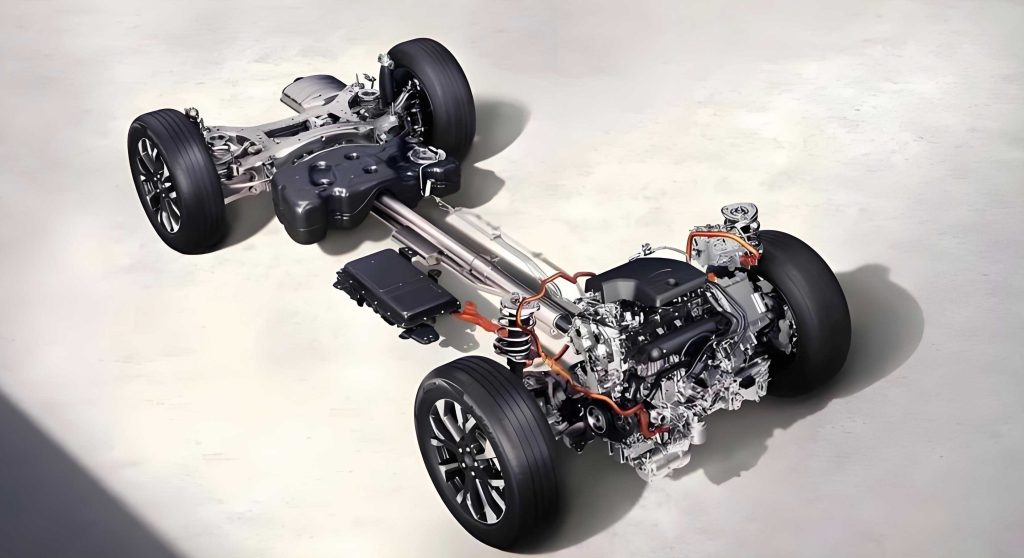
To understand the landscape of high-efficiency engines for hybrid electric vehicles, we must examine prominent hybrid systems and their dedicated power units. The following table summarizes key characteristics of various hybrid electric vehicle engines, highlighting their unique features and performance metrics.
| Manufacturer/System | Key Technologies | Typical Application | Notable Performance Metrics |
|---|---|---|---|
| Toyota Hybrid System | Planetary gearset, dual electric motors, Atkinson cycle engine | Toyota Prius, Camry Hybrid | Thermal efficiency >40%, seamless mode switching |
| Honda Dual-Motor Hybrid | Electric CVT, Atkinson cycle engine, high-power motors | Honda Accord Hybrid, CR-V Hybrid | Predominant electric drive, engine as generator |
| Nissan Variable Compression Ratio | Multi-link VCR mechanism, turbocharging, Miller cycle | Nissan Altima with VC-Turbo | Compression ratio 8:1 to 14:1, 100 kW/L power density |
| Volkswagen Efficient Engines | High-pressure direct injection, variable geometry turbo, cooled EGR | VW Golf, Audi A3 with TSI engines | Fuel economy <5 L/100 km, up to 45% thermal efficiency |
| Domestic Chinese Systems | Miller cycle, direct injection, intelligent thermal management | Various models from Geely, BYD, Chery | Competitive thermal efficiency, integration with electric drivetrains |
The Toyota hybrid system exemplifies a pioneering approach in hybrid electric vehicles, utilizing a planetary gear mechanism to blend power from the gasoline engine and electric motors. This setup enables multiple operational modes—pure electric, series, parallel, and regenerative braking—allowing the engine to operate predominantly in high-efficiency zones. For instance, in urban driving, the hybrid electric vehicle often relies on electric power, while the engine activates only when needed for charging or supplemental thrust, thus minimizing fuel use. The engine’s thermal efficiency is optimized through Atkinson cycle principles, where the expansion ratio exceeds the compression ratio, reducing pumping losses and improving part-load efficiency. This design is crucial for hybrid electric vehicles, as it aligns with frequent stop-start cycles and variable load demands.
Honda’s hybrid electric vehicle system, known as the dual-motor hybrid, emphasizes electric propulsion with the gasoline engine serving primarily as a generator. The electric continuously variable transmission (e-CVT) eliminates traditional gear shifts, reducing mechanical friction and enhancing responsiveness. In this hybrid electric vehicle architecture, the engine operates at near-constant speeds when engaged, targeting peak thermal efficiency points. This strategy is particularly effective in reducing fuel consumption during highway cruising, where the engine can run at optimal conditions while supplying power to the motors or battery. The integration of high-energy-density batteries further supports extended electric-only ranges, making the hybrid electric vehicle a versatile solution for diverse driving scenarios.
Nissan’s variable compression ratio (VCR) engine represents a breakthrough for hybrid electric vehicles, as it dynamically adjusts the compression ratio to suit load conditions. By using a multi-link mechanism, the piston’s top dead center position is altered, allowing compression ratios from 8:1 for high-performance demands to 14:1 for fuel-efficient cruising. This adaptability is invaluable in hybrid electric vehicles, where the engine must switch between supporting electric motors and providing direct drive. The VCR technology, combined with turbocharging and Miller cycle valve timing, enables a broad high-efficiency map, ensuring that the hybrid electric vehicle maintains low emissions and fuel use across accelerations, decelerations, and steady-state operation. The formula for thermal efficiency in such engines can be expressed as:
$$ \eta_t = 1 – \frac{1}{\varepsilon_c^{k-1}} $$
where $\eta_t$ is the thermal efficiency, $\varepsilon_c$ is the compression ratio, and $k$ is the specific heat ratio. For a hybrid electric vehicle engine, increasing $\varepsilon_c$ via VCR directly boosts $\eta_t$, as shown in the equation. However, practical limits arise from knocking and mechanical stresses, which VCR mitigates by lowering the ratio under high loads.
Volkswagen’s approach to hybrid electric vehicle engines incorporates advanced direct injection and exhaust gas recirculation (EGR) systems. The high-pressure fuel injection, often exceeding 350 bar, enhances atomization and mixing, leading to more complete combustion. In hybrid electric vehicles, this is paired with Miller cycle strategies—where the intake valve closes late to reduce effective compression—and cooled EGR to lower combustion temperatures and curb nitrogen oxide emissions. The synergy of these technologies allows the engine to achieve thermal efficiencies upward of 45% in dedicated hybrid electric vehicle applications, such as the EA211 evo series. The use of variable geometry turbochargers further optimizes airflow across engine speeds, ensuring prompt response when the hybrid electric vehicle transitions from electric to hybrid mode.
Domestic Chinese manufacturers have rapidly adopted similar technologies for hybrid electric vehicles, focusing on Miller cycle engines with high compression ratios and sophisticated energy management. These engines are often designed from the ground up for hybrid electric vehicle use, featuring low-friction components, electric water pumps, and integrated starter-generators. The emphasis is on achieving high brake thermal efficiency (BTE) while maintaining cost-effectiveness, making hybrid electric vehicles more accessible. For example, some Chinese hybrid electric vehicle engines report BTE values over 42%, competitive with global benchmarks. The table below summarizes the impact of various technologies on hybrid electric vehicle engine performance, based on empirical studies and simulations.
| Technology | Effect on Thermal Efficiency | Impact on Fuel Consumption | Emissions Reduction | Typical Use in Hybrid Electric Vehicles |
|---|---|---|---|---|
| Miller/Atkinson Cycle | Increase by 5-10% | Decrease by 8-15% | Lower NOx due to reduced temperatures | Common in Toyota, Honda systems |
| Direct Injection (GDI) | Increase by 3-7% | Decrease by 5-10% | Lower particulate matter with high pressure | Widespread in Volkswagen, Chinese engines |
| Lean Burn Combustion | Increase by 8-12% | Decrease by 10-20% | Significant NOx reduction, but requires aftertreatment | Limited use due to complexity |
| Variable Compression Ratio | Increase by 10-15% | Decrease by 12-18% | Balanced across load range | Pioneered by Nissan, emerging in others |
| Cooled EGR | Increase by 2-5% | Decrease by 3-8% | Substantial NOx and CO2 reduction | Integrated with turbocharging in many hybrid electric vehicles |
Delving deeper into the core technologies, Miller cycle operation is a cornerstone for high-efficiency hybrid electric vehicle engines. By delaying intake valve closure, the effective compression stroke is shortened, while the expansion stroke remains full, yielding a higher expansion ratio. This reduces pumping losses and knock tendency, allowing for increased geometric compression ratios when paired with turbocharging. In a hybrid electric vehicle, the Miller cycle is often implemented via variable valve timing systems, enabling seamless adjustment based on driving mode. The thermodynamic benefits can be modeled using the ideal gas law and cycle analysis. For instance, the net work output in a Miller cycle engine compared to a standard Otto cycle can be derived as:
$$ W_{\text{net}} = \int_{cycle} P \, dV – \text{losses} $$
where $P$ is cylinder pressure and $V$ is volume. In practice, Miller cycle engines in hybrid electric vehicles demonstrate a 5-10% improvement in indicated thermal efficiency, translating directly to lower fuel consumption and extended electric range in hybrid electric vehicle operations.
Gasoline direct injection (GDI) is another enabler for hybrid electric vehicle engines, offering precise fuel metering and enhanced charge cooling. By injecting fuel directly into the cylinder at high pressures, the latent heat of vaporization cools the intake charge, permitting higher compression ratios without knock. This is particularly beneficial in hybrid electric vehicles, where the engine may operate at high loads intermittently. Moreover, GDI supports stratified charge combustion under light loads, further improving part-load efficiency—a common scenario in urban hybrid electric vehicle driving. The injection timing and pressure are optimized through engine control units that coordinate with the hybrid electric vehicle’s powertrain controller. A formula for the ideal fuel spray penetration, relevant to GDI performance, is:
$$ S = \sqrt{\frac{2 \Delta P}{\rho_f}} \cdot t $$
where $S$ is spray penetration distance, $\Delta P$ is injection pressure differential, $\rho_f$ is fuel density, and $t$ is time. Higher $\Delta P$, as seen in modern hybrid electric vehicle engines, ensures rapid mixing and complete combustion, reducing unburned hydrocarbons.
Lean burn combustion, though challenging, holds promise for hybrid electric vehicle engines due to its potential for dramatic efficiency gains. By operating with excess air (air-fuel ratios up to 65:1), the specific heat capacity of the mixture increases, lowering combustion temperatures and reducing heat losses. However, achieving stable ignition in lean mixtures requires advanced ignition systems or compression ignition techniques. In hybrid electric vehicles, lean burn can be deployed during steady-state cruising, where the engine runs at moderate loads, supported by electric motors for transients. The efficiency improvement from lean burn is quantified by the ratio of actual to stoichiometric air-fuel ratios, often expressed as:
$$ \lambda = \frac{AFR}{AFR_{\text{stoich}}} $$
where $\lambda > 1$ indicates lean operation. For hybrid electric vehicle engines, $\lambda$ values of 1.5 to 2.0 can yield thermal efficiency boosts of 8-12%, but necessitate robust aftertreatment for nitrogen oxides, typically using selective catalytic reduction in hybrid electric vehicle exhaust systems.
Variable compression ratio (VCR) technology, as implemented by Nissan and others, provides a dynamic means to optimize efficiency across the operating envelope of a hybrid electric vehicle engine. The mechanical complexity of VCR mechanisms—such as multi-link pistons or eccentric crankshafts—is justified by the flexibility it offers. In a hybrid electric vehicle, VCR allows the engine to switch between high-compression modes for electric generation or low-load driving and low-compression modes for high-power outputs during acceleration. This adaptability reduces the need for enrichment cooling, thereby saving fuel and cutting emissions. The relationship between compression ratio and knock limit can be described using the octane requirement formula:
$$ OR = f(\varepsilon_c, T_{\text{in}}, P_{\text{in}}) $$
where $OR$ is octane requirement, $T_{\text{in}}$ is intake temperature, and $P_{\text{in}}$ is intake pressure. By lowering $\varepsilon_c$ under boost conditions, VCR engines in hybrid electric vehicles avoid knock while maintaining high efficiency, a key advantage over fixed-ratio designs.
Exhaust gas recirculation (EGR), especially cooled EGR, is integral to modern hybrid electric vehicle engines for controlling emissions and improving efficiency. Recirculating a portion of exhaust gases into the intake dilutes the mixture, reducing peak combustion temperatures and suppressing nitrogen oxide formation. In hybrid electric vehicles, EGR rates are modulated based on load and temperature sensors, often working in tandem with turbocharging to maintain volumetric efficiency. The cooling of EGR further enhances density, allowing more gas to be recirculated without sacrificing power. The effect of EGR on thermal efficiency can be approximated by considering the change in specific heat ratio $k$ in the efficiency equation:
$$ \eta_t \propto 1 – \frac{1}{\varepsilon_c^{k-1}} \quad \text{where} \quad k \text{ decreases with EGR addition} $$
Despite a slight reduction in $k$, the overall efficiency often increases due to lower heat losses and reduced pumping work, making EGR a valuable tool for hybrid electric vehicle engine calibration.
Furthermore, the integration of these technologies in hybrid electric vehicle engines necessitates sophisticated control algorithms. The engine management system must coordinate with the hybrid electric vehicle’s battery state of charge, motor torque requests, and regenerative braking strategies. For example, during deceleration, the engine may be shut off entirely, while in acceleration, it might operate at high load with VCR adjusted accordingly. This holistic optimization is what distinguishes dedicated hybrid electric vehicle engines from adapted ones. The table below outlines typical operational modes in a hybrid electric vehicle and the corresponding engine strategies.
| Hybrid Electric Vehicle Mode | Engine Status | Dominant Technology | Efficiency Goal |
|---|---|---|---|
| Pure Electric Drive | Off | N/A | Zero fuel use |
| Series Hybrid | On at constant speed | Miller cycle, high compression | Maximize generator output |
| Parallel Hybrid | On with variable load | VCR, direct injection | Optimize torque delivery |
| Regenerative Braking | Off or idling | EGR for quick restart | Recover kinetic energy |
| High-Speed Cruising | On at moderate load | Lean burn, turbocharging | Minimize fuel consumption |
Looking ahead, the evolution of gasoline engines for hybrid electric vehicles will likely involve greater electrification of ancillary components, such as electric turbochargers and fully variable valve trains. These advancements will further decouple engine operation from vehicle demand, allowing the internal combustion unit to serve as an optimized energy converter. Additionally, the use of alternative fuels with high hydrogen content, such as synthetic e-fuels or hydrogen blends, could enhance the environmental profile of hybrid electric vehicles. The combustion characteristics of such fuels align well with high-efficiency cycles like Miller and lean burn, potentially pushing thermal efficiencies beyond 50% in future hybrid electric vehicle powertrains.
In conclusion, the development of high-efficiency gasoline engines for hybrid electric vehicles is a multifaceted endeavor that leverages cycles like Miller and Atkinson, direct injection, lean combustion, variable compression ratio, and advanced EGR. These technologies, when integrated into dedicated hybrid electric vehicle architectures, enable significant improvements in fuel economy and emissions reduction. As the automotive industry progresses toward electrification, the role of optimized internal combustion engines in hybrid electric vehicles remains indispensable, offering a pragmatic bridge to a fully sustainable future. Continued research and innovation in this domain will ensure that hybrid electric vehicles meet evolving regulatory standards while delivering the performance and reliability consumers expect.