
The rapid global proliferation of automobiles presents a profound dual challenge: escalating energy consumption and increasing environmental strain. As nations strive for sustainable mobility solutions, the hybrid car has emerged as a critical transitional technology. By synergistically combining an internal combustion engine (ICE) with an electric motor and a battery pack, a hybrid car significantly improves urban fuel economy and reduces localized emissions. However, a substantial portion of the fuel’s energy—typically around 40%—is still discarded as high-temperature exhaust gas. This represents a significant untapped reservoir. In this article, I will explore and advocate for an advanced waste heat recovery (WHR) system based on the Stirling engine, tailored specifically for the unique operational profile of a hybrid car. This technology promises to convert lost thermal energy into usable electrical power, further enhancing the efficiency and appeal of the hybrid car platform.
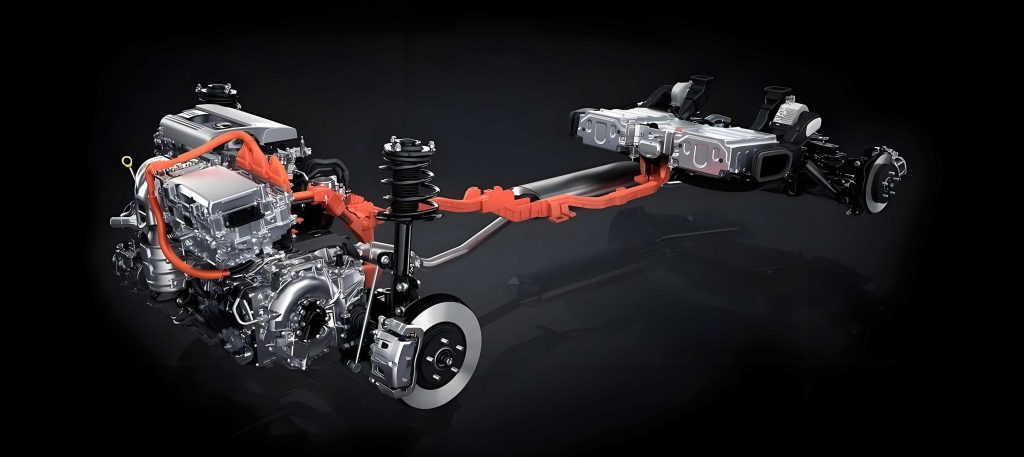
The fundamental appeal of a hybrid car lies in its ability to intelligently manage two power sources. This architecture mitigates the inherent inefficiencies of a conventional ICE, particularly in stop-and-go traffic. The core configurations are:
| Configuration | Powerflow Description | Advantages for a hybrid car | Disadvantages |
|---|---|---|---|
| Series | ICE generates electricity only; electric motor drives wheels. | ICE can operate at optimal constant speed; simpler mechanical design. | Double energy conversion losses; requires larger motor/generator. |
| Parallel | Both ICE and electric motor can directly drive wheels. | Efficient direct mechanical drive; smaller electric components. | Complex mechanical coupling; ICE may operate inefficiently. |
| Series-Parallel (Power-Split) | Uses a planetary gearset to blend series and parallel modes. | Maximizes overall efficiency across diverse driving conditions. | Extremely complex and costly control system. |
Regardless of the configuration, a significant energy loss occurs through the exhaust. For a typical gasoline engine in a hybrid car, the exhaust gas temperature can range from 500°C to 900°C. The theoretical maximum efficiency for any heat engine operating between a hot source ($T_H$) and a cold sink ($T_C$) is given by the Carnot efficiency:
$$\eta_{Carnot} = 1 – \frac{T_C}{T_H}$$
where temperatures are in Kelvin. With $T_H$ around 800 K (527°C) and $T_C$ at 350 K (77°C), the Carnot limit is approximately 56%. While practical systems cannot reach this, it highlights the potential energy available in the exhaust stream of a hybrid car. Current WHR technologies have limitations:
| Technology | Principle | Challenges for a hybrid car |
|---|---|---|
| Turbocharging | Uses exhaust to drive a compressor. | Already widely used; limited additional benefit; increases back-pressure. |
| Thermoelectric Generators (TEGs) | Direct conversion of heat to electricity via Seebeck effect. | Low conversion efficiency (3-5%); high cost of materials. |
| Rankine Cycle Systems | Uses organic fluid (ORC) in a secondary loop. | Bulky, complex, slow response to transient conditions. |
This is where the Stirling engine presents a compelling alternative for a hybrid car. Invented in 1816, it is a closed-cycle external combustion engine. Its working principle is elegantly simple yet thermodynamically profound. A sealed, fixed mass of gas (helium or hydrogen) is shuttled between a hot space (heated by exhaust) and a cold space (cooled by the engine coolant). The cycle consists of four ideal processes:
- Isothermal Compression: Gas is compressed in the cold space, releasing heat to the coolant.
$$Q_C = W_{in} = nRT_C \ln\left(\frac{V_4}{V_3}\right)$$ - Isochoric Heating (Regeneration): Gas moves through the regenerator to the hot space, absorbing stored heat.
- Isothermal Expansion: Gas is heated and expands in the hot space, doing work.
$$Q_H = W_{out} = nRT_H \ln\left(\frac{V_2}{V_1}\right)$$ - Isochoric Cooling (Regeneration): Gas moves back through the regenerator to the cold space, depositing heat.
The theoretical efficiency of the ideal Stirling cycle equals that of the Carnot cycle. While real engines have losses, modern designs can achieve practical efficiencies of 30-40%, which is highly competitive for this application. The advantages for a hybrid car are numerous:
| Advantage | Explanation |
|---|---|
| High Theoretical Efficiency | Can approach Carnot limit, making excellent use of high-grade exhaust heat. |
| Quiet & Low-Vibration Operation | Continuous external combustion, no explosive knocking, ideal for passenger comfort in a hybrid car. |
| Fuel & Pressure Flexibility | Heat source is external; performance is less sensitive to ambient pressure, unlike ICEs. |
| Sealed Working Fluid | No combustion contaminants; long system life and low maintenance. |
Designing an effective Stirling engine system for a hybrid car requires a holistic approach. The primary challenge is integration into the constrained under-hood space and managing the highly transient exhaust conditions.
1. System Architecture & Integration: The Stirling engine would be installed close-coupled to the exhaust manifold or downstream of the catalytic converter to capture the highest possible heat quality. A bypass valve, controlled by the vehicle’s central ECU, would regulate exhaust flow to the Stirling heater head based on temperature and power demand. The mechanical output of the Stirling engine would directly drive a high-efficiency permanent magnet generator. The key design parameters can be summarized:
| Parameter | Target Value / Consideration |
|---|---|
| Engine Type | Alpha or Gamma configuration for compactness. |
| Working Gas | Helium (good compromise between performance and safety). |
| Hot Side Temperature ($T_H$) | 650°C – 750°C (limited by material creep strength). |
| Cold Side Temperature ($T_C$) | 80°C – 100°C (linked to engine coolant temperature). |
| Mean Pressure | 10-15 MPa for high power density. |
| Target Electrical Output | 1-3 kW continuous, with peaks up to 5 kW. |
2. Power Management Electronics: The raw AC output from the generator will be variable in frequency and voltage. A dedicated power conditioning unit (PCU) is required. This PCU performs:
– Rectification: Converts AC to DC.
– Maximum Power Point Tracking (MPPT): Dynamically adjusts the generator’s electrical load to match the optimal mechanical load point of the Stirling engine, maximizing energy harvest.
– DC-DC Conversion: Boosts the voltage to match the hybrid car‘s high-voltage bus (typically 200-400V) for direct battery charging.
The net electrical power added to the battery ($P_{net}$) is:
$$P_{net} = \eta_{Stirling} \cdot \eta_{Gen} \cdot \eta_{PCU} \cdot \dot{Q}_{available}$$
where $\eta_{Stirling}$ is the Stirling engine’s thermal efficiency, $\eta_{Gen}$ is the generator efficiency, $\eta_{PCU}$ is the power electronics efficiency, and $\dot{Q}_{available}$ is the usable heat flux from the exhaust.
3. Control Strategy: The system must be subordinate to the overall energy management strategy of the hybrid car. The ECU will decide when to engage the Stirling WHR system based on:
– Exhaust gas temperature (must be above a minimum threshold, e.g., 300°C).
– State of Charge (SOC) of the high-voltage battery.
– Current vehicle power demand (acceleration vs. cruising).
The goal is to run the system during steady-state highway cruising or gentle deceleration, where exhaust heat is plentiful and predictable.
4. Thermal & Mechanical Integration: Effective heat exchangers are critical. The heater head must be a compact, highly efficient counter-flow design using high-temperature alloys. The cooler must be integrated into the engine’s low-temperature radiator loop. Furthermore, the Stirling engine’s inherent vibrations, though low, must be isolated from the vehicle chassis using active or passive mounts.
To quantify the potential, let’s model a typical mid-size hybrid car with a 2.0L Atkinson-cycle ICE. Assume the following average parameters during highway driving:
- Fuel Power: 40 kW
- ICE Brake Thermal Efficiency ($\eta_{ICE}$): 38%
- Exhaust Gas Energy Fraction: 35% of fuel power
- Available Exhaust Heat ($\dot{Q}_{exh}$): $0.35 \times 40 kW = 14 kW$
- Average Exhaust Temperature: 600°C (873 K)
- Coolant Temperature: 90°C (363 K)
The Carnot efficiency for the Stirling cycle boundary is:
$$\eta_{Carnot} = 1 – \frac{363}{873} \approx 0.584 \text{ (58.4%)}$$
A realistic Stirling system might achieve 50% of this Carnot limit:
$$\eta_{Stirling} \approx 0.5 \times 0.584 = 0.292$$
Assuming $\eta_{Gen} = 0.90$ and $\eta_{PCU} = 0.95$, the net electrical output is:
$$P_{net} = 0.292 \times 0.90 \times 0.95 \times 14 kW \approx 3.5 kW$$
This recovered 3.5 kW can directly offset the electrical loads (e.g., air conditioning, infotainment) or be used to recharge the traction battery, effectively improving the fuel economy. The impact on the vehicle’s overall tank-to-wheel efficiency can be significant. If the base ICE delivers 40 kW of mechanical power with 38% efficiency, the fuel power is $40 / 0.38 \approx 105.3 kW$. Recovering 3.5 kW electrically is equivalent to saving:
$$\text{Fuel Saving} \approx \frac{3.5 kW}{105.3 kW} \times 100\% \approx 3.3\%$$
of fuel power. In real-world terms, this could translate to a 1-1.5 km/L improvement in fuel economy for a hybrid car.
The following table illustrates a simplified energy flow analysis:
| Energy Stream | Power (kW) | Percentage of Fuel Energy |
|---|---|---|
| Input: Fuel Energy | 105.3 | 100% |
| Useful Brake Power (ICE) | 40.0 | 38.0% |
| Cooling Losses | 31.6 | 30.0% |
| Exhaust Loss (Original) | 42.1 | 40.0% |
| Exhaust Loss (With Stirling WHR) | 38.6 | 36.7% |
| Stirling Net Electrical Output | +3.5 | +3.3% (Recovered) |
| Effective System Output | 43.5 (40 mech + 3.5 elec) | 41.3% |
While the concept is promising, practical implementation in a mass-produced hybrid car faces several hurdles that require focused optimization strategies.
1. System-Level Optimization: The goal is to maximize the power-to-weight and power-to-volume ratios. This involves advanced compact heat exchanger design, possibly using additive manufacturing for complex internal fin structures. The engine kinematics (e.g., use of a rhombic drive or swashplate mechanism) must be optimized for minimal vibration and friction.
2. Thermodynamic Optimization: The regenerator is the heart of the Stirling engine’s efficiency. Its matrix must have very high heat capacity and surface area with minimal flow resistance (“dead volume”). The effectiveness ($\epsilon$) of the regenerator is crucial:
$$\epsilon = \frac{T_{gas, entering} – T_{gas, leaving}}{T_{hot} – T_{cold}}$$
Aim for $\epsilon > 0.95$. Material choices like stacked stainless steel wire meshes or micro-channel ceramic structures are key research areas.
3. Transient Response & Control Optimization: Unlike the steady-state analysis, a real hybrid car experiences rapid changes. The thermal inertia of the heater head can cause a lag in power response. Advanced model-predictive control (MPC) algorithms, using inputs like accelerator pedal position and GPS/navigation data to anticipate exhaust conditions, can pre-adjust the Stirling engine’s mean pressure or piston phasing for faster response.
4. Cost & Manufacturing Optimization: High-pressure seals, precision machining, and the use of helium contribute to cost. Research into alternative working fluids (e.g., nitrogen) and simplified, modular designs is essential for automotive cost targets.
The integration of a Stirling-based WHR system must be justified not only technically but also environmentally and economically. The primary benefit for a hybrid car is the reduction in greenhouse gas (GHG) emissions per kilometer driven.
Environmental Impact: Assuming the 3.3% fuel saving calculated earlier, and a well-to-wheel CO2 emission factor of 2.7 kg CO2/L for gasoline, a car consuming 5 L/100km would emit 135 g CO2/km. The Stirling system would reduce this by:
$$\Delta CO_2 = 135 \times 0.033 \approx 4.5 \text{ g CO2/km}$$
While seemingly small, when multiplied by millions of vehicles and hundreds of billions of kilometers driven annually, the cumulative impact is substantial. It also reduces other pollutants proportionally.
Economic Viability: The feasibility hinges on the system’s cost versus the value of fuel saved over the vehicle’s lifetime. A simplified payback period calculation:
Let:
– System Incremental Cost: $C$ (in USD)
– Annual Fuel Saved: $F$ (in liters/year)
– Fuel Price: $P$ (USD/liter)
– Vehicle Lifetime: $N$ years
The net present value (NPV) of savings, discounting at rate $r$, is:
$$NPV = \sum_{n=1}^{N} \frac{F \cdot P}{(1+r)^n}$$
For the system to be viable, $NPV \geq C$. For example, if $C = $800, $F = 50$ liters/year (from ~1.5 km/L improvement on 15,000 km/year), $P = $1.2/L, $N=10$, $r=5\%$:
$$NPV = 50 \times 1.2 \times \frac{1 – (1.05)^{-10}}{0.05} \approx 50 \times 1.2 \times 7.722 = \$463.3$$
This simple calculation shows the current challenge: the NPV of fuel savings is less than the assumed system cost. Therefore, driving down manufacturing cost ($C$) and/or achieving higher fuel savings ($F$) through system optimization is paramount. Government incentives or carbon pricing could improve the economic equation significantly.
| Assessment Criterion | Stirling WHR for a hybrid car |
|---|---|
| CO2 Reduction Potential | ~3-5% reduction in tank-to-wheel emissions. |
| Fuel Cost Savings | ~3-5% improvement in fuel economy. |
| Key Economic Challenge | High system cost vs. moderate fuel savings at current fuel prices. |
| Enabling Factors | Mass production, material cost reduction, policy support (tax breaks, CO2 credits). |
In conclusion, the application of Stirling engine technology for exhaust heat recovery in a hybrid car represents a sophisticated and promising pathway to push the boundaries of vehicle efficiency. It directly addresses the significant energy loss in the exhaust stream, converting waste heat into valuable electrical energy that complements the existing hybrid architecture. The technology aligns perfectly with the efficiency-centric philosophy of a hybrid car. While significant challenges remain—particularly in cost, transient response, and packaging—ongoing advancements in materials science, additive manufacturing, and control systems are steadily overcoming these barriers. As the automotive industry intensifies its pursuit of carbon neutrality, such secondary efficiency technologies will become increasingly vital. The Stirling-based WHR system may not be the sole solution, but it is a compelling piece of the puzzle in designing the ultra-efficient, next-generation hybrid car. Future work should focus on integrated prototyping, real-world durability testing, and developing robust, cost-effective supply chains to make this elegant thermodynamic solution a commercial reality for the modern hybrid car.