
As an enthusiast and analyst in the automotive industry, I have witnessed the rapid evolution of hybrid car technology in China. The growing popularity of hybrid cars is driven by their advantages in energy consumption, maintenance costs, performance, and intelligence. Compared to pure electric vehicles, hybrid cars offer lower prices, faster refueling speeds, and superior range, making them a preferred choice for many consumers. However, the diverse forms of hybrid systems can be confusing. In this article, I will analyze the basic structures of hybrid systems, along with the strengths and weaknesses of mainstream hybrid car systems, to help consumers make informed decisions.
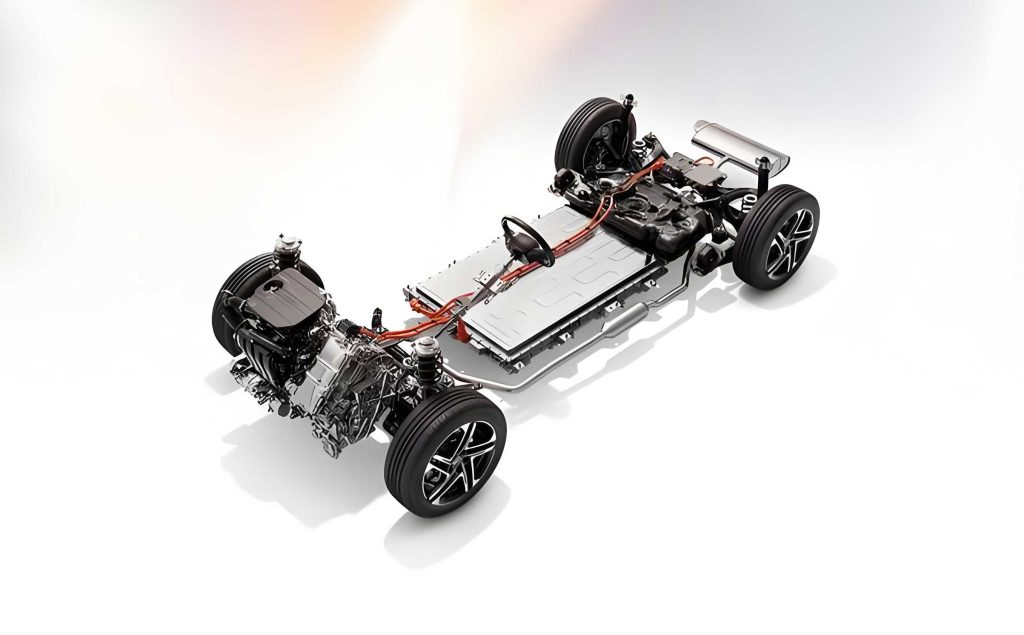
The development of hybrid car systems dates back to the early 20th century, with pioneers like Ferdinand Porsche designing the first hybrid car in 1900. The history can be divided into three stages: the initial phase (1900-1970), the revival phase (1970-1990), and the maturity phase (1990-present). Today, hybrid cars dominate the Chinese market, with systems like series (range-extender) and parallel-series configurations being prevalent. In my analysis, I will delve into these systems, emphasizing how hybrid car technology optimizes fuel efficiency and performance through innovative engineering.
Historical Evolution of Hybrid Car Systems
The journey of the hybrid car began over a century ago, but it wasn’t until the oil crises and environmental concerns of the 1970s that hybrid technology gained traction. Toyota’s Prius, launched in 1997, marked a turning point, popularizing hybrid cars globally. In China, the hybrid car market has exploded in recent years, driven by advancements in battery and control technologies. The maturity phase has seen companies like BYD, Geely, and Great Wall introduce competitive hybrid car systems, each with unique features. This evolution reflects a broader shift toward sustainable transportation, where hybrid cars play a pivotal role in reducing emissions and enhancing energy efficiency.
To quantify the progress, consider the improvement in thermal efficiency of hybrid car engines. Modern hybrid car engines, such as BYD’s Xiaoyun, achieve thermal efficiencies up to 43%, compared to around 30% for conventional engines. This can be expressed with the formula for thermal efficiency: $$\eta = \frac{W_{out}}{Q_{in}}$$ where $\eta$ is efficiency, $W_{out}$ is useful work output, and $Q_{in}$ is heat input. The higher efficiency in hybrid cars stems from optimized cycles like Atkinson, which sacrifices some power for better fuel economy. This mathematical representation underscores why hybrid cars excel in urban driving conditions.
Main Types of Hybrid Car Systems
In China’s current market, hybrid car systems are primarily categorized into series (range-extender) and parallel-series configurations. Understanding these types is crucial for evaluating hybrid car performance. Below, I outline their structures and operating modes, using tables and formulas to summarize key aspects.
Series (Range-Extender) Hybrid Car Systems
The series hybrid car, also known as a range-extender, has a simple structure where the internal combustion engine (ICE) acts solely as a generator to charge the battery or power the electric motor. The typical layout includes an ICE, generator, battery pack, and electric motor driving the wheels. This hybrid car design is favored for its reliability and efficiency in low-speed scenarios.
The operating modes of a series hybrid car are:
- Pure Electric Mode: The hybrid car runs solely on battery power, with the ICE off.
- Generation Mode: When battery charge is low, the ICE starts to generate electricity for the battery and motor.
- Mixed Mode: During high-demand situations like acceleration, both the battery and generator supply power to the motor.
The energy flow in a series hybrid car can be modeled as: $$P_{wheel} = \eta_{motor} \cdot (P_{battery} + P_{generator})$$ where $P_{wheel}$ is power at the wheels, $\eta_{motor}$ is motor efficiency, $P_{battery}$ is battery power, and $P_{generator}$ is generator power. However, this hybrid car system suffers from higher energy losses at high speeds due to multiple conversions, leading to increased fuel consumption compared to direct drive systems.
Parallel-Series Hybrid Car Systems
The parallel-series hybrid car, often called a power-split system, combines elements of both series and parallel configurations. It allows the ICE to directly drive the wheels or operate as a generator, providing flexibility across driving conditions. This hybrid car type is widely adopted by brands like BYD and Geely.
Key operating modes include:
- Pure Electric Mode: Similar to series hybrid cars.
- Generation Mode: ICE generates electricity without direct wheel drive.
- Parallel Mode: Both ICE and electric motor drive the wheels simultaneously.
- Direct Drive Mode: At cruising speeds, the ICE alone drives the wheels via a transmission.
The efficiency advantage of this hybrid car system lies in its ability to minimize energy loss. For instance, in direct drive mode, the power transfer can be expressed as: $$P_{wheel} = \eta_{transmission} \cdot P_{ICE}$$ where $\eta_{transmission}$ is transmission efficiency. This avoids the conversion losses seen in series hybrid cars, making parallel-series hybrid cars more fuel-efficient on highways.
To compare these hybrid car systems, I have summarized their characteristics in the table below:
| Hybrid Car System Type | Key Features | Advantages | Disadvantages |
|---|---|---|---|
| Series (Range-Extender) | ICE only generates electricity; simple structure | High efficiency in city driving; reliable | High fuel consumption at high speeds; energy conversion losses |
| Parallel-Series | ICE can drive wheels or generate; flexible modes | Better highway efficiency; higher performance | More complex; potentially higher cost |
Analysis of Major Hybrid Car Systems by Brand
China’s hybrid car market is dominated by several key players, each with distinct system designs. In my evaluation, I focus on BYD’s DM-i, Geely’s Leishen, Great Wall’s HI4, and Li Xiang’s range-extender systems. These hybrid car technologies showcase innovative approaches to balancing efficiency, performance, and cost.
BYD DM-i Hybrid Car System
BYD’s DM-i is a parallel-series hybrid car system that emphasizes fuel economy. Its standout feature is the dedicated Xiaoyun engine, optimized for hybrid use with an Atkinson cycle and high compression ratio of 15.5, achieving a thermal efficiency of 43%. This hybrid car system uses a single-speed direct drive for the ICE, reducing mechanical losses. The energy management strategy prioritizes electric driving in urban areas, switching to ICE only at optimal speeds. The efficiency gain can be represented as: $$\eta_{overall} = \eta_{engine} \cdot \eta_{electric} \cdot \eta_{transmission}$$ where $\eta_{overall}$ is overall efficiency, and each term corresponds to component efficiencies. This hybrid car approach has made BYD models like the Qin Plus DM-i leaders in low fuel consumption.
Geely Leishen Hybrid Car System
Geely’s Leishen hybrid car system employs a multi-speed transmission to connect the ICE to the drive shaft, enabling earlier parallel operation for enhanced performance. This hybrid car design allows the engine to engage at lower speeds, providing a power boost and addressing the high-speed acceleration limitations common in electric vehicles. The transmission efficiency plays a critical role, modeled as: $$P_{output} = \sum_{i=1}^{n} \eta_{gear_i} \cdot P_{input_i}$$ where $n$ is the number of gears. While this hybrid car system offers dynamic driving, its complexity may raise reliability concerns, which I believe require further market validation.
Great Wall HI4 Hybrid Car System
Great Wall’s HI4 is an innovative parallel-series hybrid car system that uses two motors to achieve four-wheel drive at a lower cost. By integrating front and rear motors with an ICE, this hybrid car can switch between two-wheel and four-wheel drive modes adaptively. The operating modes include pure electric rear-drive, series rear-drive, parallel front-drive, and direct drive with a 2-speed transmission. The power distribution in four-wheel drive mode can be expressed as: $$P_{total} = P_{front} + P_{rear} = \eta_{ICE} \cdot P_{engine} + \eta_{motor} \cdot P_{battery}$$ This hybrid car system excels in versatility, making it suitable for various road conditions, though its mechanical intricacy demands robust control software.
Li Xiang Range-Extender Hybrid Car System
Li Xiang’s system is a classic series hybrid car, focusing on simplicity and extended electric range. By eliminating direct ICE drive components, this hybrid car maximizes battery capacity and interior space, offering superior pure electric mileage. However, as noted earlier, series hybrid cars like this incur higher fuel usage on highways due to energy conversion inefficiencies. The fuel consumption in generation mode can be estimated as: $$FC = \frac{P_{demand}}{\eta_{generator} \cdot \eta_{motor} \cdot E_{fuel}}$$ where $FC$ is fuel consumption, $P_{demand}$ is power demand, and $E_{fuel}$ is energy content of fuel. This hybrid car type is ideal for urban commuters who prioritize electric driving.
Fuel Consumption Comparison of Hybrid Car Models
To provide a practical perspective, I have compiled fuel consumption data for representative hybrid car models under different driving conditions. The table below summarizes these statistics, highlighting how system design impacts efficiency. Note that factors like vehicle weight and aerodynamics influence results, but this comparison offers insights into real-world performance.
| Hybrid Car Model | Average Speed | Fuel Consumption (Under Charge Depletion) | Curb Weight |
|---|---|---|---|
| BYD Qin Plus DM-i 2023 Champion Edition 55km | 32 km/h | 3.5 L/100km | 1500 kg |
| BYD Qin Plus DM-i 2023 Champion Edition 55km | 74 km/h | 4.51 L/100km | 1500 kg |
| Great Wall Haval Xiaolong MAX | 35 km/h | 6.67 L/100km | 1980 kg |
| Great Wall Haval Xiaolong MAX | 97 km/h | 7.3 L/100km | 1980 kg |
| Li Xiang L7 | 39.4 km/h | 6.55 L/100km | 2440 kg |
| Li Xiang L7 | 95 km/h | 9.1 L/100km | 2440 kg |
From this data, it’s evident that hybrid car systems like BYD’s DM-i achieve lower fuel consumption across speeds, thanks to their efficient parallel-series design. In contrast, series hybrid cars like Li Xiang’s show higher consumption at high speeds, consistent with the energy loss model: $$E_{loss} = (1 – \eta_{conversion}) \cdot E_{input}$$ where $E_{loss}$ is energy loss per conversion stage. This reinforces the importance of selecting a hybrid car based on driving patterns.
Technical Insights and Future Trends
As I analyze these hybrid car systems, several technical aspects stand out. The control strategies for energy management are crucial in optimizing hybrid car performance. For instance, many hybrid cars use algorithms to switch between modes based on factors like battery state of charge (SOC) and power demand. This can be formulated as an optimization problem: $$\min_{P_{ICE}, P_{battery}} \int_{0}^{T} \dot{m}_{fuel}(t) dt$$ subject to constraints like SOC limits and power requirements, where $\dot{m}_{fuel}$ is fuel flow rate. Such strategies enable hybrid cars to balance efficiency and dynamics seamlessly.
Moreover, the integration of regenerative braking in hybrid cars enhances energy recovery. The kinetic energy captured during deceleration is given by: $$E_{regen} = \frac{1}{2} m v^2 \cdot \eta_{regen}$$ where $m$ is vehicle mass, $v$ is velocity, and $\eta_{regen}$ is regeneration efficiency. This feature is common across hybrid car types, contributing to lower overall energy use.
Looking ahead, I anticipate further innovations in hybrid car technology, such as more compact powertrains and advanced materials to reduce weight. The trend toward electrification will likely see hybrid cars evolving into plug-in hybrids with larger batteries, blurring the lines with pure electric vehicles. However, the core appeal of hybrid cars—their flexibility and range assurance—will remain key selling points.
Conclusion
In summary, the Chinese hybrid car market offers a diverse array of systems, each with distinct advantages. Series hybrid cars excel in urban efficiency and simplicity, while parallel-series hybrid cars provide better all-around performance and fuel economy. Brands like BYD, Geely, Great Wall, and Li Xiang have tailored their hybrid car technologies to meet different consumer needs, from cost-effectiveness to off-road capability. When choosing a hybrid car, I recommend considering your primary driving scenarios: if you mostly commute in cities, a series hybrid car might suffice, but for highway travel or varied terrain, a parallel-series hybrid car is preferable. Ultimately, the evolution of hybrid car systems reflects a commitment to sustainable mobility, and as technology advances, these vehicles will continue to play a vital role in the automotive landscape.
To encapsulate the efficiency gains, the overall benefit of a hybrid car can be expressed as: $$B = \frac{Fuel_{conventional} – Fuel_{hybrid}}{Fuel_{conventional}} \times 100\%$$ where $B$ is the percentage fuel savings. With modern hybrid cars achieving savings of 30% or more, it’s clear that investing in a hybrid car is not only economical but also environmentally responsible. As I continue to monitor this field, I am optimistic about the future of hybrid cars in driving us toward a greener tomorrow.