
In the rapidly evolving automotive industry, the shift toward electrification has become a central focus, driven by the need for reduced emissions and improved energy efficiency. As a leader in semiconductor solutions, we are committed to advancing technologies that power the next generation of vehicles, particularly hybrid cars and fully electric vehicles. The development of high-performance power devices is crucial for enhancing the efficiency and reliability of these systems. In this context, we introduce our latest innovation: the 650V IGBT series based on TRENCHSTOP™ 5 AUTO technology, designed specifically to meet the demanding requirements of modern hybrid car and electric vehicle applications. This article delves into the technical details, performance benefits, and applications of this groundbreaking series, emphasizing its impact on hybrid car efficiency and overall vehicle performance.
The automotive sector increasingly relies on power electronics for critical functions such as onboard charging, power factor correction (PFC), DC/DC conversion, and DC/AC inversion. In hybrid cars, which combine internal combustion engines with electric propulsion, optimizing power loss is essential to maximize fuel economy and minimize CO2 emissions. Our new 650V IGBT series addresses these challenges by offering superior efficiency and robustness. Compared to previous generations, this series achieves a higher blocking voltage of 650V, which is 50V greater than earlier IGBTs, enabling safer operation in high-voltage environments common in hybrid car architectures.
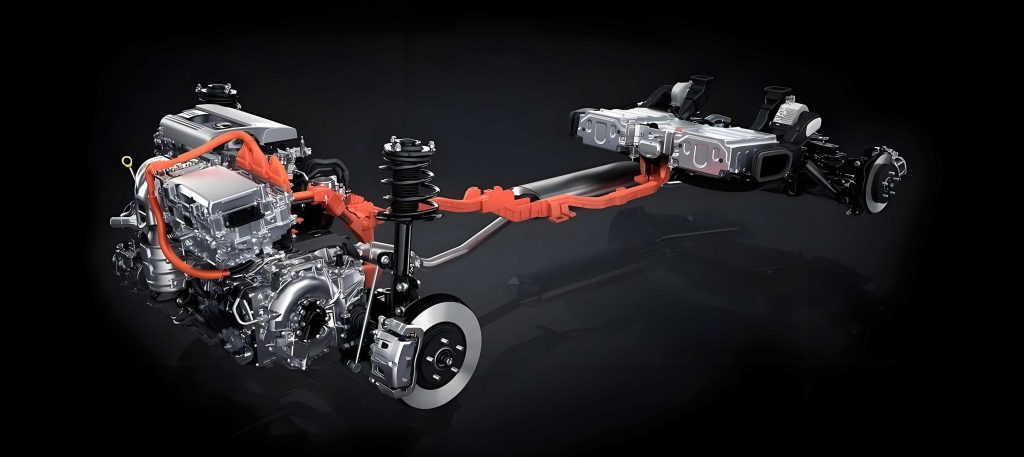
At the core of this advancement is our TRENCHSTOP™ 5 thin-wafer technology, which delivers industry-leading efficiency. The key improvements include a reduction in saturation voltage (\(V_{CE(sat)}\)) by 200 mV, a halving of switching losses, and a 2.5-fold decrease in gate charge. These enhancements translate directly into lower power dissipation and higher reliability. To quantify the benefits, consider the following table summarizing the performance metrics of our new IGBT series compared to state-of-the-art alternatives:
| Parameter | State-of-the-Art IGBT | TRENCHSTOP™ 5 AUTO IGBT | Improvement |
|---|---|---|---|
| Blocking Voltage | 600 V | 650 V | +50 V |
| Saturation Voltage (\(V_{CE(sat)}\)) | 1.8 V | 1.6 V | -200 mV |
| Switching Losses (\(E_{sw}\)) | 2.0 mJ | 1.0 mJ | 50% reduction |
| Gate Charge (\(Q_g\)) | 250 nC | 100 nC | 2.5x lower |
| Junction Temperature (\(T_j\)) | 150°C | 140°C | 10°C lower |
These improvements stem from advanced cell design and processing techniques. The lower \(V_{CE(sat)}\) reduces conduction losses, which can be expressed as:
$$ P_{cond} = I_{C} \times V_{CE(sat)} $$
where \(I_{C}\) is the collector current. For a typical operating current of 40 A, the conduction loss reduction is approximately:
$$ \Delta P_{cond} = I_{C} \times \Delta V_{CE(sat)} = 40 \times 0.2 = 8 \text{ W} $$
Similarly, switching losses (\(P_{sw}\)) are proportional to switching frequency (\(f_{sw}\)) and energy per switch (\(E_{sw}\)):
$$ P_{sw} = f_{sw} \times E_{sw} $$
With \(E_{sw}\) halved, the switching loss reduction is significant, especially in high-frequency applications like those found in hybrid car power converters. The overall power loss (\(P_{loss}\)) in an IGBT is the sum of conduction and switching losses:
$$ P_{loss} = P_{cond} + P_{sw} $$
By minimizing both components, our IGBT series achieves lower junction and case temperatures, enhancing device longevity and reducing cooling requirements. This is critical in hybrid car environments, where thermal management is paramount due to space constraints and varying operating conditions.
The efficiency gains have profound implications for hybrid car performance. For instance, in a typical onboard charger with a PFC circuit, replacing existing IGBTs with our TRENCHSTOP™ 5 AUTO series increases efficiency from 97.5% to 97.9%. The efficiency (\(\eta\)) is defined as:
$$ \eta = \frac{P_{out}}{P_{in}} \times 100\% $$
For a 3.3 kW charger, the output power (\(P_{out}\)) is 3300 W. The input power (\(P_{in}\)) can be derived from efficiency:
$$ P_{in} = \frac{P_{out}}{\eta} $$
Thus, at 97.5% efficiency, \(P_{in} \approx 3384.6 \text{ W}\), and at 97.9% efficiency, \(P_{in} \approx 3370.8 \text{ W}\). The reduction in input power loss is:
$$ \Delta P_{loss} = 3384.6 – 3370.8 = 13.8 \text{ W} $$
This aligns with the reported 13 W loss reduction. Over a 5-hour charging cycle, the energy saved is:
$$ E_{saved} = \Delta P_{loss} \times t = 13 \times 5 = 65 \text{ Wh} $$
Assuming an average CO2 emission factor of 0.5 kg per kWh from grid electricity, the CO2 reduction per charge is:
$$ \Delta CO_2 = 65 \times 10^{-3} \times 0.5 = 0.0325 \text{ kg} \approx 30 \text{ g} $$
While this may seem modest per charge, scaling to millions of hybrid cars globally results in substantial environmental benefits. Moreover, for hybrid cars, improved efficiency directly translates to lower fuel consumption and extended electric-only range, making hybrid cars more appealing to consumers.
Our IGBT series is available in multiple configurations to suit diverse applications. The table below outlines the product variants and their key specifications:
| Product Type | Current Rating | Configuration | Series Option | Target Application |
|---|---|---|---|---|
| Discrete IGBT | 40 A, 50 A | Single IGBT | H5 HighSpeed or F5 HighSpeed FAST | General-purpose converters |
| Co-packaged IGBT with Diode | 40 A, 50 A | IGBT + Rapid Diode | H5 HighSpeed or F5 HighSpeed FAST | High-frequency circuits in hybrid cars |
The H5 HighSpeed series is optimized for applications where switching speed is prioritized, while the F5 HighSpeed FAST series focuses on achieving the highest efficiency. This flexibility allows designers to tailor solutions based on specific requirements, such as those in hybrid car powertrains, where both efficiency and dynamic response are critical. The integration with our ultrafast “Rapid” silicon diodes further reduces reverse recovery losses, enhancing overall system performance.
Beyond onboard chargers, our IGBTs excel in various hybrid car systems. For example, in DC/DC converters that manage voltage levels between the battery and motor, lower losses mean less heat generation and higher power density. This is vital for hybrid cars, which often have compact layouts. Additionally, in DC/AC inverters for motor drives, improved switching characteristics lead to smoother torque control and better energy recuperation during braking. The cumulative effect across these subsystems significantly boosts the fuel economy of hybrid cars, aligning with global regulations on emissions.
To further illustrate the advantages, consider a mathematical model for a hybrid car’s energy consumption. Let \(E_{total}\) be the total energy required for a driving cycle, composed of electric energy (\(E_{elec}\)) and fuel energy (\(E_{fuel}\)). The electric energy efficiency depends on power converter efficiency (\(\eta_{conv}\)). With our IGBTs, \(\eta_{conv}\) increases, reducing \(E_{elec}\) and potentially shifting load to the electric side, thereby saving fuel. For a hybrid car with a battery capacity \(C_{bat}\) and average power demand \(P_{avg}\), the range extension (\(\Delta R\)) can be estimated as:
$$ \Delta R = \frac{C_{bat} \times \Delta \eta_{conv}}{P_{avg}} $$
where \(\Delta \eta_{conv}\) is the efficiency improvement. Assuming a 0.4% boost (from 97.5% to 97.9%) and typical values, this can add several kilometers to the electric range, enhancing the appeal of hybrid cars in urban settings.
The robustness of our IGBT series is ensured by compliance with the AEC-Q standard, which mandates rigorous testing for automotive environments. This includes temperature cycling, humidity resistance, and vibration tests, making the devices suitable for the harsh conditions encountered in hybrid cars. The higher blocking voltage also provides a safety margin against voltage spikes, common in automotive electrical systems due to regenerative braking or load dumps.
In terms of design implications, the reduced gate charge simplifies gate driver design, allowing for smaller drivers and lower parasitic effects. This is particularly beneficial in space-constrained hybrid car modules. Moreover, the lower thermal resistance enables more compact heatsinks, contributing to overall weight reduction—a key factor in improving hybrid car efficiency. The following equation relates thermal resistance (\(\theta_{JC}\)), power loss, and temperature rise:
$$ T_j – T_c = P_{loss} \times \theta_{JC} $$
With \(P_{loss}\) decreased, the temperature difference shrinks, permitting higher power densities or relaxed cooling.
Looking ahead, the adoption of such high-efficiency IGBTs will accelerate the electrification of transportation. As hybrid cars evolve into plug-in hybrids and full electrics, the demand for reliable power electronics will only grow. Our TRENCHSTOP™ 5 technology positions us at the forefront, enabling designers to push the boundaries of performance. Future iterations may explore wider bandgap materials, but for now, silicon-based IGBTs remain cost-effective and proven, especially for the mass market of hybrid cars.
In conclusion, our 650V IGBT series represents a significant leap forward for automotive power electronics. By leveraging TRENCHSTOP™ 5 AUTO technology, we deliver unmatched efficiency, reliability, and flexibility. For hybrid cars, this translates to tangible benefits: extended range, lower fuel consumption, reduced CO2 emissions, and improved overall value. As we continue to innovate, we remain dedicated to supporting the automotive industry’s transition to sustainable mobility, with hybrid cars playing a pivotal role in this journey. The integration of advanced semiconductors like our IGBTs will undoubtedly drive the future of hybrid cars and beyond, making transportation cleaner and more efficient for all.
To summarize the key technical formulas discussed in this article:
- Conduction loss: $$ P_{cond} = I_{C} \times V_{CE(sat)} $$
- Switching loss: $$ P_{sw} = f_{sw} \times E_{sw} $$
- Total power loss: $$ P_{loss} = P_{cond} + P_{sw} $$
- Efficiency: $$ \eta = \frac{P_{out}}{P_{in}} \times 100\% $$
- CO2 savings: $$ \Delta CO_2 = E_{saved} \times \text{emission factor} $$
- Range extension: $$ \Delta R = \frac{C_{bat} \times \Delta \eta_{conv}}{P_{avg}} $$
- Thermal relationship: $$ T_j – T_c = P_{loss} \times \theta_{JC} $$
These principles underscore the importance of continuous improvement in power devices for hybrid cars. As the market for hybrid cars expands, such innovations will become increasingly vital in meeting global energy and environmental goals. We are excited to contribute to this transformation with our cutting-edge IGBT solutions.