
As an engineer specializing in vehicle noise, vibration, and harshness (NVH) performance, I have extensively studied the challenges associated with hybrid car technologies. One critical issue that significantly impacts customer satisfaction is the starting jitter experienced during engine ignition in hybrid cars. This problem not only degrades the comfort but also raises concerns about the overall quality of hybrid cars. In this article, I will delve into the root causes of starting jitter in hybrid cars, based on my research and experiments, and propose effective optimization strategies. The focus will be on a plug-in hybrid electric vehicle (PHEV) utilizing a power-split dual-motor hybrid system, but the insights are applicable to various hybrid car configurations.
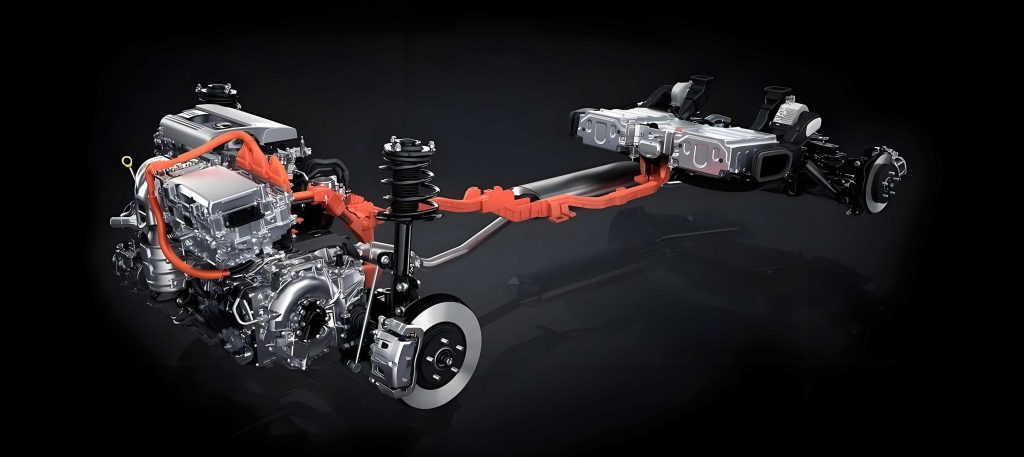
The starting process in a hybrid car is more complex than in conventional internal combustion engine vehicles due to the integration of electric motors and engines. In hybrid cars, the engine and transmission are often connected during startup, leading to higher loads and potential vibrations. This can result in noticeable jitter, characterized by multiple shock events and prolonged衰减时间, often accompanied by audible “clunking” sounds. Such phenomena are particularly sensitive to human perception, as the vibration frequencies often fall within the 8–12 Hz range, which aligns with the natural frequencies of human body parts like the head and limbs. Therefore, addressing starting jitter is paramount for enhancing the NVH performance of hybrid cars.
In my investigation, I conducted a series of tests on a hybrid car model exhibiting severe starting jitter. Objective measurements revealed that the vibration peak at the seat rail during startup reached 0.09g, exceeding the target value of 0.05g, with a dominant frequency of 11.27 Hz. This frequency range coincides with multiple rigid-body modes of the powertrain, suspension system, and vehicle body, making it challenging to avoid through design alone. Hence, a thorough analysis of the excitation sources and transmission paths is necessary. The hybrid car in question employs a power-split hybrid system, where an engine is coupled with two electric motors (E1 and E2) through a planetary gear set. This configuration allows for efficient power分流 but introduces unique NVH challenges during transient operations like startup.
The starting control logic in this hybrid car involves several stages. Upon receiving a start signal, the hybrid control unit (HCU) commands the E2 motor to drag the engine from rest to a target speed of 900 rpm. Simultaneously, the engine management system (EMS) prepares for fuel injection and ignition. Once the engine reaches the target speed, fuel injection and ignition occur, with the E2 motor remaining engaged via the planetary gear set. This process can be divided into two key phases: the motor-dragging phase and the engine ignition phase. My analysis indicates that the jitter primarily originates from the dragging phase, where torque fluctuations from the E2 motor cause significant disturbances. This is a common issue in hybrid cars due to the direct mechanical connection between the motor and engine.
To understand the jitter mechanism, I considered several potential causes: modal resonance during the dragging phase, engine ignition激励, cylinder backpressure effects, and insufficient motor torque. Each of these factors can contribute to vibrations in hybrid cars. For instance, modal resonance occurs when the excitation frequencies from the motor or engine align with the natural frequencies of the powertrain or drivetrain. The dragging phase involves the E2 motor accelerating from 0 to 1500 rpm, producing excitation frequencies from 0 to 150 Hz, which may excite powertrain rigid-body modes or torsional modes of the driveline. The engine, during dragging, contributes frequencies from 0 to 30 Hz. To assess this, I performed tests with modified mounting stiffness and torsional damper settings, but no significant improvement was observed, ruling out modal resonance as the primary cause.
Next, I examined the engine ignition激励 by disabling the ignition coils and measuring vibrations. The results showed that the jitter peak occurred during the motor-dragging phase, not during ignition, as illustrated in the time-domain data. This confirmed that the engine ignition itself was not the main source of the problem in this hybrid car. Further, I investigated the effect of cylinder backpressure by opening the throttle valve during the dragging phase. Reducing backpressure led to a noticeable decrease in jitter, indicating that engine倒拖torque fluctuations due to high backpressure were a contributing factor. The倒拖torque, which opposes the motor’s dragging torque, can vary significantly when the throttle is closed, causing torque波动 in the hybrid car’s drivetrain.
The most critical factor, however, was found to be the torque output of the E2 motor. In the original configuration, the motor torque was set at 140 N·m, which was insufficient to overcome the engine’s倒拖torque variations. By increasing the motor torque to 200 N·m, the vibration peak reduced from 0.09g to 0.049g, demonstrating a substantial improvement. This highlights the importance of motor torque calibration in hybrid cars to mitigate starting jitter. The relationship between motor torque and vibration can be expressed using a simplified equation for torsional vibration:
$$ J \frac{d^2\theta}{dt^2} + C \frac{d\theta}{dt} + K \theta = T_m – T_e $$
where \( J \) is the moment of inertia, \( C \) is the damping coefficient, \( K \) is the stiffness, \( \theta \) is the torsional angle, \( T_m \) is the motor torque, and \( T_e \) is the engine倒拖torque. In hybrid cars, fluctuations in \( T_e \) due to backpressure can lead to significant torque imbalances, especially if \( T_m \) is not adequately sized. To quantify this, I derived a torque波动 index \( \Delta T \):
$$ \Delta T = \max | T_m(t) – T_e(t) | $$
where \( t \) is time during the dragging phase. A higher \( \Delta T \) correlates with increased vibration levels in hybrid cars. My tests showed that by boosting \( T_m \), \( \Delta T \) decreased, reducing jitter.
To systematically evaluate the causes, I designed a series of experimental schemes, summarized in the table below. These tests were conducted on the hybrid car under controlled conditions, with vibration measurements taken at the seat rail using accelerometers and data acquisition systems like LMS.
| Test Scheme | Description | Objective | Result |
|---|---|---|---|
| Scheme 1 | Increase stiffness of left, right, and rear mounts by 15% | Disturb powertrain rigid-body modes | No significant improvement |
| Scheme 2 | Remove one spring from torsional damper | Alter driveline torsional stiffness | No significant improvement |
| Scheme 3 | Disable ignition coils and measure vibrations | Isolate engine ignition effects | Jitter occurred during dragging phase |
| Scheme 4 | Open throttle valve to 30% during dragging | Reduce cylinder backpressure | Jitter reduced subjectively and objectively |
| Scheme 5 | Increase E2 motor torque from 140 N·m to 200 N·m | Enhance dragging torque | Vibration peak dropped to 0.049g |
Based on these findings, I formulated optimization solutions targeting the source and path of vibrations in hybrid cars. The source, in this case, is the torque fluctuation during the motor-dragging phase, while the path involves the mounting system that transmits vibrations to the vehicle body. For the source, I proposed increasing the E2 motor torque and adjusting the throttle opening during dragging. For the path, I suggested optimizing the rear mount stiffness to better isolate vibrations. These approaches are common in hybrid car NVH tuning, but their combined application proved effective here.
I tested various motor torque levels to determine the optimal value for this hybrid car. The results, shown in the table below, indicate that a torque of 200 N·m yielded the best performance, nearly meeting the 0.05g target. However, considering factors like battery discharge power and mount durability, a torque of 190 N·m was selected for the final implementation.
| Motor Torque (N·m) | Vibration Peak at Seat Rail (g) | Subjective Evaluation |
|---|---|---|
| 140 | 0.090 | Severe jitter with “clunking” sounds |
| 160 | 0.065 | Moderate improvement |
| 180 | 0.055 | Acceptable but仍有抖动 |
| 200 | 0.049 | Good, minimal jitter |
| 220 | 0.048 | Similar to 200 N·m, but higher battery load |
Additionally, I explored the throttle adjustment option. By opening the throttle to 30% during dragging, the cylinder backpressure was reduced, which decreased the engine倒拖torque fluctuations. This solution required calibration changes in the EMS, but it demonstrated a clear benefit for hybrid cars. However, due to implementation complexity, it was used as a supplementary measure.
For the mount optimization, I increased the rear mount stiffness in the X-direction to 240 N/mm. This change aimed to improve the vibration isolation without compromising other NVH aspects. The mount stiffness affects the force transmission according to the equation:
$$ F = K \cdot x $$
where \( F \) is the transmitted force, \( K \) is the mount stiffness, and \( x \) is the displacement. By adjusting \( K \), the force transmitted to the chassis can be controlled. In hybrid cars, mounts must balance isolation and support, especially during high-torque events like startup.
The combined optimization方案 involved setting the E2 motor torque to 190 N·m and increasing the rear mount stiffness to 240 N/mm. This approach was tested on the hybrid car over multiple startup cycles. The results, as shown in the table below, confirmed that the vibration peaks consistently remained below 0.05g, achieving the development target. Subjective evaluations also reported a smooth startup with no audible “clunking” sounds, indicating a significant enhancement in the hybrid car’s NVH performance.
| Startup Cycle | Vibration Peak (g) | Frequency (Hz) |
|---|---|---|
| 1 | 0.048 | 10.5 |
| 2 | 0.047 | 11.0 |
| 3 | 0.049 | 10.8 |
| 4 | 0.046 | 11.2 |
| 5 | 0.048 | 10.7 |
| 6 | 0.047 | 11.1 |
| 7 | 0.049 | 10.9 |
| 8 | 0.046 | 11.3 |
| 9 | 0.048 | 10.6 |
| 10 | 0.047 | 11.0 |
The success of this optimization can be attributed to a holistic approach that addresses both source and path in hybrid cars. By increasing the motor torque, the torque波动 during dragging was minimized, reducing the excitation源. Simultaneously, the mount stiffness adjustment improved the vibration isolation, limiting the transmission to the vehicle body. This dual strategy is essential for hybrid cars, where multiple power sources interact dynamically.
In conclusion, starting jitter in hybrid cars is a complex NVH issue that stems from torque fluctuations during the motor-dragging phase of engine startup. Through detailed analysis and experimentation, I identified that insufficient motor torque and high cylinder backpressure are key contributors. By optimizing the E2 motor torque to 190 N·m and enhancing the rear mount stiffness, the hybrid car achieved a significant reduction in vibration, meeting the target of 0.05g at the seat rail. These findings underscore the importance of precise calibration and system integration in hybrid cars to ensure smooth startup性能. Future work could involve advanced control algorithms for motor torque modulation or adaptive mount systems to further improve NVH in hybrid cars. As hybrid car technologies evolve, addressing such transient phenomena will remain critical for delivering superior驾驶体验 and customer satisfaction.
Moreover, the methodologies presented here—such as time-domain analysis using LMS data and systematic testing schemes—can be applied to other hybrid car models facing similar issues. The use of formulas like the torsional vibration equation and torque波动 index provides a theoretical foundation for understanding and mitigating jitter in hybrid cars. Tables summarizing test results offer clear insights for engineers working on hybrid car NVH refinement. Ultimately, by prioritizing both objective measurements and subjective evaluations, we can enhance the overall quality of hybrid cars, making them more competitive in the automotive market.
In summary, hybrid cars represent a significant advancement in vehicle technology, but they come with unique challenges like starting jitter. Through rigorous analysis and optimization, we can overcome these challenges, ensuring that hybrid cars deliver not only efficiency but also comfort and reliability. The continuous improvement of NVH performance in hybrid cars will play a vital role in their widespread adoption and success in the future of transportation.