
As a researcher focused on automotive trends, I have observed a significant shift in national strategies from primarily developing pure electric vehicles to embracing multiple technological pathways. This transition, coupled with higher requirements for energy-saving and new energy vehicles, presents both challenges and opportunities for the hybrid car market. In this context, understanding the current development characteristics of the hybrid car market and exploring consumer demand is crucial for predicting its future direction and achieving strategic national goals. Based on extensive analysis, this article summarizes the technical routes and features of conventional hybrid electric vehicles (HEVs) and plug-in hybrid electric vehicles (PHEVs), examines market development and user needs, and forecasts prospects considering policies and technology.
The evolution of hybrid cars reflects broader automotive industry trends. I find that hybrid cars, which combine internal combustion engines with electric motors, offer a practical solution to reduce emissions and improve fuel efficiency. The market for hybrid cars has grown steadily, driven by technological advancements and consumer awareness. Here, I delve into the intricacies of hybrid car technologies and their market dynamics.
Introduction to Hybrid Cars
Hybrid cars represent a bridge between traditional fuel vehicles and pure electric vehicles. They leverage dual power sources to optimize performance and efficiency. In my analysis, I categorize hybrid cars into two main types: conventional hybrid electric vehicles (HEVs) and plug-in hybrid electric vehicles (PHEVs). Each type has distinct characteristics that influence consumer adoption and market trends.
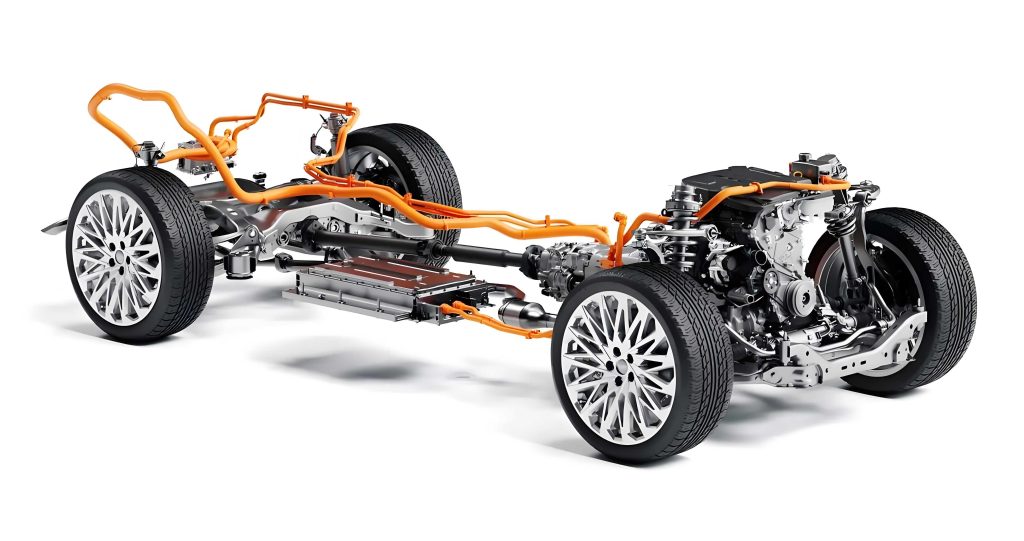
Conventional hybrid electric vehicles (HEVs) utilize both an internal combustion engine and an electric motor for propulsion. This synergy allows hybrid cars to enhance thermal efficiency by over 10% and reduce emissions by more than 30%, addressing fossil fuel dependency and environmental concerns. However, HEVs lack external charging ports and do not qualify as new energy vehicles, limiting their eligibility for green license plates. Additionally, HEVs typically have smaller battery capacities and lower energy density, which can result in weaker power output, especially during high-speed acceleration.
The technical routes for HEVs are primarily dominated by two approaches: the power-split system based on planetary gears, exemplified by Toyota, and the motor-engine connection method, championed by Honda. Toyota’s early development has established high patent barriers, making it a leader in the hybrid car segment. The efficiency of HEVs can be expressed mathematically as:
$$ \eta_{\text{HEV}} = \frac{P_{\text{engine}} + P_{\text{motor}}}{P_{\text{fuel}}} \times 100\% $$
where $\eta_{\text{HEV}}$ is the overall efficiency, $P_{\text{engine}}$ is the engine power output, $P_{\text{motor}}$ is the motor power output, and $P_{\text{fuel}}$ is the fuel power input. This formula highlights how hybrid cars improve energy utilization.
Plug-in hybrid electric vehicles (PHEVs) are a subset of hybrid cars that can be charged externally, qualifying them as new energy vehicles with green license plates. They combine elements from both pure electric vehicles and HEVs, enabling zero-emission driving in electric mode and extended range through hybrid operation. In my assessment, PHEVs offer greater flexibility, as they can operate solely on electricity for short trips while using the engine for longer journeys.
Domestic manufacturers like BYD, Geely, and SAIC have developed dedicated PHEV systems, with BYD’s DM-i super hybrid system gaining notable market favor since its 2021 launch. Internationally, brands such as Toyota and Honda have adapted existing hybrid systems by enlarging batteries and adjusting control logic, while Audi has employed additional motors and clutches. General Motors and BMW have also engineered specialized PHEV systems, with BMW’s dual-motor architecture showing relatively good market performance. The electric range of a PHEV can be modeled as:
$$ R_{\text{electric}} = \frac{C_{\text{battery}} \times \eta_{\text{battery}}}{E_{\text{consumption}}} $$
where $R_{\text{electric}}$ is the electric range, $C_{\text{battery}}$ is the battery capacity, $\eta_{\text{battery}}$ is the battery efficiency, and $E_{\text{consumption}}$ is the energy consumption per distance. This emphasizes the importance of battery technology in hybrid cars.
Market Characteristics of Hybrid Cars
From a market perspective, I have analyzed sales data to identify key trends. The overall market for hybrid cars has expanded, with increasing penetration in both new energy and traditional vehicle segments. The growth aligns with national roadmaps, such as the Technology Roadmap for Energy-saving and New Energy Vehicles, which targets higher sales proportions for hybrid cars by 2025.
Overall Market Situation
The share of new energy vehicles in passenger cars and the share of HEVs in traditional energy vehicles have been rising annually. Based on sales data up to July 2021, new energy vehicles accounted for 10% of passenger car sales, nearing the 15% target for 2025. In contrast, HEVs represented less than 4% of traditional energy vehicle sales, indicating a longer path to achieve the 20% goal. This disparity underscores the need for accelerated adoption of hybrid cars. The growth rate can be expressed as:
$$ G(t) = \frac{S(t) – S(t-1)}{S(t-1)} \times 100\% $$
where $G(t)$ is the growth rate in year $t$, and $S(t)$ is the sales volume. For hybrid cars, this rate has varied between HEVs and PHEVs.
In the hybrid car细分 market, HEV sales have generally outpaced PHEV sales, except in 2015. The table below summarizes the sales proportion trends from 2014 to 2020, highlighting how PHEVs initially surged due to policy incentives but later faced competition from HEVs.
| Year | HEV Sales Proportion (%) | PHEV Sales Proportion (%) |
|---|---|---|
| 2014 | 40 | 60 |
| 2015 | 35 | 65 |
| 2016 | 45 | 55 |
| 2017 | 50 | 50 |
| 2018 | 52 | 48 |
| 2019 | 55 | 45 |
| 2020 | 58 | 42 |
This table illustrates the dynamic competition within the hybrid car market. The resurgence of PHEVs in 2021 can be attributed to technological innovations like BYD’s DM-i system, which enhanced fuel economy and performance.
Brand and Model Analysis
Most brands have deployed both HEV and PHEV models, but sales focus varies. I have compiled data on brand preferences up to July 2021, showing that Japanese brands dominate HEV sales, while domestic brands lead in PHEVs. The following table categorizes brands based on their hybrid car sales emphasis.
| Brand Focus on HEVs | Brand Focus on PHEVs | Brands with PHEV Sales > HEV Sales | Brands with HEV Sales > PHEV Sales |
|---|---|---|---|
| Lexus, Honda, Toyota, etc. | BYD, BMW, Mercedes, etc. | Audi, Ford, Geely, etc. | Toyota, Honda, etc. |
In the HEV segment, Japanese brands, particularly Toyota and Honda, have maintained a stronghold, with sales concentrated in models like the Corolla, Camry, and Accord. Their market share can be modeled using a concentration ratio:
$$ CR_n = \sum_{i=1}^{n} s_i $$
where $CR_n$ is the concentration ratio for the top $n$ brands, and $s_i$ is the market share of brand $i$. For HEVs, the top two brands account for over 80% of sales, indicating high market concentration.
For PHEVs, domestic brands like BYD have consistently topped sales charts, though new entrants like Li Auto have rapidly gained traction with models such as the Li ONE. The competitive landscape is more fragmented, with multiple brands vying for market share. The sales growth for top PHEV brands is summarized below.
| Rank | Brand (2013-2021) | Average Sales Share (%) |
|---|---|---|
| 1 | BYD | 45.2 |
| 2 | BMW | 12.5 |
| 3 | Volkswagen | 10.8 |
| 4 | Li Auto | 8.5 |
| 5 | Roewe | 7.3 |
This data reflects the evolving nature of the hybrid car market, where innovation and consumer preferences drive brand performance.
Vehicle Type and Price Trends
In terms of vehicle types, sedans have historically dominated HEV sales, though SUVs and MPVs have seen growth, especially since 2019. For PHEVs, SUVs and sedans are the primary segments, with SUVs gaining popularity in recent years. The distribution of hybrid car sales by type can be expressed as a proportion:
$$ P_{\text{type}} = \frac{S_{\text{type}}}{S_{\text{total}}} \times 100\% $$
where $P_{\text{type}}$ is the proportion for a vehicle type, $S_{\text{type}}$ is its sales, and $S_{\text{total}}$ is total hybrid car sales. For example, in 2021, HEV sedans accounted for approximately 50% of HEV sales, while PHEV SUVs reached 40%.
Price analysis reveals that HEV prices initially concentrated in higher ranges but have shifted toward the 20,000-25,000 USD interval, driven by models like the Toyota Corolla and Honda Accord. PHEV prices have diversified, with increasing sales in the 15,000-20,000 USD range due to more affordable options from domestic brands. The average price trend can be modeled linearly:
$$ \bar{P}(t) = \alpha + \beta t $$
where $\bar{P}(t)$ is the average price in year $t$, $\alpha$ is the intercept, and $\beta$ is the slope indicating price change over time. For hybrid cars, $\beta$ has been negative for HEVs and positive for PHEVs, reflecting different market strategies.
Consumer Demand for Hybrid Cars
Understanding consumer demographics is key to forecasting hybrid car adoption. I have examined age, regional, and urban distribution patterns for hybrid car buyers up to July 2021, using first-hand data analysis.
Age Distribution
Hybrid car buyers are predominantly from the 1980s generation, constituting about 40% of both HEV and PHEV purchases. However, there are notable differences: consumers in their 70s show a preference for HEVs, while those in their 90s favor PHEVs. This suggests that younger generations are more inclined toward plug-in hybrid cars, possibly due to greater environmental awareness or tech-savviness. The age distribution can be represented as a probability density function:
$$ f(a) = \frac{1}{\sigma \sqrt{2\pi}} e^{-\frac{(a – \mu)^2}{2\sigma^2}} $$
where $f(a)$ is the proportion of buyers at age $a$, $\mu$ is the mean age, and $\sigma$ is the standard deviation. For PHEVs, $\mu$ is lower, indicating a younger demographic for hybrid cars with charging capabilities.
Regional Distribution
Geographically, hybrid car sales are heavily concentrated in eastern and southern coastal regions, such as East China and South China, which together account for over 50% of national sales. This contrasts with lower adoption in northeastern and northwestern areas. The regional sales proportion $R_i$ for region $i$ can be calculated as:
$$ R_i = \frac{S_i}{\sum_{j=1}^{n} S_j} \times 100\% $$
where $S_i$ is sales in region $i$, and $n$ is the number of regions. For hybrid cars, $R_{\text{East China}}$ exceeds 30%, highlighting regional disparities in market penetration.
The table below summarizes hybrid car sales by region for 2021, based on personal and unit purchases.
| Region | Personal Purchase Share (%) | Unit Purchase Share (%) | Total Share (%) |
|---|---|---|---|
| East China | 35 | 30 | 32.5 |
| South China | 25 | 20 | 22.5 |
| North China | 15 | 18 | 16.5 |
| Central China | 10 | 12 | 11 |
| Southwest China | 8 | 10 | 9 |
| Northeast China | 5 | 6 | 5.5 |
| Northwest China | 2 | 4 | 3 |
This data underscores the importance of regional policies and infrastructure in promoting hybrid cars.
Urban Distribution
Hybrid car sales are primarily concentrated in tier 1, 2, and 3 cities, with lower coverage in下沉 markets. For PHEVs, tier 1 cities lead with 40% of sales, likely due to policies like purchase restrictions and higher environmental standards. HEVs are more prevalent in tier 2 cities, accounting for 27% of sales. The urban distribution can be expressed using a Gini coefficient to measure inequality:
$$ G = \frac{\sum_{i=1}^{n} \sum_{j=1}^{n} |x_i – x_j|}{2n^2 \bar{x}} $$
where $x_i$ is the sales share in city tier $i$, $\bar{x}$ is the mean share, and $n$ is the number of tiers. For hybrid cars, $G$ is high, indicating uneven market development across city tiers.
Future Prospects and Conclusion
Looking ahead, the hybrid car market is poised for growth, driven by technological advancements and policy support. The Technology Roadmap 2.0 aims to increase the share of HEVs in traditional energy vehicles to 50% by 2025, which will likely stimulate further innovation and competition. Based on my analysis, I predict that hybrid cars will continue to evolve, with PHEVs gaining market share as charging infrastructure expands and battery costs decline.
The adoption rate of hybrid cars can be forecasted using a logistic growth model:
$$ A(t) = \frac{K}{1 + e^{-r(t – t_0)}} $$
where $A(t)$ is the adoption proportion at time $t$, $K$ is the carrying capacity (maximum market share), $r$ is the growth rate, and $t_0$ is the inflection point. For hybrid cars, $K$ is estimated at 30% of total vehicle sales by 2030, with $r$ varying by region.
In conclusion, hybrid cars represent a critical component of the automotive transition. Their market characteristics, such as brand dominance and consumer demographics, reveal both challenges and opportunities. By leveraging data-driven insights, stakeholders can better navigate this dynamic landscape. As hybrid car technologies mature, I anticipate increased consumer acceptance and broader market penetration, contributing to sustainable mobility goals.
This analysis underscores the importance of continuous monitoring and adaptation in the hybrid car sector. With ongoing research and development, hybrid cars will likely play a pivotal role in reducing emissions and enhancing energy efficiency, solidifying their position in the global automotive market.