
In the context of the continuous expansion of the automotive industry scale and the increasing vehicle ownership, the market share of hybrid cars has been steadily rising. With clear technological pathways, hybrid cars possess broad market development prospects. As an engineer engaged in automotive research and development, I focus on enhancing the comfort and energy efficiency of hybrid vehicles through innovative design approaches. This article, based on a clear understanding of the principles of the air conditioning refrigeration system in hybrid cars, elaborates on the main components that should be considered in the design, utilizes model analysis to examine the impact of these components on system performance, and proposes corresponding optimization directions. The goal is to promote the development of air conditioning refrigeration system design for hybrid cars, effectively improve comfort, and achieve excellent energy-saving effects.
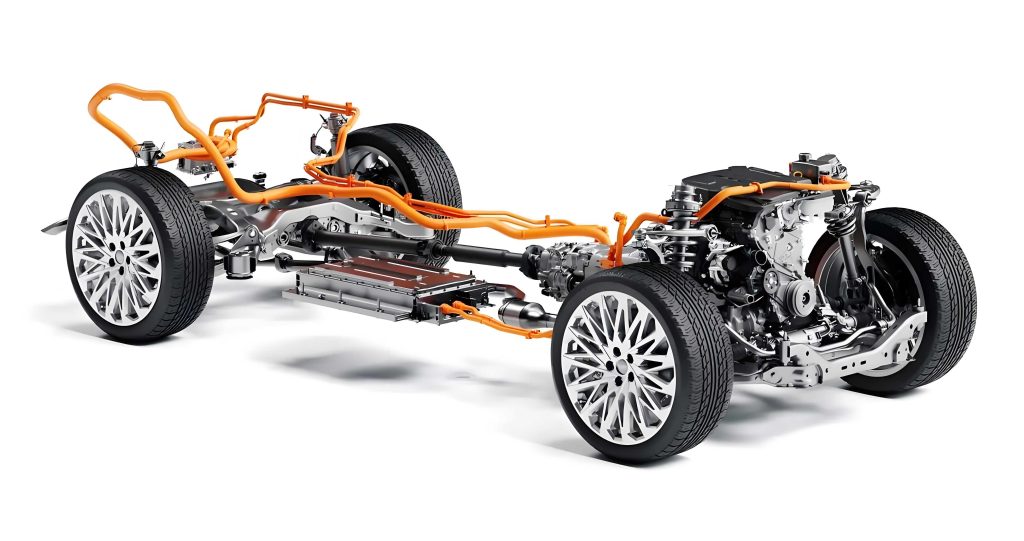
Currently, in the design of components and subsystems for hybrid cars, computer model simulation has become an essential method in development work. Building a simulation model for the air conditioning refrigeration system design of hybrid cars allows for better simulation of individual component performance, as well as the refrigerant flow and heat transfer processes within the system. This enables more accurate analysis of factors affecting system performance and targeted optimization, thereby enhancing design efficiency and reducing costs, which plays a significant role in promoting innovation and development in automotive enterprises.
Working Principle of Air Conditioning Refrigeration System in Hybrid Cars
The most notable difference between hybrid cars and traditional internal combustion engine vehicles in terms of the air conditioning refrigeration system lies in the power source for the compressor. In traditional vehicles, the compressor is driven by the engine, whereas in hybrid cars, the scroll compressor is powered by the onboard battery. During operation of the air conditioning refrigeration system in a hybrid car, the gaseous refrigerant flowing out of the evaporator is transformed into a high-temperature, high-pressure state by the action of the scroll compressor. When passing through the condenser, it changes to a liquid state, releasing a substantial amount of heat in the process. The high-pressure liquid refrigerant is then converted into a mist of fine droplets by the expansion valve. As it flows through the evaporator, it absorbs heat and transforms from a low-temperature liquid to a常温 gaseous refrigerant. The air conditioning refrigeration system in hybrid cars continuously repeats this refrigeration cycle under the cyclic action of the scroll compressor. In practical operation, the performance of the hybrid car air conditioning refrigeration system is significantly influenced by external factors. Therefore, during testing and model simulation, certain specific conditions need to be simplified, and the coefficient of performance (COP) is used to evaluate its actual operational performance. The basic energy balance can be expressed as:
$$ Q_{evap} = \dot{m} \cdot (h_{evap,in} – h_{evap,out}) $$
where \( Q_{evap} \) is the cooling capacity at the evaporator, \( \dot{m} \) is the mass flow rate of the refrigerant, and \( h_{evap,in} \) and \( h_{evap,out} \) are the specific enthalpies at the evaporator inlet and outlet, respectively. The COP is defined as:
$$ COP = \frac{Q_{evap}}{W_{comp}} $$
with \( W_{comp} \) being the compressor work input.
Components of the Air Conditioning Refrigeration System in Hybrid Cars
The air conditioning refrigeration system in hybrid cars consists of several key components, each playing a critical role in overall performance. The primary components include the refrigerant, compressor, heat exchangers (condenser and evaporator), and expansion valve. Understanding these components is essential for effective design and optimization.
| Component | Type/Description | Key Characteristics |
|---|---|---|
| Refrigerant | R134a (common), with ongoing research into alternatives | High efficiency, safety, but complex maintenance; environmental concerns drive optimization. |
| Compressor | Scroll compressor (predominant in hybrid cars) | Compact structure, smooth operation, stable working conditions, low noise, driven by battery. |
| Condenser | Parallel-flow type with multi-port flat tubes | Decreasing configuration reduces volume, high heat exchange efficiency, consists of headers, tubes, fins. |
| Evaporator | Tube-fin type structure | Simple construction, mature technology, low cost, includes inlet, tubes, outlet, and fins. |
| Expansion Valve | Electronic expansion valve (preferred) | Small time lag, high sensitivity, effective automatic control; includes valve core, bellows, actuator, stepper motor. |
Refrigerant
The refrigerant is a crucial component in the hybrid car air conditioning refrigeration system. Currently, R134a is widely used due to its efficiency and safety. However, it poses maintenance challenges and environmental issues, such as a high global warming potential (GWP). Efforts are underway to optimize refrigerants for hybrid cars, including exploring alternatives like R1234yf, which has a lower GWP. The thermodynamic properties of the refrigerant directly impact system performance, and the choice of refrigerant affects parameters like pressure, temperature, and enthalpy throughout the cycle.
Compressor
The compressor is a major factor influencing the performance of the air conditioning system in hybrid cars. Scroll compressors are favored in hybrid cars due to their advantages over traditional reciprocating piston compressors. The scroll compressor operates via two interleaving spirals that compress the refrigerant. Its performance parameters include volumetric efficiency \( \eta_v \), isentropic efficiency \( \eta_{is} \), and mechanical efficiency \( \eta_m \). The mass flow rate \( \dot{m} \) can be approximated as:
$$ \dot{m} = \eta_v \cdot \rho_{suct} \cdot V_{disp} \cdot N $$
where \( \rho_{suct} \) is the suction density, \( V_{disp} \) is the displacement volume per revolution, and \( N \) is the rotational speed in revolutions per second. Optimizing these efficiencies is key to enhancing the hybrid car air conditioning system.
Heat Exchangers
Both the condenser and evaporator are heat exchangers. The condenser in hybrid cars typically uses a parallel-flow design with multi-port flat tubes and corrugated fins to maximize heat transfer while minimizing size. The evaporator often employs a tube-fin structure for simplicity and cost-effectiveness. The heat transfer rate \( Q \) for these exchangers can be expressed as:
$$ Q = U \cdot A \cdot \Delta T_{lm} $$
where \( U \) is the overall heat transfer coefficient, \( A \) is the heat transfer area, and \( \Delta T_{lm} \) is the log mean temperature difference. Design optimizations focus on tube layout, fin geometry, and airflow management to improve \( U \) and reduce pressure drop.
Expansion Valve
The expansion valve, located between the condenser and evaporator, regulates refrigerant flow. Electronic expansion valves are preferred in modern hybrid car designs due to their precision and responsiveness. The valve opening is controlled based on superheat or other parameters to maintain optimal system operation. The mass flow through the valve can be modeled as:
$$ \dot{m}_{valve} = C_d \cdot A_{valve} \cdot \sqrt{2 \cdot \rho \cdot \Delta P} $$
where \( C_d \) is the discharge coefficient, \( A_{valve} \) is the effective flow area, \( \rho \) is the refrigerant density, and \( \Delta P \) is the pressure drop across the valve.
Model Construction for Hybrid Car Air Conditioning Refrigeration System
In the design of air conditioning systems for hybrid cars, simulation models are invaluable for analyzing component and system performance. The AMESim software platform is commonly used for this purpose, allowing for the integration of various subsystem models into a comprehensive system model.
Experimental Platform Setup
To validate individual components and overall system performance, experimental platforms such as enthalpy difference laboratories or balanced ambient room calorimeters are employed. These methods measure cooling capacity and energy consumption under controlled conditions. The enthalpy difference method is popular due to its short thermal balance time and cost-effectiveness.
Compressor Model
The compressor model in AMESim requires input parameters like displacement, isentropic efficiency, mechanical efficiency, and material properties. The model outputs pressure, temperature, density, specific enthalpy, and superheat/subcooling degrees. For a scroll compressor in a hybrid car, the mass flow rate is influenced by rotational speed. Simulation scenarios can be set with varying speeds to analyze performance. For instance, starting from a base of 2000 rpm, increasing increments can define multiple operating conditions. The relationship between speed and mass flow can be summarized in a table:
| Compressor Speed (rpm) | Refrigerant Mass Flow Rate (kg/s) | Notes |
|---|---|---|
| 2000 | 0.025 | Base condition |
| 2500 | 0.031 | Linear increase assumed |
| 3000 | 0.037 | Optimal range for efficiency |
| 3500 | 0.042 | Potential decline in COP |
The isentropic efficiency \( \eta_{is} \) is crucial and can be modeled as a function of pressure ratio and speed:
$$ \eta_{is} = f\left(\frac{P_{discharge}}{P_{suction}}, N\right) $$
Heat Exchanger Model
The condenser and evaporator models in AMESim generate 2D visualizations of tube-fin arrangements. Parameters such as number of tubes per channel, tube dimensions, and fin geometry are adjustable. After calibration, the models are validated against experimental data. If the error is within 5%, the model is deemed reliable. The heat transfer and pressure drop correlations are embedded, often using empirical formulas like:
$$ Nu = C \cdot Re^m \cdot Pr^n $$
for Nusselt number \( Nu \), Reynolds number \( Re \), and Prandtl number \( Pr \), with constants \( C, m, n \) derived from data.
Expansion Valve Model
Since AMESim may not have a dedicated electronic expansion valve component, a thermal expansion valve model can be adapted by adjusting parameters such as inlet pressure and enthalpy, outlet pressure, and temperature. The relationship between subcooling and mass flow is analyzed through built-in formulas. The valve characteristics can be represented as:
$$ \dot{m} = K \cdot \sqrt{\Delta P \cdot \rho} $$
where \( K \) is a flow coefficient that depends on valve opening and refrigerant properties.
Overall System Model
Integrating the compressor, evaporator, expansion valve, and condenser models yields a complete hybrid car air conditioning refrigeration system model. This model simulates refrigerant circulation and allows for variable condition performance analysis. The system COP can be evaluated under different operating scenarios to identify optimization opportunities. The interconnected model facilitates analysis of how changes in one component affect the entire system, which is vital for designing efficient hybrid car air conditioning systems.
Performance Influencing Factors and Optimization Directions for Hybrid Car Air Conditioning Refrigeration System
Based on model simulations and experimental validations, several factors significantly impact the performance of the air conditioning refrigeration system in hybrid cars. Understanding these factors guides optimization efforts.
Factors Affecting Performance
The key factors include compressor rotational speed, condenser inlet air velocity, evaporator air flow rate, and ambient temperature. Each factor influences system parameters like cooling capacity, compressor power, and COP.
Compressor Rotational Speed
Using a scroll compressor, simulations with varying speeds under different discharge pressure conditions (e.g., 0.9, 1.2, 1.5, 1.8 MPa) show that cooling capacity \( Q_{evap} \) is positively correlated with speed. However, beyond a certain speed, COP peaks and then declines. High discharge temperatures can degrade lubricant viscosity, triggering thermal protection and compromising operation. Therefore, optimal speed ranges must be identified for different conditions. The relationship can be expressed as:
$$ Q_{evap} = a \cdot N + b \cdot N^2 + c $$
where \( a, b, c \) are coefficients derived from data. A sample data table illustrates this:
| Discharge Pressure (MPa) | Speed (rpm) | Cooling Capacity (kW) | COP |
|---|---|---|---|
| 0.9 | 2000 | 3.5 | 3.2 |
| 2500 | 4.2 | 3.5 | |
| 3000 | 4.8 | 3.6 | |
| 3500 | 5.0 | 3.4 | |
| 1.5 | 2000 | 2.8 | 2.8 |
| 2500 | 3.4 | 3.0 | |
| 3000 | 3.9 | 3.1 | |
| 3500 | 4.1 | 2.9 |
Condenser Inlet Air Velocity
Condenser inlet air velocity affects heat transfer performance. Simulations with constant compressor and ambient conditions show that as velocity increases, evaporator inlet and outlet enthalpies decrease slightly, refrigerant mass flow decreases marginally, compressor power decreases, and cooling capacity and COP increase modestly. This indicates that improved airflow across the condenser enhances system efficiency. The heat transfer coefficient \( h_{air} \) for the condenser fins can be approximated as:
$$ h_{air} \propto V_{air}^{0.8} $$
where \( V_{air} \) is the air velocity. Thus, increasing velocity boosts heat rejection.
Evaporator Air Flow Rate
Evaporator air flow rate, largely determined by blower speed, significantly impacts system performance. Under constant ambient conditions, as flow rate increases, evaporator inlet and outlet enthalpies rise, refrigerant mass flow increases, and compressor power decreases gradually. This is because higher airflow improves heat absorption at the evaporator. The cooling capacity can be related to air flow rate \( \dot{V}_{air} \) as:
$$ Q_{evap} \approx \dot{m}_{air} \cdot c_p \cdot (T_{air,in} – T_{air,out}) $$
with \( \dot{m}_{air} = \rho_{air} \cdot \dot{V}_{air} \), where \( c_p \) is specific heat, and \( T \) are temperatures.
Ambient Temperature
Ambient temperature inversely affects cooling capacity; as temperature rises, cooling capacity declines, leading to reduced COP. This is due to increased condensing temperature and pressure, which raise compressor work. The relationship can be modeled as:
$$ COP = COP_{ref} \cdot \left(1 – k \cdot (T_{amb} – T_{ref})\right) $$
where \( k \) is a degradation coefficient, and \( T_{ref} \) is a reference temperature.
Optimization Directions
Given that compressor performance has the most pronounced impact on the hybrid car air conditioning refrigeration system, optimization should focus on the scroll compressor. Specifically, enhancing the scroll compressor’s efficiency through geometric parameter optimization is crucial. The compressor operates via varying suction chamber volumes, which are determined by scroll wrap parameters such as pitch, height, and profile geometry.
Scroll compressors undergo three basic processes: suction, compression, and discharge. To optimize design, constraints including wrap pitch \( P \), scroll height \( H \), and base circle radius \( R_b \) are considered. Using algorithms like genetic algorithms, optimal combinations of parameters can be determined to maximize the energy efficiency ratio (EER). The objective function might be:
$$ \text{Maximize } EER = \frac{Q_{evap}}{W_{comp}} $$
subject to constraints like \( P_{\min} \leq P \leq P_{\max} \), \( H_{\min} \leq H \leq H_{\max} \), and mechanical strength limits. For instance, in a case study with fixed condenser and evaporator inlet conditions and a discharge pressure of 1.5 MPa, optimizing the scroll profile at a compressor speed of 3000 rpm resulted in approximately 10% reduction in energy consumption and 20% increase in cooling capacity, with notable COP improvement.
Key parameters for scroll wrap optimization include:
| Parameter | Symbol | Typical Range | Influence on Performance |
|---|---|---|---|
| Wrap Pitch | \( P \) | 10–30 mm | Affects displacement and compression ratio |
| Scroll Height | \( H \) | 20–50 mm | Impacts volume and mechanical stability |
| Base Circle Radius | \( R_b \) | 2–10 mm | Influences wrap curvature and leakage |
| Involute Angle | \( \phi \) | 0–2π rad | Determines wrap shape and engagement |
The optimization process involves simulating multiple parameter sets and selecting those yielding highest COP. This approach ensures that the hybrid car air conditioning system achieves better performance with lower energy use, contributing to the overall efficiency of the hybrid car.
Conclusion
Based on simulation and experimental results, the performance of the air conditioning refrigeration system in hybrid cars is influenced by multiple factors, with compressor selection and performance being the most significant. Therefore, in designing air conditioning refrigeration systems for hybrid cars, emphasis should be placed on optimizing the compressor structure and scroll wrap parameters. This enhances operational performance, increases cooling capacity, and reduces energy consumption during operation. The use of simulation tools like AMESim facilitates this optimization by allowing detailed analysis of component interactions and system behavior under various conditions. As hybrid cars continue to gain market share, advancing such design optimizations will be key to improving passenger comfort and achieving sustainable energy efficiency goals in the automotive industry.
Future work may involve integrating advanced refrigerants with lower environmental impact, further refining heat exchanger designs for compactness, and leveraging real-time control strategies for electronic expansion valves. Continued research and development in these areas will drive innovation in hybrid car air conditioning systems, supporting the broader adoption of hybrid cars worldwide.