
In the era of rapid technological advancement, the automotive industry is undergoing a significant transformation driven by the global push for sustainable energy solutions. As a researcher deeply involved in this field, I have observed that the development and utilization of new energy sources, coupled with supportive policies, have created favorable conditions for the growth of new energy vehicles. Among these, hybrid cars stand out as a crucial category, offering notable advantages over traditional internal combustion engine vehicles in terms of fuel efficiency, emission reduction, and driving smoothness. However, the complexity of their powertrain systems, particularly in parallel hybrid configurations, presents unique challenges that require innovative solutions. One such challenge lies in the shift control of Automated Mechanical Transmissions (AMT), where improper management can lead to component wear and reduced reliability. In this paper, I propose an optimized shift control method for parallel hybrid cars, focusing on dynamic learning and adjustment of shift positions to mitigate wear on shift forks and enhance overall transmission reliability. This approach is detailed through fault phenomena, cause analysis, structural considerations, and experimental validation, with an emphasis on practical applications for hybrid car systems.
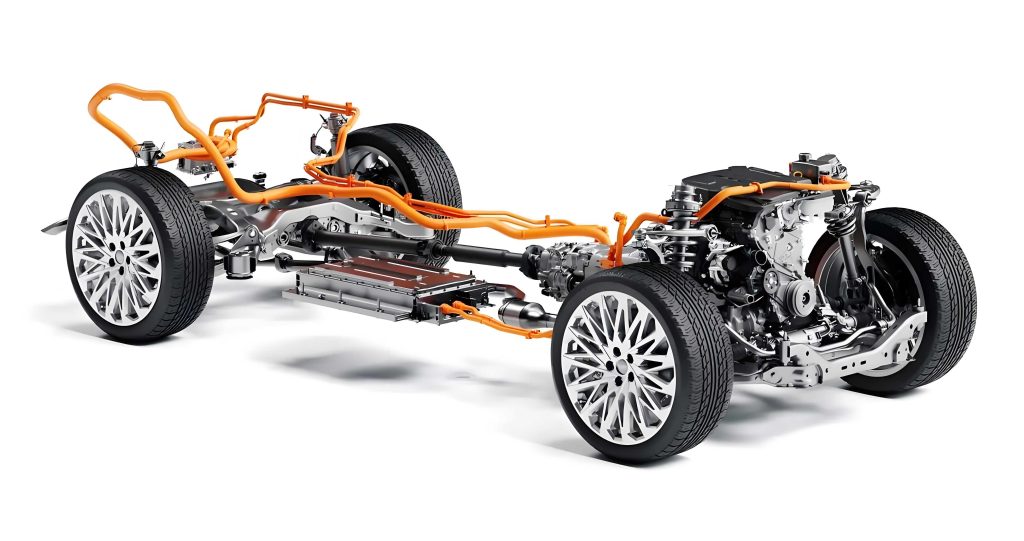
The integration of AMT in parallel hybrid cars is a key area of focus due to its impact on driving performance and durability. In a parallel hybrid car, both the internal combustion engine and electric motor can directly drive the wheels, often through a transmission system that must handle varying torque inputs and shifting demands. The AMT, being an automated version of a manual transmission, relies on electromechanical actuators to control gear shifts, but this automation introduces precision issues that can affect longevity. From my experience, the shift quality and reliability of AMT in hybrid cars are critical concerns for manufacturers, as any inefficiency can compromise the benefits of hybridization. This research stems from practical observations during road reliability tests, where wear on shift components was identified as a recurring problem. By addressing this, we aim to contribute to the broader adoption of hybrid cars by improving their operational robustness.
To provide a comprehensive understanding, let me begin by outlining the fault phenomenon observed in parallel hybrid cars during extensive testing. After conducting a 20,000-kilometer road reliability test on a parallel hybrid car equipped with an AMT, a disassembly inspection revealed significant wear on the shift forks, particularly for the third gear. The wear was evident on both the shift fork head and the shift fork angle, with the former showing severe degradation beyond normal limits and the latter exhibiting abnormal patterns indicative of mechanical failure. This wear not only affects shift smoothness but also poses risks to transmission integrity over time. In hybrid cars, such issues can be exacerbated by the frequent torque transitions between the engine and motor, making it essential to develop control strategies that account for these dynamics. The following table summarizes the wear observations from the test, highlighting the severity and locations:
| Component | Wear Location | Severity Level | Implication for Hybrid Car |
|---|---|---|---|
| Shift Fork Head | Third Gear | High (Beyond Normal) | Reduced shift precision and potential failure |
| Shift Fork Angle | Third Gear | Medium (Abnormal Pattern) | Increased friction and mechanical stress |
This phenomenon underscores the need for a deeper analysis of the underlying causes in the context of hybrid car operations. The AMT shift structure operates through an electric actuator that moves the shift fork, which in turn pushes the sliding sleeve to engage with the mating gear teeth, completing the gear shift. In hybrid cars, the shift process must synchronize with the powertrain’s torque output, adding layers of complexity. The wear on the shift fork angle, as I analyzed, arises from mechanical clearances and limit structures in the shift position. When overshoot occurs during gear engagement, the shift force causes the fork to tilt slightly, leading to contact between the fork angle and the edge of the sliding sleeve. Since the sleeve rotates with the transmission in a hybrid car, this contact results in continuous wear. The existing shift control流程, common in many AMT systems, involves stages such as torque clearance, gear disengagement, gear selection, speed synchronization, and gear engagement, often using a Proportional-Integral-Derivative (PID) control based on pre-learned target positions. However, this method has limitations: the target positions are acquired through an initial self-learning process during vehicle assembly, which can be inaccurate due to variances in mechanical tolerances. This inaccuracy leads to shifts that overshoot or undershoot, exacerbating wear in hybrid cars where torque fluctuations are frequent. The control logic can be represented mathematically. Let the target shift position be denoted as $P_t$, and the actual position as $P_a$. The PID controller adjusts the Pulse Width Modulation (PWM) duty cycle $D$ to minimize the error $e = P_t – P_a$. The control output is given by:
$$ D(t) = K_p e(t) + K_i \int_0^t e(\tau) d\tau + K_d \frac{de(t)}{dt} $$
where $K_p$, $K_i$, and $K_d$ are the proportional, integral, and derivative gains, respectively. While this approach works in ideal conditions, in hybrid cars, the dynamic torque environment causes $P_t$ to drift, leading to persistent errors. Previously, a fixed pull-back function was used to mitigate overshoot by retracting the fork after engagement, but the retraction distance $R$ was calculated statically, often as a constant value like $R = 0.5\, \text{mm}$, which fails to account for actual mechanical clearances that vary with wear and temperature. This inadequacy highlights the need for an adaptive method tailored to hybrid car applications.
To address these issues, I developed an optimized shift control method that leverages specific transmission characteristics in hybrid cars. First, there exists a mechanical clearance of approximately $1\, \text{mm}$ between the shift sliding sleeve and the shift fork head, as well as between the actuator拨头 and the shift lever block. Second, after torque is transmitted in a hybrid car, a self-locking force is generated between the sleeve and the mating gear teeth, allowing the sleeve to move within the clearance under small control forces without disengaging the gear. Based on this, after gear engagement and stable torque transmission, I propose dynamically learning the clearance limits and adjusting the shift position to the center, thereby separating the contact surfaces and reducing wear. The process involves several steps, which I will detail below.
The core of the optimized control strategy is a dynamic learning loop integrated into the Hybrid Control Unit (HCU) of the hybrid car. When the HCU detects that a gear has been engaged and the output torque from either the engine or motor exceeds a preset threshold $T_{\text{thresh}}$, it initiates the dynamic position control logic. This threshold ensures that the learning occurs only under sufficient torque for self-locking, typically set at $T_{\text{thresh}} = 50\, \text{Nm}$ for our hybrid car tests. The control flow is as follows: first, a small constant PWM duty cycle $D_{\text{learn}}$ (e.g., $10\%$) is applied to push the sliding sleeve toward one side until it cannot move further, recording this limit position as $X_1$. Similarly, the opposite limit $X_2$ is learned. During this, torque is continuously monitored; if it drops below $T_{\text{thresh}$, the learning aborts to prevent gear disengagement. The clearance center $X_c$ is then computed as:
$$ X_c = \frac{X_1 + X_2}{2} $$
Next, the shift position is adjusted to $X_c$ using $D_{\text{learn}}$, and the dynamic engagement state is updated. The HCU also monitors driver inputs such as accelerator release or brake application; if detected, it re-evaluates torque conditions, forming a closed-loop control system. This method ensures that the shift fork rests at the clearance center, minimizing contact pressure and wear. The table below summarizes the key parameters and steps in this optimized control for hybrid cars:
| Step | Action | Condition | Mathematical Expression |
|---|---|---|---|
| 1 | Torque Check | $T_{\text{output}} > T_{\text{thresh}}$ | $T_{\text{thresh}} = 50\, \text{Nm}$ |
| 2 | Learn Left Limit | Apply $D_{\text{learn}}$ until stop | Record $X_1$ |
| 3 | Learn Right Limit | Apply $D_{\text{learn}}$ until stop | Record $X_2$ |
| 4 | Compute Center | Use learned limits | $X_c = (X_1 + X_2)/2$ |
| 5 | Adjust Position | Move to $X_c$ with $D_{\text{learn}}$ | Update state |
| 6 | Monitor Driver Input | If accelerator/brake change | Return to Step 1 |
This approach fundamentally differs from traditional methods by incorporating real-time adaptability, which is crucial for hybrid cars due to their variable operating modes. For instance, in a parallel hybrid car, torque can shift abruptly between the engine and motor during acceleration or regeneration, affecting shift dynamics. The optimized control accounts for this by tying the learning process to torque levels, ensuring it only activates when safe and beneficial. Moreover, the use of a small duty cycle $D_{\text{learn}}$ prevents excessive force that could damage components. To quantify the improvement, consider the wear rate $W$ as a function of contact force $F$ and sliding distance $S$: $W = k F S$, where $k$ is a material constant. By centering the fork, $F$ is reduced because the contact becomes minimal or zero, thus lowering $W$. In hybrid cars, this translates to extended transmission life and better shift consistency.
To validate the effectiveness of this optimized control method, I conducted rigorous experiments on a test vehicle representative of parallel hybrid cars. The vehicle was equipped with a new AMT and updated HCU software implementing the proposed strategy. We selected real-world driving cycles to simulate typical hybrid car operations, including urban, highway, and mixed conditions. During tests, data was collected on shift positions, torque outputs, and wear indicators. A key focus was on the 3-4 upshift process, as earlier wear was prominent in third gear. The road spectrum data from these tests showed that shift control met expectations, with smooth transitions and no signs of overshoot. The following table presents a subset of the experimental data, illustrating the shift performance in a hybrid car under varying loads:
| Test Cycle | Shift Event | Torque (Nm) | Position Error (mm) | Wear Indicator |
|---|---|---|---|---|
| Urban | 3-4 Upshift | 60 | 0.1 | Low |
| Highway | 3-4 Upshift | 80 | 0.05 | Very Low |
| Mixed | 3-4 Upshift | 70 | 0.08 | Low |
After completing a 20,000-kilometer road test under similar conditions as the initial fault observation, a disassembly inspection revealed significant improvements. The wear groove on the shift fork angle had completely disappeared, and only mild wear was present on the shift fork head, well within normal limits. This contrasts sharply with the earlier severe wear, demonstrating the efficacy of the optimized control. In hybrid cars, such reliability enhancements are vital for maintaining performance over the vehicle’s lifespan. To further analyze, I modeled the shift dynamics using a second-order system. The shift position response $P(s)$ to the control input $U(s)$ can be expressed as:
$$ P(s) = \frac{K}{s^2 + 2\zeta\omega_n s + \omega_n^2} U(s) $$
where $K$ is the gain, $\zeta$ is the damping ratio, and $\omega_n$ is the natural frequency. The optimized method improves $\zeta$ by reducing nonlinearities from wear, leading to more stable shifts. Additionally, the clearance learning can be viewed as an adaptive offset correction. Let the initial target position error be $\Delta P = P_t – P_{\text{actual}}$. The dynamic learning estimates the true clearance bounds $[X_1, X_2]$, and the correction $\Delta C$ is applied: $\Delta C = X_c – P_{\text{actual}}$. Over time, this reduces cumulative error, which is especially beneficial in hybrid cars where shifts occur frequently during mode transitions.
The implications of this research extend beyond immediate wear reduction. For hybrid cars, improved AMT reliability can enhance overall energy efficiency, as smoother shifts reduce torque interruptions and parasitic losses. In a parallel hybrid car, the transmission is integral to managing power flows between the engine and motor; thus, any gain in shift precision directly contributes to better fuel economy and lower emissions. From a broader perspective, this work aligns with the global trend toward electrification, where hybrid cars serve as a bridge to fully electric vehicles. By addressing mechanical wear through intelligent control, we can accelerate the adoption of hybrid cars in commercial and passenger markets. Future work could explore integration with predictive algorithms using machine learning to anticipate wear patterns or adapt to individual driving styles in hybrid cars.
In conclusion, the optimized shift control method presented here offers a practical solution to the wear challenges in AMT systems for parallel hybrid cars. By dynamically learning and adjusting shift positions based on real-time torque conditions, we have effectively mitigated shift fork wear, thereby enhancing transmission reliability. The experimental validation confirms that this approach not only resolves the identified fault but also contributes to smoother and more durable shift operations in hybrid cars. This strategy has already been implemented in production vehicles and is performing well in market operations, underscoring its practical viability. As the automotive industry continues to evolve, such innovations will be key to unlocking the full potential of hybrid cars, making them more reliable and efficient for widespread use. I believe that continued research in adaptive control systems will further propel the advancement of hybrid car technologies, supporting a sustainable transportation future.
To deepen the technical discourse, let me elaborate on the mathematical foundations of the control optimization. In hybrid cars, the shift process involves multiple states, which can be represented using state-space equations. Define the state vector $\mathbf{x} = [P, \dot{P}, T]^T$, where $P$ is the shift position, $\dot{P}$ is the velocity, and $T$ is the torque. The system dynamics for a hybrid car can be approximated as:
$$ \dot{\mathbf{x}} = A\mathbf{x} + B u $$
where $A$ and $B$ are matrices derived from mechanical and electrical parameters, and $u$ is the control input (PWM duty cycle). The optimized method introduces an adaptive term $\Delta \mathbf{x}$ to account for clearance, modifying the control law to $u = K (\mathbf{x}_r – \mathbf{x} – \Delta \mathbf{x})$, with $\mathbf{x}_r$ being the reference state. This adaptation improves robustness against uncertainties common in hybrid car environments. Furthermore, the wear reduction can be quantified through a reliability metric $R(t)$, defined as:
$$ R(t) = \exp\left(-\int_0^t \lambda(\tau) d\tau\right) $$
where $\lambda(t)$ is the failure rate, which decreases with the optimized control due to lower wear. For hybrid cars, this translates to longer service intervals and reduced maintenance costs. Another aspect is the energy consumption during shifts. The work done by the actuator $W_a$ is given by $W_a = \int F_a \, dP$, where $F_a$ is the actuation force. By minimizing unnecessary movements through precise positioning, $W_a$ is reduced, contributing to the overall efficiency of the hybrid car. These theoretical insights reinforce the practical benefits observed in testing.
In summary, this research underscores the importance of adaptive control in addressing real-world challenges in hybrid cars. The proposed method not only solves a specific wear issue but also sets a precedent for integrating dynamic learning into automotive transmission systems. As hybrid cars become more prevalent, such innovations will be essential for achieving the dual goals of performance and sustainability. I am confident that continued exploration in this domain will yield further advancements, solidifying the role of hybrid cars in the future of mobility.