
In the evolving landscape of automotive technology, the push for enhanced fuel economy has become a paramount concern globally. As governments implement stricter regulations, such as China’s target to reduce average passenger car fuel consumption to 5.0 liters per 100 kilometers by 2020, the automotive industry is compelled to innovate beyond conventional internal combustion engine improvements. Among the promising solutions, hybrid cars stand out as a pivotal technology that combines an internal combustion engine with an electric propulsion system to significantly cut fuel consumption and emissions. My research focuses on the critical role of electrical components in hybrid cars, specifically examining how their performance directly impacts overall fuel economy. By developing and refining testing methodologies for these components, I aim to contribute to more efficient hybrid vehicle designs and ensure compliance with emerging fuel economy standards.
The core electrical components in a hybrid car include the drive motor, motor controller, and power battery pack, along with auxiliary power converters like DC/DC and onboard chargers. These elements form the electric drivetrain that enables key fuel-saving operations such as electric-assisted acceleration, regenerative braking, and engine optimization. However, the performance of these components under various driving conditions is not fully captured by existing standard tests, which often focus on nominal ratings rather than real-world efficiency metrics. In this study, I explore comprehensive testing approaches that bridge this gap, emphasizing bench testing methods that simulate actual hybrid car operating cycles. By evaluating components like the motor-controller pair and battery management system as integrated units, I can assess parameters that directly influence fuel economy, such as energy conversion efficiency during transient states, regenerative braking recovery rates, and power loss during frequent start-stop cycles.
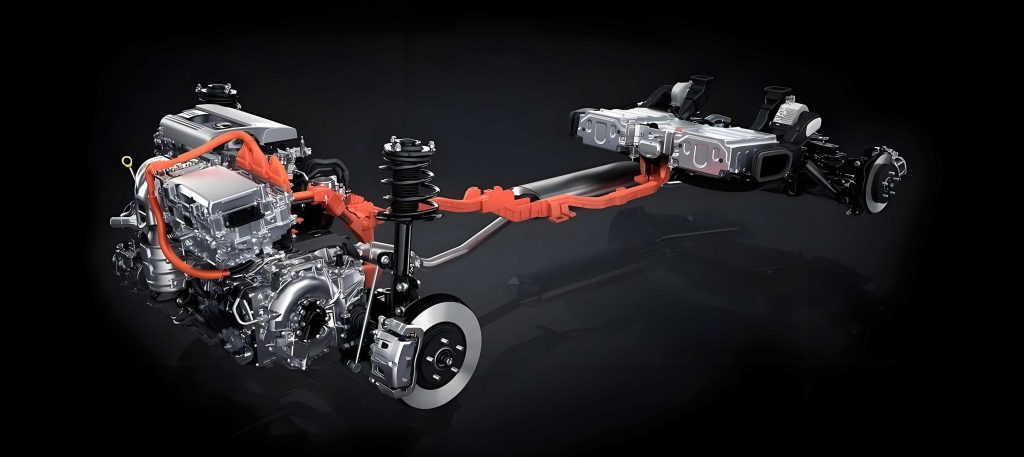
To understand the testing framework, it is essential to first delineate the electrical architecture of a typical parallel hybrid car. The power flow in such a system involves bidirectional energy transfer between the internal combustion engine, electric motor, and battery pack, managed by power electronic controllers. For instance, during acceleration, the motor supplements engine torque to avoid fuel-rich injection phases, while during deceleration, the motor acts as a generator to recover kinetic energy into the battery. This dynamic interplay necessitates that electrical components exhibit high efficiency across a wide range of operating points, not just at rated conditions. My testing methodology prioritizes bench setups that replicate these scenarios, allowing for controlled measurements of efficiency, response time, and energy loss. The goal is to establish performance benchmarks that correlate with the hybrid car’s fuel economy in standardized driving cycles, such as the New European Driving Cycle (NEDC) or Worldwide Harmonized Light Vehicles Test Procedure (WLTP).
The drive motor and its controller are among the most critical components in a hybrid car, as they directly affect traction and energy recovery. In my testing approach, I treat the motor and controller as a single integrated unit because their combined efficiency determines the overall electrical drivetrain performance. The bench test setup, as illustrated in Figure 2 of the original study, employs a programmable DC power supply to simulate the hybrid car’s high-voltage bus, a load motor to apply dynamic torques, and precision instruments to measure input-output power. This configuration enables bidirectional power flow, mimicking both motoring and generating modes that occur in a hybrid car during driving and regenerative braking. Key performance indicators include the motor-controller system’s efficiency map across speed-torque domains, transient torque response capability, and regenerative braking efficiency over various speed ranges. These metrics are vital because, for example, a slow torque response during hybrid car acceleration could lead to increased fuel consumption due to engine over-fueling, while limited regenerative braking speed range reduces energy recovery efficiency.
To quantify the efficiency of the motor-controller system, I measure input electrical power and output mechanical power under steady-state and transient conditions. The overall efficiency $\eta_{mc}$ can be expressed as:
$$ \eta_{mc} = \frac{P_{\text{out}}}{P_{\text{in}}} \times 100\% $$
where $P_{\text{out}}$ is the mechanical power output (or input during regeneration) and $P_{\text{in}}$ is the electrical power input (or output during regeneration). For a hybrid car, the efficiency at low-speed, high-torque conditions is particularly important for launch assistance, whereas high-speed efficiency affects cruising performance. My tests involve sweeping through operational envelopes to generate efficiency contour plots, which reveal optimal and suboptimal regions. Additionally, the regenerative braking efficiency $\eta_{rb}$ is assessed by measuring the energy recovered during deceleration simulations:
$$ \eta_{rb} = \frac{E_{\text{recovered}}}{E_{\text{kinetic}}} \times 100\% $$
where $E_{\text{kinetic}}$ is the kinetic energy of the simulated vehicle mass and $E_{\text{recovered}}$ is the energy stored in the battery. This metric directly influences the hybrid car’s fuel economy by determining how much waste energy is recaptured.
The power battery pack, typically lithium-ion based, is another cornerstone of hybrid car efficiency. Its performance in terms of charge-discharge efficiency, internal resistance, and state-of-charge (SOC) management profoundly impacts the hybrid car’s ability to store and deliver electrical energy. In my testing regimen, the battery pack is evaluated along with its battery management system (BMS) as a cohesive unit, as the BMS controls critical functions like cell balancing, thermal management, and power limiting. The bench setup includes a bidirectional power supply that can emulate charging from regenerative braking and discharging for motor assist, coupled with a hardware-in-the-loop system to simulate vehicle signals. Key tests focus on internal resistance under pulsed power conditions, cycle life under driving profiles, and energy loss during idle periods. For instance, the internal resistance $R_{\text{int}}$ affects the power loss $P_{\text{loss}}$ during high-current events common in hybrid car operation:
$$ P_{\text{loss}} = I^2 \times R_{\text{int}} $$
where $I$ is the current during acceleration or regeneration. A lower $R_{\text{int}}$ means less energy wasted as heat, thereby improving the hybrid car’s overall energy utilization. Furthermore, I conduct cycle testing based on NEDC or other standard cycles to estimate the battery’s contribution to the hybrid car’s electric range and fuel savings.
To systematize the relationship between component performance and hybrid car fuel economy, I have developed a table summarizing key energy-saving indicators for major electrical components. This table aligns with the fuel economy evaluation standards and highlights parameters that should be prioritized in testing protocols.
| Component | Energy-Saving Mechanism | Key Performance Indicators | Impact on Hybrid Car Fuel Economy |
|---|---|---|---|
| Drive Motor & Controller | Electric launch and acceleration assist | Torque response time, low-speed torque capability, efficiency map coverage | Reduces engine fuel enrichment during acceleration; improves overall drivetrain efficiency |
| Drive Motor & Controller | Regenerative braking | Regenerative efficiency, speed range for regeneration, mode switching time | Increases energy recovery, reducing fuel needed for subsequent acceleration |
| Drive Motor & Controller | Engine optimization (steady-state) | Torque control accuracy, efficiency at partial loads | Allows engine to operate at optimal efficiency points, lowering fuel consumption |
| Power Battery & BMS | Frequent charge-discharge in start-stop cycles | Internal resistance under pulse power, short-term current capacity, charge acceptance rate | Minimizes energy loss during kinetic energy recovery and electric assist, enhancing net fuel savings |
| Power Battery & BMS | Electric range and sustaining SOC | Cycle life under driving profiles, self-discharge rate, energy density | Extends electric-only operation in plug-in hybrid cars, reducing gasoline usage |
| Auxiliary Controllers (DC/DC, onboard charger) | Power conversion for auxiliaries and grid charging | Conversion efficiency across load range, grid harmonic compliance, thermal performance | Reduces parasitic losses; for plug-in hybrid cars, improves well-to-wheel efficiency by optimizing grid energy use |
In addition to tabulated metrics, mathematical models help in predicting the hybrid car’s fuel economy based on component data. For example, the overall fuel consumption $FC$ of a hybrid car over a driving cycle can be approximated by integrating the power contributions from the engine and electric system:
$$ FC = \int_{0}^{T} \left( \frac{P_{\text{engine}}(t)}{\eta_{\text{engine}}(t) \cdot \text{LHV}} + \frac{P_{\text{battery}}(t)}{\eta_{\text{charge-discharge}}(t) \cdot \eta_{\text{grid}}(t) \cdot \text{LHV}} \right) dt $$
where $P_{\text{engine}}$ and $P_{\text{battery}}$ are the power outputs from the engine and battery, respectively, $\eta_{\text{engine}}$ is the engine efficiency, $\eta_{\text{charge-discharge}}$ is the battery round-trip efficiency, $\eta_{\text{grid}}$ is the grid-to-battery efficiency (for plug-in hybrid cars), LHV is the lower heating value of fuel, and $T$ is the cycle duration. This formula underscores how improvements in electrical component efficiencies directly reduce $FC$. My testing aims to provide accurate inputs for such models by measuring $\eta_{\text{charge-discharge}}$ and other parameters under realistic conditions.
To validate the testing methodologies, I conducted bench tests on representative components used in hybrid cars. For the motor-controller system, a permanent magnet synchronous motor rated at 90 kW and a controller rated at 150 kW were evaluated. The efficiency maps generated from steady-state tests reveal that the motor’s efficiency varies significantly with operating points, particularly at low speeds where torque demand is high. The controller efficiency, however, remains above 93% across most conditions, indicating that the motor is the limiting factor. This finding emphasizes the need for motor design optimizations to boost hybrid car fuel economy. The efficiency $\eta_m$ at a given point $( \omega, T )$ can be modeled as:
$$ \eta_m( \omega, T ) = \frac{T \cdot \omega}{T \cdot \omega + P_{\text{loss, copper}} + P_{\text{loss, iron}} + P_{\text{loss, stray}} } $$
where $\omega$ is angular speed, $T$ is torque, and the loss terms include copper, iron, and stray losses. During regenerative braking tests, the system achieved an energy recovery efficiency of around 65-75% in typical urban driving speed ranges, highlighting potential for improvement through better control algorithms or component selection.
For the power battery pack, a lithium-ion pack with 100 cells in series was tested for internal resistance under pulsed power conditions, simulating the aggressive charge-discharge cycles of a hybrid car in stop-and-go traffic. The results, summarized in the table below, show that internal resistance remains below 50 mΩ, but the power loss due to this resistance can reach 1-2 kW during high-power events. This loss translates to reduced energy availability for electric assist, indirectly increasing fuel consumption. The battery’s charge-discharge efficiency $\eta_{bat}$ over a cycle can be derived from:
$$ \eta_{bat} = \frac{ \int P_{\text{discharge}}(t) dt }{ \int P_{\text{charge}}(t) dt } $$
where $P_{\text{discharge}}$ and $P_{\text{charge}}$ are the power outputs and inputs during driving and regeneration, respectively. In my tests, $\eta_{bat}$ ranged from 85% to 90% for moderate cycles, but dropped under high-current pulses due to increased resistive losses.
| State of Charge (SOC) (%) | Charging Power (kW) | Charging Internal Resistance (mΩ) | Discharging Power (kW) | Discharging Internal Resistance (mΩ) |
|---|---|---|---|---|
| 85 | 26.86 | 31.23 | 83.04 | 51.26 |
| 70 | 77.31 | 46.41 | 82.87 | 44.13 |
| 50 | 79.86 | 49.84 | 81.61 | 45.30 |
| 35 | 78.89 | 48.45 | 81.56 | 31.22 |
Beyond the motor and battery, auxiliary power converters like DC/DC units and onboard chargers also play a role in hybrid car fuel economy. The DC/DC converter, which steps down the high-voltage battery power to low-voltage levels for auxiliary loads, must operate efficiently to minimize parasitic drains. Its efficiency $\eta_{dc}$ is a function of load current $I_{load}$ and input voltage $V_{in}$:
$$ \eta_{dc} = \frac{ V_{\text{out}} \cdot I_{\text{load}} }{ V_{\text{in}} \cdot I_{\text{in}} } $$
In my tests, I found that many converters exhibit peak efficiencies above 95% but can drop below 80% at light loads, which is common in hybrid car standby modes. Improving light-load efficiency through design changes could yield measurable fuel savings over time. Similarly, for plug-in hybrid cars, the onboard charger’s efficiency and power factor affect the well-to-wheel energy use, as electricity from the grid is partially converted to fuel displacement. Standards like IEC 61851 dictate charging protocols, but testing under real-world voltage fluctuations is essential to ensure robust performance.
The integration of component test data into full hybrid car simulation models allows for predictive fuel economy analysis. Using software tools like MATLAB/Simulink or AVL CRUISE, I can create a virtual hybrid car model where the tested component characteristics are embedded. This enables sensitivity analyses to determine which parameters most affect fuel consumption. For instance, a 5% improvement in motor efficiency at low torque might reduce fuel use by 1-2% in urban cycles, while a 10% reduction in battery internal resistance could enhance regenerative braking recovery by a similar margin. Such insights guide component selection and development priorities for hybrid car manufacturers.
Furthermore, the testing methodologies I propose align with international standards while extending them to address hybrid car-specific scenarios. Standards such as ISO 12405-2 for battery testing and GB/T 18488 for motor testing provide foundational methods, but they often lack emphasis on transient performance. My approach supplements these with dynamic cycle tests that mirror hybrid car driving patterns, including rapid power transitions and thermal cycling. This holistic testing ensures that components not only meet safety and durability requirements but also contribute optimally to the hybrid car’s fuel economy targets.
In conclusion, the fuel economy of hybrid cars is inextricably linked to the performance of their electrical components. Through rigorous bench testing focused on energy-saving indicators—such as efficiency maps, regenerative braking recovery, and internal resistance—I can assess and improve these components’ contributions to overall efficiency. The tables and formulas presented in this study provide a framework for evaluating components in a way that directly correlates with hybrid car fuel economy in real-world driving. As hybrid car technologies evolve, continued refinement of testing methods will be crucial to achieving stringent fuel consumption regulations and promoting sustainable transportation. My research underscores the importance of component-level optimization as a pathway to more efficient hybrid vehicles, ultimately reducing greenhouse gas emissions and dependence on fossil fuels.
Looking ahead, future work will involve expanding testing to include next-generation components like wide-bandgap semiconductor-based controllers and solid-state batteries, which promise even greater efficiencies for hybrid cars. Additionally, the integration of artificial intelligence for adaptive control algorithms could be tested on benches to predict fuel economy benefits. By maintaining a focus on the interplay between component performance and system-level fuel economy, my testing methodologies will support the ongoing advancement of hybrid car technology, helping to realize a greener automotive future.