
In the development of modern hybrid cars, particularly power-split hybrid vehicles, ensuring reliable powertrain performance is critical. Engine torque faults, such as insufficient torque or complete torque loss due to issues like fuel injection malfunctions or ignition problems, can severely degrade driving capability. These faults are common in internal combustion engines and pose significant challenges for hybrid car systems that rely on precise torque coordination for efficient operation. As a researcher focused on hybrid car technologies, I have explored robust diagnostic and fault-tolerant control strategies to address these issues. This article presents a comprehensive approach based on planetary gear torque balance models, along with hierarchical fault-tolerant control, validated through simulation. The goal is to enhance the safety and reliability of power-split hybrid cars, ensuring they maintain performance even under engine torque anomalies.
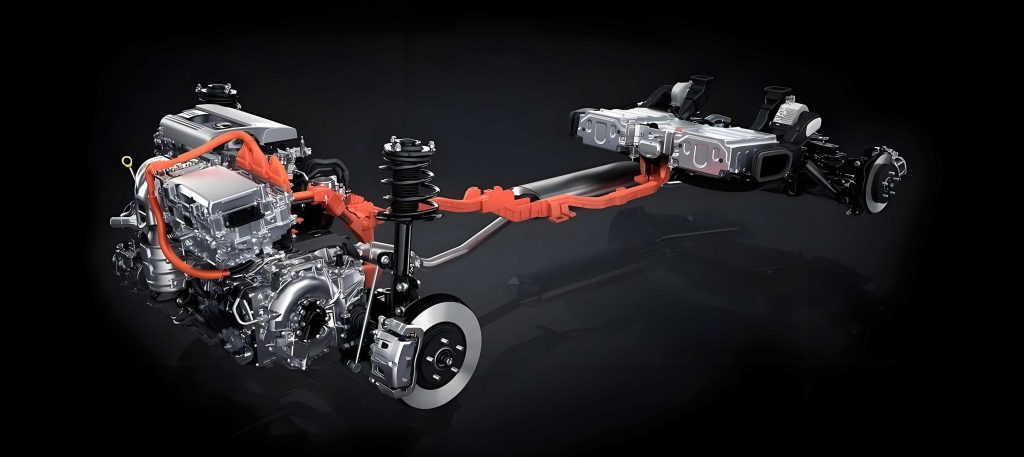
Power-split hybrid cars utilize a dual-planetary gearset to integrate the engine and electric motors, enabling efficient power flow and torque management. The architecture typically includes an engine connected to the planetary carrier via a torsional damper, two electric motors linked to the sun gears, and an output shaft attached to the ring gear. This configuration allows for versatile operating modes, such as power-split hybrid driving, electric-only propulsion, and regenerative braking. For hybrid cars, precise control of engine torque is essential to maintain planetary gear equilibrium and achieve desired vehicle dynamics. However, engine torque faults can disrupt this balance, leading to reduced acceleration, increased noise, or even complete drivability loss. Therefore, developing effective diagnostic and fault-tolerant methods is paramount for hybrid car systems.
To address this, we first establish a mathematical model of the power-split hybrid transmission. The dual-planetary gear system can be analyzed using lever analogies or kinematic equations. The speed relationships among the components are derived from planetary gear principles. Let $N_{Ho}$, $N_{PC}$, $N_{S1}$, and $N_{S2}$ represent the rotational speeds of the output shaft, planetary carrier, sun gear 1, and sun gear 2, respectively. Similarly, $N_{ENG}$, $N_{E1}$, and $N_{E2}$ denote the speeds of the engine and the two electric motors. The gear ratios are defined as $i_1$ and $i_2$ for the front and rear planetary sets. The speed equations are:
$$ N_{S1} = N_{Ho} \cdot i_1 + N_{PC} \cdot (1 – i_1) $$
$$ N_{S2} = N_{Ho} \cdot i_2 + N_{PC} \cdot (1 – i_2) $$
$$ N_{S1} = N_{E1} $$
$$ N_{S2} = N_{E2} $$
$$ N_{PC} = N_{ENG} $$
The torque balance equations account for inertial effects and external torques. Let $T_{ENG}$, $T_{E1}$, and $T_{E2}$ be the output torques of the engine and motors, while $T_{S1}$, $T_{S2}$, $T_{PC}$, and $T_{Ho}$ are the torques acting on the sun gears, planetary carrier, and output shaft. The angular accelerations are $a_{S1}$, $a_{S2}$, and $a_{PC}$, with corresponding moments of inertia $J_{S1}$, $J_{S2}$, and $J_{PC}$. The torque relationships are:
$$ T_{E1} – J_{S1} \cdot a_{S1} = T_{S1} $$
$$ T_{E2} – J_{S2} \cdot a_{S2} = T_{S2} $$
$$ T_{ENG} – J_{PC} \cdot a_{PC} = T_{PC} $$
$$ T_{PC} + T_{S1} + T_{S2} + T_{Ho} = 0 $$
$$ T_{Ho} + T_{S1} \cdot i_1 + T_{S2} \cdot i_2 = 0 $$
These equations form the basis for modeling hybrid car dynamics. By manipulating them, we can derive expressions for estimating actual engine torque and diagnosing faults. For hybrid cars, real-time torque estimation is crucial, as it enables detection of deviations from expected values.
Our fault diagnosis strategy leverages the torque balance model to estimate actual engine torque ($T_{ENG\_actl}$) using measurable parameters. From the equations above, we can solve for $T_{ENG\_actl}$ in terms of motor torques and accelerations. The derived formula is:
$$ T_{ENG\_actl} = (T_{E1} – J_{S1} \cdot a_{S1}) \cdot (i_1 – 1) + (T_{E2} – J_{S2} \cdot a_{S2}) \cdot (i_2 – 1) + \left[ \frac{(a_{S1} \cdot i_2 – a_{S2} \cdot i_1)}{(i_2 – i_1)} \right] \cdot J_{PC} $$
Here, $T_{E1}$ and $T_{E2}$ are obtained from the motor controllers with high accuracy, while $a_{S1}$ and $a_{S2}$ are computed by differentiating the motor speeds. This estimation method is computationally efficient, making it suitable for embedded ECU implementation in hybrid cars. The error between the theoretical engine torque ($T_{ENG}$) and the estimated value ($T_{ENG\_actl}$) is calculated as:
$$ e_T = T_{ENG} – T_{ENG\_actl} $$
Based on the ratio of $e_T$ to $T_{ENG}$, we classify engine torque faults into four levels. To prevent false alarms due to signal noise, a fault is confirmed only if it persists for 4 seconds. The decision logic is summarized in Table 1, which outlines the fault levels and corresponding conditions for hybrid cars.
| Condition | Diagnosis Result | Fault Level |
|---|---|---|
| $e_T \leq 10\% \cdot T_{ENG}$ | Normal | 1 |
| $e_T > 10\% \cdot T_{ENG}$ and $e_T \leq 20\% \cdot T_{ENG}$ | Minor Torque Fault | 2 |
| $e_T > 20\% \cdot T_{ENG}$ and $e_T \leq 80\% \cdot T_{ENG}$ | Engine Torque Insufficiency | 3 |
| $e_T > 80\% \cdot T_{ENG}$ | Engine Torque Loss | 4 |
Once a fault is diagnosed, a hierarchical fault-tolerant control strategy is applied to maintain hybrid car performance. This strategy adapts the torque coordination based on the fault level, ensuring drivability and safety. The control actions are detailed in Table 2, which maps fault levels to specific operational modes for hybrid cars.
| Diagnosis Result | Fault-Tolerant Control |
|---|---|
| Minor Fault | Hybrid Operation with Fault |
| Engine Torque Insufficiency | Hybrid Operation with Reduced Power |
| Engine Torque Loss | Electric-Only Limp Home Mode |
For minor torque faults (Level 2), the hybrid car continues in power-split hybrid mode with standard torque coordination. In this mode, the engine torque theoretical value is used to compute motor torques via decoupling equations. The output shaft torque ($T_{Ho}$) is decomposed into motor torques $T_{E1}$ and $T_{E2}$ using the following formulas, which ensure planetary gear balance:
$$ T_{E1} = \frac{T_{Ho} \cdot (i_2 – 1) + (T_{ENG} – J_{PC} \cdot a_{PC}) \cdot i_2}{i_1 – i_2} + J_{S2} \cdot a_{PC} \cdot (1 – i_2) $$
$$ T_{E2} = \frac{T_{Ho} \cdot (i_1 – 1) + (T_{ENG} – J_{PC} \cdot a_{PC}) \cdot i_1}{i_2 – i_1} + J_{S1} \cdot a_{PC} \cdot (1 – i_1) $$
Here, $a_{PC}$ is controlled via a PI regulator based on the engine speed error $e_N = N_{ENG\_req} – N_{ENG\_actl}$, where $N_{ENG\_req}$ is the target speed and $N_{ENG\_actl}$ is the actual speed. The PI control law is:
$$ a_{PC} = K_P \cdot \left[ e_N + \frac{1}{T_I} \int e_N \, dt \right] $$
This approach maintains smooth engine speed transitions and low noise, but it relies on accurate engine torque input. For hybrid cars, this mode is suitable when torque deviations are small, as it preserves overall efficiency and comfort.
When engine torque insufficiency is detected (Level 3), the hybrid car switches to a reduced-power hybrid operation. In this mode, we abandon precise engine speed rate control and instead prioritize torque balance using motor-based compensation. The control strategy modifies the torque coordination: motor E1 is tasked with regulating engine speed to its target, while motor E2 handles output torque demands. Specifically, $T_{E1}$ is computed via PI control to zero the engine speed error:
$$ T_{E1} = K_P \left[ e_N + \frac{1}{T_I} \int e_N \, dt \right] $$
Then, $T_{E2}$ is derived from the torque balance equation to satisfy the output shaft torque requirement:
$$ T_{E2} = – \frac{T_{Ho} + T_{E1} \cdot i_2}{i_2} $$
This method ensures that the hybrid car can still deliver adequate driving force despite engine torque shortfalls, albeit with potentially reduced acceleration or gradeability. It represents a pragmatic compromise for maintaining drivability in fault conditions.
In cases of engine torque loss (Level 4), the hybrid car enters an electric-only limp home mode. This is appropriate when the engine cannot produce any usable torque, often due to severe fuel system or ignition failures. The engine is shut down, and the vehicle operates solely on electric power. Since motor E2 alone can provide sufficient torque for limp-home driving, and single-motor operation avoids power recirculation for better efficiency, we use motor E2 exclusively. In this mode, the engine torque demand and motor E1 torque demand are set to zero. The torque for motor E2 is calculated based on the fixed gear ratio between motor E2 and the output shaft:
$$ T_{E2} = – \frac{T_{Ho}}{i_2} $$
This ensures basic mobility for the hybrid car, allowing the driver to reach a service station safely. It highlights the redundancy benefits of hybrid car architectures, where electric motors can compensate for engine failures.
To validate our diagnostic and fault-tolerant control strategies, we conducted simulations using a power-split hybrid car model. The focus was on acceleration scenarios where engine torque faults could critically impact performance. We tested two fault levels: torque insufficiency and torque loss, with the expectation that faults would be diagnosed within 4 seconds and handled appropriately. The simulation parameters included gear ratios $i_1 = 2.5$ and $i_2 = 1.8$, inertia values $J_{S1} = 0.02 \, \text{kg} \cdot \text{m}^2$, $J_{S2} = 0.025 \, \text{kg} \cdot \text{m}^2$, and $J_{PC} = 0.15 \, \text{kg} \cdot \text{m}^2$, and PI gains $K_P = 0.5$ and $T_I = 0.1 \, \text{s}$.
For the torque insufficiency case, the theoretical engine torque was set to 85 N·m, while the actual torque simulated was 60 N·m, representing a 29% deficiency. During the first 4 seconds, without fault-tolerant control, the output shaft torque actual value ($T_{Ho\_actl}$) lagged behind the demand (-120 N·m vs. -150 N·m), and engine speed deviated from the target (below 1400 rpm vs. 1500 rpm). After fault confirmation at 4 seconds, the reduced-power control was activated. Subsequently, $T_{Ho\_actl}$ converged to the demand within 1 second, and engine speed reached the target, demonstrating effective compensation. This shows that hybrid cars can maintain performance under partial engine faults.
For the torque loss case, the theoretical engine torque was 85 N·m, but actual torque was near zero at 8 N·m. Initially, output torque was insufficient (-100 N·m vs. -150 N·m), and engine speed remained around 1200 rpm. Upon fault detection at 4 seconds, the system switched to electric-only mode. The engine was shut down, and motor E2 provided the required torque, achieving the output demand within 1 second. This confirms that hybrid cars can safely limp home even during complete engine failures.
The simulation results underscore the efficacy of our approach. The diagnostic method accurately identified faults within the specified timeframe, and the hierarchical control strategy adapted seamlessly to maintain drivability. For hybrid cars, such robustness is essential to meet consumer expectations for reliability and safety. Moreover, the mathematical models and control laws are designed for real-time ECU implementation, ensuring practicality in production vehicles.
In conclusion, this work presents a comprehensive framework for engine torque fault diagnosis and fault-tolerant control in power-split hybrid cars. By leveraging planetary gear torque balance equations, we developed a real-time estimation method that detects torque deviations with minimal computational overhead. The hierarchical control strategy ensures graceful degradation: minor faults are tolerated, insufficiency triggers reduced-power operation, and loss leads to electric-only limp mode. Simulations validated that faults are diagnosed within 4 seconds and handled to preserve driving capability. These contributions enhance the resilience of hybrid cars against engine anomalies, supporting broader adoption of hybrid technology. Future work could integrate machine learning for fault prediction or extend the strategy to other hybrid car architectures, further advancing the reliability of electrified vehicles.
Throughout this discussion, the term “hybrid car” has been emphasized to highlight the application context. Power-split hybrid cars represent a sophisticated class of vehicles where intelligent control systems are paramount. Our diagnostic and fault-tolerant methods address a critical vulnerability, ensuring that hybrid cars remain dependable even under adverse conditions. As hybrid car technologies evolve, similar approaches will be vital for achieving high standards of performance and safety. The integration of mathematical modeling, real-time diagnostics, and adaptive control exemplifies the interdisciplinary innovation driving the hybrid car industry forward.