
In the modern automotive industry, the proliferation of hybrid car technologies has revolutionized transportation by integrating electric propulsion with conventional internal combustion engines. This evolution brings forth sophisticated electronic architectures, particularly in the Electrical Power Supply (EPS) system, which is pivotal for generating, storing, controlling, and distributing electrical energy throughout the vehicle. As a hybrid car relies heavily on its EPS for functions ranging from engine ignition to powering advanced driver-assistance systems, ensuring its reliability and safety becomes paramount. The increasing complexity of these systems introduces new risks, necessitating rigorous risk assessment methodologies. Failure Mode and Effects Analysis (FMEA) emerges as a cornerstone technique for identifying and mitigating potential failures in hybrid car EPS systems. This article delves into the application of FMEA within the framework of ISO 26262, a standard dedicated to functional safety in road vehicles, to systematically evaluate and enhance the safety of hybrid car power supply systems.
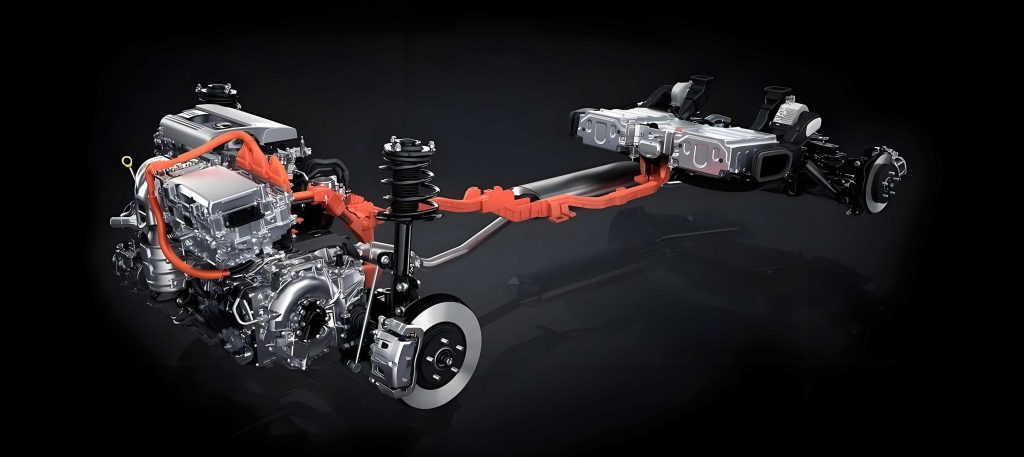
The EPS system in a hybrid car is an intricate network comprising components like batteries, alternators, converters, controllers, and cabling, all orchestrated by software to ensure uninterrupted power delivery. It supports critical operations such as electric motor assistance, regenerative braking, and powering infotainment systems, making it the lifeblood of a hybrid car’s functionality. Any failure within this system can lead to severe consequences, including loss of propulsion, electrical fires, or even accidents, underscoring the need for proactive risk management. FMEA, a structured approach, facilitates the early detection of failure modes, their causes, and effects, enabling designers to implement corrective measures before failures manifest. In the context of a hybrid car, FMEA is instrumental in quantifying risks associated with EPS components, thereby bolstering overall vehicle safety and reliability.
ISO 26262 provides a standardized methodology for functional safety in automotive electronics, extending principles from IEC 61508 to address the unique challenges of road vehicles. It introduces the Automotive Safety Integrity Level (ASIL), a risk classification scheme that evaluates hazards based on three parameters: Exposure (E), Controllability (C), and Severity (S). Exposure denotes the probability of a hazardous situation occurring during operational conditions, Controllability reflects the driver’s ability to avert harm, and Severity indicates the potential injury level. Each parameter is rated on a scale, as summarized in Table 1. These ratings are combined to determine the ASIL, which ranges from QM (Quality Management) for negligible risks to D for the most critical ones, guiding the requisite safety measures for hybrid car systems.
| Parameter | Level | Description |
|---|---|---|
| Exposure (E) | E0 | Incredibly improbable |
| E1 | Very low probability | |
| E2 | Low probability | |
| E3 | Medium probability | |
| E4 | High probability | |
| Controllability (C) | C0 | Controllable in general |
| C1 | Simply controllable | |
| C2 | Normally controllable | |
| C3 | Difficult to control or uncontrollable | |
| Severity (S) | S0 | No injuries |
| S1 | Light to moderate injuries | |
| S2 | Severe to life-threatening injuries (survival probable) | |
| S3 | Life-threatening injuries (fatal or survival uncertain) |
The ASIL is derived from a combinatorial matrix of E, C, and S values, as illustrated in Table 2. This structured approach ensures that risks in a hybrid car are assessed consistently, with higher ASILs mandating more stringent safety requirements. For instance, a hazard with high exposure, low controllability, and severe consequences would necessitate rigorous design safeguards. The ASIL determination can be expressed mathematically as a function: $$ ASIL = \mathcal{F}(E, C, S) $$ where $\mathcal{F}$ represents the mapping defined by ISO 26262 tables. This formula underscores the systematic nature of risk evaluation, which is crucial for hybrid car EPS systems where failures can have cascading effects.
| Severity (S) | Exposure (E) | Controllability (C) | ||
|---|---|---|---|---|
| C1 | C2 | C3 | ||
| S1 | E1 | QM | QM | QM |
| E2 | QM | QM | QM | |
| E3 | QM | QM | A | |
| E4 | QM | A | B | |
| S2 | E1 | QM | QM | QM |
| E2 | QM | QM | A | |
| E3 | QM | A | B | |
| E4 | A | B | C | |
| S3 | E1 | QM | QM | A |
| E2 | QM | A | B | |
| E3 | A | B | C | |
| E4 | B | C | D | |
FMEA implementation for a hybrid car EPS system follows a meticulous workflow to ensure comprehensive risk coverage. The process begins by delineating all interfaces within the EPS, categorizing them into data interfaces (ID) and energy interfaces (IE). Each interface is assigned a unique identifier, and the information flows between components—such as control signals from a management unit to a power driver—are documented. Subsequently, potential dreaded events (DEs) are enumerated, representing worst-case scenarios like insufficient torque or electrical leakage. For each interface, possible failure modes are analyzed, including signal corruption, loss, or unintended activation. The effects of these failures on the hybrid car’s operation are evaluated, leading to the assignment of E, C, and S ratings based on operational contexts. Finally, ASIL levels are computed, and appropriate safety barriers, such as redundancy or fault detection algorithms, are proposed. This iterative workflow, depicted in Figure 1, fosters continuous improvement in hybrid car safety.
The FMEA process can be formalized through a series of steps. Let $I$ represent the set of all interfaces in the EPS system, where each interface $i \in I$ has associated failure modes $F_i = \{f_1, f_2, \dots, f_n\}$. For a given failure mode $f$, the risk priority number (RPN) in traditional FMEA is computed as: $$ RPN_f = O_f \times S_f \times D_f $$ where $O_f$ is the occurrence probability, $S_f$ is the severity, and $D_f$ is the detectability. However, in alignment with ISO 26262 for hybrid car applications, we adapt this to use Exposure, Controllability, and Severity, leading to an ASIL-centric approach. The overall risk assessment for the hybrid car EPS can be summarized as: $$ \text{Total Risk} = \sum_{i \in I} \sum_{f \in F_i} w_f \cdot \text{ASIL}_f $$ where $w_f$ is a weighting factor accounting for the criticality of the failure mode, and $\text{ASIL}_f$ is derived from Table 2. This quantitative framing aids in prioritizing mitigation efforts for hybrid car systems.
To illustrate, consider an EPS interface in a hybrid car involving a high-voltage battery contactor control signal, denoted as ID1. This signal, sent from a management component to the power drive subsystem, commands the contactor to open or close. Potential failure modes include unintended toggling, signal loss, or stuck-at faults. For each mode, we assess the impact on the hybrid car. Suppose the signal erroneously changes from 0 (open) to 1 (close). This could cause unexpected energization of high-voltage circuits, leading to electrical shock hazards (DE_EPS_09). Assuming the hybrid car is in motion, the exposure might be rated E3 (medium probability), controllability C3 (difficult to control), and severity S3 (life-threatening), yielding an ASIL of C from Table 2. Conversely, if the signal fails to transmit a close command during startup, the hybrid car may not start, but with low severity (S0), the ASIL remains QM. Such analyses are compiled into an FMEA table, as shown in Table 3 for a subset of interfaces. This tabular representation facilitates clear documentation and review for hybrid car engineers.
| Interface ID | Information Flow | Failure Mode | Effect on Hybrid Car | Dreaded Event | Exposure (E) | Controllability (C) | Severity (S) | ASIL |
|---|---|---|---|---|---|---|---|---|
| ID1 | HVB_Contact (close signal) | False activation (0→1) | Unexpected high-voltage exposure | DE_EPS_09 (Electrical leakage) | E3 | C3 | S3 | C |
| ID1 | HVB_Contact (open signal) | False deactivation (1→0) | Loss of power at high speed | DE_EPS_04 (Insufficient power) | E3 | C3 | S2 | A |
| ID2 | Torque_Request | Signal corruption | Inadequate acceleration | DE_EPS_01 (Insufficient torque) | E2 | C2 | S2 | QM |
| IE1 | Battery_Output | Overvoltage | Component damage or fire | DE_EPS_05 (Excessive power) | E2 | C3 | S3 | B |
| IE2 | Coolant_Flow | Blockage | System overheating | DE_EPS_06 (Overheating) | E3 | C2 | S2 | A |
Expanding on this, a hybrid car EPS system encompasses numerous interfaces, each requiring detailed FMEA. For instance, energy interfaces like battery discharge paths may exhibit failure modes such as short circuits or insulation breakdown, potentially causing thermal runaway in a hybrid car battery pack. The risk assessment for such events involves evaluating environmental factors—like temperature and humidity—that influence exposure rates. Mathematically, the failure probability $P_f$ for a component can be modeled using reliability engineering principles: $$ P_f(t) = 1 – e^{-\lambda t} $$ where $\lambda$ is the failure rate derived from historical data or testing, and $t$ is the operational time of the hybrid car. Integrating this into FMEA allows for dynamic risk updates over the vehicle’s lifecycle. Additionally, software interfaces in a hybrid car, such as those controlling power distribution algorithms, are prone to bugs or latency issues, which can be analyzed using fault tree analysis (FTA) in conjunction with FMEA to identify root causes.
Despite its utility, FMEA applied to hybrid car EPS systems has inherent limitations, primarily subjectivity in rating E, C, and S parameters. The exposure rating, for example, often relies on expert judgment or historical data that may not fully capture real-world hybrid car usage patterns. Variability among assessors can lead to inconsistent ASIL assignments, potentially overlooking critical risks in a hybrid car. Moreover, traditional FMEA may not adequately address interconnected failures in complex hybrid car networks, where a single fault can propagate across multiple subsystems. To mitigate these issues, advancements in data analytics offer promising avenues. By leveraging big data from hybrid car fleets, machine learning algorithms can predict failure probabilities more objectively. For instance, a regression model could estimate exposure based on driving data: $$ E = \beta_0 + \beta_1 \cdot \text{mileage} + \beta_2 \cdot \text{environmental stress} + \epsilon $$ where $\beta$ coefficients are learned from datasets, reducing human bias. Similarly, simulation tools like Monte Carlo methods can model failure scenarios in a hybrid car EPS, providing probabilistic insights for FMEA.
Another enhancement involves integrating FMEA with other safety standards specific to hybrid car technologies, such as ISO 6469 for electric vehicle safety or SAE J2344 for battery systems. This holistic approach ensures comprehensive coverage of electrical and electrochemical hazards unique to hybrid car. Furthermore, the advent of autonomous features in hybrid car necessitates considering cybersecurity threats as potential failure modes, expanding FMEA to include malicious attacks on EPS communication buses. In such cases, the risk assessment might incorporate factors like attack likelihood and impact on vehicle controllability, adapting ASIL frameworks accordingly. These evolving challenges underscore the need for continuous refinement of FMEA methodologies to keep pace with hybrid car innovation.
In conclusion, FMEA serves as a vital tool for safeguarding hybrid car Electrical Power Supply Systems against potential failures. Through structured analysis aligned with ISO 26262, it enables the identification and prioritization of risks, guiding the implementation of safety measures tailored to hybrid car architectures. The use of tables and formulas, as demonstrated, enhances clarity and reproducibility in risk evaluation. However, the subjective nature of parameter rating calls for complementary data-driven techniques to bolster objectivity. As hybrid car technologies advance toward greater electrification and connectivity, integrating FMEA with real-time analytics and cross-domain standards will be crucial for achieving robust safety assurance. Ultimately, proactive risk management through FMEA not only enhances the reliability of hybrid car EPS but also fosters consumer trust and regulatory compliance, paving the way for safer and more efficient hybrid car on our roads.
To further quantify the benefits, consider a cost-risk optimization model for hybrid car EPS design. Let $C_m$ be the cost of implementing a safety measure for a failure mode with ASIL level $L$. The expected loss without mitigation is: $$ L_{\text{expected}} = P_f \cdot C_{\text{failure}} $$ where $C_{\text{failure}}$ is the cost incurred from the failure, including repairs and liability. Mitigation reduces this loss, and the decision to implement can be based on a threshold: $$ \text{Implement if } C_m < L_{\text{expected}} \cdot (1 – R_{\text{reduction}}) $$ where $R_{\text{reduction}}$ is the risk reduction factor achieved by the measure. This economic perspective aligns with ASIL-driven requirements, ensuring that resources are allocated efficiently in hybrid car development. As the automotive industry embraces electrification, such analytical rigor will be indispensable for sustaining the growth and safety of hybrid car globally.