
As the global energy system undergoes a profound transformation centered on “decarbonization” and “electrification,” the electrification of the transportation sector has emerged as a critical pathway toward achieving carbon neutrality goals. In this context, the rapid adoption of battery electric vehicles is reshaping infrastructure demands, particularly in charging networks. My research explores the intricate interplay between power transformers and charging infrastructure for battery electric vehicles, drawing on industrial symbiosis theory to uncover mutual dependencies and co-evolutionary dynamics. This analysis aims to provide a comprehensive understanding of how traditional power equipment and emerging technologies converge to support sustainable mobility.
The proliferation of battery electric vehicles worldwide has spurred unprecedented expansion in charging infrastructure. By the third quarter of 2024, the number of charging stations in China alone exceeded 11.43 million, reflecting near-doubling growth within two years. This surge underscores the urgency of examining the underlying power systems that enable such infrastructure, where power transformers serve as indispensable components. Beyond mere supply chain linkages, transformers and charging stations engage in multifaceted exchanges of energy, information, and capital, fostering a symbiotic relationship that drives innovation and efficiency. I will delve into this relationship through empirical data, theoretical frameworks, and technical case studies, emphasizing the role of battery electric vehicles as a catalyst for systemic change.
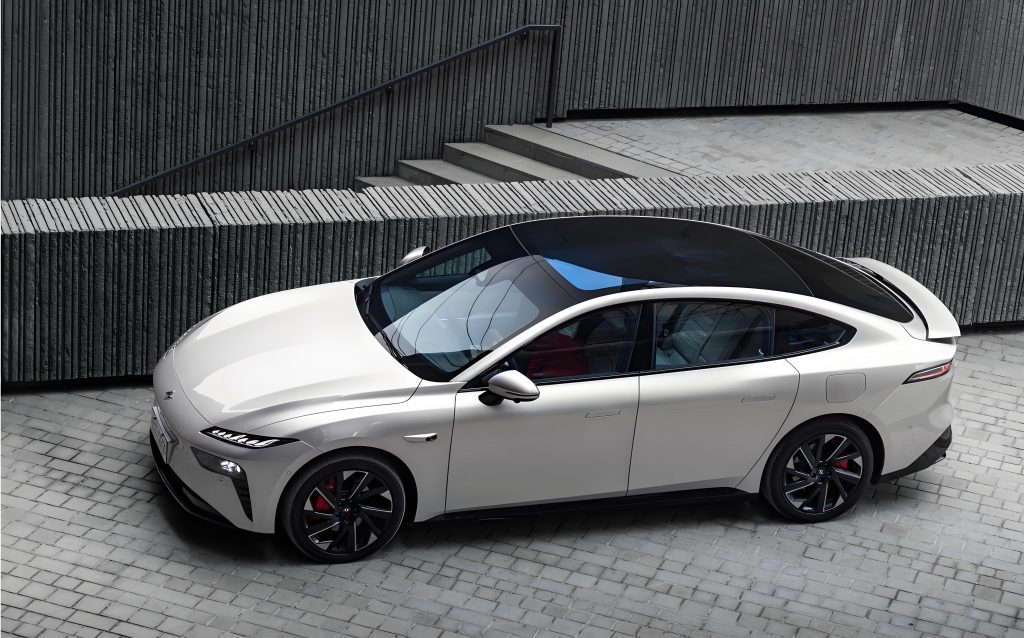
Industrial symbiosis, a core concept in industrial ecology, redefines linear industrial systems as interconnected networks akin to natural ecosystems. In such networks, outputs or “waste” from one industrial unit become inputs or “nutrients” for another, enhancing resource efficiency, minimizing environmental impact, and creating economic value. Applying this lens, I view the power transformer industry and the battery electric vehicle charging infrastructure sector as forming a robust symbiotic network. Their interaction transcends simple supplier-client transactions, evolving into a complex web of product-resource, technology-information, and market-capital exchanges. This perspective allows me to analyze their co-dependency holistically, considering how advancements in one domain propel progress in the other.
To quantify the symbiotic dynamics, I summarize key aspects of their relationship in Table 1, highlighting resource flows and mutual benefits. The table illustrates how transformers provide critical physical inputs for charging stations, while charging infrastructure generates demand that stimulates transformer innovation.
| Symbiosis Dimension | Transformer Industry Contribution | Charging Infrastructure Contribution | Mutual Benefit |
|---|---|---|---|
| Product-Resource | Supply of distribution and high-frequency transformers | Demand for transformers as core components | Stable material flow and market growth |
| Technology-Information | Innovation in magnetic materials and power electronics | Feedback on efficiency and power density needs | Accelerated technical evolution |
| Market-Capital | Investment in R&D for high-performance designs | Large-scale deployment providing market certainty | Risk reduction and capital synergy |
The establishment of a stable ecological niche is fundamental to sustaining industrial symbiosis. In the ecosystem of battery electric vehicle charging, power transformers occupy a dual niche that spans macro and micro scales. At the macro level, distribution transformers act as system-level energy interfaces, functioning as grid-charging station junctions. They perform voltage transformation (e.g., stepping down 10 kV to 380 V), ensure power quality, maintain system stability, and serve as physical nodes for energy routing. For instance, the impedance characteristics of transformers must accommodate nonlinear loads from battery electric vehicle chargers, which can generate harmonics. The transformer’s role in isolating and stabilizing power is encapsulated in the following formula for voltage regulation: $$ \text{Voltage Regulation} = \frac{V_{no-load} – V_{full-load}}{V_{full-load}} \times 100\% $$ where $V_{no-load}$ and $V_{full-load}$ represent transformer voltages under no-load and full-load conditions, respectively. Optimal regulation minimizes losses and enhances charging reliability for battery electric vehicles.
At the micro level, high-frequency isolation transformers embedded within DC fast chargers for battery electric vehicles serve as component-level enablers. They mediate energy transfer in AC/DC power modules, provide electrical isolation for safety, and directly influence conversion efficiency and power density. The performance of these transformers, determined by core materials and winding techniques, can be modeled using core loss equations. For example, Steinmetz’s equation approximates hysteresis loss: $$ P_h = k_h f B_m^\alpha $$ where $P_h$ is hysteresis loss, $k_h$ is a material constant, $f$ is frequency, $B_m$ is maximum flux density, and $\alpha$ is an exponent typically around 1.6-2.0. Advances in amorphous or nanocrystalline cores reduce $k_h$, lowering losses and boosting charger efficiency for battery electric vehicles.
The symbiotic relationship manifests through bidirectional driving effects, which I analyze empirically. The explosive growth of battery electric vehicle charging infrastructure exerts a “demand-pull” effect on the transformer industry. As shown in Table 2, the surge in charging stations correlates with increased transformer production and technological upgrades. This demand not only expands market size but also pushes for transformers with higher K-factor ratings to withstand harmonic distortions from chargers.
| Year | Battery Electric Vehicle Charging Stations (Millions) | Distribution Transformer Demand (GVA) | High-Frequency Transformer Demand (Millions of Units) | Key Driver |
|---|---|---|---|---|
| 2022 | 5.21 | 50 | 10 | Initial adoption of battery electric vehicles |
| 2023 | 8.50 | 75 | 18 | Expansion of fast-charging networks for battery electric vehicles |
| 2024 | 11.43 | 100 | 25 | Policy support and battery electric vehicle sales growth |
Conversely, transformer industry advancements produce a “supply-push” effect, empowering charging infrastructure for battery electric vehicles. Innovations in magnetic materials and power electronics enable higher efficiency and power density. For example, the overall efficiency of a charger can be expressed as: $$ \eta_{total} = \eta_{transformer} \times \eta_{converter} $$ where $\eta_{transformer}$ is the transformer efficiency and $\eta_{converter}$ is the power converter efficiency. With new materials, $\eta_{transformer}$ approaches 99%, elevating $\eta_{total}$ to over 97%. This reduces energy waste and operational costs for battery electric vehicle charging. Additionally, power density, defined as $$ \text{Power Density} = \frac{P_{output}}{V_{volume}} $$ where $P_{output}$ is output power and $V_{volume}$ is volume, benefits from compact transformer designs, allowing smaller, more versatile chargers for battery electric vehicles.
The symbiosis is dynamically evolving, driven by technological disruptions like wide-bandgap semiconductors. Silicon carbide (SiC) technology, with its superior properties, is reshaping the relationship. SiC devices operate at higher frequencies, reducing transformer size and weight according to the frequency-scaling principle: $$ L \propto \frac{1}{f} $$ where $L$ is inductance and $f$ is frequency. This enables MHz-range operation, shrinking transformer volume exponentially. The adoption of SiC also enhances system efficiency, as shown in the loss comparison formula: $$ P_{loss, SiC} = R_{on} I^2 + C_{oss} V^2 f $$ where $R_{on}$ is on-resistance, $I$ is current, $C_{oss}$ is output capacitance, $V$ is voltage, and $f$ is switching frequency. SiC’s lower $R_{on}$ and $C_{oss}$ curtail losses, supporting faster charging for battery electric vehicles. This technological shift deepens collaboration, moving from component supply to integrated system design.
Looking ahead, vehicle-to-grid (V2G) integration will further elevate the symbiosis toward smart energy networks. In V2G systems, battery electric vehicles become distributed storage resources, requiring bidirectional power flow. Transformers must handle reverse energy currents, and chargers need advanced topologies. The power balance in a V2G scenario can be modeled as: $$ P_{grid} + \sum P_{battery electric vehicle} = P_{load} + P_{loss} $$ where $P_{grid}$ is grid power, $P_{battery electric vehicle}$ is power from battery electric vehicles, $P_{load}$ is load demand, and $P_{loss}$ is system losses. This integration expands the symbiotic network to include grid operators and virtual power plants, emphasizing the centrality of transformers and chargers for battery electric vehicles in future energy internet.
To encapsulate the technical interdependencies, I present Table 3, which compares traditional and advanced transformer technologies in the context of battery electric vehicle charging. This highlights how symbiosis fosters continuous improvement.
| Technology | Core Material | Typical Efficiency | Power Density (W/cm³) | Impact on Battery Electric Vehicle Charging |
|---|---|---|---|---|
| Traditional Silicon Steel | Grain-Oriented Silicon Steel | 95-97% | 0.5-1.0 | Baseline for early battery electric vehicle chargers |
| Advanced Amorphous Alloy | Amorphous Metal | 98-99% | 1.0-2.0 | Reduces losses, improves efficiency for battery electric vehicles |
| High-Frequency Nanocrystalline | Nanocrystalline Alloy | 99%+ | 2.0-5.0 | Enables compact fast chargers for battery electric vehicles |
| SiC-Optimized Design | Composite Materials | 99.5%+ | 5.0-10.0 | Supports ultra-fast charging for battery electric vehicles |
The mutual driving effects are further quantified through economic and energy metrics. For instance, the lifecycle cost of a charging station for battery electric vehicles depends on transformer performance. The total cost of ownership (TCO) can be approximated as: $$ TCO = C_{capital} + \sum_{t=1}^{n} \frac{C_{operational, t}}{(1+r)^t} $$ where $C_{capital}$ is initial cost, $C_{operational, t}$ is operational cost in year $t$, $r$ is discount rate, and $n$ is lifespan. Efficient transformers lower $C_{operational, t}$ by reducing electricity losses, enhancing the viability of battery electric vehicle networks. Moreover, the carbon footprint reduction from battery electric vehicles is amplified by efficient transformers, as per the equation: $$ \text{Carbon Savings} = E_{saved} \times EF_{grid} $$ where $E_{saved}$ is energy saved through high-efficiency transformers and $EF_{grid}$ is grid emission factor.
In conclusion, my analysis affirms that the symbiotic relationship between power transformers and battery electric vehicle charging infrastructure is a cornerstone of the electrified transportation future. Through dual ecological niches, bidirectional driving effects, and dynamic technological evolution, these industries co-elevate each other, paving the way for sustainable mobility. The integration of SiC and V2G heralds a new phase of intelligence and efficiency, where battery electric vehicles and power systems merge seamlessly. For stakeholders, fostering cross-industry collaboration and supporting foundational innovations are imperative to harnessing this symbiosis for global energy goals. The journey of battery electric vehicles is inextricably linked to the evolution of power transformers, and understanding this bond is key to accelerating the transition to a cleaner world.