
With the rapid advancement of transportation electrification and the accelerated construction of new electrical power systems centered on renewable energy, the role of the electric vehicle car as a mobile energy storage unit is becoming increasingly prominent. The potential of electric vehicle cars to support grid peak shaving, valley filling, emergency power supply, and the integration of renewable energy has garnered significant global attention. This technological and application evolution necessitates a corresponding advancement in standardization frameworks. This article systematically examines the current landscape of electric vehicle standards pertinent to vehicle-grid interaction (VGI) from a personal research perspective. It analyzes the existing system’s gaps and proposes directions for its optimization, focusing on the core domains of on-board energy storage and charging/discharging systems.
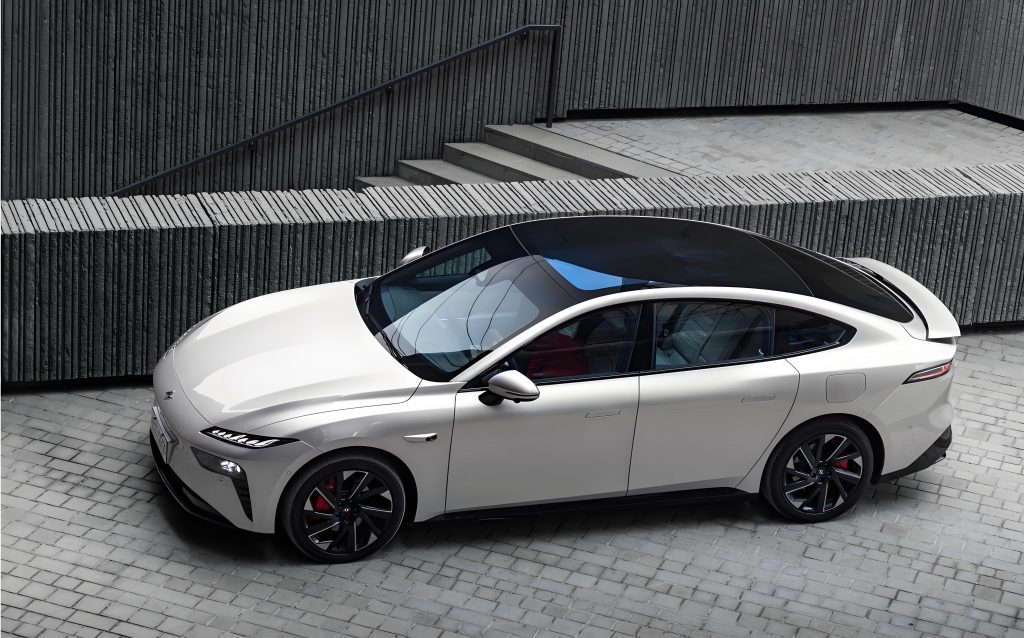
Vehicle-grid interaction refers to the technological system that enables bidirectional energy and information flow between electric vehicle cars and the power grid, leveraging the energy storage characteristics of traction batteries. The architecture typically involves interactions from the electric vehicle car to the charging/discharging equipment, to the charging service platform, further to the load aggregation platform or virtual power plant, and finally to the grid dispatch or trading systems. The primary operational modes can be categorized as follows:
- Smart/Managed Charging: This mode involves unidirectional energy transfer from the grid to the electric vehicle car. Charging power or timing is dynamically adjusted based on grid load conditions, time-of-use electricity prices, or user reservations to achieve load optimization.
- Bidirectional Charging/Vehicle-to-Grid (V2G): This mode supports bidirectional energy flow. The electric vehicle car can charge from the grid during periods of low demand or high renewable generation and discharge back to the grid during peak demand or power shortages, providing grid services.
Current Status of the Electric Vehicle Standard System for VGI
China has established a relatively comprehensive electric vehicle standard system, covering fundamental/general standards, whole vehicle standards, key component systems, and energy replenishment systems. The development of VGI imposes new requirements, primarily impacting standards within the key component systems (on-board energy storage) and the energy replenishment systems (charging infrastructure).
On-Board Energy Storage System (Battery System)
The existing standards for traction batteries primarily address safety, electrical performance, cycle life, and recycling. Key standards relevant to the foundational technology of the electric vehicle car include:
| Standard Code | Title | Core Scope |
|---|---|---|
| GB 38031—2025 | Safety Requirements for Traction Battery of Electric Vehicles | Specifies safety requirements and test methods for battery cells, packs, and systems, applicable to various chemistries like lithium-ion and emerging sodium-ion batteries. |
| GB/T 31484—2015 | Cycle Life Requirements and Test Methods for Traction Battery of Electric Vehicles | Defines requirements and test methods for standard and driving profile cycle life of traction batteries. |
| GB/T 38661—2020 | Technical Specifications for Battery Management System of Electric Vehicles | Stipulates technical requirements, test methods, and inspection rules for Battery Management Systems (BMS). |
However, these standards were formulated without specific consideration for the unique stresses imposed by frequent, high-power bidirectional energy flows characteristic of VGI services. The impact of V2G on battery degradation and the corresponding requirements for BMS monitoring and response in grid-interactive scenarios are not addressed.
Charging and Discharging System
The charging standard system is well-developed, focusing on safety, convenience, and interoperability. Recent updates have begun to incorporate VGI functionalities, particularly for direct current (DC) systems.
| Standard Code | Title | Relevance to VGI |
|---|---|---|
| GB/T 18487.5—2024 | EV Conductive Charging System — Part 5: DC Charging System for GB/T 20234.3 | Specifies the DC charging system scheme compatible with the latest DC connector. It supports DC V2G by defining control processes, safety thresholds, protection mechanisms, and grid adaptation requirements. |
| GB/T 27930.2—2024 | Digital Communication Protocol between Off-board Conductive Charger and EV — Part 2: Protocol for GB/T 20234.3 | Defines the digital communication protocol (based on CAN) for the new DC system. It provides end-to-end specification for DC V2G functions, including function negotiation, parameter configuration, energy transfer control, and safety mechanisms. |
| GB/T 18487.4—2025 | EV Conductive Charging and Discharging System — Part 4: Requirements for Vehicle Discharge to External Load | Standardizes vehicle discharge to external loads (V2L, Vehicle-to-Vehicle V2V), covering general requirements, control pilot circuits, and safety. It does not cover grid-connected V2G requirements. |
The standards GB/T 18487.1—2023 (General Requirements) and GB/T 27930—2023 (Legacy DC Communication Protocol) also provide foundational requirements that can be applied to certain VGI scenarios with compatible interfaces.
Analysis of Standardization Gaps and Proposals for VGI Development
While the existing framework is robust, significant gaps remain to fully enable and standardize widespread VGI applications for the electric vehicle car. The following analysis details these gaps and proposes areas for standard development or revision.
1. Smart/Managed Charging (AC)
DC smart charging is well-supported by protocols like GB/T 27930.2, enabling high-power adjustments. The primary gap lies in Alternating Current (AC) smart charging, which is crucial for home and workplace slow-charging scenarios. The current AC charging control relies on the Pulse-Width Modulation (PWM) signal on the Control Pilot (CP) line for basic functionality but lacks standardized mechanisms for advanced features like remote wake-up for scheduled charging. This inconsistency in implementation among different charging point operators and electric vehicle car manufacturers hinders reliable AC smart charging. A unified standard for vehicle sleep/wake-up logic via CP signal variations is needed. A potential model for the required wake-up signal detection could be formalized as a condition:
$$ \text{VehicleWakeUp} = f(S_{\text{CP}}(t), \Delta t, \text{Threshold}_{\text{PWM}}) $$
Where $S_{\text{CP}}(t)$ is the time-varying state of the CP signal, $\Delta t$ is the signal persistence duration, and $\text{Threshold}_{\text{PWM}}$ is a defined PWM characteristic threshold that triggers the wake-up sequence in the electric vehicle car.
2. Vehicle-to-Grid (V2G)
The bidirectional energy flow of V2G, while beneficial for the grid, introduces unique challenges for the electric vehicle car, particularly its battery system.
DC V2G: High-power DC V2G subjects the traction battery to intensified stress cycles, accelerating degradation. Existing battery standards (GB/T 31484) use test profiles that do not simulate the frequent, partial, and high-rate charge/discharge cycles typical of V2G. There is a need to revise cycle life testing standards or create supplementary standards that account for V2G duty cycles. The capacity fade per equivalent full cycle in a V2G context can be modeled as a function of multiple stress factors:
$$ \Delta Q_{\text{cycle, V2G}} = g(\text{DOD}, C_{\text{rate}}, T, \text{SOC}_{\text{mid}}, N) $$
Where $\Delta Q_{\text{cycle, V2G}}$ is the capacity loss per cycle, $\text{DOD}$ is the depth of discharge, $C_{\text{rate}}$ is the charge/discharge rate, $T$ is the operating temperature, $\text{SOC}_{\text{mid}}$ is the mid-point state of charge around which cycling occurs, and $N$ is the cycle number. Standards must define representative test profiles incorporating these parameters. Furthermore, battery safety standards (GB 38031) and BMS specifications (GB/T 38661) need enhancements to address the unique thermal and electrical management challenges, as well as communication requirements for real-time grid interaction, for the electric vehicle car in V2G mode.
AC V2G: Two major technical hurdles exist. First, the standard AC charging interface lacks dedicated digital communication pins, relying solely on analog PWM for unidirectional information flow. Implementing AC V2G requires a robust bidirectional digital communication channel. Standards must define a communication method, potentially using power line communication (PLC) or wireless protocols on top of the existing connector. Second, the electric vehicle car’s on-board charger must act as a grid-tied inverter when discharging, requiring compliance with stringent grid interconnection standards. This includes synchronization (voltage, frequency, phase), anti-islanding protection, and fault ride-through capabilities. A new standard or a major revision to GB/T 18487.4 is required to specify these grid-supportive functions for the electric vehicle car’s AC discharge system.
3. Vehicle Charging Service Platforms
The service platform is the informational nexus for VGI, connecting the electric vehicle car user, the vehicle, the charging point, and the grid aggregator. Standardizing platform functionalities is critical for scalability and interoperability.
| Platform Tier | Required Standardized Functions |
|---|---|
| User-Facing Platform |
|
| Enterprise/Aggregator Platform |
|
The aggregated power $P_{\text{agg}}(t)$ available from a fleet of $N$ electric vehicle cars can be expressed as:
$$ P_{\text{agg}}(t) = \sum_{i=1}^{N} \left[ \eta_i \cdot C_i \cdot \text{SOC}_i(t) \cdot \text{Ava}_i(t) \cdot W_i(t) \right] $$
Where for the $i$-th electric vehicle car, $\eta_i$ is the discharge efficiency, $C_i$ is the battery capacity, $\text{SOC}_i(t)$ is the current state of charge, $\text{Ava}_i(t)$ is a binary availability status (connected/available), and $W_i(t)$ is a weighting factor based on user settings and contract terms. Standardized data models are needed to describe these parameters for aggregation.
4. Off-Grid Discharge
While GB/T 18487.4 covers basic vehicle-to-load (V2L) discharge, the expanding use cases for the electric vehicle car as a mobile power source in off-grid or emergency scenarios demand more detailed specifications. The standard should be enhanced to address:
- System-Level Safety: Specific protection requirements for islanded operation (lack of grid ground reference, fault current management).
- Load Compatibility and Stability: Requirements for the electric vehicle car’s discharge system to handle various load types (resistive, inductive, capacitive) and inrush currents without instability or shutdown.
- Scenario-Specific Requirements: Distinct specifications for V2L, V2V, Vehicle-to-Building (V2B) in off-grid mode, and Vehicle-to-Home (V2H) as backup power, including connection/interlock requirements and operational procedures.
Conclusion
The transition of the electric vehicle car from a mere consumer of electricity to a proactive grid asset through VGI represents a paradigm shift. This analysis underscores that while China’s electric vehicle standard system is mature in foundational areas, it requires targeted evolution to fully support the complex, bidirectional interactions of VGI. Key gaps identified include the standardization of AC smart charging wake-up protocols, the development of battery test profiles and safety requirements reflective of V2G operational stresses, the definition of communication and grid-compliance for AC V2G, the functional specification of vehicle service platforms for user engagement and resource aggregation, and the refinement of standards for safe and reliable off-grid discharge. Addressing these gaps through collaborative, cross-sector standard development is essential to unlock the full potential of the electric vehicle car in the future energy ecosystem, ensuring the safe, efficient, and scalable integration of millions of electric vehicle cars into the smart grid.