
Based on my analysis of current research and incident reports, the proliferation of electric vehicle car technology presents a paradigm shift in transportation but also introduces novel and complex challenges for emergency responders. The safety principles discussed in rope rescue contexts, such as the critical reduction in material strength after exposure to significant stress, find a direct parallel in the compromised integrity of electric vehicle car battery packs following thermal runaway. This article synthesizes key findings and proposes a comprehensive framework for understanding and mitigating the risks associated with electric vehicle car fires.
The fundamental challenge lies in the energy source. Unlike internal combustion engines, an electric vehicle car stores immense electrical energy in its high-voltage battery pack. A failure within this system is not merely a fuel fire but a complex electrochemical and thermal event. The conclusions from mechanical systems safety—where prior overloading drastically reduces future capacity—are analogous here. A battery cell that has experienced an overload, short circuit, or physical damage undergoes irreversible structural and chemical changes, significantly degrading its safety margin and making it prone to catastrophic failure, much like a rope reduced to 50% of its original strength.
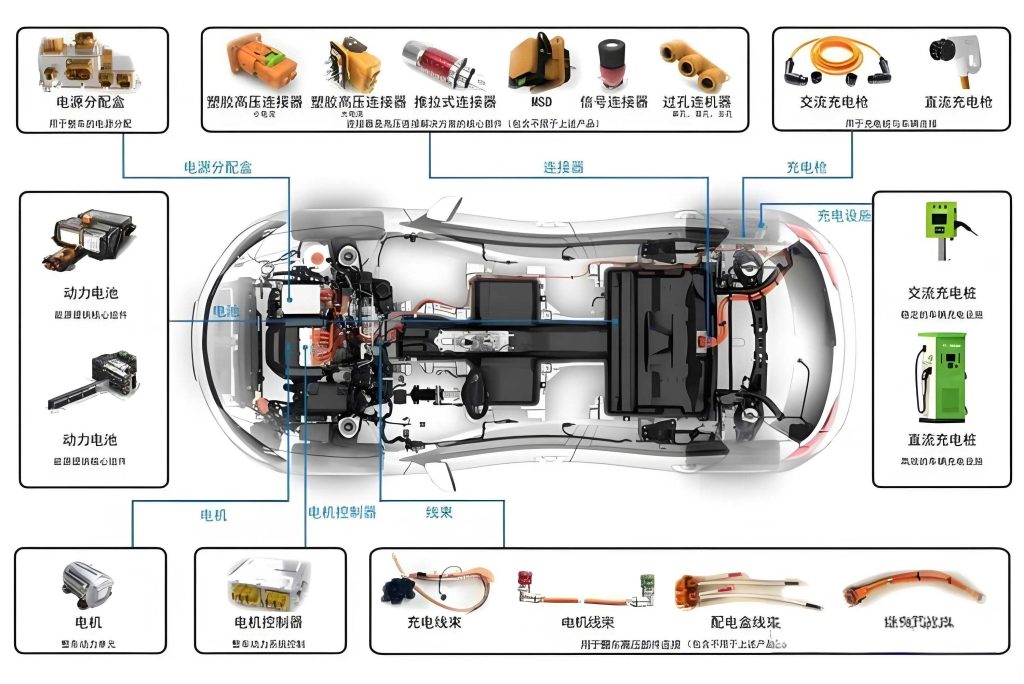
The global market penetration of the electric vehicle car is accelerating exponentially. Policy incentives, technological maturation, and growing consumer acceptance are driving this trend. However, this rapid growth brings inherent safety management difficulties, including a vast population of vehicles with varying generations of technology, some of which may have inherent design flaws from earlier “conversion” phases. The recall mechanisms for these complex systems are still evolving, often lagging behind the pace of innovation. Consequently, first responders are frequently tasked with managing incidents involving systems they may not fully understand, increasing operational risk.
Comparative Hazard Analysis: Electric Vehicle Car vs. Internal Combustion Engine (ICE) Vehicle Fires
The distinct characteristics of an electric vehicle car fire necessitate a complete departure from traditional vehicle fire tactics. The following table summarizes the critical differences:
| Parameter | Internal Combustion Engine (ICE) Vehicle Fire | Electric Vehicle Car Fire |
|---|---|---|
| Primary Fuel | Liquid hydrocarbon (Gasoline/Diesel) | Electrochemical storage (Lithium-ion battery) |
| Ignition & Growth Rate | Relatively slower, often pool-fire based. | Extremely rapid; can progress from smoke to full involvement in seconds. |
| Key Hazard | Heat, conventional smoke, risk of BLEVE from fuel tank. | Thermal runaway, toxic/flammable gas generation (HF, CO, H2), jet fires from venting, stranded high voltage (>400V), reignition risk. |
| Extinguishing Agent | Water, foam (for fuel). | Large volumes of water for cooling; agents are largely ineffective on internal cell reactions. |
| Duration & Reignition Potential | Typically controlled with agent application; limited reignition if fuel is removed/cooled. | Prolonged; requires massive, sustained cooling for hours. High risk of reignition days later due to deep-seated thermal reactions. |
| Rescue Time Window | Moderate (several minutes). | Very short (often less than 60 seconds for occupant egress). |
Battery Chemistry and Thermal Runaway Dynamics
The core danger originates from the lithium-ion battery pack. Thermal runaway is a positive feedback loop where exothermic reactions within a failing cell generate heat, propagating to adjacent cells. The governing principles can be conceptualized through energy and heat transfer equations. The total energy available for release in a damaged electric vehicle car battery is substantial:
$$E_{pack} = N_{series} \times N_{parallel} \times V_{cell} \times C_{cell} \times 3600$$
Where $E_{pack}$ is the total energy in Joules, $N_{series}$ and $N_{parallel}$ are the cell configurations, $V_{cell}$ is the nominal cell voltage (e.g., 3.6V), and $C_{cell}$ is the cell capacity in Amp-hours.
Different battery chemistries common in electric vehicle car models exhibit varying thermal stability profiles, influencing incident behavior and response strategy.
| Battery Chemistry | Typical Energy Density | Thermal Runaway Onset Temp. | Key Hazardous Off-Gas | Fire Behavior Note |
|---|---|---|---|---|
| Lithium Nickel Manganese Cobalt Oxide (NMC) | High | ~150-200°C | High HF, CO, H2 | Very violent, rapid propagation. |
| Lithium Iron Phosphate (LFP) | Moderate | ~200-250°C | Lower HF, more P-compounds | More thermally stable, but still significant fire load. |
The heat release rate ($\dot{Q}$) during thermal runaway is a critical factor determining fire growth. It depends on the reaction kinetics and the rate of cell-to-cell propagation:
$$\dot{Q}(t) = \sum_{i=1}^{n} \Delta H_{rxn} \cdot \frac{dm_i}{dt}$$
where $\Delta H_{rxn}$ is the heat of decomposition reaction per unit mass, and $\frac{dm_i}{dt}$ is the mass loss rate of cell $i$ as it undergoes failure. The violent venting of gases often results in jet-fire-like behavior, with temperatures exceeding 1000°C.
Comprehensive Emergency Response Protocol for Electric Vehicle Car Incidents
Effective management of an electric vehicle car incident requires a structured, safety-oriented process. The following integrated protocol outlines the essential phases.
| Phase | Core Objectives | Critical Actions & Considerations |
|---|---|---|
| 1. Pre-Planning & Receipt of Alarm | Maximize preparedness and initial intelligence gathering. | • Train on major electric vehicle car brands, battery locations, and emergency manuals. • Upon alarm, immediately identify the vehicle as an electric vehicle car and ascertain model/battery type. • Dispatch appropriate resources: major fire appliance, copious water supply, thermal imaging camera, gas detector, electrical insulation gear. |
| 2. Scene Approach & Size-Up | Establish safety zones and perform dynamic risk assessment. | • Establish initial isolation zones: 50m for crash/no fire, 200m for fire, 500m+ on highways. Double in confined spaces (tunnels, garages). • Identify vehicle state: upright, side/rear, submerged, etc. • Perform 360° assessment. Look for OEM emergency response guides (QR codes/guides). • Deploy gas monitors (CO, HF, H2, VOC) from upwind. |
| 3. Stabilization & Power Isolation | Make the vehicle and scene electrically and mechanically safe. | • Chock wheels (both sides) and use parking brake. • Power Isolation is paramount: Remove key/fob to >15m, disable proximity features. If accessible and safe, activate vehicle’s emergency disconnect switch (often under rear seat or in frunk). • Assume high-voltage systems remain live even after disconnection. Use insulated tools. |
| 4. Initial Fire Attack & Exposure Protection | Protect exposures and initiate cooling if safe to do so. | • If battery pack is involved in fire, initiate direct cooling from a safe distance (15-25m) using a master stream or monitor. • Protect exposures and fuel sources. • Do not commit personnel inside the isolation zone without absolute necessity and full PPE/SCBA. |
| 5. Extrication & Patient Access | Rescue trapped occupants while managing extreme hazards. | • Full structural firefighting PPE with SCBA is mandatory. Add electrical insulation (gloves, boots) when near the vehicle. • Avoid contact with orange high-voltage cables and obvious battery casing. • Strategic vehicle displacement (lifting, rolling) may be required; consider battery integrity before applying force. • Control run-off water if possible due to potential contamination. |
| 6. Fire Extinguishment & Overhaul | Achieve complete extinguishment and prevent reignition. | • Extinguishment is defined as the cessation of active flame and cooling of the battery pack to near-ambient temperature. • This requires massive, sustained water application. A common formula for initial water estimate is: $$V_{water} \approx k \cdot E_{pack}$$ where $k$ is an empirical constant (e.g., 5-10 liters per kWh of battery capacity). A 100 kWh pack may require 500-1000+ liters for initial cooling. • Use thermal imaging to identify and target hot spots. Continue cooling until temperatures are stable and low. • Monitor for off-gassing and thermal re-elevation for a minimum of 45-60 minutes after visible signs stop. |
| 7. Post-Incident Management | Secure the scene and handle the damaged electric vehicle car. | • The vehicle remains a hazardous material. Label it as a potential reignition hazard. • Storage must be in an open area, isolated from other assets (minimum 15m separation). • Notify the owner, insurer, and manufacturer. Specialized recovery teams are often required for transport. |
Mathematical Modeling for Safety Margins and Resource Planning
Informed response leverages quantitative assessment. We can adapt safety factor concepts from other fields. The “load” on an electric vehicle car battery system can be considered the operational stress (thermal, electrical, mechanical). After an incident, its “strength” or safety margin is degraded. If we define a catastrophic failure (thermal runaway) as the ultimate limit, the safety factor $SF$ post-incident is drastically reduced:
$$SF_{post-incident} \ll SF_{new}$$
This underscores why damaged electric vehicle cars are so unpredictable.
For resource planning, understanding the water demand is crucial. The energy balance for cooling a battery pack from its reaction temperature ($T_{runaway}$) to a safe temperature ($T_{safe}$) can be approximated. The heat $Q$ that must be absorbed by water is:
$$Q = m_{pack} \cdot c_{pack} \cdot (T_{runaway} – T_{safe}) + Q_{rxn}$$
where $m_{pack}$ is battery mass, $c_{pack}$ is its average specific heat capacity, and $Q_{rxn}$ is the residual heat from ongoing chemical reactions. The mass of water $m_{water}$ required, assuming it is heated from ambient ($T_{amb}$) to boiling ($100^\circ C$) and partially vaporized, is:
$$Q = m_{water} \cdot [c_{w}(100 – T_{amb}) + L_{v}]$$
where $c_w$ is the specific heat of water (4.186 kJ/kg·K) and $L_v$ is the latent heat of vaporization (2260 kJ/kg). This calculation reveals why thousands of liters of water may be necessary to stabilize a single large electric vehicle car battery fire.
Future Directions and Systemic Recommendations
Enhancing safety for the electric vehicle car ecosystem requires a multi-faceted approach beyond firefighting tactics. My analysis points to several critical areas for development:
1. Vehicle Design & Regulation: Mandate standardized, accessible emergency disconnects and battery compartment isolation points. Improve passive protection systems within battery packs to delay or isolate thermal runaway. Standardize the location and marking of venting ports to guide safe firefighting positioning.
2. Emergency Response Technology: Develop and deploy rapid-cooling agents or application systems specifically for battery modules. Integrate real-time data telemetry from the electric vehicle car to first responders (battery state of charge, thermal hotspots, crash data) via secure channels. Advance thermal imaging and gas detection technology for better situational awareness.
3. Training & Information Systems: Create dynamic, centralized databases accessible to responders with specific emergency procedures for every make and model of electric vehicle car. Develop advanced simulation tools for training on these high-risk, low-frequency events.
4. Post-Incident Logistics: Establish a certified national network for the safe recovery, temporary storage, and disposal of damaged electric vehicle cars. Develop clear protocols for determining when a damaged electric vehicle car battery is “safe.”
In conclusion, the rise of the electric vehicle car is an irreversible global trend. Its safety challenges, particularly regarding fire and emergency response, are significant but manageable through rigorous scientific understanding, strategic procedural adaptation, and proactive systemic development. The core lesson from related safety fields holds true: systems that have been stressed or damaged possess fundamentally reduced and unpredictable safety margins. Therefore, a posture of utmost caution, underpinned by specialized knowledge and a vast margin for error, is essential when dealing with incidents involving an electric vehicle car. The integration of quantitative risk assessment, detailed procedural protocols, and continuous technological and training advancements will be the cornerstone of effective emergency response in this new era of transportation.