
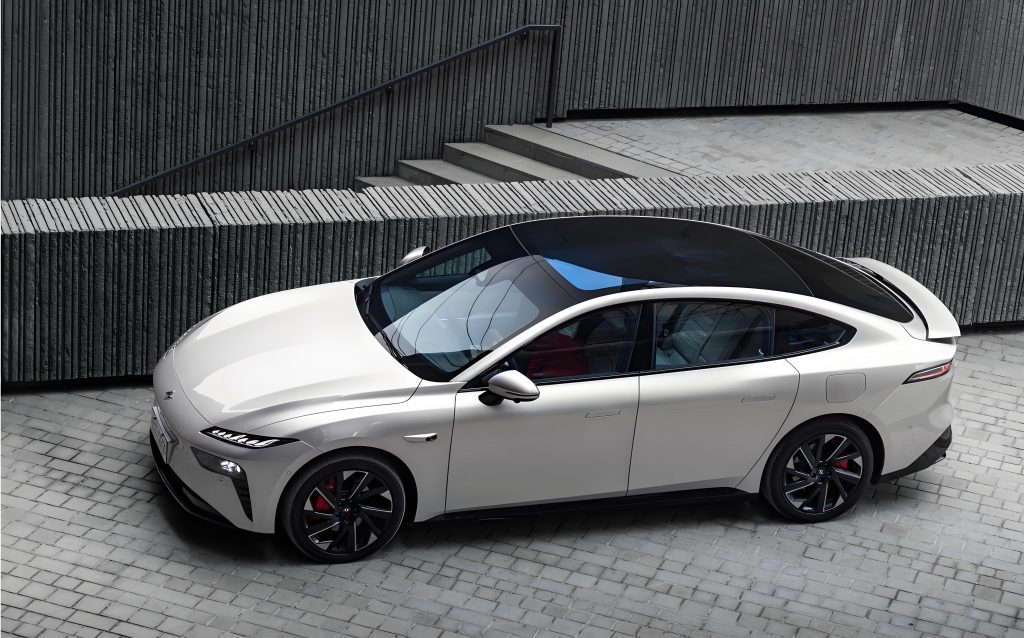
The rapid proliferation of the electric vehicle car market represents a pivotal shift towards sustainable transportation. However, this advancement is accompanied by significant safety concerns, paramount among which is the risk of spontaneous combustion. The characteristics of an electric vehicle car fire differ profoundly from those of a conventional internal combustion engine vehicle, primarily due to the nature of the energy source. The lithium-ion battery pack, the heart of an electric vehicle car, stores immense energy in a chemical form that, under certain failure conditions, can be released in an uncontrolled exothermic reaction known as thermal runaway. This process is the root cause of the vast majority of electric vehicle car fire incidents. The implications for occupant safety are severe, as the available time for emergency response and egress can be critically short. In this comprehensive analysis, I will explore the fundamental causes and unique progression of electric vehicle car fires and present a detailed experimental investigation into the application of metal mesh fire retardant technology as a potential countermeasure to enhance occupant survival time.
The genesis of an electric vehicle car fire typically lies within the battery pack. The causes can be broadly categorized into mechanical, electrical, and thermal abuses. Mechanical abuse includes scenarios like a severe underbody impact or penetration from road debris, which can compromise the battery cell integrity and cause an internal short circuit. Electrical abuse involves overcharging, deep discharging, or internal manufacturing defects leading to dendrite formation. Thermal abuse occurs when the battery operates outside its safe temperature window, often due to cooling system failure or external heat sources. Once initiated, thermal runaway is a chain reaction: a single failing cell rapidly heats up, heating its neighbors and causing them to fail, propagating the failure throughout the module and pack. The energy release is catastrophic, with temperatures soaring to approximately 2000°C within seconds. At this extreme temperature, not only do the organic electrolytes and separators combust, but even typically non-flammable materials like the aluminum alloy battery casing can melt and, in some conditions, oxidize vigorously, acting as additional fuel. This creates an intense, persistent fire that is notoriously difficult to extinguish and prone to reignition.
The fire dynamics in an electric vehicle car present a distinct and dangerous timeline. The fire source, concentrated in the battery pack usually located along the vehicle floor, acts as a sustained high-intensity heat flux source directly applied to the vehicle’s underbody and passenger compartment floor. The thermal assault compromises structural materials rapidly. In contrast to gasoline fires, which often start at lower temperatures and may take several minutes to breach the passenger cabin, the thermal runaway fire in an electric vehicle car can lead to cabin involvement in under 60 seconds. The high heat flux quickly degrades the thermal protection and melts or weakens the metal floor pan, allowing flames and hot gases to enter. Simultaneously, interior trim materials, largely composed of polymers, pyrolyze and ignite. This leaves occupants with an exceedingly narrow window—often less than a minute—to recognize the danger, overcome the initial shock, initiate an emergency stop, and execute a safe escape. This critical time deficit is the central safety challenge addressed by this research.
The proposed solution is inspired by a historical safety invention: the Davy lamp. In 1815, Sir Humphry Davy observed that a fine metal mesh could quench a flame and prevent it from igniting flammable methane gas in mines. The underlying principle is thermal quenching. A metal mesh, with its high thermal conductivity and surface-area-to-volume ratio, acts as a heat sink. When a flame front or hot gas attempts to pass through, the metal wires rapidly conduct heat away from the advancing combustion zone, cooling the gases below their auto-ignition temperature and thereby halting flame propagation. This fundamental principle of using a conductive barrier to disrupt heat transfer forms the basis for applying metal mesh fire retardant technology to an electric vehicle car. The objective is to interpose such a barrier between the high-temperature battery fire source and the passenger cabin, thereby delaying the heat flux and increasing the time-to-cabin-breach (TTCB).
The practical implementation of this technology in an electric vehicle car structure, however, requires careful consideration of several parameters: the optimal material for the mesh (e.g., steel, aluminum, copper), its geometric specifications (wire diameter, mesh opening size, and overall thickness), its placement within the complex vehicle layered structure, and ultimately, the quantification of its performance improvement. To answer these questions, I designed a series of controlled experiments simulating the thermal attack from a battery pack thermal runaway event.
Experimental Design for Metal Mesh Efficacy Verification
The core challenge in laboratory testing is replicating the intense, short-duration heat flux characteristic of an electric vehicle car battery fire. For this purpose, I selected a thermite mixture (aluminum powder and iron oxide) as the simulated fire source. Thermite reactions provide several key advantages: they generate temperatures exceeding 2500°C, they have a predictable and controllable burn duration based on mass, and the primary reaction products are molten iron and aluminum oxide, simulating the molten metal hazards present in real electric vehicle car fires. A standard charge of 1 kg of thermite yields a burn time of (60 ± 3) seconds, creating a well-defined thermal pulse for testing.
The test setup aimed to model a section of an electric vehicle car’s underbody structure. A primary substrate, representing the passenger cabin floor, was subjected to the thermite heat source from below. Two representative substrate materials were chosen to model different real-world components:
1. Dry Engineered Wood: Simulating structural floor panels or packaging components.
2. Engineering-Grade Polycarbonate: Simulating underbody covers, wiring conduits, or other polymer-based components.
A layer of metal mesh (stainless steel, 0.3 mm wire diameter, 2 mm aperture) was introduced at different strategic locations within the simulated structure stack-up. The performance metric was the time to observable failure of the primary substrate, specifically the time to sustained flaming ignition for wood and the time to sustained flaming or severe structural collapse/melting for polycarbonate.
Three primary experimental configurations (Scheme 1, 2, and 3) were devised, each representing a different potential integration point for the metal mesh within an electric vehicle car.
| Experimental Scheme | Simulated Location in Electric Vehicle Car | Test Stack-up (Bottom to Top) |
|---|---|---|
| Scheme 1 | Inside Battery Pack, between cells and casing | Thermite → Metal Mesh → Substrate |
| Scheme 2 | Between Battery Pack and Vehicle Floor Pan | Thermite → [Air Gap] → Metal Mesh → Substrate |
| Scheme 3 | On top of Vehicle Floor Pan, beneath interior trim | Thermite → [Air Gap] → Insulating Layer → Metal Mesh → Substrate |
The inclusion of an air gap in Schemes 2 and 3 is critical, as it models the real physical separation between the battery pack and the vehicle body in most electric vehicle car designs. This gap is a key parameter influencing heat transfer, primarily through radiation. The governing equation for radiative heat flux (q”) from the fire source to the target is given by:
$$q” = \sigma \varepsilon (T_{fire}^4 – T_{target}^4)$$
where $\sigma$ is the Stefan-Boltzmann constant, $\varepsilon$ is the effective emissivity, and $T$ is temperature in Kelvin. The metal mesh’s role is to intercept this radiation, heat up, and then re-radiate and convect heat in a more distributed and less intense manner.
Experimental Results and Initial Analysis
The results from the initial 60-second thermite exposure tests are summarized below. The metrics recorded are Time to First Smoke (TTS), Time to Sustained Flame (TTF) for wood, Time to Significant Softening (TTSs) for polycarbonate, and the final state after the test pulse.
| Scheme | Dry Engineered Wood Substrate | Engineering Polycarbonate Substrate |
|---|---|---|
| 1 (No practical gap) | TTS: 3 s, TTF: 7 s. Complete combustion. | TTSs: 5 s, TTF: 15 s. Complete melting and combustion. |
| 2 (With air gap) | TTS: 18 s, TTF: 29 s. Sustained combustion. | TTSs: 22 s, TTF: 40 s (intermittent). Severe melting. |
| 3 (With gap & insulation) | TTS: 36 s, Surface charring at 41 s. No sustained flame. | TTSs: 50 s, No ignition, minimal deformation. |
The results clearly demonstrate a progressive improvement in fire resistance from Scheme 1 to Scheme 3. Scheme 1, representing internal battery pack integration, showed almost no benefit; the intimate contact between the thermite and mesh led to immediate overheating and failure. Scheme 2, simulating an underbody shield, provided a moderate delay by leveraging the air gap. However, the most promising results came from Scheme 3, where the metal mesh was placed in a protected location atop the floor structure. Here, the combination of an air gap, an underlying insulating layer (modeling sound deadening or existing floor insulation), and the metal mesh succeeded in preventing sustained ignition of the primary substrate for the entire 60-second duration of the simulated electric vehicle car battery fire. This validated the core hypothesis: a strategically placed metal mesh barrier can effectively delay the thermal threat.
Extended and Optimized Validation Testing
While preventing ignition for 60 seconds is a positive result, the ultimate goal for an electric vehicle car safety system is to extend the safe egress time as much as possible. To stress-test the Scheme 3 configuration, I conducted extended duration tests. Instead of a self-limiting thermite charge, a sustained high-temperature heat source approximating 2000°C was applied to the test assembly, and the time to failure was recorded. Furthermore, based on the principles observed, an optimized “Scheme 2+3” was conceived, combining elements of both by using multiple, strategically spaced metal mesh layers with enhanced air gaps to create a staged thermal baffle system.
| Test Configuration | Time to Sustained Flame/Collapse | Observations |
|---|---|---|
| Scheme 3 (Baseline Extended) | Wood: ~15 min Polycarbonate: ~30 min (severe deformation by 22 min) |
Provided a significant but limited extension. Failure occurred once the mesh and underlying insulation reached thermal saturation. |
| Optimized Scheme 2+3 | Wood: 37 minutes Polycarbonate: 61 minutes |
The multi-layer, staged baffle system dramatically increased time to failure. Heat transfer was effectively impeded through sequential radiative interception and convective cooling within the air gaps. |
The performance of the optimized scheme can be modeled by considering the combined thermal resistance network. The total thermal resistance ($R_{total}$) opposing heat flow from the fire to the cabin for an n-layer system with air gaps can be approximated as a series sum:
$$R_{total} \approx R_{gap1} + R_{mesh1} + R_{gap2} + R_{mesh2} + … + R_{substrate}$$
Where the resistance of an air gap ($R_{gap}$) is dominated by radiation and can be modified by the presence of a mesh, which acts as a radiation shield. The heat transfer rate ($Q$) is then:
$$Q \approx \frac{\Delta T}{R_{total}}$$
where $\Delta T$ is the temperature difference. By increasing $R_{total}$ through multiple mesh-gap sequences, the heat flux $Q$ reaching the passenger compartment over a given time period is substantially reduced, directly correlating to the increased TTCB observed experimentally.
The experimental data unequivocally supports the technical feasibility of metal mesh fire retardant technology. The transition from a sub-60-second threat timeline to one exceeding 30, and potentially 60, minutes represents a paradigm shift for occupant safety in an electric vehicle car fire scenario. This extended timeframe transforms an almost unsurvivable event into a manageable emergency, providing occupants ample opportunity to safely bring the electric vehicle car to a stop and evacuate, and likewise affords first responders a considerably larger window for intervention before full vehicle involvement.
Practical Implementation and Concluding Synthesis
The translation from laboratory validation to real-world application in an electric vehicle car must consider practicality, cost, and integration. A retrofit demonstration was conducted on a production electric vehicle car. Following the Scheme 3 principle (which avoids complex disassembly of the battery pack), a stainless-steel mesh layer was installed atop the existing cabin floor pan, beneath the interior carpet and trim. The installation was non-invasive, completed in approximately three hours, and the material cost was minimal. This exercise proved the logistical and economic viability of the solution both for new vehicle design and as a potential aftermarket safety enhancement for existing electric vehicle car models.
In conclusion, the hazard posed by spontaneous combustion in an electric vehicle car is severe due to the extreme thermal dynamics of lithium-ion battery thermal runaway. The primary risk to occupants is the critically short time available for escape. This research has systematically investigated and validated the application of metal mesh fire retardant technology as a highly effective countermeasure. Through controlled experimentation simulating electric vehicle car fire conditions, it was demonstrated that a strategically designed metal mesh barrier system, leveraging the principles of thermal quenching and radiative shielding, can dramatically delay the transfer of heat from a battery fire into the passenger compartment. The optimized multi-layer configuration extended the time to cabin fire involvement from under one minute to over one hour for certain materials. This order-of-magnitude increase in critical egress time can decisively improve occupant survival odds. Therefore, integrating metal mesh fire retardant technology into the design and construction of an electric vehicle car presents a technically sound, economically feasible, and potentially life-saving advancement in the safety architecture of modern electric vehicle car platforms.