
The rapid evolution of the battery electric car industry has placed immense focus on the safety and reliability of its core component: the traction battery pack. The battery pack enclosure, or tray, is typically fabricated from 6000-series aluminum alloys, chosen for their favorable strength-to-weight ratio and corrosion resistance. A paramount requirement for this enclosure is its hermetic integrity, preventing the ingress of moisture, dust, or other contaminants that could compromise the battery cells and thermal management system. Among various joining techniques, Friction Stir Welding (FSW) has emerged as a preferred method for manufacturing these enclosures due to its solid-state nature, which yields joints with low distortion, minimal residual stress, and an absence of solidification-related defects like cracks and porosity commonly associated with fusion welding.
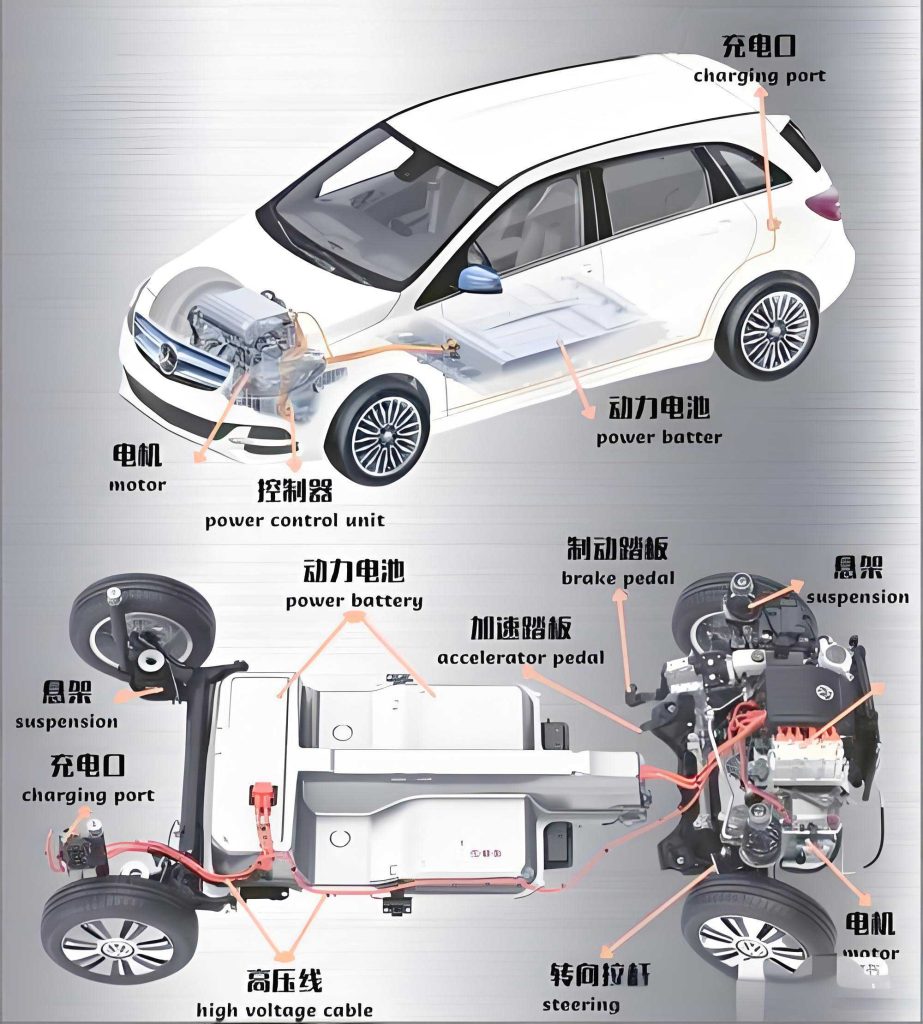
Despite the maturity of FSW technology, achieving consistent, leak-tight welds in high-volume production for battery electric car applications presents significant challenges. Process fluctuations, fixture wear, and assembly gaps can introduce defects that jeopardize seal integrity. These defects, often subtle and difficult to detect via non-destructive methods, pose a high-risk failure mode. This article presents a first-person, systematic investigation into a recurring leakage failure observed in the FSW joints of a battery pack lower tray during mass production. The analysis details the methodology for fault localization, characterizes the root-cause defect, elucidates its formation mechanism, and validates an effective process optimization strategy.
Problem Statement and Initial Investigation
The subject component was the lower tray of a battery pack for a battery electric car. The tray was constructed by FSW joining six extruded 6005-T6 aluminum alloy profiles, including base plates, front/rear panels (which formed an integrated liquid cooling channel), and side panels. The sealing performance of the entire assembly was critically dependent on the quality of these FSW seams. During production, a failure mode manifested as coolant leakage from specific weld lines on the exterior of the tray, leading to functional failure of the thermal management system and subsequent client rejections during final leak testing.
My initial action was to conduct a comprehensive investigation to reproduce and locate the fault. The suspected tray was subjected to a helium leak test under a pressure of 0.5 MPa. The test confirmed a gross leak, as the system could not maintain pressure. A meticulous manual survey using a helium sniffer probe was then performed along all FSW seams. This procedure successfully localized the primary leakage source to a specific longitudinal FSW joint on the tray’s exterior surface, far from the cooling channel’s direct path, indicating a through-thickness leak channel.
Material, Methods, and Analytical Techniques
The base material was 6005-T6 aluminum alloy. Its nominal chemical composition and mechanical properties are summarized in Table 1 and Table 2, respectively. These properties serve as the benchmark for evaluating weld joint performance.
| Si | Mg | Fe | Cu | Mn | Cr | Zn | Ti | Al |
|---|---|---|---|---|---|---|---|---|
| 0.6 – 0.9 | 0.4 – 0.7 | ≤0.35 | ≤0.30 | ≤0.50 | ≤0.30 | ≤0.20 | ≤0.10 | Bal. |
| Material | Tensile Strength (MPa) | Yield Strength (MPa) | Elongation (%) |
|---|---|---|---|
| 6005-T6 | ≥ 285 | ≥ 230 | ≥ 12 |
The welding was performed on a gantry-style FSW machine equipped with automated pneumatic clamps. The weld tool featured a replaceable pin-and-shoulder module with a threaded, tri-flat pin (length: 2.5 mm) and a concave shoulder (diameter: 10 mm). The initial welding parameters suspected in the failure were a rotation speed (ω) of 1200 rpm and a travel speed (v) of 600 mm/min.
Following leak localization, a section containing the leak point was extracted via wire electrical discharge machining (EDM). The sample was then mounted, ground, polished, and etched using Keller’s reagent. Macroscopic and microscopic examination was conducted using optical microscopy (OM). To understand the post-failure actions, it was noted that a Tungsten Inert Gas (TIG) repair weld had been attempted on the leaking seam, which introduced additional artifacts for analysis.
Defect Characterization and Root Cause Analysis
Macroscopic visual inspection of the leaked area revealed a fine, continuous line running along the weld crown, resembling a crack. Cross-sectional metallographic analysis provided definitive insights. The micrograph revealed two distinct defect types, as illustrated in the schematic and described below.
1. Primary Leakage Defect (Root Cause): A continuous, unbonded interface was observed, originating from the original faying surface and propagating to the exterior surface of the weld. This defect acted as a direct conduit for fluid passage. Critically, this interface lacked the characteristic stirred, recrystallized microstructure of a sound FSW nugget. Instead, the material on either side appeared only plastically deformed and bent, with clear evidence of the original oxide layer remaining largely intact along the interface. This is a classic manifestation of a “cold weld” or “lack of consolidation” defect.
2. Secondary Defect (From Repair): Within the nominal weld nugget area, porosity and micro-cracking were observed. These features were conclusively linked to the subsequent TIG repair process, as evidenced by their location and the associated heat-affected zone microstructure. They were not the initiators of the original leak.
The root cause analysis focused on the cold weld defect. In FSW, sufficient frictional heat and material plasticity are required to break up and disperse the surface oxides, allowing for solid-state diffusion and metallurgical bonding across the interface. The key process variables governing this are tool rotation speed (ω), travel speed (v), axial force (F), and, crucially, tool alignment relative to the joint line.
The observed defect indicated a severe insufficiency of material intermixing at the original joint line. This is mathematically related to the specific energy input per unit length and the tool’s interaction with the joint. The linear heat input (Q) in FSW can be approximated by models considering the power generated by the tool shoulder and pin. A simplified representation is:
$$ Q \propto \eta \cdot \mu \cdot \omega \cdot F \cdot R $$
where $\eta$ is an efficiency factor, $\mu$ is the coefficient of friction, $\omega$ is the rotation speed, $F$ is the axial force, and $R$ is a characteristic tool radius. However, if the stirring pin is significantly offset from the joint line, the effective energy delivered directly to the interface for breaking up oxides is drastically reduced, even if overall parameters seem nominal. The material flow pattern becomes asymmetrical, and the interface may be merely displaced or folded without being stirred.
My investigation concluded that the primary cause of the leakage in this battery electric car pack was a substantial misalignment of the FSW tool pin relative to the butt joint line. This misalignment led to a localized “cold welding” condition where the oxide layer was not disrupted, preventing metallurgical bonding and creating a continuous, crack-like leakage path. This type of defect is particularly insidious as it can be visually subtle on the surface and challenging to detect with standard non-destructive testing methods.
Process Optimization and Validation
To eliminate the defect, the solution had to address the root cause: inconsistent tool alignment. The optimization strategy was two-pronged:
1. Enhanced Process Control: A real-time laser seam tracking system was integrated into the FSW machine. This system actively monitors the joint line and provides dynamic feedback to the machine controller, allowing for automatic correction of the tool path. The alignment tolerance was tightened to ±0.2 mm.
2. Parameter Optimization: Concurrently, the welding parameters were reviewed and optimized to ensure robust bonding within the new alignment tolerance. The goal was to ensure adequate heat input and material flow. The optimized parameters established were:
$$ \omega = 1500 \, \text{rpm}, \quad v = 800 \, \text{mm/min} $$
This represents a higher heat input condition compared to the initial suspect parameters (1200 rpm / 600 mm/min). The specific welding energy, $E$, often expressed in J/mm, can be considered proportional to the ratio ω/v. While not a perfect metric, it indicates a trend:
$$ E_{\text{initial}} \propto \frac{1200}{600} = 2.0, \quad E_{\text{optimized}} \propto \frac{1500}{800} = 1.875 $$
The slight decrease in this simple ratio is counteracted by the absolute increase in rotational speed, which significantly affects peak temperature and material flow. More importantly, the precise alignment ensures this energy is effectively applied at the joint interface.
| Condition | Rotation Speed (rpm) | Travel Speed (mm/min) | Pin Alignment Control | Key Feature |
|---|---|---|---|---|
| Initial (Faulty) | 1200 | 600 | Manual / Visual, > ±0.5 mm deviation likely | Cold weld defect due to misalignment |
| Optimized | 1500 | 800 | Laser Tracking, ≤ ±0.2 mm | Precise alignment with robust parameters |
The effectiveness of the optimized process was rigorously validated:
1. Metallurgical Quality: Cross-sectional analysis of welds produced with the new setup showed complete elimination of the cold weld defect. The weld nugget exhibited a homogeneous, recrystallized grain structure with complete consolidation at the original joint line.
2>Leak Test Performance: Batch production trials were conducted. Helium leak testing was performed on hundreds of units. The results showed a dramatic improvement. The leakage rate fell to near-zero, and the first-pass yield for hermeticity stabilized above 99.8%.
3. Mechanical Property Verification: Tensile test specimens were extracted transversely from the optimized welds. The results, averaged over multiple tests, are summarized in Table 4. The joint efficiency achieved was satisfactory for the structural and sealing requirements of a battery electric car pack enclosure.
| Property | Average Value | Percentage of Base Material (6005-T6) | Standard Deviation |
|---|---|---|---|
| Tensile Strength | 209 MPa | 73.3% | ±4.2 MPa |
| Fracture Location | Thermo-Mechanically Affected Zone (TMAZ)/HAZ | ||
| Failure Mode | Ductile fracture with micro-void coalescence | ||
Scanning Electron Microscope (SEM) examination of the fracture surfaces confirmed a ductile failure mode, characterized by dimpled morphology, indicating good metallurgical bonding within the weld proper.
Conclusions and Recommendations for Battery Electric Car Applications
This failure analysis underscores the critical importance of precise process control in FSW for safety-critical applications like battery electric car battery packs. The investigation led to the following key conclusions:
- The leakage failure was definitively caused by a “cold weld” or lack-of-consolidation defect at the FSW joint interface. This defect resulted from significant misalignment of the stirring pin relative to the joint line, which prevented the breakup of the surface oxide layer and subsequent metallurgical bonding.
- Tool alignment is a parameter as critical as rotation speed, travel speed, and force. For thin-section aluminum welds requiring hermetic seals, reliance on manual setup is insufficient for volume production.
- The implementation of a real-time laser seam tracking system, coupled with optimized welding parameters (1500 rpm, 800 mm/min), successfully eliminated the defect by ensuring consistent, precise tool placement (±0.2 mm).
- The optimized process was validated through metallography, leak testing, and mechanical testing, demonstrating robust joint integrity and a first-pass yield exceeding 99.8%.
Based on this experience, I recommend the following for FSW of battery enclosures and similar structures in the battery electric car industry:
- Mandatory Seam Tracking: Implement automated seam tracking for any FSW process where joint consistency and sealing are paramount. This is a non-negotiable investment for quality assurance in high-volume manufacturing.
- Robust Parameter Windows: Develop and qualify welding parameters that are not only mechanically sound but also tolerant of minor variations. A slightly higher heat input condition can provide a safer margin against lack-of-fusion defects.
- Enhanced In-Process Monitoring: Beyond tracking, consider integrating force, torque, and temperature monitoring to create a digital fingerprint for each weld. Deviations from this fingerprint can trigger an automatic reject flag.
- Design for Weldability: Collaborate with design engineers to ensure joint configurations are accessible and friendly for FSW tooling, minimizing the risk of tool deflection or access issues that can lead to misalignment.
This case study highlights that achieving the full potential of FSW for the battery electric car sector requires moving beyond basic parameter selection to embrace advanced process control and monitoring technologies, ensuring the reliability and safety that this transformative mobility technology demands.