
In the rapidly evolving landscape of electric mobility, the infrastructure supporting battery electric cars is paramount. Central to this infrastructure are charging piles, which facilitate the energy transfer from the grid to the vehicle’s battery. However, the high-power nature of fast-charging systems, especially direct current (DC) charging piles, introduces significant electrical safety concerns, primarily due to residual currents. Residual current, often termed leakage current, arises from imbalances in current flow, potentially caused by insulation failures, aging components, or overloads. If undetected, these currents can lead to severe hazards, including electric shock and fire, jeopardizing both life and property. This paper elaborates on an optimized B-type detection technology designed to accurately detect residual currents in battery electric car charging piles, enhancing operational reliability and safety.
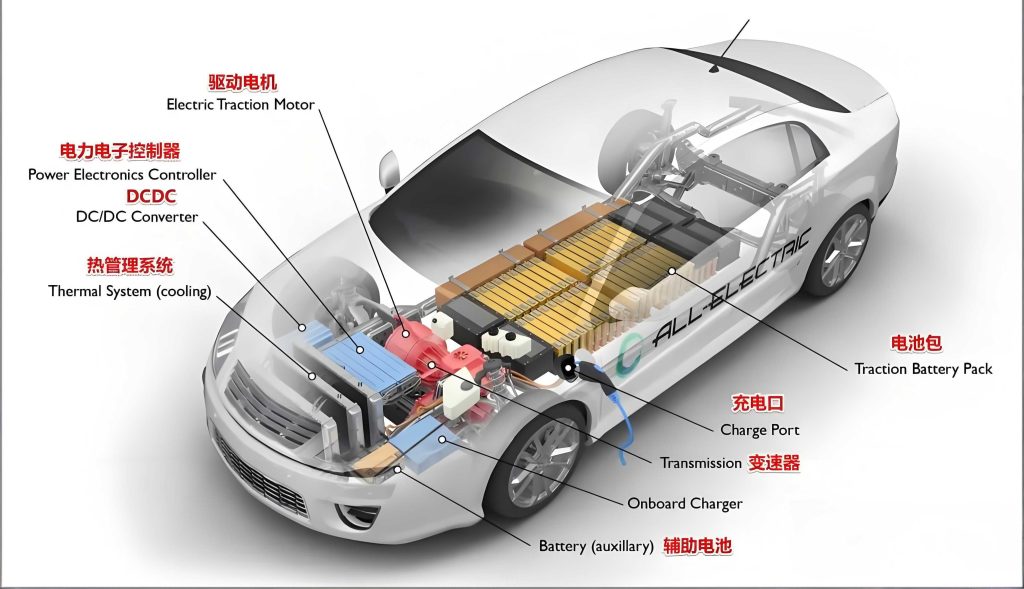
The proliferation of battery electric cars has driven demand for efficient and safe charging solutions. Charging piles are classified based on their charging modes: alternating current (AC) and direct current (DC). AC charging piles, typically with power ratings of 5–10 kW, are slower and rely on the vehicle’s onboard charger to convert AC to DC for battery charging. In contrast, DC charging piles operate at voltages exceeding 1 kV, enabling charging efficiencies above 95% and completion within 30 minutes, making them ideal for fast-charging applications. However, the high-power DC environment is prone to generating complex residual current waveforms, including high-frequency pulsating, smooth DC, and mixed types. These waveforms challenge traditional protection devices, necessitating advanced detection methodologies.
Residual current is fundamentally defined as the vector sum of currents in live conductors. In a balanced three-phase system, this sum should ideally be zero. Deviations occur due to leakage paths, such as through ground capacitance or human contact. The mathematical representation is:
$$I_{\text{residual}} = \sum_{i=1}^{n} I_{\text{phase}_i} – I_{\text{neutral}}$$
where \(I_{\text{phase}_i}\) denotes the current in each phase conductor and \(I_{\text{neutral}}\) is the neutral current. For battery electric car charging piles, this current can include components at various frequencies, as shown in Table 1.
| Type | Frequency Range | Typical Cause | Risk Level |
|---|---|---|---|
| Sinusoidal AC | 50/60 Hz | Insulation degradation, moisture | High (shock hazard) |
| Pulsating DC | 100 Hz – 1 kHz | Rectifier circuits in charging systems | Moderate (fire risk) |
| Smooth DC | 0 Hz (DC) | Battery leakage, ground faults | High (thermal runaway) |
| High-Frequency AC | 1 kHz – 20 kHz | Switching power supplies, inverters | Moderate to High |
Traditional residual current protection devices, such as AC-type and A-type breakers, are widely used but exhibit limitations. AC-type devices are sensitive only to sinusoidal alternating residual currents, while A-type devices can detect pulsating DC but fail with smooth DC or high-frequency components. This inadequacy stems from their reliance on fixed magnetic cores that saturate under DC bias, impairing detection accuracy. For battery electric car charging piles, where DC components are prevalent, this poses a critical safety gap. Standards like GB/T 22794-2017 specify that B-type residual current operated circuit-breakers must protect against all current forms, including smooth DC up to 1 kHz and beyond, highlighting the need for advanced B-type solutions.
The proposed optimized B-type detection scheme centers on a single-supply fluxgate-type current transformer. This innovative approach replaces conventional current transformers with a fluxgate sensor that modulates magnetic fields via core saturation, enabling dynamic and precise detection of residual currents across a broad spectrum. The fluxgate principle relies on the nonlinear magnetization of a high-permeability core. When an excitation winding is driven by a periodic current, the core saturates alternately, and any external magnetic field from residual current induces a measurable signal in a detection winding. The output voltage is proportional to the rate of change of magnetic flux:
$$V_{\text{out}} = -N \frac{d\Phi}{dt}$$
where \(N\) is the number of turns and \(\Phi\) is the magnetic flux. By operating in a feedback loop, the system can precisely measure both AC and DC components.
Key components of this optimized scheme include the fluxgate transformer, detection circuit, demodulation circuit, and software algorithm. The transformer’s core material is critical; we selected cobalt-based amorphous alloy for its low coercivity (\(H_c < 1 \text{ A/m}\)) and high permeability (\(\mu_r > 10^5\)), ensuring sensitivity to weak residual currents. Core dimensions are optimized for battery electric car charging pile applications, with an inner diameter of 10 mm, outer diameter of 18 mm, and effective magnetic path length of 41.55 mm. Table 2 summarizes core parameters.
| Parameter | Value | Unit |
|---|---|---|
| Material | Cobalt-based amorphous alloy | – |
| Inner Diameter | 10 | mm |
| Outer Diameter | 18 | mm |
| Path Length | 41.55 | mm |
| Coercivity (\(H_c\)) | 0.8 | A/m |
| Relative Permeability (\(\mu_r\)) | 1.2 × 10⁵ | – |
| Saturation Flux Density (\(B_s\)) | 0.7 | T |
The detection circuit employs a single-supply configuration, reducing power consumption and enhancing noise immunity. A high-frequency MOSFET is used to switch the excitation waveform, with positive half-cycles driving the MOSFET and negative half-cycles ensuring cutoff. This design minimizes distortion in residual current signal acquisition. The circuit’s transfer function can be modeled as:
$$H(s) = \frac{K}{1 + \tau s}$$
where \(K\) is the gain and \(\tau\) is the time constant, tailored to filter out high-frequency noise while preserving signal integrity for battery electric car charging piles.
Demodulation is handled by a low-power microcontroller, specifically the HC32F003C4PA, chosen for its fast processing speed and compact footprint. It processes signals from the fluxgate output, extracting residual current magnitudes and frequencies. The software algorithm integrates a neural network for intelligent detection, adapting to varying operating conditions in battery electric car charging environments. The neural network uses a convolutional architecture to classify residual current types and estimate their RMS values. The forward propagation is expressed as:
$$y = \sigma(W * x + b)$$
where \(x\) is the input signal vector, \(W\) is the weight matrix, \(b\) is the bias, \(*\) denotes convolution, and \(\sigma\) is the activation function (e.g., ReLU). Training data includes simulated residual currents from battery electric car charging scenarios, with preprocessing steps like smoothing and anomaly removal.
The overall detection workflow involves several stages: signal acquisition via the fluxgate transformer, frequency decomposition using a sweep circuit, filtering through low-pass filters, voltage level shifting, and microcontrolled analysis. The system dynamically adjusts detection thresholds based on real-time conditions, improving accuracy. For instance, it compensates for temperature effects on magnetic core properties using a polynomial model:
$$B(T) = B_0 (1 + \alpha (T – T_0) + \beta (T – T_0)^2)$$
where \(B(T)\) is the flux density at temperature \(T\), \(B_0\) is the reference value at \(T_0\), and \(\alpha, \beta\) are coefficients derived from calibration.
To validate the scheme, extensive testing was conducted using a signal generator to simulate residual currents typical in battery electric car charging piles. The test setup injected known currents into the detection module, and response times and accuracy were recorded. Results confirm that the fluxgate B-type transformer meets international standards for residual current protection, with action values within specified tolerances. Table 3 compares the performance of traditional methods versus the optimized B-type scheme.
| Technology | Detectable Current Types | Power Consumption | Accuracy | Suitability for Battery Electric Car Charging |
|---|---|---|---|---|
| AC-Type | Sinusoidal AC only | Low | High for AC | Poor |
| A-Type | AC + Pulsating DC | Moderate | Moderate | Limited |
| Traditional B-Type | AC, Pulsating DC, some smooth DC | High | Good | Fair |
| Optimized B-Type (Fluxgate) | All types up to 20 kHz | Low (< 100 mW) | Excellent (> 95%) | Excellent |
The optimized scheme demonstrates superior sensitivity across frequency ranges. For sinusoidal AC residual currents, the device triggers at thresholds as low as 10 mA, complying with safety standards. For smooth DC currents, it accurately detects levels from 6 mA to 20 mA, critical for preventing thermal hazards in battery electric car charging piles. The fluxgate’s linear response ensures minimal error, with deviation less than 2% across the operational range. The neural network enhancement further reduces false trips by distinguishing between harmless leakage and dangerous faults, leveraging patterns from historical data of battery electric car charging events.
Power efficiency is a standout feature. The single-supply design and optimized circuitry reduce overall consumption to under 100 mW, making it suitable for integration into compact charging pile enclosures without additional cooling. This low power demand also aligns with green initiatives for battery electric car infrastructure, minimizing energy overhead. The detection latency, measured from fault occurrence to trip signal, averages 40 ms for AC faults and 60 ms for DC faults, well within the 300 ms limit prescribed by standards.
Environmental robustness was tested under varying temperatures (-20°C to 70°C) and humidity levels (10% to 95% RH). The fluxgate core’s material properties show minimal drift, and software compensation algorithms adjust detection parameters in real-time. This ensures reliable operation in diverse climates where battery electric car charging piles are deployed. Long-term stability tests over 1000 hours indicate no degradation in performance, with consistent output signals.
From an implementation perspective, the optimized B-type detection module can be retrofitted into existing charging piles or designed into new models. Its modular architecture allows for firmware updates to adapt to evolving standards or charging technologies for battery electric cars. The use of standard communication protocols (e.g., CAN bus, Modbus) facilitates integration with charging pile management systems, enabling remote monitoring and diagnostics. This connectivity supports predictive maintenance, alerting operators to potential insulation degradation before failures occur.
The economic implications are also favorable. While the fluxgate sensor and associated electronics may have higher initial costs than traditional devices, the enhanced safety reduces liability risks and maintenance expenses. For battery electric car charging networks, this translates to lower total cost of ownership and higher consumer trust. Moreover, compliance with stringent standards like GB/T 18487.1-2023 ensures market acceptance and regulatory approval.
In conclusion, the optimized B-type residual current detection scheme based on a single-supply fluxgate transformer offers a comprehensive solution for battery electric car charging piles. It addresses the limitations of conventional protectors by accurately identifying all residual current types, including high-frequency and smooth DC components. The integration of neural network algorithms enables adaptive and intelligent detection, while low power consumption and robust design ensure reliability in harsh environments. This advancement not only enhances safety for battery electric car users but also contributes to the sustainable growth of electric mobility infrastructure. Future work may explore miniaturization for portable chargers or integration with vehicle-to-grid (V2G) systems, further supporting the ecosystem for battery electric cars.
The ongoing evolution of battery electric car technology demands continuous innovation in safety mechanisms. As charging powers increase and new topologies emerge, residual current detection must keep pace. The proposed scheme lays a foundation for next-generation protection, combining precision, efficiency, and intelligence. It exemplifies how advanced sensing and computing can mitigate risks, ensuring that the charging experience for battery electric cars remains secure and efficient, thereby accelerating the adoption of clean transportation.