
The rapid growth of the electric vehicle market in China has intensified the focus on vehicle comfort and durability, particularly for components like the wheel cover liner, which is critical in the body structure of China EVs. When subjected to road-induced excitations, the liner can experience structural vibrations, compromising ride quality and leading to potential failures. In this study, we employ finite element analysis to investigate the vibration behavior of a rear wheel cover liner in an electric vehicle, utilizing modal and harmonic response analyses to derive natural frequencies, amplitude-frequency responses, and mode shapes. Based on the simulation results, we identify stiffness-deficient areas and propose two structural optimization strategies: adding vibration-damping materials and implementing cross-stiffeners. Both approaches demonstrate significant vibration reduction, with the cross-stiffener design showing superior performance in minimizing resonance peaks and enhancing natural frequencies, thereby improving the structural integrity of electric vehicle components.
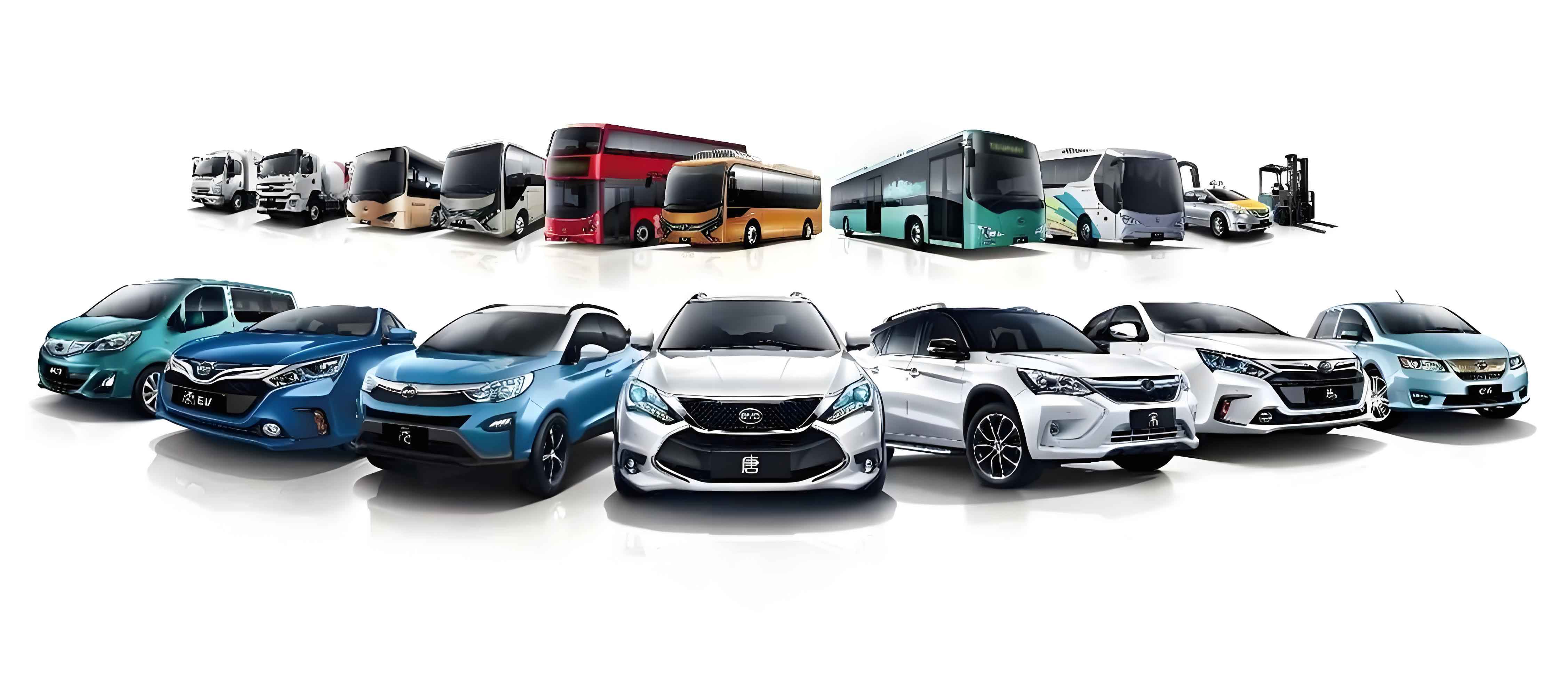
Electric vehicles, especially those manufactured in China, represent a transformative shift in the automotive industry, driven by advancements in energy efficiency and environmental sustainability. The wheel cover liner, a thin-walled sheet metal part, plays a vital role in shielding the vehicle’s underbody from debris and reducing noise. However, its exposure to road excitations, such as uneven surfaces, can induce vibrations that propagate through the electric vehicle’s structure, causing discomfort and accelerating wear. In China EVs, where consumer expectations for quiet and smooth operation are high, addressing these vibrations is paramount. This research focuses on analyzing the vibration characteristics of a rear wheel cover liner using numerical simulations, which provide insights into its dynamic behavior under typical operating conditions. By leveraging finite element methods, we aim to optimize the liner’s design to mitigate resonance effects, thereby enhancing the overall performance of electric vehicles in the Chinese market and beyond.
The finite element model of the wheel cover liner was developed in Abaqus, simplifying the complex geometry into a simply supported plate to facilitate analysis. The liner, typically made of steel, was discretized using S4R shell elements, which are suitable for thin structures. The material properties assigned to the model are summarized in Table 1, reflecting the high strength and formability of steel commonly used in China EV components. These parameters are essential for accurate simulation of the liner’s dynamic response.
| Material Type | Young’s Modulus (GPa) | Poisson’s Ratio | Density (kg/m³) |
|---|---|---|---|
| Steel | 206 | 0.3 | 7800 |
Modal analysis was conducted to determine the natural frequencies and mode shapes of the liner in a free-state condition, without any constraints or external loads. This approach helps identify the inherent dynamic characteristics that could lead to resonance when excited by road inputs. The first eight modal frequencies are listed in Table 2, revealing that the first natural frequency is 24.52 Hz, which falls within the typical road excitation range of 0.01–30 Hz for electric vehicles. This low frequency increases the risk of resonance, necessitating design modifications to shift the natural frequencies higher and avoid overlap with common excitation sources in China EVs.
| Mode Order | 1st | 2nd | 3rd | 4th | 5th | 6th | 7th | 8th |
|---|---|---|---|---|---|---|---|---|
| Natural Frequency (Hz) | 24.52 | 33.12 | 61.69 | 65.63 | 80.18 | 96.88 | 125.46 | 133.75 |
Harmonic response analysis was performed using the modal superposition method to evaluate the liner’s steady-state response under sinusoidal loading. A force of 10 N was applied at the geometric center of the liner, simulating road-induced excitations at a frequency of 30 Hz. The amplitude-frequency response curve over the 0–1000 Hz range, as shown in Figure 3, indicates a resonance peak at approximately 33 Hz with a maximum amplitude of 8.23 mm. This peak corresponds to the second modal frequency, highlighting areas of high vibration susceptibility. The mode shapes at resonance frequencies, such as those at 33 Hz and 61 Hz, exhibit local deformations in the liner’s structure, with lower-order modes showing more significant displacements. These deformations are critical for identifying weak spots in the electric vehicle’s body that require reinforcement.
The vibration response can be mathematically described using the equation of motion for a damped system: $$m\ddot{x} + c\dot{x} + kx = F_0 \sin(\omega t)$$ where \(m\) is the mass, \(c\) is the damping coefficient, \(k\) is the stiffness, \(F_0\) is the amplitude of the applied force, and \(\omega\) is the angular frequency. The steady-state amplitude \(X\) is given by: $$X = \frac{F_0}{\sqrt{(k – m\omega^2)^2 + (c\omega)^2}}$$ This equation underscores how resonance occurs when the excitation frequency \(\omega\) approaches the natural frequency \(\omega_n = \sqrt{k/m}\), leading to amplified vibrations. For the wheel cover liner in a China EV, optimizing \(k\) and \(m\) through structural changes is essential to reduce \(X\) and minimize resonance effects.
Based on the analysis, two optimization strategies were implemented to enhance the liner’s vibration performance. The first involved adding vibration-damping materials, specifically a layered composite of butyl rubber and aluminum, to the liner surface. Butyl rubber, with its high damping coefficient, dissipates vibrational energy, while aluminum provides structural support. The material properties for this composite are detailed in Table 3. The liner and damping layers were constrained using tie connections in the finite element model to simulate bonded interactions.
| Material | Young’s Modulus (MPa) | Poisson’s Ratio | Density (kg/m³) | Damping Coefficient |
|---|---|---|---|---|
| Butyl Rubber | 7.8 | 0.48 | 960 | 1.000 |
| Aluminum | 72,000 | 0.33 | 2700 | 0.002 |
Harmonic response analysis of the optimized liner with damping materials showed a notable reduction in resonance peaks, as illustrated in Figure 5. The maximum amplitude decreased to approximately 0.27 mm, and the number of resonance points within the 0–1000 Hz range diminished significantly. The first natural frequency increased to 64 Hz, shifting it away from typical road excitation frequencies for electric vehicles. The mode shapes, such as those at 64 Hz and 111 Hz, displayed symmetric patterns with reduced displacements, indicating improved stiffness and damping effectiveness. This optimization approach is particularly beneficial for China EVs, where noise and vibration harshness (NVH) standards are stringent.
The second optimization technique involved incorporating cross-stiffeners into the liner through a stamping process, creating a ribbed structure that enhances bending stiffness without substantially increasing mass. This method is cost-effective and commonly used in electric vehicle manufacturing to reinforce thin-walled components. The cross-stiffener design, as depicted in Figure 7, was applied to the liner’s center, where previous analysis indicated high stress concentrations. Modal analysis of the stiffened liner revealed higher natural frequencies, as summarized in Table 4, with the first mode at 52.36 Hz, further reducing the risk of resonance in China EVs.
| Mode Order | 1st | 2nd | 3rd | 4th | 5th | 6th | 7th | 8th |
|---|---|---|---|---|---|---|---|---|
| Natural Frequency (Hz) | 52.36 | 73.18 | 86.29 | 89.85 | 122.48 | 150.38 | 155.68 | 198.02 |
Harmonic response analysis of the cross-stiffened liner, shown in Figure 8, demonstrated a maximum amplitude of around 0.2 mm, with fewer resonance points compared to both the original and damping-material-optimized designs. The mode shapes, such as those at 73 Hz and 120 Hz, exhibited minimal deformations, confirming the effectiveness of cross-stiffeners in distributing stresses and enhancing overall rigidity. The improvement in vibration characteristics can be quantified using the stiffness enhancement factor \(\beta\), defined as: $$\beta = \frac{k_{\text{optimized}}}{k_{\text{original}}}$$ where \(k_{\text{optimized}}\) is the effective stiffness after optimization. For the cross-stiffener design, \(\beta > 1\), leading to a higher natural frequency \(\omega_n\) and reduced amplitude \(X\), as per the earlier equations. This makes the cross-stiffener approach highly suitable for electric vehicles, especially in China, where optimizing performance and cost is crucial.
Comparing the two optimization methods, the cross-stiffener design outperformed the damping material approach in terms of resonance reduction and frequency shift. However, both strategies contributed to significant improvements in the liner’s dynamic behavior. The choice between them depends on factors such as manufacturing constraints, material costs, and specific NVH requirements for China EVs. For instance, damping materials add weight and may increase production complexity, whereas cross-stiffeners integrate seamlessly into existing stamping processes. In practice, a combination of both methods could be explored for optimal results in electric vehicle applications.
In conclusion, this study underscores the importance of vibration analysis and structural optimization for wheel cover liners in electric vehicles. Through finite element simulations, we identified critical vibration modes and resonance frequencies, enabling targeted improvements via damping materials and cross-stiffeners. The cross-stiffener optimization, in particular, proved highly effective in elevating natural frequencies and minimizing resonance amplitudes, thereby enhancing the reliability and comfort of China EVs. Future work could involve experimental validation and multi-objective optimization to further refine the design for mass production. As the electric vehicle industry evolves, such advancements will play a pivotal role in meeting the growing demands for quieter, more durable vehicles in China and globally.
The mathematical modeling and simulation techniques employed here provide a robust framework for analyzing other components in electric vehicles, contributing to the broader goal of improving NVH performance. By continuously refining structural designs, manufacturers of China EVs can achieve superior ride quality and longevity, reinforcing the position of electric vehicles as the future of sustainable transportation. The integration of advanced materials and geometric optimizations, as demonstrated in this research, will be essential for addressing the dynamic challenges faced by modern electric vehicles.