
With the rapid growth of the electric vehicle industry, the number of electric vehicles on the road has increased significantly. Compared to traditional internal combustion engine vehicles, electric vehicles utilize high-energy-density lithium-ion batteries as their power source, which can lead to severe fires in accident scenarios. These fires often exhibit unique characteristics, such as sustained burning due to battery short circuits and arc discharges from high-voltage circuit failures. In this paper, we systematically investigate emergency response technologies and equipment for electric vehicle fire accidents, aiming to build a comprehensive response system that includes feature recognition, early warning, rapid extinguishing, safe isolation, and rescue techniques. We evaluate equipment performance thoroughly and develop emergency plans and rescue team strategies to enhance the safety of electric vehicles. This research provides a theoretical and practical foundation for improving electric vehicle safety and offers insights into future technological developments.
The rise of electric vehicles, particularly in markets like China EV, has brought attention to the associated fire risks. For instance, statistics indicate that charging-related incidents account for approximately 31% of electric vehicle fires, while collisions contribute to around 35%. This underscores the urgency of developing specialized emergency response measures. Our study focuses on addressing these challenges through innovative technologies and equipment, with an emphasis on practical applications and scalability. By integrating advanced sensors, artificial intelligence, and robotic systems, we aim to create a robust framework that can mitigate the dangers posed by electric vehicle fires effectively.
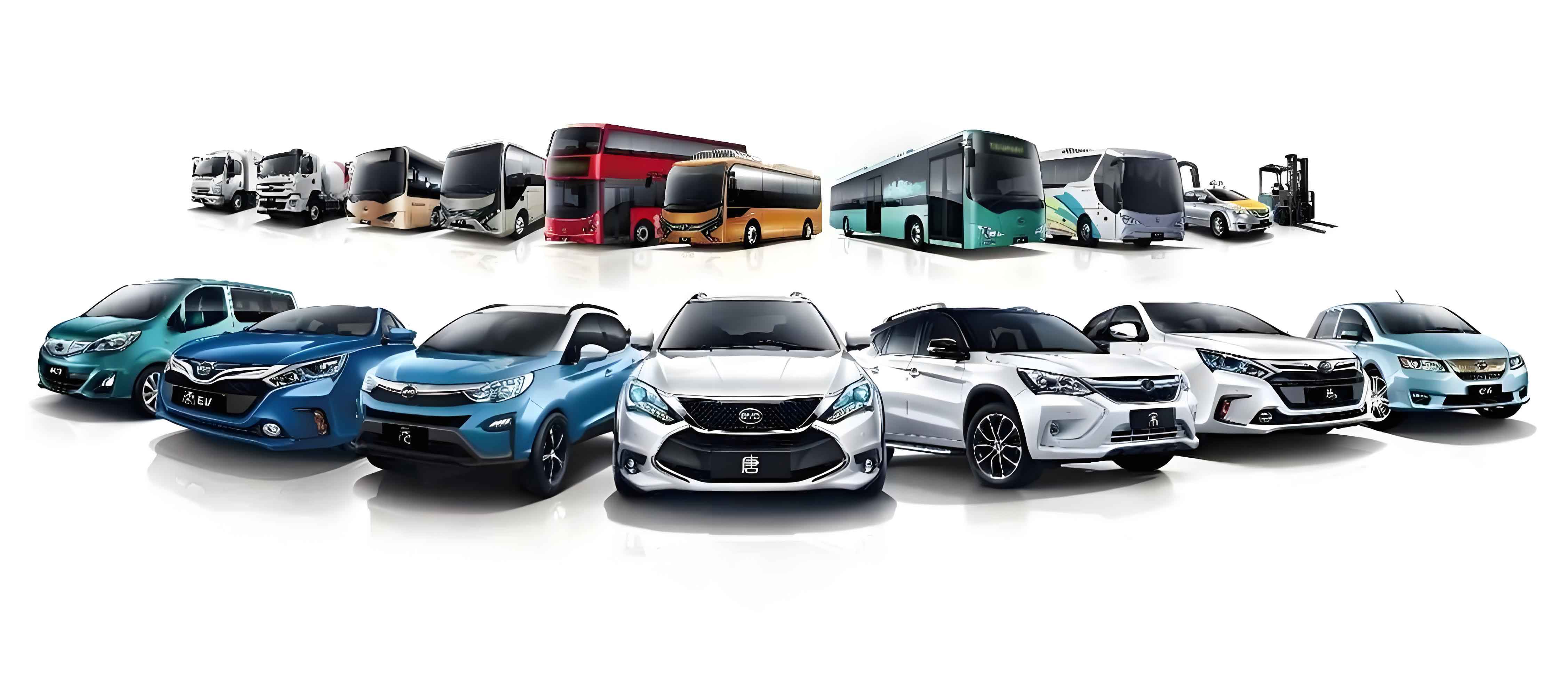
Current analysis of electric vehicle fire incidents reveals that thermal runaway in batteries can cause temperatures to exceed 1000°C within minutes, releasing toxic gases like carbon monoxide that pose lethal threats to occupants and responders. Therefore, it is crucial to develop rapid and efficient response strategies. In this context, we explore various aspects of emergency handling, from initial detection to post-incident management, ensuring that each phase is supported by evidence-based technologies and equipment. The integration of these elements into a cohesive system will not only improve response times but also reduce the overall impact of such accidents on public safety and property.
Current State of Emergency Response
Globally, efforts to address electric vehicle fire accidents have been undertaken by various governments and research institutions. In the United States, the National Fire Protection Association (NFPA) has established standards for emergency response to electric vehicle fires, providing guidelines for firefighters, such as isolating high-voltage systems and using personal protective equipment. Similarly, European studies, like those by the RISE research institute in Sweden, have highlighted the release of hazardous gases during electric vehicle fires, emphasizing the need for professional cleanup and extended battery isolation periods. Japan has focused on developing specialized equipment, including battery cooling systems and insulating mats, to enhance response capabilities.
In the context of China EV markets, national policies like the New Energy Vehicle Industry Development Plan have mandated improvements in safety measures and emergency response readiness. Recent experimental studies in China have demonstrated the effectiveness of foam-based extinguishing agents compared to water mist in controlling electric vehicle fires. For example, full-scale tests showed that battery packs can eject flames up to 2.6 meters during thermal runaway, with high risks of re-ignition. These findings underscore the importance of tailored approaches for electric vehicle incidents, which differ significantly from conventional vehicle fires due to the involvement of high-voltage components and toxic emissions.
| Region | Key Standards/Studies | Focus Areas |
|---|---|---|
| United States | NFPA 70 | Electrical isolation, personal protective equipment |
| Europe | RISE experiments | Gas emissions, battery isolation protocols |
| Japan | Specialized equipment development | Battery cooling, insulation |
| China EV | National policies and local experiments | Foam extinguishing, thermal management |
The evolution of emergency response for electric vehicle fires has been driven by the unique properties of lithium-ion batteries. These batteries can experience cascading failures, leading to intense fires that are difficult to extinguish with traditional methods. As a result, research has shifted towards multi-faceted approaches that combine real-time monitoring with advanced suppression techniques. In China EV contexts, this includes the use of cloud-based platforms for remote monitoring of vehicle status, enabling quicker detection and response. Overall, the current state reflects a growing recognition of the need for specialized strategies, though challenges remain in standardizing practices across different regions and vehicle models.
Feature Recognition and Early Warning Technologies
Feature recognition and early warning are foundational to effective emergency response for electric vehicle fires. Unlike conventional vehicles, electric vehicles exhibit distinct fire signatures, such as rapid temperature rises in battery packs and the release of flammable electrolytes. To address this, we have developed a multi-sensor fusion approach that integrates data from temperature, voltage, and current sensors, along with smoke density and heat release rate measurements. This allows for the creation of a feature recognition model that can quickly identify the type and severity of an electric vehicle fire incident. For instance, the heat release rate \( Q \) can be modeled using the equation: $$ Q = \dot{m} \Delta H_c $$ where \( \dot{m} \) is the mass loss rate and \( \Delta H_c \) is the heat of combustion. This helps in predicting fire intensity and guiding response actions.
Artificial intelligence algorithms play a crucial role in enhancing early warning systems. By analyzing historical accident data from various electric vehicle models, including those prevalent in China EV markets, we have trained machine learning models to predict the probability and potential impact of fires. These models consider factors such as battery age, charging patterns, and environmental conditions. Additionally, remote monitoring technologies leveraging onboard sensors and cloud platforms enable continuous tracking of electric vehicle parameters. This facilitates real-time alerts to emergency services, reducing response times and minimizing damage. The integration of these technologies into a cohesive early warning system ensures that potential incidents are identified before they escalate, providing a proactive layer of safety for electric vehicle users.
| Parameter | Description | Typical Range |
|---|---|---|
| Battery Temperature | Measured in °C, indicates thermal runaway risk | 50°C to 1000°C |
| Voltage Fluctuation | Monitors circuit stability in high-voltage systems | 200V to 800V |
| Smoke Density | Optical density units, signals combustion products | 0.1 to 1.0 OD/m |
| Heat Release Rate | Energy release per unit time, in kW | Up to 5000 kW |
In practice, the early warning system for electric vehicle fires relies on a network of sensors that transmit data to a central processing unit. For example, in China EV applications, this might involve IoT devices that communicate via 5G networks, ensuring low latency and high reliability. The AI algorithms then apply pattern recognition techniques, such as neural networks, to classify events as normal or hazardous. This not only improves accuracy but also reduces false alarms, which are critical for maintaining trust in the system. As electric vehicle technology evolves, we anticipate further refinements in feature recognition, such as the incorporation of acoustic sensors to detect battery venting or internal short circuits. Ultimately, these advancements will contribute to a safer ecosystem for electric vehicles worldwide.
Rapid Extinguishing and Control Technologies
Rapid extinguishing and control are essential for managing electric vehicle fires, which often involve intense heat and the risk of re-ignition. Traditional firefighting methods, such as water-based systems, may be insufficient due to the high energy density of lithium-ion batteries. Therefore, we have focused on developing advanced techniques like fine water mist systems, which optimize parameters such as flow rate, pressure, and droplet size to enhance灭火 efficiency. The effectiveness of fine water mist can be quantified using the extinguishing efficiency \( \eta \), defined as: $$ \eta = \frac{Q_{\text{extinguished}}}{Q_{\text{total}}} $$ where \( Q_{\text{extinguished}} \) is the heat extinguished and \( Q_{\text{total}} \) is the total heat generated. This approach has shown promise in laboratory tests, particularly when combined with foam agents that create a blanket over the fire, suppressing flames and cooling the battery pack.
Robotic and remote-controlled systems represent another innovation in rapid extinguishing for electric vehicle fires. We have designed robots equipped with thermal cameras and precision nozzles that can navigate hazardous environments, targeting fire sources directly. These robots can operate in tandem with drones for aerial surveillance, providing a comprehensive view of the incident site. For instance, in a simulated electric vehicle fire scenario, a robot might deploy a localized application of extinguishing agent, reducing the amount required and minimizing collateral damage. The use of such technology is especially relevant in urban areas with high electric vehicle density, such as in China EV hubs, where quick response can prevent fires from spreading to other vehicles or infrastructure.
| Extinguishing Agent | Application Method | Efficiency (%) | Re-ignition Risk |
|---|---|---|---|
| Fine Water Mist | High-pressure spray | 70-80 | Moderate |
| Foam | Compressed air delivery | 85-95 | Low |
| Dry Chemical | Manual or robotic | 60-70 | High |
| Carbon Dioxide | Gas discharge | 50-60 | Very High |
In addition to these methods, we have explored synergistic approaches that combine multiple extinguishing agents. For example, a sequence might involve using fine water mist to cool the battery pack followed by foam to seal the surface and prevent oxygen contact. This is supported by computational fluid dynamics models that simulate fire spread and agent distribution, allowing for optimized deployment strategies. The equation for agent coverage \( C \) can be expressed as: $$ C = A \cdot v \cdot t $$ where \( A \) is the area covered, \( v \) is the velocity of application, and \( t \) is time. Such models help in designing systems that are both efficient and economical, crucial for widespread adoption in electric vehicle emergency response protocols. As the electric vehicle market expands, particularly in regions like China EV, these technologies will play a vital role in safeguarding public safety and reducing economic losses from fire incidents.
Safe Isolation and Rescue Technologies
Safe isolation and rescue are critical components of emergency response for electric vehicle fires, given the hazards posed by high-voltage systems and toxic emissions. We have developed rapid isolation techniques using mechanical or electronic breakers that can de-energize high-voltage circuits within seconds of detecting a fault. This prevents arc flashes and secondary fires, which are common in electric vehicle accidents. The isolation process can be modeled using circuit theory, where the time to isolation \( t_{\text{iso}} \) is a function of the fault current \( I_f \) and the breaker response time \( t_b \): $$ t_{\text{iso}} = t_b + \frac{k}{I_f} $$ where \( k \) is a constant dependent on the system design. This ensures that responders can approach the vehicle without risking electrocution.
For rescue operations, we have designed personal protective equipment (PPE) made from insulating materials, such as rubber gloves and flame-resistant suits, that shield responders from electrical shocks and high temperatures. Additionally, specialized tools like battery disconnection units allow for safe manual intervention. In the context of China EV safety standards, these technologies are being integrated into training programs for emergency teams. We have also investigated automated rescue systems that use robotic arms to extract occupants from damaged electric vehicles, minimizing human exposure to hazards. The effectiveness of these systems is evaluated through risk assessment models that quantify the probability of injury reduction, often expressed as: $$ R = 1 – \frac{N_{\text{injured}}}{N_{\text{total}}} $$ where \( N_{\text{injured}} \) is the number of injuries with the technology and \( N_{\text{total}} \) is the total potential injuries without it.
| Equipment Type | Function | Performance Metric | Target Value |
|---|---|---|---|
| High-Voltage Breaker | Circuit isolation | Response time (ms) | < 100 ms |
| Insulating PPE | Personal protection | Breakdown voltage (kV) | > 10 kV |
| Battery Disconnect Tool | Manual safety | Operation time (s) | < 30 s |
| Rescue Robot | Occupant extraction | Success rate (%) | > 90% |
Furthermore, we have emphasized the importance of training and simulations for rescue personnel. Using virtual reality platforms, responders can practice isolating high-voltage systems and performing extrications in realistic electric vehicle fire scenarios. This hands-on approach builds confidence and ensures that teams are prepared for real-world incidents. As electric vehicle technologies advance, including the proliferation of autonomous features in China EV models, we anticipate the development of more integrated isolation and rescue systems that communicate directly with vehicle networks. This will enable faster, more coordinated responses, ultimately saving lives and reducing the severity of electric vehicle fire accidents.
Design Principles for Emergency Response Equipment
The design of emergency response equipment for electric vehicle fires must adhere to key principles to ensure effectiveness and usability. Safety and reliability are paramount, as these equipment handle high-risk scenarios involving high-voltage electricity and toxic substances. For instance, insulating materials used in tools must withstand extreme temperatures and electrical stresses, with reliability quantified by failure rates derived from accelerated life testing. The reliability function \( R(t) \) can be expressed as: $$ R(t) = e^{-\lambda t} $$ where \( \lambda \) is the failure rate and \( t \) is time. This ensures that equipment performs consistently under demanding conditions, which is crucial for protecting both responders and victims in electric vehicle incidents.
Operability and portability are also critical design considerations. Equipment must be easy to deploy in diverse environments, such as urban streets or remote areas where electric vehicles might catch fire. We have focused on minimizing weight and size without compromising functionality, using lightweight composites and modular designs. For example, portable extinguishing units can be carried by a single responder and set up within minutes. Economic and environmental factors are integrated into the design process through life-cycle assessments that evaluate costs and ecological impacts. In China EV markets, this involves selecting materials that are recyclable and minimizing waste during operations. The overall design goal is to create equipment that is not only effective but also sustainable and accessible to emergency services worldwide.
| Design Principle | Description | Application Example |
|---|---|---|
| Safety | Ensure protection against electrical and thermal hazards | Insulated gloves with high dielectric strength |
| Reliability | Maintain performance under stress over time | Redundant systems in breakers |
| Operability | Simplify use for quick deployment | Intuitive controls on extinguishers |
| Portability | Reduce weight and size for mobility | Compact battery cooling packs |
| Economy | Control costs without sacrificing quality | Use of standardized components |
| Environmental | Minimize ecological footprint | Biodegradable extinguishing agents |
In practice, these design principles guide the development of a wide range of equipment, from detection sensors to full-scale response vehicles. For instance, in China EV emergency protocols, we have seen the adoption of multi-functional units that combine isolation, extinguishing, and rescue capabilities. This holistic approach reduces the need for multiple pieces of equipment, streamlining responses and cutting costs. As we continue to innovate, we are exploring smart materials that can self-heal or adapt to changing conditions, further enhancing reliability. By adhering to these principles, we aim to set a benchmark for emergency response equipment that meets the evolving challenges of electric vehicle fires.
Performance Evaluation of Emergency Response Equipment
Performance evaluation is essential to ensure that emergency response equipment for electric vehicle fires meets operational standards. We conduct comprehensive assessments based on functional indicators, such as灭火 efficiency for extinguishers and insulation resistance for isolation tools. For example, the灭火 efficiency \( \eta \) is tested under controlled conditions that simulate electric vehicle battery fires, using parameters like fire size and agent application rate. The results are analyzed using statistical methods, such as regression analysis, to correlate performance with design variables. This allows us to optimize equipment for real-world scenarios, particularly in high-density electric vehicle areas like China EV urban centers.
Usability metrics, including reliability, ease of operation, portability, and battery life, are evaluated through field trials and user feedback. We employ techniques like failure mode and effects analysis (FMEA) to identify potential weaknesses and improve durability. The overall performance score \( P \) can be calculated as a weighted sum: $$ P = w_1 \cdot F + w_2 \cdot U + w_3 \cdot E $$ where \( F \) is functional performance, \( U \) is usability, \( E \) is economic efficiency, and \( w_i \) are weights assigned based on priority. This holistic evaluation ensures that equipment not only functions well but is also practical for emergency teams working in stressful environments.
| Equipment Category | Key Metrics | Evaluation Method | Ideal Outcome |
|---|---|---|---|
| Extinguishers | Efficiency, re-ignition prevention | Lab tests and simulations | > 90% efficiency |
| Isolation Devices | Response time, insulation level | Electrical testing | < 100 ms response |
| Protective Gear | Breakdown voltage, comfort | Wear trials and standards compliance | > 10 kV protection |
| Monitoring Systems | Accuracy, latency | Field deployments | < 1 s alert time |
Additionally, we use simulation-based exercises to assess the integrated performance of equipment in realistic electric vehicle fire scenarios. These exercises involve multi-agency coordination and measure outcomes such as response time and damage reduction. For instance, in a simulated China EV fire incident, teams might use a combination of robots, sensors, and extinguishers to control a blaze, with data collected on success rates and resource usage. This not only validates the equipment’s effectiveness but also informs training and protocol development. As electric vehicle technologies evolve, we plan to incorporate digital twins—virtual replicas of equipment and environments—to enable continuous improvement. Through rigorous evaluation, we aim to ensure that emergency response equipment remains capable of addressing the dynamic risks associated with electric vehicle fires.
Building an Emergency Response System
Constructing a robust emergency response system for electric vehicle fires involves developing comprehensive应急预案 and training specialized rescue teams. We have formulated应急预案 that outline procedures for accident classification, warning mechanisms, on-site handling, and post-incident management. These plans are designed through collaboration with stakeholders, including fire departments, medical services, and electric vehicle manufacturers, ensuring that roles and responsibilities are clearly defined. For example, in China EV contexts,应急预案 incorporate local regulations and technological capabilities, such as the use of mobile apps for real-time communication during incidents. Regular drills and reviews help maintain the relevance and effectiveness of these plans, adapting to new challenges as the electric vehicle landscape changes.
Emergency rescue teams are the backbone of the response system, requiring专业化 training and equipment. We propose the establishment of teams composed of firefighters, technicians, and medical personnel, with ongoing education on electric vehicle-specific hazards. Equipment配置 includes not only standard gear but also specialized tools like high-voltage isolators and environmental monitors. Management structures support these teams through clear protocols and continuous improvement cycles. In practice, this might involve cross-training with electric vehicle companies in China EV regions to enhance technical expertise. The overall goal is to create a cohesive system that can respond swiftly and safely to electric vehicle fires, minimizing harm and disruption.
| Component | Description | Implementation Example |
|---|---|---|
| Emergency Plans | Detailed procedures for incident handling | Step-by-step guides for isolation and extinguishing |
| Rescue Teams | Trained personnel with specialized skills | Multi-disciplinary units with electric vehicle expertise |
| Equipment Inventory | Tools and devices for response actions | Portable extinguishers, robots, and PPE |
| Training Programs | Education and simulation exercises | VR-based drills for high-voltage scenarios |
| Coordination Mechanisms | Inter-agency communication protocols | Integrated command centers for China EV incidents |
To ensure the system’s resilience, we emphasize the importance of resource allocation and scalability. This includes maintaining inventories of critical equipment and establishing partnerships with industry players for technical support. The system’s performance can be measured using metrics like average response time \( T_{\text{response}} \), given by: $$ T_{\text{response}} = \frac{\sum t_{\text{arrival}} – t_{\text{alert}}}{N} $$ where \( t_{\text{arrival}} \) is the time teams arrive on scene, \( t_{\text{alert}} \) is the alert time, and \( N \) is the number of incidents. By continuously monitoring these indicators, we can identify areas for improvement and adapt to emerging trends in electric vehicle safety. As the adoption of electric vehicles grows globally, particularly in markets like China EV, a well-built emergency response system will be vital for public confidence and sustainable mobility.
Conclusion and Future Outlook
In conclusion, our research on emergency response technology and equipment for electric vehicle fire accidents has highlighted the critical need for specialized approaches. We have analyzed the unique characteristics of electric vehicle fires, such as high temperatures and toxic emissions, and developed technologies for feature recognition, rapid extinguishing, and safe isolation. The design and evaluation of equipment have been guided by principles of safety, reliability, and usability, resulting in practical solutions that can be deployed in various settings, including China EV environments. The construction of an emergency response system, encompassing应急预案 and rescue teams, provides a framework for coordinated action that can save lives and reduce property damage.
Looking ahead, we anticipate further advancements in key technologies for electric vehicle fire response. For example, the integration of artificial intelligence and IoT devices could lead to more predictive and adaptive systems. Additionally, improvements in battery design may reduce fire risks, but emergency preparedness must keep pace with innovation. We recommend ongoing research into novel extinguishing agents and robotic systems, as well as the standardization of protocols across regions. The equation for future innovation potential \( I \) might be modeled as: $$ I = k \cdot A \cdot R $$ where \( k \) is a constant, \( A \) is investment in R&D, and \( R \) is regulatory support. By fostering collaboration between academia, industry, and government, we can enhance the safety of electric vehicles and support the transition to sustainable transportation worldwide.
Ultimately, the goal is to create a resilient ecosystem where electric vehicle fires are rare and manageable. Through continuous improvement of technologies, equipment, and systems, we can address the evolving challenges and ensure that the benefits of electric vehicles, including those in China EV markets, are realized without compromising safety. We encourage stakeholders to invest in training and infrastructure to build capacity for emergency response, paving the way for a safer future in mobility.