
As global environmental awareness intensifies and energy structures transform, the electric vehicle industry is experiencing unprecedented growth. This trend stems not only from concerns about pollution from traditional internal combustion engines but also from continuous advancements in battery technology, drive systems, and intelligent technologies. Electric vehicles, as a crucial component of future transportation, have placed the development of intelligent technologies at the forefront of industry attention. In this article, I will explore the current state of intelligent technology development in electric vehicles, analyze the challenges faced, and discuss innovations and future prospects, with a particular focus on the context of China EV. The goal is to strengthen research into these intelligent systems and promote the smart evolution of electric vehicles, while considering how regulatory bodies can adapt to this changing landscape.
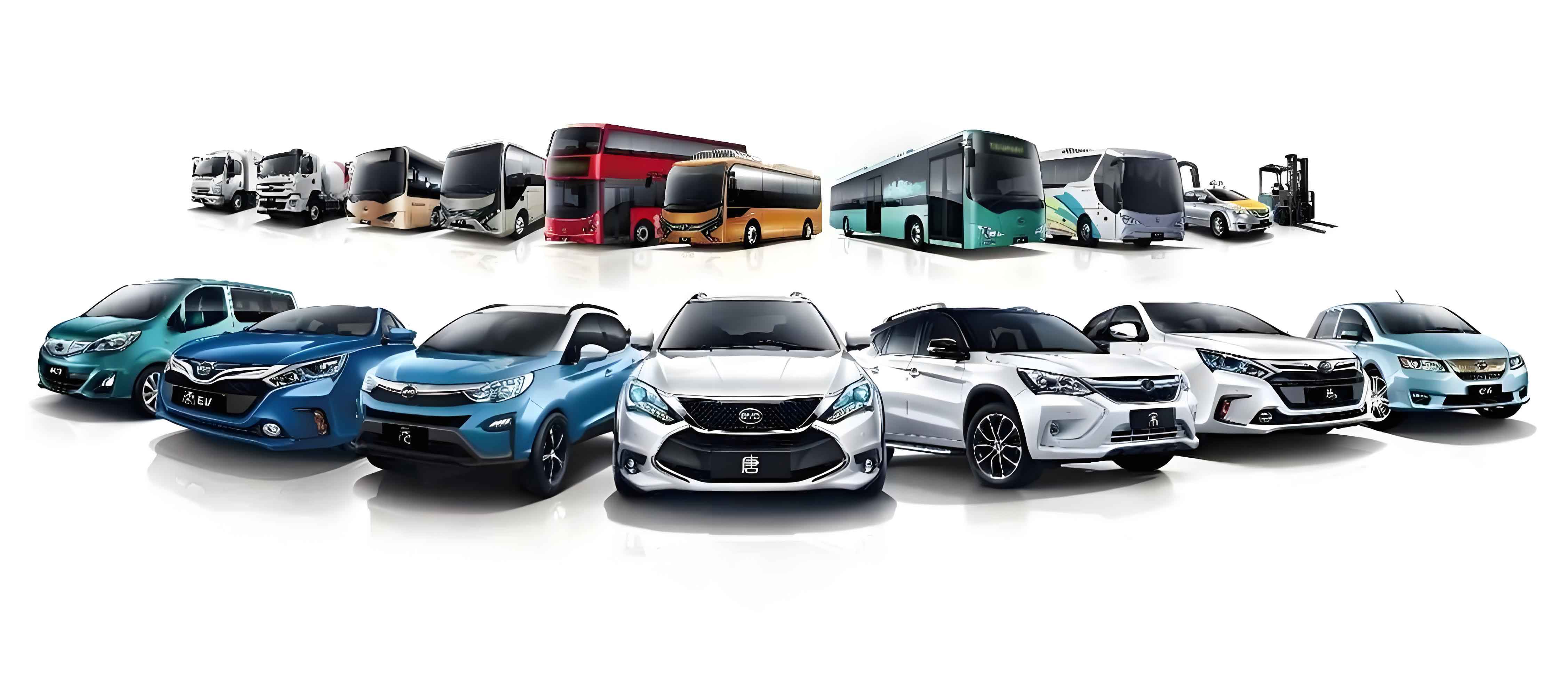
The penetration rate of electric vehicles worldwide has exceeded 18% as of 2023, with intelligent technologies becoming a new battleground for competition in the electric vehicle industry. In China, the electric vehicle sector is in a rapid development phase, fostering cross-industry integration. Companies like Xiaopeng, Xiaomi, Huawei, and Nio have entered the electric vehicle market, significantly elevating the intelligence level of these vehicles. Intelligent technology has become a core driver in the development of electric vehicles, altering traditional vehicle attributes and impacting the transportation industry. To fully leverage regulatory roles and guide urban transport development, it is essential to delve deeper into the intelligent technologies of electric vehicles, ensuring transportation safety and efficiency.
Current State of Intelligent Technology Development in Electric Vehicles
Intelligent Driving Technology
Intelligent driving technology is one of the core technologies in the development of electric vehicles. Its maturity is categorized into several levels, as summarized in the table below:
| Autonomy Level | Key Features | Market Penetration (2023) | User Adoption Rate | Representative Systems |
|---|---|---|---|---|
| L2 | Adaptive Cruise Control, Lane Centering | 62% | 89% | Tesla Autopilot |
| L2+ | NOA Highway Pilot | 28% | 74% | Xiaopeng XNGP |
| L3 | Conditional Automation | 3% | 51% | Mercedes DRIVE PILOT |
| L4 | Limited-scenario Unmanned Driving | <0.5% | N/A | Waymo One (Robotaxi) |
Most electric vehicle models currently operate at L2 and L3 autonomy levels. For instance, Tesla’s Autopilot system has accumulated over 30 billion miles globally, with features like lane centering and adaptive cruise control effectively assisting drivers. Domestically, Nio’s similar autonomous driving system, NOP+, shows increasing usage rates, with average single-trip distances exceeding 100 km. However, technical challenges persist, particularly with sensors and cameras affected by adverse weather conditions, leading to potential misjudgments in scenarios like heavy snow or fog. Decision-making algorithms for complex traffic environments also require optimization to ensure feasible autonomous system decisions. The growth in adoption can be modeled using a exponential function: $$ A(t) = A_0 e^{rt} $$ where \( A(t) \) is the adoption rate at time \( t \), \( A_0 \) is the initial rate, and \( r \) is the growth rate. For L2 systems, with \( r \approx 0.2 \), penetration has risen rapidly.
Vehicle-to-Everything (V2X) Technology
V2X technology integrates IoT and mobile internet to enable “human-vehicle-road-cloud” information exchange, providing reliable intelligent connectivity services for electric vehicles. The standards for V2X in electric vehicles are outlined below:
| Technology Standard | Peak Data Rate | Latency | Deployment Status | Typical Application |
|---|---|---|---|---|
| LTE-V2X | 100 Mbps | 20-50 ms | Deployed in over 50 Chinese cities | Traffic light information推送 |
| 5G NR-V2X | 1 Gbps | <10 ms | Piloting in 10 cities (e.g., Beijing, Shanghai) | Collaborative automatic parking |
| 802.11bd | 10 Gbps | Laboratory validation phase | High-speed platooning |
V2X technology supports services like shared mobility and remote control. Intelligent cockpit systems in electric vehicles, equipped with 5G networks, integrate functions such as smart navigation and multimedia entertainment, enhancing driver comfort. For example, Xiaopeng’s Xmart OS collaborates with Amap to provide real-time traffic conditions and intelligent route planning for users. The data transmission efficiency can be expressed as: $$ \eta_{tx} = \frac{D_{success}}{D_{total}} \times 100\% $$ where \( \eta_{tx} \) is the transmission efficiency, \( D_{success} \) is the amount of successfully transmitted data, and \( D_{total} \) is the total data attempted. In 5G NR-V2X, this efficiency often exceeds 95% in pilot areas.
Intelligent Charging Management Technology
Charging infrastructure remains a bottleneck in electric vehicle development. The common charging types are summarized in the table:
| Charging Type | Peak Power | Efficiency | Global Deployment (2023) | Remarks |
|---|---|---|---|---|
| AC Slow Charging | 22 kW | 88%-92% | 12 million units | Common for overnight charging |
| DC Fast Charging | 350 kW | 93%-95% | 580,000 units | Reduces charging time significantly |
| Wireless Charging | 11 kW | 90%-92% | Over 200 pilot projects | Convenience-focused applications |
| V2G Bidirectional Charging | 150 kW | 92% | Over 50 demonstration stations | Enables vehicle-to-grid energy flow |
Additionally, electric vehicles require intelligent battery management capabilities to optimize charging strategies based on user behavior. By leveraging data on charging station distribution, navigation, and battery level predictions, systems can plan optimal charging routes and interface with station information for user convenience. The charging efficiency \( \eta_{chg} \) can be calculated as: $$ \eta_{chg} = \frac{E_{battery}}{E_{grid}} \times 100\% $$ where \( E_{battery} \) is the energy stored in the battery and \( E_{grid} \) is the energy drawn from the grid. For DC fast charging, this often exceeds 93%, while V2G systems maintain around 92% efficiency in demonstrations.
Challenges in the Development of Intelligent Technologies for Electric Vehicles
The advancement of intelligent technologies in electric vehicles faces several challenges. Technologically, further innovation is needed; although key technologies are maturing, issues arise in complex traffic scenarios. Environmental perception and decision-making require enhanced research, as current algorithms in electric vehicles struggle to handle dynamic traffic environments efficiently. Data security is another critical issue; the development of intelligent technologies involves massive data related to driver privacy and safety. In 2024, multiple incidents of data breaches in electric vehicles threatened user security. While some companies employ encryption techniques, effectiveness is limited, necessitating stronger management for frequent data interactions. Regulations and standards lag behind; traditional transportation rules are inadequate for the intelligent evolution of electric vehicles. Moreover, varying international policies on autonomous vehicles increase R&D difficulties for multinational electric vehicle firms. The risk of data breaches can be quantified using a probability model: $$ P_{breach} = 1 – e^{-\lambda t} $$ where \( P_{breach} \) is the probability of a breach over time \( t \), and \( \lambda \) is the incident rate, which has been increasing by 15% annually in the electric vehicle sector.
Innovations and Future Prospects in Intelligent Technologies for Electric Vehicles
Innovations in Key Technologies and Trend Predictions
In autonomous driving for electric vehicles, innovations in sensor configuration and algorithm architecture have emerged. For example, the front-loading rate of lidar increased from 3.2% in 2021 to 18.7% in 2023, with 40% of electric vehicles adopting 8-megapixel cameras. Algorithmically, BEV perception models have reduced missed detection rates to 0.8%, while occupancy networks improve identification of irregular obstacles. A case in point is Xiaomi’s SU7, equipped with one Hesai AT128 lidar, multiple cameras, and five mm-wave radars, using a self-developed BEV+Transformer fusion model trained on 2 billion km of data. In tests on Shanghai’s inner ring, the urban NOA intervention rate was 0.3 times per 100 km, and automated valet parking succeeded in 99.2% of cases across over 200 city parking lots. Future autonomous driving in electric vehicles will integrate multi-spectral sensors and advance computational power, potentially overcoming L3-level accident liability barriers. The improvement in detection accuracy can be modeled as: $$ A_{det} = A_0 + k \cdot \ln(S) $$ where \( A_{det} \) is the detection accuracy, \( A_0 \) is the base accuracy, \( k \) is a constant, and \( S \) is the sensor data volume, which has doubled annually in China EV applications.
In V2X technology, breakthroughs have been made with support from systems like BeiDou, enabling 10 cm-level positioning through third-generation BeiDou and inertial navigation. Edge computing has also seen innovations, such as Huawei’s roadside units with 100 TOPS computing power. Additionally, the SM9 algorithm encrypts vehicle-cloud communication data, enhancing security. For instance, Xiaomi SU7 supports 4G and 5G switching with latencies under 30 ms, connecting to over 300 roadside devices in Beijing’s Yizhuang demo area and accessing municipal traffic data to optimize routes and reduce congestion. Future V2X developments for electric vehicles will achieve integrated communication, perception, and computing, with increased focus on data security—experiments at universities explore quantum encryption systems using quantum key distribution to counter hackers. Efforts will also target city-level real-time traffic simulation systems with over 95% accuracy for comprehensive digital twins. The latency reduction in communication can be expressed as: $$ L_{future} = L_{current} \cdot e^{-\alpha t} $$ where \( L_{future} \) is the future latency, \( L_{current} \) is the current latency, \( \alpha \) is the improvement rate, and \( t \) is time, with goals to halve latency every two years in China EV networks.
Intelligent charging technology has achieved notable breakthroughs. Tesla, for example, implements integrated solar-storage-charging systems that reduce grid reliance; Xiaomi pioneers wireless charging with dynamic alignment technology, allowing charging even with parking errors up to ±30 cm; Huawei employs super-charging technology, with 600 kW liquid-cooled super-charging piles enabling 300 km of range in 5 minutes. Future innovations will leverage AI to adjust charging schedules based on user habits, saving costs, and labs like CATL are researching solid-state battery compatibility. The optimization of charging schedules can be formulated as: $$ C_{total} = \sum_{i=1}^{n} P_i \cdot t_i \cdot r_i $$ where \( C_{total} \) is the total charging cost, \( P_i \) is the power at time slot \( i \), \( t_i \) is the duration, and \( r_i \) is the electricity rate, with AI minimizing this for electric vehicle users.
Prospects for Intelligent Technology Development in Electric Vehicles
From a transportation perspective, promoting intelligent technology development in electric vehicles requires infrastructure support. On one hand, roadside facility upgrades are crucial: 5G-V2X roadside unit coverage was 12% in 2023, with a target of 30% by 2025; smart traffic light coverage was 8% in 2023, aiming for 25% by 2025; high-definition map coverage spanned 350,000 km in 2023, with a goal of 1 million km by 2025. On the other hand, transportation authorities should establish mechanisms for risks associated with electric vehicle intelligence, such as clarifying liability rules for L3+ autonomous accidents, building data security monitoring platforms, and improving road testing regulations. Future developments should focus on areas like intelligent shuttle vehicles for barrier-free travel, enhancing one-click hailing systems, building national platforms integrating over 90% of key road sections for real-time data exchange with electric vehicles, and using autonomous electric vehicles in disaster scenarios for logistics and emergency communication networks in offline environments. The coverage expansion can be described by: $$ C_{cov} = C_0 + \beta \cdot I $$ where \( C_{cov} \) is the coverage percentage, \( C_0 \) is the initial coverage, \( \beta \) is the investment coefficient, and \( I \) is the infrastructure investment, which is projected to grow by 20% annually in China for electric vehicle support.
Conclusion
In summary, the intelligent evolution of electric vehicles is not only an inevitable outcome of technological progress but also a core trend in the future of transportation. To fully unlock the potential of intelligent technologies in the electric vehicle domain, we must focus on key areas like autonomous driving, V2X, and charging management, continuously exploring and overcoming existing bottlenecks. From a transportation standpoint, the future of intelligent technologies in electric vehicles is promising; these advancements are expected to significantly enhance the safety, comfort, and convenience of electric vehicles while revolutionizing urban traffic management, energy utilization, and environmental protection. The ongoing innovation in China EV will play a pivotal role in shaping a smarter, more sustainable transportation ecosystem globally.