
As a researcher focusing on global electric vehicle markets, I have observed the rapid growth of the ASEAN region as a key emerging market for electric vehicles. The demand for electric vehicles in ASEAN is accelerating, driven by environmental policies and the global shift toward energy transformation. This region has become a critical area for the deployment of the global electric vehicle industry, with China EV manufacturers like BYD leading the charge through international expansion, technological advantages, and localization strategies. In this article, I will explore the ASEAN electric vehicle market, analyzing its policy environment, market characteristics, and competitive landscape, with a deep dive into BYD’s strategies and successes. My aim is to provide insights for other Chinese electric vehicle companies and contribute to the broader discussion on the globalization of electric vehicles and green economic development.
The ASEAN electric vehicle market has shown remarkable expansion in recent years. Based on data from the United Nations Comtrade Database, the total market size for electric vehicles in ASEAN approached $500 million in 2021. Comparing 2021 and 2022 data, the import value of battery electric vehicles surged from $297 million to $1.064 billion, representing a growth rate of 258%. Similarly, exports increased from $98.5 million to $1.22 billion, with an annual growth rate of 900%. This explosive growth underscores ASEAN’s position as one of the fastest-developing regions for electric vehicles globally. According to Deloitte’s surveys, consumer demand for electric vehicles in ASEAN is expected to continue rising, with projections indicating the market will exceed $2.6 billion by 2027. This growth trajectory suggests that the industry is entering a phase of rapid development, fueled by increasing awareness and supportive policies.
| Year | Import Value (Billion USD) | Export Value (Billion USD) | Total Trade Value (Billion USD) | Annual Growth Rate (%) |
|---|---|---|---|---|
| 2018 | 0.56 | 0.04 | 0.60 | – |
| 2019 | 0.82 | 0.07 | 0.89 | 48.3 |
| 2020 | 1.10 | 0.09 | 1.19 | 33.7 |
| 2021 | 2.97 | 0.98 | 3.95 | 231.9 |
| 2022 | 10.64 | 9.85 | 20.49 | 419.5 |
| 2023 | 13.00 | 12.20 | 25.20 | 22.8 |
The annual growth rate can be calculated using the formula: $$ \text{Growth Rate} = \frac{\text{Value}_{\text{current}} – \text{Value}_{\text{previous}}}{\text{Value}_{\text{previous}}} \times 100\% $$ For instance, the growth from 2021 to 2022 for imports is $$ \frac{10.64 – 2.97}{2.97} \times 100\% \approx 258\% $$, highlighting the rapid adoption of electric vehicles in the region.
In terms of market characteristics, countries like Thailand, Malaysia, and Indonesia have demonstrated significant potential. Thailand, in particular, has emerged as a leader in the ASEAN electric vehicle market, with sales reaching approximately 76,314 units in 2023, a 684% increase from the previous year. This growth is partly due to Thailand’s role as a hub for internal combustion engine production, which is now transitioning toward electric vehicles. The market penetration of electric vehicles in Thailand is nearing 10%, making it a pivotal market for manufacturers. In contrast, Malaysia and Indonesia have smaller but growing markets. Malaysia’s electric vehicle sales, including both battery electric vehicles and hybrids, reached 38,000 units in 2023, a 69% year-on-year increase, while Indonesia saw sales rise to 17,057 units in 2023, with brands like Hyundai and Wuling dominating 80% of the market. The entry of Chinese electric vehicle companies, such as BYD, into these markets is accelerating competition and expansion.
| Country | 2022 Sales (Units) | 2023 Sales (Units) | Growth Rate (%) |
|---|---|---|---|
| Thailand | 9,749 | 76,314 | 684 |
| Malaysia | 2,631 | 4,500 | 71 |
| Indonesia | 10,327 | 17,057 | 65 |
The policy environment in ASEAN plays a crucial role in shaping the electric vehicle landscape. Governments in Thailand, Malaysia, and Indonesia have implemented various incentives to promote the adoption of electric vehicles. For example, Thailand’s “30@30” policy aims for electric vehicles to constitute 30% of domestic production by 2030, supported by tax reductions and subsidies. Malaysia offers exemptions from import duties and road taxes, while Indonesia provides import tax waivers and purchase subsidies, leveraging its nickel resources for battery production. These policies are complemented by regional cooperation, such as the development of unified charging networks and the Regional Comprehensive Economic Partnership (RCEP), which facilitates trade and investment through zero tariffs and streamlined regulations. This supportive framework has attracted global electric vehicle players, including China EV manufacturers, to invest in the region.
| Country | Policy Details |
|---|---|
| Thailand | 30@30 policy targeting 30% EV production by 2030; import tariff reductions up to 40% for EVs under 2 million THB; excise tax exemptions for electric pickups; subsidies up to 100,000 THB per vehicle. |
| Malaysia | Exemption from import duties, excise taxes, and sales taxes for locally assembled and imported EVs until 2027; income tax incentives for charging equipment manufacturers. |
| Indonesia | Removal of luxury tax and import duties until 2025; VAT reductions based on local content; subsidies up to 80 million IDR for battery electric vehicles. |
The competitive landscape in ASEAN is becoming increasingly diverse, with traditional automakers from Japan and Korea, global leaders like Tesla, and local brands vying for market share. Japanese companies, such as Toyota and Nissan, have established production bases in Thailand and Indonesia, focusing on hybrid and electric models. Korean firms like Hyundai and Kia are targeting mid-range consumers with affordable options. Meanwhile, local enterprises, including Indonesia’s Wuling and Vietnam’s VinFast, are gaining traction through price competitiveness and government support. Chinese electric vehicle brands, particularly BYD, are making significant inroads by leveraging technological innovations and full industry chain integration. In Thailand, for instance, BYD’s market share grew from nearly zero in 2022 to 3.6% in 2023, challenging the dominance of Japanese brands.
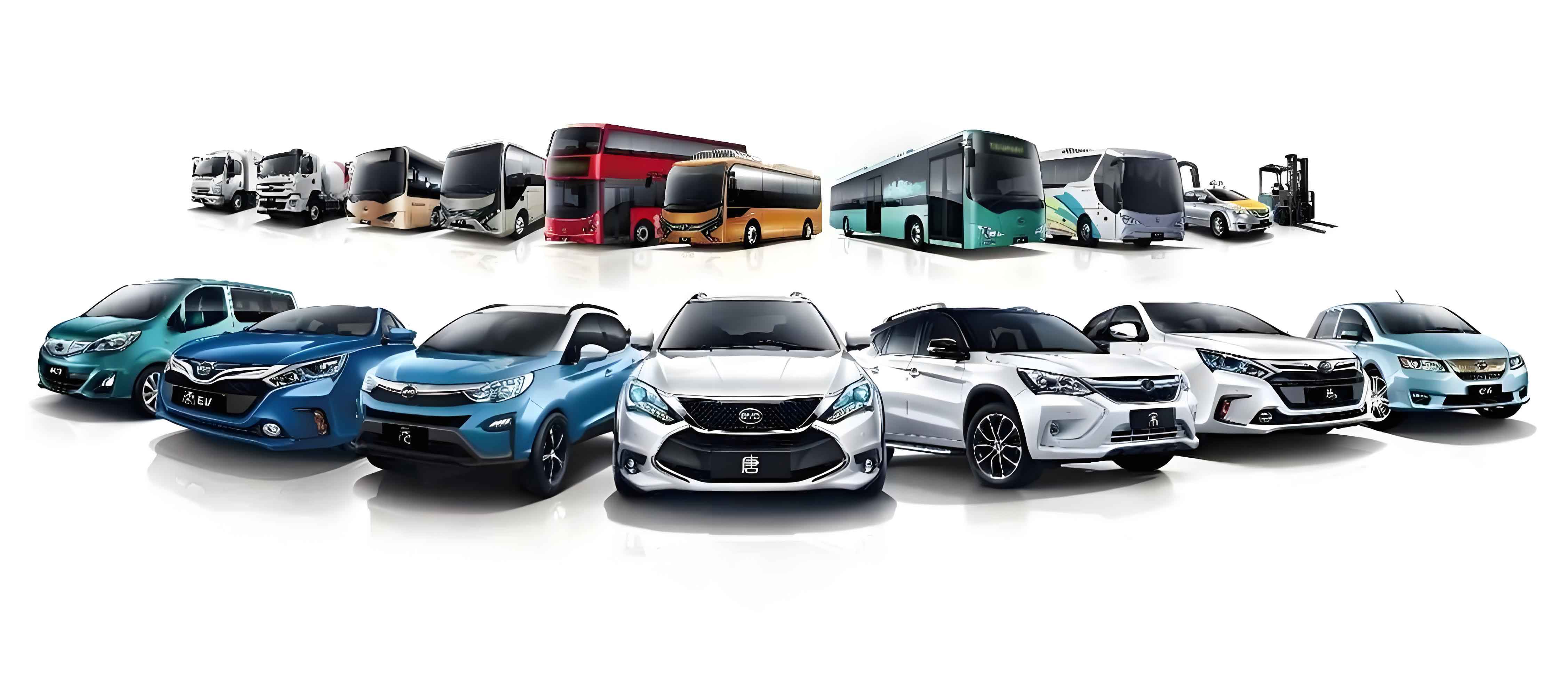
Turning to BYD, as a leader in the China EV sector, its international development journey has been marked by strategic expansion and innovation. Initially, BYD built its domestic presence through technological research and vertical integration, then gradually expanded globally by targeting regions with favorable policies and growth potential. In Europe, BYD entered with commercial vehicles like electric buses and later introduced passenger cars, while in Latin America, it capitalized on environmental demands through partnerships in countries like Brazil and Chile. This global experience has equipped BYD with the expertise to navigate diverse markets, making it a formidable player in the electric vehicle industry.
BYD’s core competencies lie in its technological advancements and integrated production model. The company’s self-developed Blade Battery technology offers high safety, long range, and energy density, serving as a key differentiator for its electric vehicles. Additionally, the DM-i hybrid system combines efficient engines and motors to optimize fuel economy and battery performance. BYD’s vertical integration strategy encompasses the entire supply chain, from batteries and motors to vehicle manufacturing, enabling cost control, production efficiency, and quality assurance. This approach allows BYD to maintain a competitive edge and quickly adapt to market changes, reinforcing its position in the global electric vehicle market.
In the ASEAN market, BYD has implemented a comprehensive layout strategy. Its market entry approach involves establishing local production facilities, such as the factory in Thailand completed in 2024, which enhances supply chain efficiency and reduces costs. By manufacturing in Thailand, BYD can leverage the country’s strategic location for exporting to other ASEAN nations and markets like Japan and Australia, benefiting from trade agreements and right-hand drive vehicle compatibility. This local production not only accelerates delivery times but also supports Thailand’s electric vehicle transition, potentially reshaping the market dynamics dominated by Japanese brands.
BYD’s channel cooperation strategy in ASEAN relies on partnerships with local distributors to build a robust sales network. For example, in Thailand, BYD collaborates with Rever Automotive, which plans to provide 300 sales outlets by 2025. In Malaysia and Singapore, Sime Darby handles distribution, while in Indonesia, Bakrie & Brothers and in the Philippines, Ayala Corp. facilitate market penetration. These alliances help BYD tap into local expertise, reduce entry risks, and enhance consumer trust through outsourced services like warranties and maintenance. The Rever Care package in Thailand, offering extended warranties and low loan rates, further lowers purchase barriers, making BYD’s electric vehicles more accessible.
| Country | Partner | Expansion Plans |
|---|---|---|
| Thailand | Rever Automotive | 300 sales outlets by end of 2025 |
| Malaysia | Sime Darby | Currently 27 sales outlets |
| Indonesia | Bakrie & Brothers | 50 dealerships in the future |
| Philippines | Ayala Corp. | 22 dealerships by end of 2024 |
Product-wise, BYD tailors its electric vehicle offerings to ASEAN consumer preferences. Models like the Seal and Song PLUS EV are designed to meet local demands for affordability, range, and practicality. The Seal targets the premium segment with high performance, while the Song PLUS EV appeals to mid-range buyers with a balance of price and endurance. BYD also adapts its vehicles to ASEAN’s tropical climate by optimizing air conditioning, battery cooling, and散热 systems to ensure reliability in high temperatures. Through local production and supply chain management, BYD achieves competitive pricing, making its electric vehicles attractive in price-sensitive markets.
Marketing strategies for BYD in ASEAN emphasize localization and engagement. The company conducts test drive events, participates in auto shows, and sponsors cultural activities to build brand awareness and emotional connections with consumers. Digital marketing and social media campaigns target younger demographics, highlighting the environmental benefits and innovation of BYD’s electric vehicles. Collaborations with local governments and businesses, such as involvement in Thailand’s “30@30” policy initiatives, enhance BYD’s credibility and visibility. These efforts position BYD as a technologically advanced and socially responsible brand in the ASEAN electric vehicle market.
In response to policy drivers, BYD proactively aligns its strategies with governmental incentives. For instance, in Thailand, BYD’s local manufacturing qualifies for tax benefits and subsidies under the “30@30” policy, reducing costs and boosting competitiveness. The company also engages in public-sector projects, such as government electric vehicle procurement programs, to expand its market presence. By monitoring policy trends in countries like Indonesia and Malaysia, BYD anticipates changes and adjusts its production and infrastructure plans accordingly, ensuring it remains agile in a dynamic regulatory environment.
The success of BYD in ASEAN offers valuable lessons for other Chinese electric vehicle companies. Firstly, balancing localization and globalization is essential; firms must adapt to local cultures and policies while leveraging global technological and brand advantages. BYD’s partnerships and local production demonstrate how this balance can drive market penetration. Secondly, reliance on policies should be complemented by continuous innovation. While government support can kickstart expansion, long-term competitiveness depends on proprietary technologies, as seen with BYD’s Blade Battery and DM-i systems. Chinese electric vehicle manufacturers should invest in R&D to reduce dependency on incentives and enhance their global standing.
In conclusion, the ASEAN electric vehicle market presents immense opportunities, driven by policy support, growing demand, and regional cooperation. BYD’s strategic approach, combining local production, distributor partnerships, tailored products, and policy alignment, has enabled it to thrive in this competitive landscape. For other China EV companies, emulating BYD’s focus on innovation and localization can facilitate successful international expansion. As the global shift toward electric vehicles accelerates, such strategies will be crucial for promoting sustainable development and green economic growth in ASEAN and beyond.
To quantify the impact of market growth, consider the compound annual growth rate (CAGR) for electric vehicle adoption in ASEAN, which can be expressed as: $$ \text{CAGR} = \left( \frac{\text{End Value}}{\text{Start Value}} \right)^{\frac{1}{n}} – 1 $$ where n is the number of years. For instance, from 2021 to 2023, the total trade value increased from $3.95 billion to $25.20 billion, giving a CAGR of approximately 150% over two years, underscoring the rapid expansion of the electric vehicle sector in the region.