
As a researcher in the field of energy storage, I have witnessed the rapid evolution of solid-state batteries, which promise to revolutionize energy density, safety, and operational temperature ranges compared to conventional liquid electrolyte systems. The core of this advancement lies in solid electrolytes, with garnet-type materials like Li7La3Zr2O12 (LLZO) standing out due to their high ionic conductivity (up to 10−3 S/cm at room temperature), wide electrochemical window (0–6 V vs. Li+/Li), and compatibility with lithium metal anodes. However, the interface between garnet solid electrolytes and lithium metal remains a critical bottleneck, hindering the commercialization of all-solid-state lithium metal batteries. In this review, I will delve into the interfacial challenges, analyze their origins, and summarize effective strategies for improving this interface, incorporating tables and formulas to consolidate key concepts. The goal is to provide a comprehensive perspective on how we can engineer robust interfaces to unlock the full potential of solid-state battery technology.
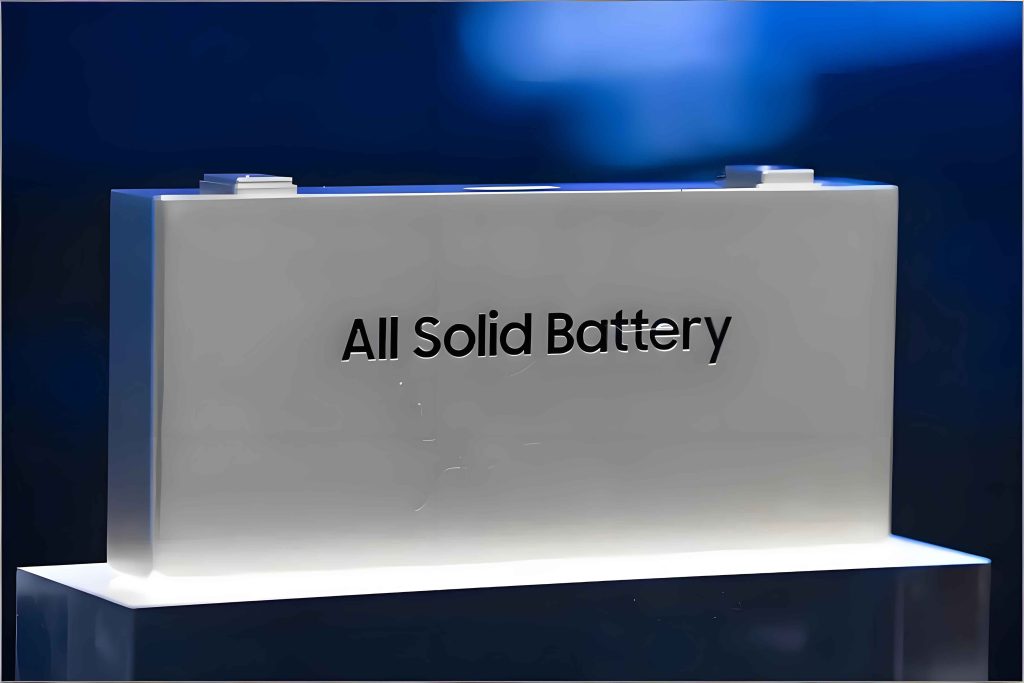
The transition to solid-state batteries is driven by the need for safer and higher-energy-density storage systems. In a solid-state battery, the solid electrolyte replaces flammable organic liquid electrolytes, mitigating risks like leakage and thermal runaway. Garnet electrolytes, particularly doped variants such as Al3+, Ta5+, or Nb5+-substituted LLZO, exhibit cubic phases that enhance Li+ mobility. The ionic conductivity often follows the Arrhenius equation:
$$ \sigma = A \exp\left(-\frac{E_a}{kT}\right) $$
where $\sigma$ is the ionic conductivity, $A$ is the pre-exponential factor, $E_a$ is the activation energy, $k$ is Boltzmann’s constant, and $T$ is the temperature. For garnets, $E_a$ can be as low as 0.2–0.3 eV, contributing to high conductivity. Despite this, the solid-solid interface with lithium metal introduces complexities not present in liquid systems. The inherent rigidity of garnets (Young’s modulus ~60 GPa) versus the softness of lithium (shear modulus ~4.8 GPa) leads to poor physical contact, resulting in high interfacial resistance and localized current hotspots. This interface is crucial for the performance of a solid-state battery, as it dictates Li+ transport kinetics and cycling stability.
To systematically address these issues, I will first outline the key interfacial problems, then explore modification strategies, and finally discuss future directions. Throughout, the term ‘solid-state battery’ will be emphasized to underscore its centrality in this discourse.
Interfacial Challenges in Garnet/Lithium Metal Systems
The interface between garnet electrolytes and lithium metal anodes in a solid-state battery is plagued by three main issues: poor solid-solid contact, non-wettability, and lithium dendrite growth. Each of these problems stems from material properties and environmental interactions, which I will analyze below.
1. Poor Solid-Solid Contact and High Interfacial Resistance
In a solid-state battery, the garnet electrolyte and lithium metal form a rigid interface. Due to surface roughness and mechanical mismatch, gaps or voids occur, reducing the effective contact area. This leads to high interfacial resistance ($R_{interface}$), which can be expressed as:
$$ R_{interface} = \frac{1}{A_c \cdot \sigma_{eff}} $$
where $A_c$ is the true contact area and $\sigma_{eff}$ is the effective ionic conductivity at the interface. In practice, $A_c$ is often less than the geometric area, causing $R_{interface}$ to soar to hundreds of Ω·cm², compared to near-zero resistance in liquid systems. This resistance impedes Li+ flux, increasing polarization and reducing battery efficiency. During cycling, repeated lithiation/delithiation induces stress at the interface, described by the strain energy density:
$$ U = \frac{1}{2} \sigma_{ij} \epsilon_{ij} $$
where $\sigma_{ij}$ is the stress tensor and $\epsilon_{ij}$ is the strain tensor. Accumulated stress can cause microcracks or delamination, further degrading the solid-state battery performance.
2. Non-Wettability Due to Surface Contaminants
Garnet electrolytes are hygroscopic and react with ambient moisture and CO2, forming Li2CO3 and LiOH surface layers. These contaminants are lithiophobic, with contact angles exceeding 140°, as per Young’s equation:
$$ \cos\theta = \frac{\gamma_{sv} – \gamma_{sl}}{\gamma_{lv}} $$
Here, $\theta$ is the contact angle, $\gamma_{sv}$ is the solid-vapor surface energy, $\gamma_{sl}$ is the solid-liquid (or solid-lithium) interfacial energy, and $\gamma_{lv}$ is the lithium-vapor surface energy. High $\theta$ indicates poor wettability. Li2CO3 has low ionic conductivity (~10−8 S/cm) and decomposes at low voltages (~3.2 V), generating insulating byproducts that block Li+ transfer. The formation reactions are:
$$ \text{LLZO} + x\text{H}_2\text{O} \rightarrow \text{Li}_{7-x}\text{H}_x\text{La}_3\text{Zr}_2\text{O}_{12} + x\text{LiOH} $$
$$ 2\text{LiOH} + \text{CO}_2 \rightarrow \text{Li}_2\text{CO}_3 + \text{H}_2\text{O} $$
These layers not only increase $R_{interface}$ but also promote inhomogeneous Li deposition, undermining the solid-state battery stability.
3. Lithium Dendrite Growth and Penetration
Lithium dendrites are filamentary Li deposits that can pierce through the garnet electrolyte, causing short circuits. This is a critical safety concern in solid-state batteries. Dendrite nucleation and growth are influenced by local current density, described by the Butler-Volmer equation:
$$ i = i_0 \left[\exp\left(\frac{\alpha n F \eta}{RT}\right) – \exp\left(-\frac{(1-\alpha) n F \eta}{RT}\right)\right] $$
where $i$ is the current density, $i_0$ is the exchange current density, $\alpha$ is the charge transfer coefficient, $n$ is the number of electrons, $F$ is Faraday’s constant, $\eta$ is the overpotential, $R$ is the gas constant, and $T$ is the temperature. At high currents, Li+ accumulation at interface defects (e.g., grain boundaries, pores) creates localized $\eta$, triggering dendrite formation. Moreover, garnet electrolytes have non-negligible electronic conductivity (~10−8 S/cm), enabling Li+ reduction within the bulk:
$$ \text{Li}^+ + e^- \rightarrow \text{Li}^0 $$
This internal plating exacerbates dendrite propagation. The critical current density (CCD) for dendrite initiation is a key metric for solid-state battery design, often limited to <0.5 mA/cm² for unmodified garnets.
To summarize these challenges, I present Table 1, which categorizes the issues, their mechanisms, and impacts on solid-state battery performance.
| Interfacial Problem | Primary Cause | Impact on Solid-State Battery | Typical Metrics |
|---|---|---|---|
| Poor solid-solid contact | Mechanical mismatch, surface roughness | High $R_{interface}$ (>100 Ω·cm²), increased polarization | Contact area, impedance spectroscopy |
| Non-wettability | Li2CO3/LiOH surface layers | Reduced Li+ flux, inhomogeneous Li deposition | Contact angle, $R_{interface}$ |
| Lithium dendrite growth | Localized current density, electronic conductivity, defects | Short circuit, capacity fade, safety risks | CCD, cycling stability, SEM imaging |
Strategies for Improving the Garnet/Lithium Metal Interface
To overcome these challenges, extensive research has focused on interface engineering. As a community, we have developed three main approaches: surface treatment of the garnet electrolyte, modification of the lithium metal anode, and insertion of interfacial layers. Each strategy aims to enhance wettability, reduce $R_{interface}$, and suppress dendrites, thereby advancing solid-state battery technology.
1. Surface Treatment of Garnet Electrolytes
Surface treatments remove contaminants and improve lithiophilicity. Common methods include polishing, thermal annealing, and chemical reactions. For instance, polishing with abrasive papers followed by annealing at 500°C can eliminate Li2CO3, reducing the contact angle from 146° to 95° and lowering $R_{interface}$ to ~2 Ω·cm². Thermally, Li2CO3 decomposes at high temperatures:
$$ \text{Li}_2\text{CO}_3 \xrightarrow{\Delta} \text{Li}_2\text{O} + \text{CO}_2 $$
Chemical treatments are more precise. Acid etching (e.g., with HCl or HNO3) converts Li2CO3 to soluble Li salts, while fluoride-based reagents (e.g., NH4F) form LiF layers that are ionically conductive and lithiophilic. The reaction with NH4F is:
$$ \text{Li}_2\text{CO}_3 + 2\text{NH}_4\text{F} \rightarrow 2\text{LiF} + (\text{NH}_4)_2\text{CO}_3 $$
LiF has a high surface energy ($\gamma_{sv}$) that promotes wettability. Another innovative approach uses carbon or reducing atmospheres at 700°C to reduce Li2CO3 to Li2O, enhancing interface contact. These treatments are crucial for fabricating reliable solid-state battery cells.
2. Lithium Metal Anode Modification
Modifying the lithium anode itself can improve interface compliance. Alloying lithium with other metals (e.g., Mg, Al, C) creates composites with better mechanical properties and lower reactivity. For example, Li-Mg alloys (e.g., Li4Mg) exhibit reduced modulus mismatch with garnets, enabling intimate contact. The alloy formation can be represented as:
$$ x\text{Li} + y\text{M} \rightarrow \text{Li}_x\text{M}_y $$
where M is the alloying element. Such alloys also have higher melting points, reducing flow and shape change during cycling. In practice, a Li-C composite anode can lower $R_{interface}$ to ~11 Ω·cm² and enable stable cycling at 0.3 mA/cm² for over 1,000 hours. The enhanced performance is due to improved Li+ diffusion kinetics and stress distribution, which are vital for long-lived solid-state batteries.
3. Interfacial Layer Insertion
Inserting a thin layer between garnet and lithium is a versatile strategy. These layers act as buffers, improving contact, homogenizing Li+ flux, and blocking electron transfer. They can be deposited via atomic layer deposition (ALD), magnetron sputtering, vacuum evaporation, or solution coating. Key materials include:
- Inorganic layers: Al2O3, ZnO, LiF, Ag, Au, SnO2. For instance, a 5 nm Al2O3 layer by ALD reduces $R_{interface}$ from 1,710 to 1 Ω·cm².
- Carbon-based layers: Graphite or graphene coatings provide soft, compliant interfaces that adapt to volume changes.
- Polymer layers: PEO, PAN, or PDMS offer flexibility and good Li+ conductivity. Polymers can also form coordination bonds with garnet surfaces, stabilizing the interface.
The effectiveness of an interfacial layer depends on its ionic conductivity ($\sigma_{ion}$), electronic conductivity ($\sigma_{elec}$), and adhesion strength. Ideally, $\sigma_{ion}$ should be high to facilitate Li+ transport, while $\sigma_{elec}$ should be low to prevent internal plating. The overall interface resistance with a layer can be modeled as a series combination:
$$ R_{total} = R_{garnet} + R_{layer} + R_{Li} $$
where $R_{garnet}$ and $R_{Li}$ are the bulk resistances, and $R_{layer}$ is minimized by choosing conductive materials. To compare different interfacial layers, Table 2 summarizes their properties and performance in solid-state battery applications.
| Interfacial Layer | Deposition Method | Thickness | $R_{interface}$ Reduction | CCD Improvement | Key Mechanism |
|---|---|---|---|---|---|
| Al2O3 | ALD | 5–10 nm | ~1,710 to 1 Ω·cm² | Up to 0.5 mA/cm² | Wettability enhancement, electron blocking |
| LiF | Vacuum evaporation | 0.5–5 nm | ~940 to 12.7 Ω·cm² | 0.4 mA/cm² stable | Lithiophilic surface, low electronic conductivity |
| Graphite | Pencil drawing/solution | 1–10 μm | ~1,350 to 105 Ω·cm² | 0.3 mA/cm² for 1,000 h | Soft buffer, uniform Li+ distribution |
| Ag | Sputtering/ALD | 10–50 nm | ~300 to 50 Ω·cm² | 0.6 mA/cm² | Alloying with Li, improved contact |
| PEO polymer | Spin-coating | 10–100 μm | ~500 to 20 Ω·cm² | 0.2 mA/cm² for 500 h | Flexible, accommodates volume change |
These strategies collectively contribute to building a robust solid-state battery. For example, combining surface treatment with an interfacial layer can yield synergistic effects, such as using acid-etched garnet coated with Al2O3 to achieve $R_{interface}$ < 10 Ω·cm² and CCD > 1 mA/cm².
Conclusions and Future Perspectives
In summary, the interface between garnet solid electrolytes and lithium metal is a focal point for advancing solid-state batteries. The challenges of poor contact, non-wettability, and dendrite growth are addressable through meticulous engineering of surfaces, anodes, and interlayers. Our collective efforts have reduced $R_{interface}$ to below 10 Ω·cm² in many cases, extended cycling life to thousands of hours, and raised CCD to over 1 mA/cm². However, several frontiers remain for the solid-state battery community to explore.
First, garnet electrolyte fabrication must evolve toward thinner, lighter membranes without sacrificing ionic conductivity or mechanical integrity. The areal resistance ($R_A$) should be minimized for high-energy-density solid-state batteries:
$$ R_A = \frac{t}{\sigma} $$
where $t$ is the thickness. Targeting $t$ < 50 μm with $\sigma$ > 10−3 S/cm is essential. Second, the fundamental mechanisms of lithium dendrite nucleation and propagation in solid electrolytes require deeper in situ characterization. Techniques like operando neutron diffraction or atomic force microscopy can reveal dynamic interface evolution. Third, we need standardized testing protocols for interface stability under realistic conditions (e.g., stack pressure, temperature cycles).
Moreover, scaling up interface modification techniques—such as roll-to-roll ALD or solution processing—is crucial for commercialization. Cost-effectiveness and environmental impact must be considered. Finally, integrating garnet electrolytes with high-voltage cathodes (e.g., NMC811) will demand compatible cathode-electrolyte interfaces, another critical aspect of solid-state battery design.
Looking ahead, I believe that hybrid approaches combining multiple strategies—like alloy anodes with polymer interlayers on contaminant-free garnets—will pave the way for practical solid-state batteries. The continuous innovation in interface engineering will not only enhance performance but also unlock new applications in electric vehicles and grid storage. As we progress, the solid-state battery will undoubtedly remain at the forefront of energy storage research, driven by our relentless pursuit of safer, higher-capacity systems.
To encapsulate key formulas discussed, here is a summary:
- Arrhenius equation for ionic conductivity: $$ \sigma = A \exp(-E_a/kT) $$
- Interfacial resistance: $$ R_{interface} = 1/(A_c \cdot \sigma_{eff}) $$
- Butler-Volmer kinetics: $$ i = i_0 [\exp(\alpha n F \eta /RT) – \exp(-(1-\alpha) n F \eta /RT)] $$
- Young’s equation for wettability: $$ \cos\theta = (\gamma_{sv} – \gamma_{sl})/\gamma_{lv} $$
- Areal resistance: $$ R_A = t/\sigma $$
These mathematical frameworks guide our understanding and optimization of interfaces in solid-state batteries.