
In the pursuit of next-generation energy storage systems, solid-state batteries have emerged as a promising candidate due to their high safety and potential for high energy density. Among various solid electrolytes, polyethylene oxide (PEO)-based polymer electrolytes have garnered significant attention because of their flexibility, ease of processing, and compatibility with lithium metal anodes. However, the widespread adoption of PEO-based solid-state batteries is hindered by several intrinsic limitations, including narrow electrochemical windows, low room-temperature ionic conductivity, and interfacial instability at both anode and cathode interfaces. In this article, I will delve into the recent research progress on interfacial issues in PEO-based solid-state batteries, focusing on the underlying physical and chemical processes, mitigation strategies, and advanced characterization techniques. By synthesizing current knowledge, I aim to provide a comprehensive overview that can guide future efforts in enhancing the performance and reliability of these batteries.
The fundamental appeal of solid-state batteries lies in their ability to replace flammable liquid electrolytes with solid counterparts, thereby reducing risks of leakage and thermal runaway. PEO-based electrolytes, composed of long chains of ethylene oxide units, facilitate lithium-ion transport through coordination with oxygen atoms. The ionic conductivity, $\sigma$, in such polymers can be described by the Vogel-Tammann-Fulcher equation: $$\sigma = \sigma_0 \exp\left(-\frac{E_a}{k_B (T – T_0)}\right),$$ where $\sigma_0$ is a pre-exponential factor, $E_a$ is the activation energy, $k_B$ is Boltzmann’s constant, $T$ is temperature, and $T_0$ is the Vogel temperature. This equation highlights the strong temperature dependence of conductivity, which is a major drawback for room-temperature applications. At temperatures below 60°C, PEO tends to crystallize, drastically reducing ion mobility. Moreover, the electrochemical stability window of PEO is typically limited to about 3.8–4.0 V versus Li/Li⁺, restricting its use with high-voltage cathode materials. These challenges underscore the importance of interfacial engineering in PEO-based solid-state batteries.
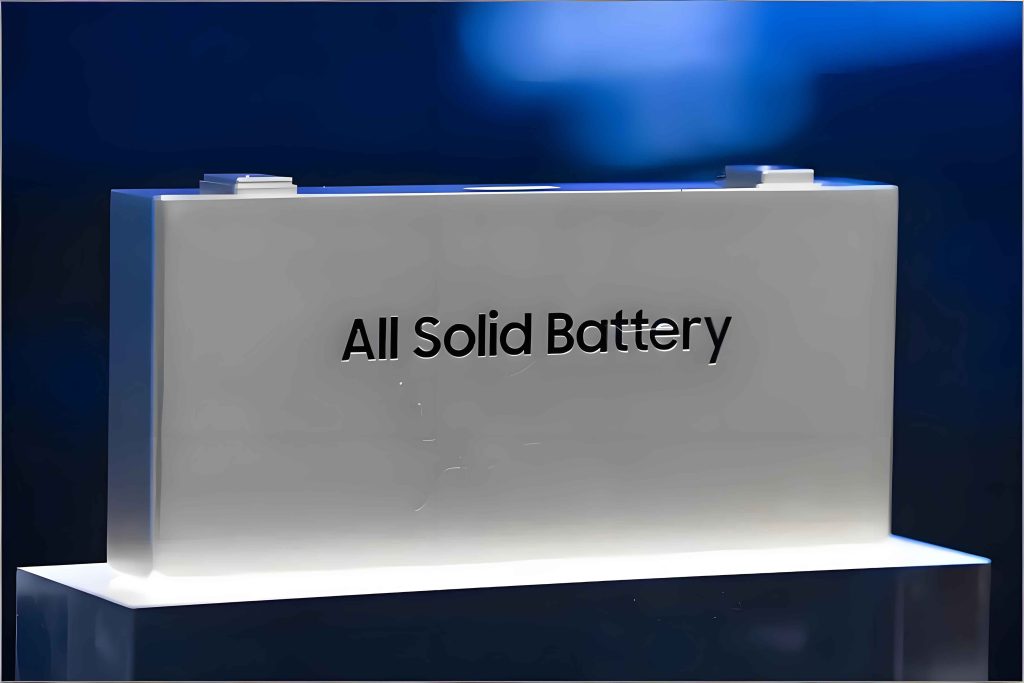
Interfacial phenomena in solid-state batteries are complex and multifaceted, involving electrochemical reactions, mechanical stress, and ion transport across phase boundaries. For PEO-based systems, the interfaces with both anodes (e.g., lithium metal, graphite) and cathodes (e.g., LiFePO₄, LiCoO₂, high-nickel NCM) are critical determinants of cycle life and safety. In the following sections, I will systematically explore anode and cathode interfaces, discussing reaction mechanisms, improvement strategies, and characterization methods. To organize key information, I will incorporate tables and equations that summarize essential concepts and data.
Anode Interface Challenges and Solutions
The anode interface in PEO-based solid-state batteries primarily involves lithium metal or alternative materials like graphite. Lithium metal is highly reactive, leading to spontaneous reactions with PEO electrolytes that form a solid electrolyte interphase (SEI). The SEI composition typically includes decomposition products of lithium salts (e.g., LiTFSI) and polymer fragments. For instance, LiTFSI may decompose as: $$\text{LiTFSI} \rightarrow \text{LiF} + \text{Li}_2\text{S} + \text{Li}_3\text{N} + \text{organic species}.$$ This SEI can be both beneficial and detrimental: it may passivate the surface but also increase interfacial resistance. Moreover, non-uniform lithium deposition often results in dendrite growth, which can penetrate the polymer electrolyte and cause short circuits. The dendrite formation kinetics can be modeled using theories that consider current density, electrolyte modulus, and lithium surface morphology.
To mitigate anode interface issues, various strategies have been developed. These can be categorized into surface modifications, composite electrolytes, and polymer design. Table 1 summarizes key approaches and their effects on solid-state battery performance.
| Strategy | Mechanism | Impact on Performance |
|---|---|---|
| Lithium surface coating (e.g., with polymers or inorganic layers) | Forms a stable artificial SEI, reduces direct contact with PEO | Enhances cycling stability, lowers interfacial resistance |
| Composite electrolytes with ceramic fillers (e.g., LLZO, Al₂O₃) | Increases mechanical strength, suppresses dendrite growth | Improves ionic conductivity and cycle life |
| Block copolymers (e.g., PS-PEO) | Combines high modulus (PS) with ion conduction (PEO) | Reduces lithium dendrite penetration |
| Single-ion conducting polymers | Enhances lithium transference number, minimizes concentration gradients | Promotes uniform lithium deposition |
| In situ polymerization of protective layers | Creates conformal, adherent interfaces | Improves interfacial adhesion and stability |
Mathematically, the critical current density for dendrite initiation, $J_c$, can be expressed as: $$J_c = \frac{G \cdot \delta}{\eta \cdot t_+},$$ where $G$ is the shear modulus of the electrolyte, $\delta$ is the surface roughness, $\eta$ is the overpotential, and $t_+$ is the lithium transference number. This equation emphasizes the importance of high modulus and high transference number in preventing dendrites. Recent studies have shown that composite electrolytes with ceramic particles like Li₇La₃Zr₂O₁₂ (LLZO) can achieve $G$ values exceeding 1 GPa, significantly extending the cycle life of lithium symmetric cells.
Advanced characterization techniques have been instrumental in understanding anode interfaces. For example, in situ scanning electron microscopy (SEM) allows real-time observation of lithium deposition and dendrite growth. X-ray photoelectron spectroscopy (XPS) reveals the chemical composition of SEI layers, identifying compounds like LiF, Li₂O, and organic carbonates. Synchrotron X-ray microtomography provides three-dimensional views of lithium morphology and electrolyte penetration. These tools collectively offer insights into the dynamic evolution of interfaces during cycling, guiding the design of more stable anodes for solid-state batteries.
Cathode Interface Challenges and Solutions
On the cathode side, the primary challenge is the limited oxidative stability of PEO electrolytes. At voltages above 4.0 V versus Li/Li⁺, PEO tends to decompose, especially in the presence of transition metal oxides that catalyze oxidation reactions. The decomposition mechanism involves the oxidation of ethylene oxide units, leading to the formation of gaseous products like H₂ and CO₂. The reaction can be approximated as: $$\text{PEO} \xrightarrow[\text{high voltage}]{\text{oxidation}} \text{CH}_2=\text{CH}_2 + \text{H}_2\text{O} + \text{CO}_2.$$ This not only degrades the electrolyte but also increases interfacial resistance and causes capacity fading.
To enhance cathode interface stability, researchers have focused on surface coatings, interfacial layers, and electrolyte modifications. High-voltage cathodes such as LiCoO₂, LiNiₓCoₓMnₓO₂ (NCM), and LiNi₀.₅Mn₁.₅O₄ require protective measures to prevent direct contact with PEO. Table 2 outlines common strategies and their outcomes in solid-state batteries.
| Strategy | Mechanism | Impact on Performance |
|---|---|---|
| Inorganic coatings (e.g., Li₃PO₄, LATP, LiNbO₃) | Acts as a barrier against oxidation, allows Li⁺ transport | Enables high-voltage operation, improves cycle life |
| Polymer coatings (e.g., PAN, PECA) | Provides flexible, ion-conducting layers | Reduces interfacial resistance, enhances compatibility |
| Bilayer or multilayer electrolytes | Separates anode-stable and cathode-stable layers | Broadens electrochemical window |
| Lithium salt additives (e.g., LiBOB, LiDFOB) | Decomposes to form stable CEI, passivates surface | Suppresses electrolyte decomposition, improves coulombic efficiency |
| In situ formation of CEI via electrochemical reactions | Creates conformal, self-healing interfaces | Enhances long-term stability |
The effectiveness of coatings can be evaluated using the ionic conductivity of the interface, $\sigma_{\text{int}}$, which is influenced by the coating thickness $d$ and intrinsic conductivity $\sigma_0$: $$\sigma_{\text{int}} = \frac{\sigma_0}{1 + \frac{d}{L}},$$ where $L$ is a characteristic length related to the interface morphology. Thin, uniform coatings (e.g., applied via atomic layer deposition) minimize $d$ and maximize $\sigma_{\text{int}}$, thereby reducing overall cell resistance. Additionally, the use of lithium salts like LiDFOB can promote the formation of a cathode electrolyte interphase (CEI) rich in borate species, which are electronically insulating but ionically conductive.
Characterization of cathode interfaces often involves techniques such as differential electrochemical mass spectrometry (DEMS) to detect gas evolution, transmission electron microscopy (TEM) to examine coating uniformity, and X-ray absorption spectroscopy (XAS) to monitor transition metal oxidation states. For instance, in situ DEMS has revealed that PEO decomposition accelerates above 4.2 V when in contact with LiCoO₂, but coatings like Li₁.₄Al₀.₄Ti₁.₆(PO₄)₃ (LATP) can shift this threshold to 4.5 V. These insights are crucial for designing cathodes that operate reliably in solid-state batteries.
Advanced Characterization Techniques for Interfacial Analysis
Understanding interfaces in PEO-based solid-state batteries requires a multifaceted approach, combining spectroscopic, microscopic, and electrochemical methods. I have compiled key techniques and their applications in Table 3, highlighting how each contributes to interfacial science.
| Technique | Principle | Applications in Interface Studies |
|---|---|---|
| X-ray photoelectron spectroscopy (XPS) | Measures elemental composition and chemical states | Identifies SEI/CEI components (e.g., LiF, B-O species) |
| In situ scanning electron microscopy (SEM) | Visualizes morphological changes in real time | Observes lithium deposition, dendrite growth, and crack formation |
| Synchrotron X-ray microtomography (XTM) | Provides 3D imaging with high resolution | Analyzes lithium morphology, porosity, and interface delamination |
| Fourier-transform infrared spectroscopy (FTIR) | Detects molecular vibrations and functional groups | Monitors polymer decomposition and interface reactions |
| Electrochemical impedance spectroscopy (EIS) | Measures resistance and capacitance of interfaces | Quantifies interfacial resistance evolution during cycling |
| Atomic force microscopy (AFM) | Maps surface topography and mechanical properties | Assesses interface roughness and modulus changes |
| Nuclear magnetic resonance (NMR) | Probes local chemical environments and ion dynamics | Studies lithium diffusion and coordination in polymers |
These techniques often complement each other. For example, XPS can quantify the thickness of SEI layers, while SEM reveals their morphology. Moreover, theoretical calculations, such as density functional theory (DFT), are increasingly used to predict interface reactions and stability. DFT can compute the highest occupied molecular orbital (HOMO) and lowest unoccupied molecular orbital (LUMO) energies of polymers, indicating their electrochemical windows. For PEO, HOMO energy is around -5.99 eV relative to the standard hydrogen electrode, corresponding to a reduction potential of 5.99 V, but in practice, oxidation occurs at lower voltages due to interactions with lithium salts. Such calculations help in designing new polymers with wider stability windows for solid-state batteries.
Future Perspectives and Conclusion
The development of PEO-based solid-state batteries is at a crossroads, where interfacial engineering holds the key to unlocking their full potential. Based on current research, I believe future efforts should focus on several areas. First, enhancing the intrinsic properties of PEO electrolytes through molecular design—for instance, by incorporating functional groups like nitriles or carbonates to raise the oxidation potential. The ionic conductivity can be improved by reducing crystallinity, perhaps via copolymerization or plasticizer addition. A general formula for conductivity enhancement is: $$\sigma = n q \mu,$$ where $n$ is the charge carrier concentration, $q$ is the charge, and $\mu$ is the mobility. Strategies that increase $n$ (e.g., better salt dissociation) and $\mu$ (e.g., higher amorphous content) are essential.
Second, hybrid approaches that combine solid and liquid components may offer a pragmatic solution. For example, adding small amounts of liquid electrolytes can improve interface wetting and reduce resistance, while maintaining overall safety. However, the compatibility of such hybrids with lithium metal anodes needs careful evaluation. Third, the development of novel lithium salts and multi-salt systems can tailor interface formation. Salts like LiTFPFB (lithium tris(perfluoro-tert-butoxy) borate) have shown promise in forming stable CEI layers. Fourth, advanced manufacturing techniques, such as roll-to-roll processing and 3D printing, could enable scalable production of thin, uniform electrolyte films and coated electrodes.
From a characterization standpoint, the integration of in situ and operando methods will be crucial for real-time monitoring of interface dynamics. Techniques like cryogenic electron microscopy (cryo-EM) can preserve sensitive interfaces for high-resolution imaging. Additionally, machine learning algorithms could analyze vast datasets from multiple techniques, identifying patterns that guide material design. Ultimately, the goal is to achieve solid-state batteries with energy densities exceeding 350 Wh/kg, cycle lives over 1000 cycles, and safe operation at room temperature.
In conclusion, the interface in PEO-based solid-state batteries is a complex but manageable frontier. Through a combination of material innovations, strategic engineering, and sophisticated characterization, we can overcome current limitations and pave the way for commercial adoption. The progress in anode and cathode interface studies, as reviewed here, demonstrates the viability of solid-state batteries as a transformative technology for energy storage. Continued interdisciplinary collaboration will be essential to turn these scientific insights into practical devices that power our future sustainably.