
As a researcher deeply invested in the future of energy storage, I have witnessed the rapid evolution of battery technologies. Among these, the solid-state battery stands out as a transformative innovation, promising to address the critical limitations of conventional liquid lithium-ion batteries. The solid-state battery, with its solid electrolyte replacing liquid counterparts, offers superior energy density, enhanced safety, and extended cycle life. This has positioned the solid-state battery at the forefront of next-generation secondary battery research, attracting significant global attention. In this comprehensive analysis, I delve into the patent landscape of solid-state batteries, focusing on the core component—the solid electrolyte. My aim is to unravel global and regional trends, technological disparities, and strategic insights to support high-quality development in this pivotal industry. The analysis is based on patent data retrieved up to December 2024, employing keyword and classification-based searches to ensure a thorough examination.
The fundamental principle of a solid-state battery hinges on replacing the liquid electrolyte and separator with a solid electrolyte, which facilitates ion transport while eliminating risks of leakage and combustion. This shift is not merely incremental but revolutionary, as it enables the use of high-capacity electrodes, such as lithium metal anodes, thereby pushing energy density boundaries. The solid-state battery’s architecture fundamentally enhances thermal stability and mechanical robustness. To illustrate this core concept visually, consider the following representation of the solid-state battery structure:
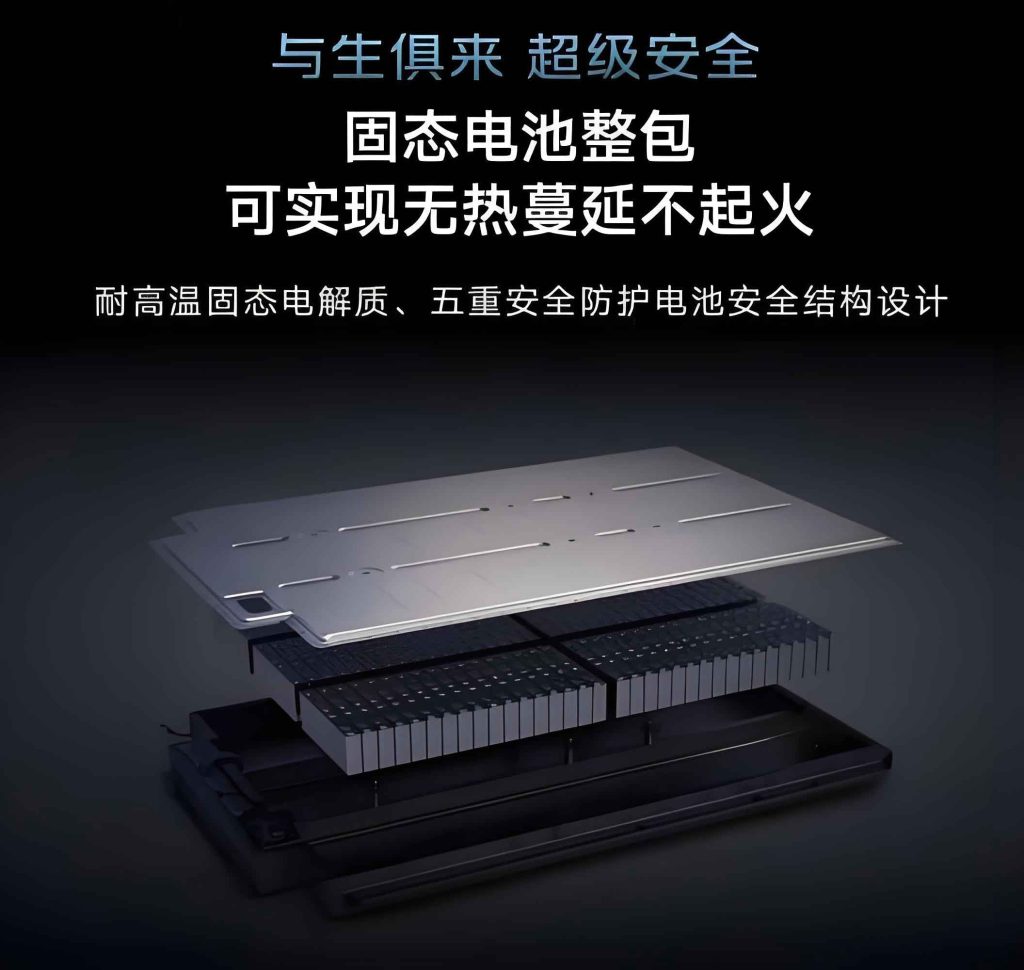
The solid electrolyte is the heart of the solid-state battery. For a systematic patent analysis, I have categorized solid electrolytes into three primary branches based on material composition: polymer-based, oxide-based, and sulfide-based solid electrolytes. Each branch presents distinct advantages and challenges, shaping the research and development (R&D) trajectories globally.
The performance of a solid-state battery is often governed by the ionic conductivity (σ) of its solid electrolyte, which can be expressed using the Arrhenius equation:
$$ \sigma = \sigma_0 \exp\left(-\frac{E_a}{k_B T}\right) $$
where $\sigma_0$ is the pre-exponential factor, $E_a$ is the activation energy for ion migration, $k_B$ is Boltzmann’s constant, and $T$ is the absolute temperature. Achieving high room-temperature ionic conductivity (ideally >10⁻³ S/cm) is a central metric for solid electrolyte viability in commercial solid-state batteries.
Methodology for Patent Analysis
In my investigation, I utilized a global patent database to collect invention and utility model patents related to solid electrolytes for solid-state batteries. The search strategy combined International Patent Classification (IPC) codes with relevant keywords encompassing the three technical branches. Data was cleaned to remove noise and duplicates, ensuring analytical accuracy. The analysis period spans the last two decades, with particular focus on trends from 2005 to 2024, though recent years (2023-2024) are acknowledged to have potential data lag due to publication delays. This methodology allows for a robust examination of the innovation dynamics within the solid-state battery domain.
Global Patent Application Trends for Solid-State Batteries
The evolution of patent filings for solid-state battery electrolytes reveals distinct phases of technological maturation and market interest. My analysis shows a clear trajectory from initial exploration to rapid acceleration.
| Phase | Period | Global Trend | Chinese Trend | Key Characteristics |
|---|---|---|---|---|
| Technology Accumulation | 2005-2010 | Gradual growth (~10% annual increase) | Parallel gradual growth | Focus on fundamental research; low patent volume; high technical barriers. |
| Slow Development | 2011-2015 | Accelerated growth, reaching ~2,200 applications by 2015 | Significant rise to ~380 applications by 2015 | Key material breakthroughs; growing industry attention. |
| High-Speed Development | 2016-Present | Exponential growth, peaking at ~6,500 applications in 2022 | Surge to ~2,400 applications by 2023, surpassing Japan | Technology maturation; industrialization focus; optimization and integration innovations. |
The data underscores a pivotal shift: while Japan and the United States led early innovation, China has emerged as a dominant force in recent years. The year 2023 marked a milestone where China’s patent application volume in solid electrolytes for solid-state batteries overtook Japan’s, signaling a reconfiguration of the global innovation landscape. This surge is largely driven by strong policy support for new energy vehicles and energy storage within China, creating a fertile ground for solid-state battery R&D.
Regional Disparities in Technology Focus
A deeper dive into the patent portfolios of major countries—China, Japan, the United States, South Korea, and the European Patent Office (EPO)—reveals pronounced strategic differences in technological emphasis. Each region appears to favor specific solid electrolyte pathways for the solid-state battery, influenced by historical expertise, resource availability, and market strategy.
| Region/Office | Polymer Electrolyte Patents | Oxide Electrolyte Patents | Sulfide Electrolyte Patents | Dominant Strategy |
|---|---|---|---|---|
| China | 5,812 | 4,106 | 2,950 (estimated) | Strong focus on polymer electrolytes; competitive in oxides. |
| Japan | 3,200 (estimated) | 4,125 | 5,723 | Clear dominance in sulfide electrolytes; strong in oxides. |
| United States | 2,800 (estimated) | 2,950 (estimated) | 2,100 (estimated) | Balanced portfolio with emphasis on polymers and oxides. |
| South Korea | 1,950 (estimated) | 2,200 (estimated) | 2,500 (estimated) | Broad-based approach, with significant sulfide activity. |
| European Patent Office | 1,500 (estimated) | 1,800 (estimated) | 1,400 (estimated) | Diversified portfolio, often focusing on fundamental material science. |
This table illustrates that the development path for the solid-state battery is not monolithic. China’s heavy investment in polymer electrolytes suggests a strategy prioritizing faster commercialization and integration with existing lithium-ion battery manufacturing processes. Polymer electrolytes, often based on poly(ethylene oxide) (PEO) complexes with lithium salts, offer good flexibility and processability. Their ionic conductivity, while improved, often follows a Vogel-Tammann-Fulcher (VTF) type relationship due to coupling with polymer segmental motion:
$$ \sigma(T) = A T^{-1/2} \exp\left[-\frac{B}{k_B (T – T_0)}\right] $$
where $A$ and $B$ are constants, and $T_0$ is the ideal glass transition temperature. The quest is to lower $T_0$ and enhance dissociation of lithium salts.
In contrast, Japan’s entrenched lead in sulfide electrolytes reflects a long-term bet on high-performance materials. Sulfide solid electrolytes, such as those in the Li₂S–P₂S₅ system or thio-LISICON types, boast ionic conductivities rivaling liquid electrolytes (up to 10⁻² S/cm). A representative formula for a high-conductivity sulfide is Li₁₀GeP₂S₁₂ (LGPS-type), with its conductivity given by:
$$ \sigma_{\text{Li}^+} \approx 12 \times 10^{-3} \, \text{S/cm} \, \text{at } 25^\circ\text{C} $$
However, these materials often suffer from poor air stability, reacting with moisture to produce toxic H₂S. Patent activity in Japan heavily focuses on mitigating these stability issues through compositional tuning and protective coatings, which is crucial for the practical deployment of sulfide-based solid-state batteries.
Oxide electrolytes represent a middle ground, favored for their excellent stability and mechanical strength. Key families include garnet-type (e.g., Li₇La₃Zr₂O₁₂, LLZO), perovskite-type (e.g., Li₃ˣLa₂/₃ˣTiO₃, LLTO), and NASICON-type (e.g., Li₁₊ₓAlₓTi₂₋ₓ(PO₄)₃, LATP) materials. Their conductivity often depends on the concentration and mobility of charge carriers (Li⁺ ions and vacancies). For garnet oxides, the ionic conductivity can be modeled as:
$$ \sigma = \sum_i n_i q_i \mu_i $$
where $n_i$ is the carrier density, $q_i$ the charge, and $\mu_i$ the mobility. Doping strategies to increase $n_i$ (e.g., Al or Ta doping in LLZO to stabilize the cubic phase) are a major theme in oxide-related patents. Both China and Japan show strong and roughly equal commitment to this branch, indicating its perceived importance for developing safe and durable solid-state batteries.
Analysis of Key Innovators and Patent Strategies
While specific company names are omitted per the guidelines, my analysis identifies clear patterns among global innovators. The landscape is dominated by large automotive and electronics conglomerates from East Asia, particularly Japan and South Korea, alongside significant contributions from Chinese academia and emerging battery giants. These entities have built extensive patent thickets covering not only material composition but also manufacturing methods, cell design, and interface engineering for the solid-state battery.
Early pioneers, primarily from Japan, established strong foundational patents in sulfide electrolyte synthesis and cell integration. Their portfolios often feature high-citation patents and extensive international patent families, securing broad global protection. For instance, key patents disclose methods for synthesizing sulfide electrolytes with minimized H₂S generation or novel cell designs that mitigate interfacial resistance. A generic representation of such an advancement might involve a solid electrolyte layer with a gradient composition to improve contact, described by a function of position $x$:
$$ \text{Li}_{a(x)}\text{A}_{b(x)}\text{X}_{c(x)} $$
where A is P, Si, or Ge, and X is S or Se, with the composition varying smoothly from anode to cathode interface.
Leading Korean players exhibit a more balanced portfolio, with significant activity in polymer-oxide composite electrolytes and sulfur-based systems. Their recent patents frequently address interface stability, such as introducing protective interlayers between the cathode and sulfide electrolyte to prevent side reactions. An example patent might claim a composite electrode structure where active material particles are embedded in a 3D fibrous conductive network infiltrated with solid electrolyte, optimizing both ionic and electronic pathways—a critical enabler for high-rate solid-state batteries.
In China, the innovation engine is fueled by a combination of prominent research institutes and ambitious companies. Academic institutions have produced foundational research on novel electrolyte materials, such as oxy-sulfide hybrids (e.g., materials with formula LiₓAlᵧS₂O₂₋₂) or new structural families (e.g., Li₂ADX₄, where A=Ca, Sr, Ba; D=Si, Ge, Sn; X=S, Se). These inventions aim to combine the high conductivity of sulfides with the stability of oxides. Chinese companies, on the other hand, are filing numerous patents on manufacturing processes and cell integration techniques for polymer-based and oxide-based solid-state batteries, aiming for scalable production.
| Innovator Type | Common Patent Themes | Typical Technical Focus | Strategic Goal |
|---|---|---|---|
| Japanese Automotive Majors | Sulfide electrolyte synthesis, all-solid-state cell design, lithium metal anode integration. | High energy density, long cycle life. | Securing core technology for next-generation electric vehicles. |
| Korean Electronics & Chemical Conglomerates | Composite electrolytes, interface engineering, roll-to-roll manufacturing processes. | Safety, processability, cost reduction. | Diversifying battery supply and enabling consumer electronics applications. |
| Chinese Research Institutes | Novel electrolyte material discovery (oxy-sulfides, halide-based), fundamental ion transport mechanisms. | Breaking conductivity/stability trade-offs. | Building intellectual property foundation and supporting national industry. |
| Chinese Battery/Vehicle Manufacturers | Pouch cell design with solid electrolytes, in-situ polymerization techniques, integration with silicon anodes. | Compatibility with existing production lines, fast charging. | Accelerating commercialization of semi-solid and all-solid-state batteries. |
Technical Branch-Specific Patent Progress
Delving into each solid electrolyte branch reveals the specific challenges and innovation fronts within the solid-state battery ecosystem.
Polymer Solid Electrolytes
Polymer electrolytes have the longest patent history. Early work focused on PEO-based systems. Modern innovations center on creating composite or hybrid electrolytes. A common approach is to disperse ceramic fillers (e.g., LLZO, TiO₂ nanoparticles) into the polymer matrix to enhance mechanical strength and ionic conductivity. The effective conductivity of such a composite can be estimated using effective medium theory. Patents also cover cross-linked polymer networks, single-ion conductors (where the anion is tethered to the polymer backbone), and in-situ polymerization methods that improve electrode-electrolyte contact. The continuous goal is to achieve a Li⁺ transference number ($t_+$) close to 1 and conductivity over 10⁻⁴ S/cm at room temperature for a viable solid-state battery.
Oxide Solid Electrolytes
The patent trajectory for oxides shows a shift from bulk material discovery to interface and processing solutions. Key challenges include high sintering temperatures and brittle nature. Recent patents detail low-temperature sintering aids, thin-film deposition techniques (e.g., sputtering, ALD), and the design of porous/dense bilayer structures. Interface engineering is critical, as the rigid oxide often forms poor contact with electrodes. Patents disclose the use of soft interlayers or atomic layer deposition of lithophilic coatings. For NASICON-type LATP, a major issue is instability against lithium metal. Patents address this by creating stable passivation layers or developing modified compositions like Li₁₊ₓAlₓGe₂₋ₓ(PO₄)₃ (LAGP).
Sulfide Solid Electrolytes
Sulfide electrolyte patents are the most dynamic, reflecting their performance potential. Innovation clusters around four areas: 1) **Compositional Optimization**: Exploring new systems beyond Li₂S–P₂S₅, such as Li₂S–SiS₂–GeS₂ or halide-doped systems (LiPSX, X=Cl, Br, I) to boost conductivity and electrochemical window. The ionic conductivity often follows a correlation with the network former/modifier ratio. 2) **Stability Enhancement**: Developing coatings (e.g., Li₂O, Li₃PO₄) or surface treatments to improve air and moisture stability. 3) **Glass-Ceramic Processing**: Patents on heat-treatment protocols to control crystallinity in glasses like Li₇P₃S₁₁, optimizing the glass-ceramic state for high conductivity. 4) **Interface Design**: Creating compliant layers or using alloy anodes to reduce interfacial resistance. A significant number of patents focus on full cell designs that integrate sulfide electrolytes with high-voltage cathodes like NMC811, addressing the oxidative instability challenge.
The performance trade-offs between these branches can be summarized by a set of key parameters, as idealized in the following table:
| Parameter | Polymer Electrolytes | Oxide Electrolytes | Sulfide Electrolytes | Target for Solid-State Battery |
|---|---|---|---|---|
| Ionic Conductivity at 25°C (S/cm) | ~10⁻⁵ to 10⁻⁴ | ~10⁻⁶ to 10⁻⁴ | ~10⁻⁴ to 10⁻² | >10⁻³ |
| Electrochemical Window (V vs. Li/Li⁺) | ~4.0 | >5.0 | ~1.7-2.5 (vs. Li) | >4.5 (for high-voltage cathodes) |
| Mechanical Properties | Flexible, soft | Brittle, rigid | Ductile, cold-pressable | Robust yet compliant |
| Air/Moisture Stability | Good | Excellent | Poor (H₂S generation) | High for manufacturing |
| Interface with Li Metal | Moderate stability | Poor (without modification) | Moderate to good | Stable, dendrite-suppressing |
| Estimated Maturity for Solid-State Battery | Near-term (semi-solid) | Mid-term | Long-term (high-performance) | Varies by application |
Strategic Recommendations for High-Quality Development
Based on my patent analysis, I propose several strategic pathways to foster a robust and competitive solid-state battery industry. The solid-state battery is not a singular technology but a platform, and success requires nuanced strategies.
1. Strengthen Foundational R&D and Overseas Patent Layouts: While domestic patent filings are booming, international patent families from Chinese entities remain relatively sparse. To compete globally, companies and institutes must proactively file patents in key markets (US, Europe, Japan, Korea) to build defensive moats and secure freedom to operate. This is especially critical for core material inventions related to sulfide and oxide electrolytes. Learning from early pioneers, a strategic patent portfolio should cover not only composition of matter but also key manufacturing processes and unique cell architectures for the solid-state battery.
2. Foster Deep Industry-Academia Collaboration: The patent data shows Chinese research institutes are prolific in novel material discovery. Mechanisms to accelerate the translation of these discoveries into commercial prototypes are vital. Establishing more joint labs, pilot lines, and standardized testing platforms can bridge this gap. The collaboration should focus on solving practical problems like interfacial resistance, which often dictates the ultimate performance of a solid-state battery. For instance, modeling the interface impedance ($R_{\text{int}}$) as a function of contact area ($A$), interfacial layer conductivity ($\sigma_{\text{IL}}$), and thickness ($d$) can guide R&D:
$$ R_{\text{int}} = \frac{d}{\sigma_{\text{IL}} A} $$
Efforts should aim to minimize $d$ and maximize $\sigma_{\text{IL}}$ and $A$.
3. Adopt a Differentiated, Multi-Path Technology Strategy: Given the regional strengths, a one-size-fits-all approach is suboptimal. For the Chinese industry, leveraging its lead in polymer and oxide electrolytes to develop and commercialize semi-solid or hybrid solid-state batteries in the short-to-medium term is a pragmatic strategy. This can generate revenue and manufacturing experience. Concurrently, significant resources should be allocated to overcoming the challenges of sulfide electrolytes—particularly stability and interface issues—to capture the long-term high-performance market. Investing in atmospheric-controlled production equipment and coating technologies is essential for sulfide-based solid-state batteries.
4. Enhance Competitive Intelligence and Risk Mitigation: Continuous monitoring of global patent filings is crucial. Companies should conduct regular freedom-to-operate analyses to avoid infringement, especially when exporting products or expanding overseas. Given the dense patent thickets in sulfide electrolytes held by historical players, designing around key patents or seeking cross-licensing opportunities will be a necessary business skill. Special attention should be paid to patents covering critical enabling technologies, such as specific methods for forming thin, dense electrolyte layers or for integrating lithium metal anodes in a solid-state battery.
5. Participate in and Shape International Standards: As the solid-state battery technology matures, standards for performance, safety, and testing will emerge. Active participation in international standard-setting bodies can help align standards with domestic technological advantages and reduce future market entry barriers. This includes defining test protocols for ionic conductivity, cycle life under realistic conditions, and safety abuse tests specific to solid-state battery configurations.
Conclusion
My exhaustive patent analysis paints a vivid picture of a global race towards the solid-state battery future. The solid-state battery is undoubtedly a key disruptive technology for electrification and renewable energy storage. The innovation landscape is dynamic, with China’s recent surge in patent volume challenging the early leadership of Japan and South Korea. However, qualitative differences remain, particularly in the depth of foundational patents and global IP protection for critical sulfide electrolyte technologies.
The three technical branches—polymer, oxide, and sulfide electrolytes—each offer distinct pathways with their own timelines and challenges. The ultimate winning chemistry for the mass-market solid-state battery may well be application-dependent, with different solutions for electric vehicles, consumer electronics, and grid storage. Success will belong to those who can not only innovate in materials science but also master the arts of scalable manufacturing, interface engineering, and strategic intellectual property management.
For stakeholders aiming to thrive in this space, the recommendations outlined provide a roadmap. By strengthening core R&D, building global IP portfolios, fostering collaboration, and staying agile in technology choices, the industry can navigate the complexities and accelerate the arrival of high-performance, safe, and cost-effective solid-state batteries. The journey of the solid-state battery from lab to market is a marathon, not a sprint, and strategic patience coupled with relentless innovation will be the defining factors for high-quality development in this transformative field.