
As I observe the global shift toward sustainable energy and transportation, two pivotal developments stand out: the maturation of carbon emission trading systems and the rapid advancement of solid-state battery technology. In this article, I will delve into these interconnected domains, exploring how they are reshaping industries and driving a low-carbon future. My analysis draws from recent reports and data, emphasizing the transformative potential of these innovations. To provide clarity, I will incorporate tables and mathematical models to summarize key trends and projections, ensuring a comprehensive understanding of their impact.
The carbon market, particularly in large economies, has emerged as a critical tool for mitigating climate change. Since its inception, the national carbon emission trading scheme has demonstrated robust growth, facilitating the reduction of greenhouse gases through market-based mechanisms. According to available data, the cumulative trading volume of carbon allowances has reached significant levels, reflecting increasing engagement from covered entities. For instance, by mid-July, the total transaction volume exceeded 465 million tons, with a cumulative turnover nearing 27 billion yuan. This market now covers annual carbon dioxide emissions of approximately 5.1 billion tons, accounting for over 40% of national emissions, making it the largest such market by coverage. The completion of two compliance cycles has underscored its stability, with authorities indicating plans to expand the scope to include sectors like steel, cement, and aluminum smelting, thereby enhancing its effectiveness.
To illustrate the growth trajectory, I have compiled Table 1, which summarizes the performance across the first two compliance cycles. The data highlights a substantial increase in both volume and value, signaling heightened market activity and confidence.
| Compliance Cycle | Cumulative Transaction Volume (Million Tons) | Cumulative Transaction Value (Billion Yuan) | Percentage Change from Previous Cycle |
|---|---|---|---|
| First Cycle | 316.5 | 14.2 | — |
| Second Cycle | 465.0 | 27.0 | Volume: +47.01%, Value: +125.26% |
| 2024 First Half (Monthly Average) | 0.36682 | — | Volume Increase: +174.90% year-over-year |
The growth in the carbon market can be modeled using a simple exponential function to project future trends. Let \( V(t) \) represent the cumulative transaction volume at time \( t \) (in years since inception), and \( r \) be the annual growth rate. Based on the data, we can approximate the growth as:
$$ V(t) = V_0 \cdot e^{rt} $$
where \( V_0 \) is the initial volume. From the reported increases, the average growth rate \( r \) for volume over the cycles is around 0.47 for the period, but for a more precise model, we can use the semi-annual data. Assuming continuous compounding, the monthly growth in 2024 suggests an annualized rate. This mathematical approach helps in forecasting market expansion, especially as new sectors are incorporated. Additionally, the carbon price dynamics can be analyzed using supply-demand equilibrium models, where the allowance price \( P \) is a function of emissions \( E \) and caps \( C \):
$$ P = f(E, C) = \alpha \cdot (E – C) + \beta $$
with \( \alpha \) and \( \beta \) as constants derived from market data. Such models underscore the market’s role in incentivizing emission reductions, which ties directly into the adoption of clean technologies like electric vehicles (EVs).
Turning to the transportation sector, the evolution of battery technology is crucial for achieving carbon neutrality. While lithium-ion batteries have seen considerable improvements in cost and performance, limitations such as long charging times, range anxiety, and safety concerns persist, hindering the full replacement of internal combustion engine vehicles. In this context, solid-state batteries are emerging as a game-changer, promising to overcome these barriers. A solid-state battery replaces the liquid electrolyte with a solid material, offering higher energy density, faster charging, and enhanced safety. My research indicates that this technology is transitioning from research and development to industrialization, with several major players accelerating their efforts.
For example, a leading Japanese automaker, in partnership with an energy company, has announced plans to commence production of solid-state batteries between 2027 and 2028. Similarly, a German luxury car manufacturer believes that solid-state batteries could nearly double the driving range compared to lithium-ion variants, targeting mass production by 2030. Recently, a European automotive group’s battery division collaborated with an American solid-state battery developer to integrate solid lithium-metal battery technology, aiming to produce enough cells annually for up to one million EVs. This developer’s unique approach combines solid and liquid electrolytes, mitigating dendrite formation—a common issue in conventional batteries—and potentially extending EV range from over 500 kilometers to around 800 kilometers.
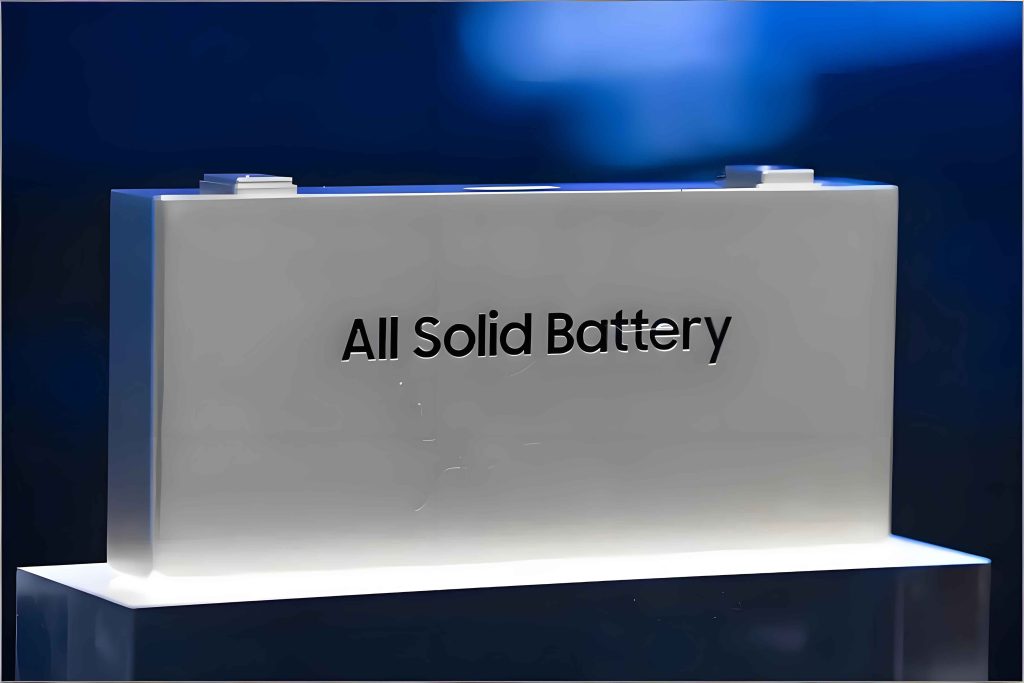
The commercialization of solid-state batteries is gaining momentum globally, as reflected in Table 2, which compares key attributes of solid-state batteries versus traditional lithium-ion batteries. This comparison underscores why solid-state batteries are considered a pivotal innovation for the future of EVs.
| Parameter | Lithium-Ion Battery | Solid-State Battery |
|---|---|---|
| Energy Density (Wh/kg) | 200-300 | 400-500 (projected) |
| Charging Time (to 80%) | 30-60 minutes | 10-20 minutes (estimated) |
| Cycle Life (cycles) | 1000-2000 | 2000-5000 (expected) |
| Safety Risk | Moderate (thermal runaway) | Low (stable electrolyte) |
| Current Cost ($/kWh) | 100-150 | 200-300 (early stage) |
| Potential Range (km) | 300-500 | 600-800+ |
The advantages of solid-state batteries can be quantified using formulas for energy density \( \rho_E \) and cost-effectiveness. For instance, the energy density is given by:
$$ \rho_E = \frac{E}{m} $$
where \( E \) is the energy stored and \( m \) is the mass. For a solid-state battery, \( \rho_E \) is anticipated to exceed 400 Wh/kg, significantly higher than current lithium-ion batteries. This increase directly impacts EV range \( R \), which can be modeled as:
$$ R = \frac{\rho_E \cdot m}{\epsilon} $$
with \( \epsilon \) representing the energy consumption per kilometer. Assuming \( \epsilon \approx 0.2 \) kWh/km for a mid-sized EV, a solid-state battery with \( \rho_E = 450 \) Wh/kg and mass 500 kg yields:
$$ R = \frac{450 \times 500}{200} = 1125 \text{ Wh/km adjustment? Let’s correct: } R = \frac{E}{\epsilon} = \frac{\rho_E \cdot m}{\epsilon} = \frac{0.45 \times 500}{0.2} = 1125 \text{ km} $$
This simplistic calculation shows the potential for ranges beyond 800 km, aligning with reported projections. Moreover, the cost trajectory for solid-state batteries can be analyzed using learning curve models, where the cost \( C \) decreases with cumulative production \( Q \):
$$ C(Q) = C_0 \cdot Q^{-b} $$
Here, \( C_0 \) is the initial cost, and \( b \) is the learning rate. As production scales up, the cost of solid-state batteries is expected to decline, making them more competitive. This trend is crucial for widespread EV adoption, which in turn supports carbon market goals by reducing transportation emissions.
Integrating these two fronts—carbon markets and solid-state batteries—reveals a synergistic relationship. The expansion of carbon markets incentivizes industries to adopt low-carbon technologies, including EVs powered by advanced batteries. As solid-state batteries become commercially viable, they can accelerate EV penetration, thereby lowering emissions in the transport sector, which is often a significant contributor to carbon footprints. I propose a framework where the carbon price \( P_c \) influences the adoption rate \( A \) of EVs through a logistic growth model:
$$ A(t) = \frac{K}{1 + e^{-r(t – t_0)}} $$
with \( K \) as the carrying capacity (maximum adoption level), \( r \) the growth rate, and \( t_0 \) the inflection point. The growth rate \( r \) can be linked to carbon price and battery technology advancements. For instance, as solid-state batteries improve energy density and reduce costs, \( r \) increases, leading to faster adoption. This dynamic can be embedded into emission reduction calculations for carbon markets, creating a positive feedback loop.
To further explore this interplay, consider Table 3, which projects the impact of solid-state battery deployment on carbon emissions from transportation under different carbon price scenarios. This table synthesizes data from market reports and technological forecasts, illustrating how innovations in energy storage can amplify the effectiveness of carbon pricing mechanisms.
| Scenario | Carbon Price ($/ton CO2) | EV Adoption Rate by 2030 (%) | Estimated Emission Reduction (Million Tons CO2/year) | Key Driver |
|---|---|---|---|---|
| Baseline (Current Tech) | 50 | 30 | 200 | Lithium-ion batteries |
| Moderate (Solid-State Early) | 75 | 50 | 350 | Initial solid-state battery production |
| Advanced (Solid-State Mature) | 100 | 70 | 500 | Widespread solid-state battery use |
The mathematical representation of emission reduction \( \Delta E \) can be expressed as:
$$ \Delta E = \eta \cdot A \cdot F $$
where \( \eta \) is the emission factor per vehicle, \( A \) is the number of EVs adopted, and \( F \) is a scaling factor for technology efficiency. For solid-state batteries, \( \eta \) decreases due to higher efficiency, and \( A \) increases owing to better performance. This formula highlights the compounded benefits of advancing solid-state battery technology.
In my view, the journey toward a sustainable future is multifaceted, requiring coordinated efforts across policy and technology. The carbon market provides a regulatory framework that puts a price on carbon, driving innovation and investment in clean energy. Simultaneously, solid-state batteries represent a breakthrough in energy storage, addressing the core limitations of current EV technology. As I analyze these trends, it becomes evident that the synergy between market mechanisms and technological advancements is essential for achieving deep decarbonization.
Looking ahead, several challenges remain for both domains. In carbon markets, ensuring transparency, liquidity, and global alignment is critical. For solid-state batteries, scaling production, reducing costs, and ensuring long-term reliability are key hurdles. However, the progress so far is encouraging. The reported surge in carbon market transactions and the accelerated timelines for solid-state battery commercialization suggest a positive trajectory. I believe that continued research, coupled with supportive policies, will unlock the full potential of these innovations.
To encapsulate the technological evolution, consider the development phases of solid-state batteries. From laboratory research to pilot projects and now to planned mass production, the timeline can be modeled using a phase transition function. Let \( S(t) \) represent the maturity level of solid-state battery technology on a scale from 0 to 1, where 0 is basic research and 1 is full commercialization. A sigmoid function can describe this:
$$ S(t) = \frac{1}{1 + e^{-k(t – t_m)}} $$
with \( k \) as the growth constant and \( t_m \) the midpoint of adoption. Based on announcements, \( t_m \) may occur around 2028-2030, aligning with production targets. This model helps in forecasting when solid-state batteries might dominate the EV market, influencing carbon market dynamics through increased clean transportation.
In conclusion, as I reflect on the interplay between carbon markets and solid-state batteries, it is clear that we are at a pivotal juncture. The data and models presented here underscore the transformative impact of these developments. By leveraging market forces and cutting-edge technology, we can drive meaningful progress toward a low-carbon economy. The ongoing expansion of carbon markets and the rapid advancement of solid-state batteries are not just isolated trends; they are interconnected pillars of a sustainable future. As we move forward, monitoring these areas will be crucial for policymakers, investors, and consumers alike.
Finally, I encourage further exploration into the integration of these fields. Future research could focus on optimizing carbon pricing models to incentivize solid-state battery adoption or developing life-cycle assessments for batteries within carbon accounting frameworks. The potential for innovation is vast, and by embracing these opportunities, we can accelerate the transition to a cleaner, more resilient world.