
As a participant in a recent national conference focused on energy storage technologies, I was immersed in the vibrant discussions surrounding solid-state batteries. This gathering underscored the transformative potential of solid-state batteries in revolutionizing energy storage systems. The conference served as a testament to the collective efforts in addressing the core challenges and advancing the frontier of solid-state battery research. In this article, I aim to share insights from the event, delving into the technical nuances, current trends, and future directions of solid-state batteries, while emphasizing the critical role they play in the global shift toward sustainable energy.
The fundamental appeal of solid-state batteries lies in their enhanced safety and energy density compared to conventional lithium-ion batteries. By replacing liquid electrolytes with solid counterparts, solid-state batteries mitigate risks such as leakage, flammability, and thermal runaway. The solid electrolyte serves as both ion conductor and separator, enabling thinner designs and higher energy densities. A key metric for solid electrolytes is ionic conductivity, often expressed as:
$$ \sigma = n \cdot e \cdot \mu $$
where $\sigma$ is the ionic conductivity (in S/cm), $n$ is the charge carrier concentration, $e$ is the elementary charge, and $\mu$ is the mobility of ions. For solid-state batteries to be viable, the solid electrolyte must achieve high ionic conductivity, typically above $10^{-3}$ S/cm at room temperature, to rival liquid electrolytes. Recent advancements have focused on materials like oxides, sulfides, polymers, and halides, each with distinct trade-offs in conductivity, stability, and processability.
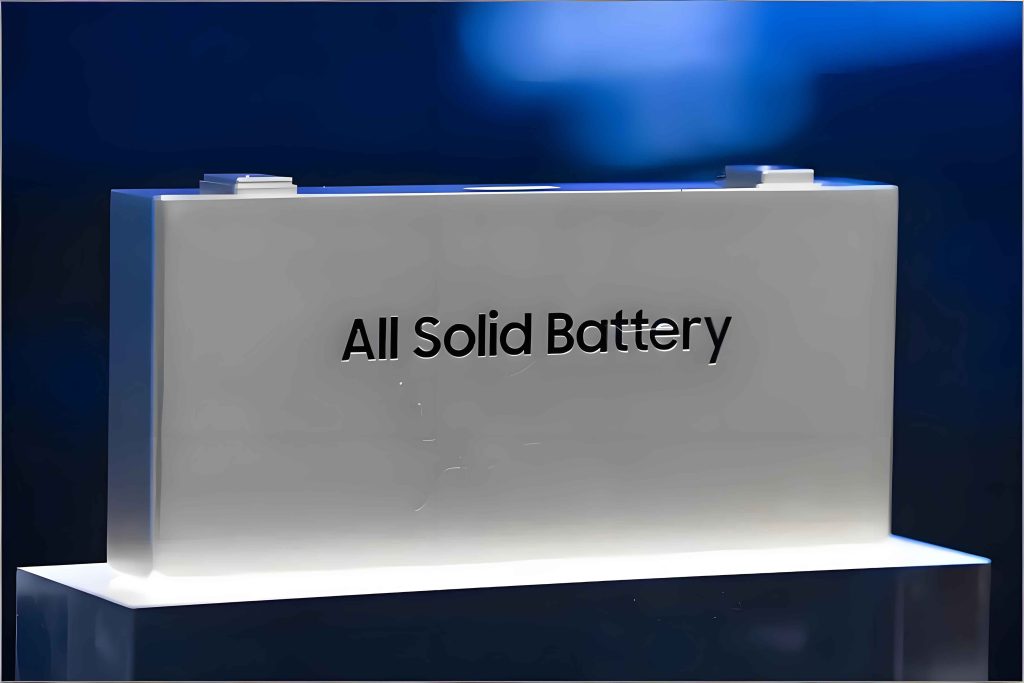
The conference highlighted several pivotal areas in solid-state battery development. One major theme was the integration of artificial intelligence to accelerate material discovery and optimization for solid-state batteries. Machine learning algorithms can predict electrolyte properties, such as ionic conductivity and interfacial stability, reducing experimental trial-and-error. For instance, the search for novel solid electrolytes often involves high-throughput screening using descriptors like the activation energy $E_a$ for ion migration, given by the Arrhenius equation:
$$ \sigma = A \exp\left(-\frac{E_a}{k_B T}\right) $$
where $A$ is a pre-exponential factor, $k_B$ is Boltzmann’s constant, and $T$ is the temperature. AI models trained on databases of crystalline structures can identify promising candidates for solid-state batteries, speeding up innovation cycles.
Another focal point was the development of composite electrolytes, which combine polymers with inorganic fillers to balance flexibility and ionic conductivity. These hybrids address interfacial issues common in solid-state batteries, such as poor contact between electrodes and solid electrolytes. The effective conductivity of a composite can be modeled using percolation theory:
$$ \sigma_{\text{eff}} = \sigma_0 (\phi – \phi_c)^t $$
where $\sigma_0$ is the conductivity of the conductive phase, $\phi$ is the volume fraction of filler, $\phi_c$ is the percolation threshold, and $t$ is a critical exponent. This approach is crucial for designing robust solid-state batteries with long cycle life.
To summarize the progress in solid electrolyte materials, the following table compares key characteristics of major classes used in solid-state batteries:
| Electrolyte Type | Typical Ionic Conductivity (S/cm, 25°C) | Advantages | Challenges | Relevance to Solid-State Batteries |
|---|---|---|---|---|
| Oxide-based (e.g., garnets) | $10^{-4}$ to $10^{-3}$ | High stability, wide electrochemical window | Brittleness, high sintering temperatures | Enables high-voltage solid-state batteries |
| Sulfide-based (e.g., argyrodites) | $10^{-3}$ to $10^{-2}$ | High conductivity, good processability | Moisture sensitivity, interfacial reactions | Promising for scalable solid-state batteries |
| Polymer-based (e.g., PEO) | $10^{-5}$ to $10^{-4}$ | Flexibility, ease of fabrication | Low conductivity at room temperature | Used in flexible solid-state batteries |
| Halide-based (e.g., chlorides) | $10^{-4}$ to $10^{-3}$ | Good compatibility with electrodes | Cost and scalability issues | Emerging for next-generation solid-state batteries |
| Composite (polymer-inorganic) | $10^{-4}$ to $10^{-3}$ | Balanced properties, improved interfaces | Optimization of filler distribution | Key to hybrid solid-state batteries |
The pursuit of higher energy density in solid-state batteries often involves novel electrode designs. For example, lithium-sulfur chemistry paired with solid electrolytes can theoretically achieve specific energies over 500 Wh/kg, addressing the limitations of traditional lithium-ion systems. The discharge reaction in a solid-state lithium-sulfur battery can be simplified as:
$$ 2\text{Li} + \text{S} \rightarrow \text{Li}_2\text{S} $$
However, challenges like polysulfide shuttle and volume expansion require tailored solid electrolytes to suppress side reactions. Conference discussions emphasized sulfur cathode engineering, where porous structures infused with solid electrolytes enhance ion transport and stability. This aligns with the broader goal of commercializing solid-state batteries for electric vehicles and grid storage.
Interfacial phenomena remain a critical bottleneck for solid-state batteries. The solid-solid contact between electrodes and electrolytes often leads to high impedance and capacity fade. Strategies to mitigate this include the development of interlayers or coatings that promote adhesion and ion transfer. The interfacial resistance $R_{\text{int}}$ can be described by:
$$ R_{\text{int}} = \frac{\delta}{\sigma_{\text{int}}} $$
where $\delta$ is the interfacial layer thickness and $\sigma_{\text{int}}$ is its conductivity. Reducing $R_{\text{int}}$ is essential for achieving fast-charging solid-state batteries with high power density.
Dry electrode processing emerged as a promising manufacturing technique for solid-state batteries, eliminating solvents and reducing costs. This method involves dry mixing of active materials, solid electrolytes, and binders, followed by compaction into electrodes. The process parameters, such as pressure and temperature, influence electrode density and performance. A comparative analysis of electrode fabrication methods is shown below:
| Fabrication Method | Key Steps | Advantages for Solid-State Batteries | Limitations |
|---|---|---|---|
| Dry Process | Dry mixing, calendaring | Solvent-free, scalable, compatible with solid electrolytes | Challenges in homogeneity |
| Wet Process (slurry casting) | Slurry mixing, coating, drying | Established, good electrode uniformity | Solvent removal issues, incompatibility with some solid electrolytes |
| Additive Manufacturing (3D printing) | Layer-by-layer deposition | Customizable architectures, reduced waste | Slow throughput, material constraints |
The conference also shed light on the产业化 trajectory of solid-state batteries. While laboratory prototypes have demonstrated impressive metrics, mass production requires overcoming hurdles like material costs, supply chain integration, and quality control. For instance, sulfide electrolytes, though highly conductive, necessitate inert atmosphere handling, increasing manufacturing complexity. Economic analyses presented at the event suggested that scaling solid-state battery production could drive costs down to below $\$100$/kWh within the next decade, making them competitive with incumbent technologies.
In terms of performance metrics, solid-state batteries are evaluated based on energy density, cycle life, safety, and rate capability. The gravimetric energy density $E_g$ of a solid-state battery cell can be approximated as:
$$ E_g = \frac{Q \cdot V}{m} $$
where $Q$ is the capacity (in Ah), $V$ is the average discharge voltage (in V), and $m$ is the mass (in kg). Recent prototypes of solid-state batteries have reported $E_g$ values exceeding 400 Wh/kg, a significant leap from the 250-300 Wh/kg of commercial lithium-ion batteries. This progress underscores the potential of solid-state batteries to extend the range of electric vehicles and enhance portable electronics.
The role of solid-state batteries in enabling next-generation technologies, such as solid-state lithium-metal batteries, was a recurring topic. By leveraging lithium metal anodes, these systems can achieve theoretical capacities up to 3860 mAh/g, compared to 372 mAh/g for graphite anodes. However, dendrite formation poses a safety risk, which solid electrolytes aim to suppress through mechanical rigidity. The critical current density $J_c$ for dendrite initiation in a solid-state battery can be modeled as:
$$ J_c = \frac{2 \sigma \cdot \Delta \phi}{L} $$
where $\sigma$ is the ionic conductivity, $\Delta \phi$ is the overpotential, and $L$ is the electrolyte thickness. Optimizing these parameters is vital for stable cycling of solid-state batteries.
Beyond lithium-ion systems, the conference explored sodium-ion solid-state batteries as a cost-effective alternative. Sodium resources are abundant, and solid electrolytes can enable safer operation. The ionic conductivity of sodium solid electrolytes often follows similar principles, with materials like NASICON showing promise. The general formula for conductivity in these systems is:
$$ \sigma = \sigma_0 \exp\left(-\frac{E_a}{k_B T}\right) $$
where $E_a$ is typically higher for sodium ions due to larger ionic radii, posing challenges for room-temperature performance. Innovations in crystal structure design are helping to overcome this, further diversifying the landscape of solid-state batteries.
The integration of solid-state batteries with renewable energy sources was another highlight. For grid storage, solid-state batteries offer long cycle life and reduced maintenance, thanks to their solid components that minimize degradation. A simplified model for battery degradation in solid-state batteries involves capacity fade over cycles $N$:
$$ C(N) = C_0 \cdot \exp(-\alpha N) $$
where $C_0$ is the initial capacity and $\alpha$ is a degradation rate constant. Solid-state batteries exhibit lower $\alpha$ values compared to liquid-based systems, enhancing longevity. This makes solid-state batteries ideal for buffering solar and wind power fluctuations.
Throughout the conference, the collaborative spirit among academia, industry, and government agencies was palpable. Panel discussions emphasized the need for standardized testing protocols for solid-state batteries to facilitate benchmarking and commercialization. Metrics such as ionic transference number $t_+$, defined as:
$$ t_+ = \frac{\sigma_+}{\sigma_+ + \sigma_-} $$
where $\sigma_+$ and $\sigma_-$ are the cationic and anionic conductivities, respectively, are crucial for assessing electrolyte performance in solid-state batteries. A high $t_+$ (close to 1) indicates predominant cation transport, reducing polarization and improving efficiency.
To encapsulate the multifaceted advancements in solid-state batteries, the following table summarizes key research frontiers and their implications:
| Research Frontier | Key Innovations | Impact on Solid-State Batteries | Future Challenges |
|---|---|---|---|
| Electrolyte Material Discovery | AI-driven synthesis, halide electrolytes | Enhanced conductivity and stability | Scalability and cost reduction |
| Interface Engineering | Nanoscale coatings, interlayer design | Reduced impedance, longer cycle life | Understanding degradation mechanisms |
| Electrode Architecture | 3D structured electrodes, dry processing | Higher energy density, faster charging | Manufacturing consistency |
| System Integration | Solid-state battery packs for EVs | Improved safety and performance | Thermal management and packaging |
| Sustainability and Recycling | Eco-friendly materials, closed-loop cycles | Reduced environmental footprint | Development of efficient recycling methods |
The enthusiasm at the conference was infectious, with attendees engaging in lively debates during poster sessions and networking breaks. The poster presentations showcased cutting-edge work on topics like mechanochemical synthesis of solid electrolytes and in-situ characterization techniques for solid-state batteries. These interactions fostered a sense of community dedicated to pushing the boundaries of solid-state battery technology.
Looking ahead, the trajectory for solid-state batteries appears promising. With continued investment in research and development, we can anticipate incremental improvements in energy density, safety, and affordability. The convergence of solid-state batteries with emerging trends like Internet of Things (IoT) devices and electric aviation opens new avenues for application. For instance, solid-state batteries with ultra-thin form factors could power wearable electronics, while high-power variants might enable electric aircraft with reduced weight.
In conclusion, the conference reinforced my belief that solid-state batteries are poised to play a pivotal role in the energy transition. The collective knowledge shared at such events accelerates innovation, bringing us closer to a future where solid-state batteries are ubiquitous in our daily lives. As research progresses, the synergy between material science, engineering, and policy will be essential to overcome remaining hurdles. The journey toward commercializing solid-state batteries is fraught with challenges, but the potential rewards—safer, more efficient, and sustainable energy storage—make it a pursuit worthy of our utmost effort. Solid-state batteries represent not just an technological evolution, but a paradigm shift in how we store and utilize energy, and I am excited to witness and contribute to this transformative era.