
As we observe the rapid evolution of modern cities and energy systems, two critical areas stand out: the optimization of urban lighting through advanced control systems and the revolutionary progress in solid-state battery technology. In this article, I will delve into how these innovations are shaping a more efficient and sustainable future. From the shift to low-voltage control in street lighting to the deployment of LED systems with single-lamp control, and from the fundamental challenges in polymer-based electrolytes to the latest achievements in solid-state battery performance, we are witnessing a transformative era. The integration of smart grids, IoT devices, and high-energy-density storage solutions like solid-state batteries is paving the way for smarter cities and greener energy networks. This discussion will explore the technical details, benefits, and future implications of these advancements, supported by data, tables, and formulas to provide a comprehensive understanding.
Let me begin by examining the transition to low-voltage control in street lighting systems. Traditionally, streetlights were managed via high-voltage dedicated lines, which posed significant maintenance and efficiency issues. For instance, faults in high-voltage cables due to external damage often went unnoticed until nighttime, leading to delayed repairs and public inconvenience. However, the adoption of low-voltage control systems has revolutionized this domain. By equipping power sites with low-voltage monitoring devices and maintaining 24-hour operation, real-time monitoring of streetlight circuits is now possible. This not only enhances reliability but also enables proactive maintenance. The core of this system lies in the use of contactors and control terminals that allow continuous status tracking. From my perspective, this shift represents a foundational step toward more granular control methods, such as zoning and grading, which can optimize energy use based on traffic patterns, weather conditions, or time of day.
To illustrate the benefits, consider the following table comparing traditional high-voltage control with modern low-voltage control systems:
| Aspect | Traditional High-Voltage Control | Modern Low-Voltage Control |
|---|---|---|
| Operation Hours | Limited to nighttime operation | 24-hour continuous operation |
| Fault Detection | Delayed until lighting periods | Real-time monitoring and alerts |
| Energy Efficiency | Lower due to lack of adaptive control | Higher through dynamic adjustments |
| Maintenance | Reactive and often in darkness | Proactive with immediate response |
| Future Scalability | Limited for smart city integration | Supports IoT and advanced controls |
The mathematical basis for energy savings in such systems can be expressed using power consumption formulas. For a streetlight network, the total energy usage over time t is given by:
$$E = \sum_{i=1}^{n} P_i \cdot t_i$$
where \(E\) is the total energy, \(P_i\) is the power of the i-th lamp, and \(t_i\) is its operating time. With low-voltage control, \(t_i\) can be optimized dynamically, reducing overall \(E\). Moreover, the integration of sensors and controllers allows for adaptive dimming, which further enhances efficiency. This aligns with global trends toward smart urban infrastructure, where data-driven decisions minimize waste and improve public safety.
Moving on to urban lighting upgrades, the replacement of aging fixtures with LED technology coupled with single-lamp control systems has become a cornerstone of municipal projects. Older streetlights, often plagued by quality degradation and insufficient brightness after years of outdoor use, are being phased out in favor of energy-efficient LEDs. These new systems not only provide better illumination but also incorporate single-lamp control, enabling precise management via computer backends. For example, when road surface illuminance meets requirements, the power of individual lamps can be reduced to 70% instead of turning off alternate lights—a method that ensures uniform lighting while conserving energy. This approach demonstrates a significant improvement over conventional binary on-off strategies.
The efficacy of LED lighting can be quantified using the luminous efficacy formula:
$$\eta = \frac{\Phi}{P}$$
where \(\eta\) is the luminous efficacy in lumens per watt (lm/W), \(\Phi\) is the luminous flux, and \(P\) is the electrical power input. Modern LEDs often achieve \(\eta > 150\) lm/W, compared to \(\eta \approx 50\) lm/W for traditional high-pressure sodium lamps. This translates to direct energy savings. Additionally, the single-lamp control system allows for granular adjustments, which can be modeled as a optimization problem to minimize energy use subject to illuminance constraints. Let \(I_{min}\) be the minimum required illuminance on a road segment; then the control algorithm aims to find the set of lamp powers \(\{P_i\}\) that satisfy:
$$\sum_{i=1}^{m} C_i \cdot P_i \geq I_{min}$$
while minimizing \(\sum_{i=1}^{m} P_i\), where \(C_i\) represents the contribution factor of each lamp to the illuminance at key points. This is typically solved using linear programming techniques in real-time systems.
To highlight the impact of such upgrades, the table below summarizes key performance metrics before and after the implementation of LED-based single-lamp control systems:
| Metric | Before Upgrade (Old Lamps) | After Upgrade (LED with Control) |
|---|---|---|
| Average Power per Lamp | 250 W | 100 W (adjustable down to 70 W) |
| Luminous Efficacy | 50 lm/W | 160 lm/W |
| Annual Energy Savings | Baseline | Up to 60% reduction |
| Maintenance Interval | Frequent due to failures | Extended due to LED longevity |
| Control Flexibility | Manual or group-based | Individual lamp control via software |
These advancements in urban lighting are not isolated; they intersect with broader energy storage innovations, particularly the development of solid-state batteries. As we strive for more sustainable cities, the ability to store renewable energy efficiently becomes paramount. This brings me to the cutting-edge research on polymer-based solid-state batteries, which promise safer and higher-energy-density alternatives to conventional lithium-ion batteries. A solid-state battery utilizes a solid electrolyte instead of a liquid one, eliminating flammability risks and enabling the use of high-capacity electrodes. Among various solid electrolytes, poly(ethylene oxide) (PEO) has garnered attention due to its lightweight nature, film-forming ability, and good interfacial contact with electrodes. However, challenges such as low ionic conductivity and limited lithium-ion transference numbers at room temperature have hindered its widespread adoption.
Recent breakthroughs have addressed these issues by leveraging novel material designs and ion transport mechanisms. For instance, researchers have exploited the shuttle effect of lithium polysulfides to enhance ion mobility in PEO-based electrolytes. This involves the incorporation of redox-active species that facilitate lithium-ion diffusion, leading to improved stability and conductivity. The ionic conductivity \(\sigma\) of a solid electrolyte is a key parameter, given by the Nernst-Einstein relation:
$$\sigma = \frac{n q^2 D}{k_B T}$$
where \(n\) is the ion concentration, \(q\) is the charge, \(D\) is the diffusion coefficient, \(k_B\) is Boltzmann’s constant, and \(T\) is the temperature. For solid-state batteries based on PEO, enhancing \(D\) through structural modifications is critical. One approach involves creating homogeneous ion pathways at the microscopic scale, which reduces activation energy barriers and boosts conductivity even at lower temperatures. The temperature dependence often follows an Arrhenius-type behavior:
$$\sigma = \sigma_0 \exp\left(-\frac{E_a}{k_B T}\right)$$
where \(\sigma_0\) is a pre-exponential factor and \(E_a\) is the activation energy for ion hopping. By tailoring the polymer matrix with additives or nanofillers, \(E_a\) can be lowered, enabling solid-state battery operation at room temperature and below.
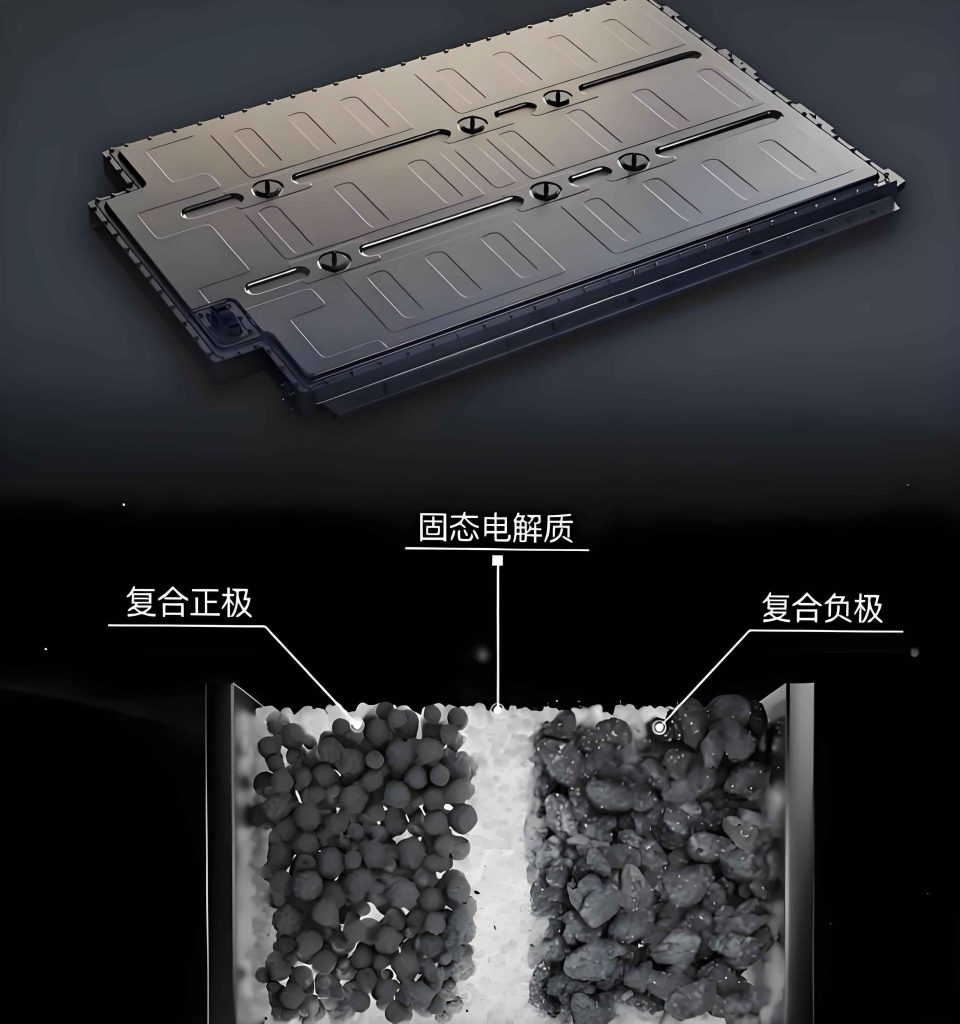
The progress in solid-state battery technology is not merely academic; it has profound implications for integrating renewable energy sources into urban grids. For example, solid-state batteries could be deployed in conjunction with solar-powered streetlights, providing backup power during cloudy days or nights. The high energy density of solid-state batteries, often exceeding 400 Wh/kg in experimental setups, makes them ideal for space-constrained applications. Moreover, the safety profile of solid-state batteries—free from leakage or thermal runaway—aligns with the reliability demands of critical infrastructure like street lighting networks. As we develop these batteries further, their cycle life and stability are improving. A typical metric is the capacity retention over cycles, which for state-of-the-art solid-state batteries can now approach 90% after 500 cycles, a significant leap from earlier versions.
To quantify the advancements in solid-state battery performance, the following table compares key characteristics of traditional liquid-electrolyte batteries with emerging polymer-based solid-state batteries:
| Characteristic | Liquid-Electrolyte Lithium-ion Battery | Polymer-Based Solid-State Battery |
|---|---|---|
| Electrolyte State | Liquid (flammable) | Solid (non-flammable) |
| Energy Density | 200-300 Wh/kg | 300-500 Wh/kg (projected) |
| Operating Temperature Range | 0°C to 45°C typical | -20°C to 100°C achievable |
| Cycle Life (to 80% capacity) | 500-1000 cycles | 1000-2000 cycles (improving) |
| Safety | Risk of leakage and fire | Inherently safer, no thermal runaway |
| Ionic Conductivity at 25°C | ~10 mS/cm | ~1 mS/cm (enhanced variants) |
The development of solid-state batteries also involves complex electrochemistry. For instance, the lithium-ion transference number \(t_{Li^+}\), which indicates the fraction of current carried by lithium ions, is crucial for minimizing polarization. In PEO-based systems, \(t_{Li^+}\) can be increased by suppressing anion mobility through cross-linking or adding ceramic fillers. This is described by:
$$t_{Li^+} = \frac{\sigma_{Li^+}}{\sigma_{total}}$$
where \(\sigma_{Li^+}\) is the partial conductivity of lithium ions and \(\sigma_{total}\) is the total ionic conductivity. Recent studies have achieved \(t_{Li^+} > 0.6\) in solid-state batteries, compared to values around 0.2-0.3 in liquid electrolytes, leading to more efficient charge-discharge processes. Furthermore, the interfacial resistance between the solid electrolyte and electrodes is a critical factor. Using soft polymers like PEO can reduce this resistance due to better contact, but it may compromise mechanical strength. Thus, composite approaches that blend polymers with inorganic particles are being explored to balance conductivity and durability.
Looking ahead, the synergy between smart lighting systems and advanced energy storage like solid-state batteries could redefine urban energy management. Imagine a streetlight network where each pole is equipped with a small solid-state battery charged by integrated solar panels. During the day, excess energy is stored, and at night, the batteries power the LEDs, with the low-voltage control system dynamically adjusting brightness based on real-time data. This decentralized approach reduces grid dependency and enhances resilience. The solid-state battery’s ability to operate efficiently across a wide temperature range ensures reliability in diverse climates, from cold winters to hot summers.
In conclusion, the evolution of urban lighting through low-voltage control and LED upgrades, combined with the rapid progress in solid-state battery research, represents a powerful convergence toward sustainable cities. The technical details discussed here—from energy-saving formulas to ion transport mechanisms—highlight the depth of innovation in these fields. As we continue to refine these technologies, their integration will likely accelerate, driven by the dual needs of energy efficiency and environmental stewardship. The solid-state battery, in particular, stands as a cornerstone for future energy storage solutions, with its potential to revolutionize not only consumer electronics but also large-scale infrastructure. By embracing these advancements, we can build smarter, safer, and more energy-resilient urban environments for generations to come.