
As an observer and participant in the evolving landscape of electric vehicles, I have witnessed a significant shift in focus toward advanced energy storage solutions. The recent flurry of activity among automotive manufacturers and battery producers underscores a growing consensus: the future of electric mobility hinges on breakthroughs in battery technology. In particular, the development of solid-state batteries has captured the industry’s imagination, with semi-solid-state variants emerging as a pragmatic and promising intermediate step. This article delves into why semi-solid-state batteries are becoming the centerpiece of innovation, exploring their technical merits, comparative advantages, and the strategic imperatives driving their adoption.
The journey from traditional liquid electrolytes to solid-state batteries represents a paradigm shift in energy storage. Lithium-ion batteries with liquid electrolytes have dominated the market for decades, but inherent limitations—such as safety risks, energy density ceilings, and cycle life constraints—have spurred the search for alternatives. Solid-state batteries, which replace the liquid electrolyte with a solid material, offer a transformative potential. However, the path to commercialization is fraught with challenges. It is here that semi-solid-state batteries, which blend solid and liquid electrolytes, present a compelling compromise. They mitigate many drawbacks of liquid batteries while avoiding the steep hurdles of fully solid-state systems.
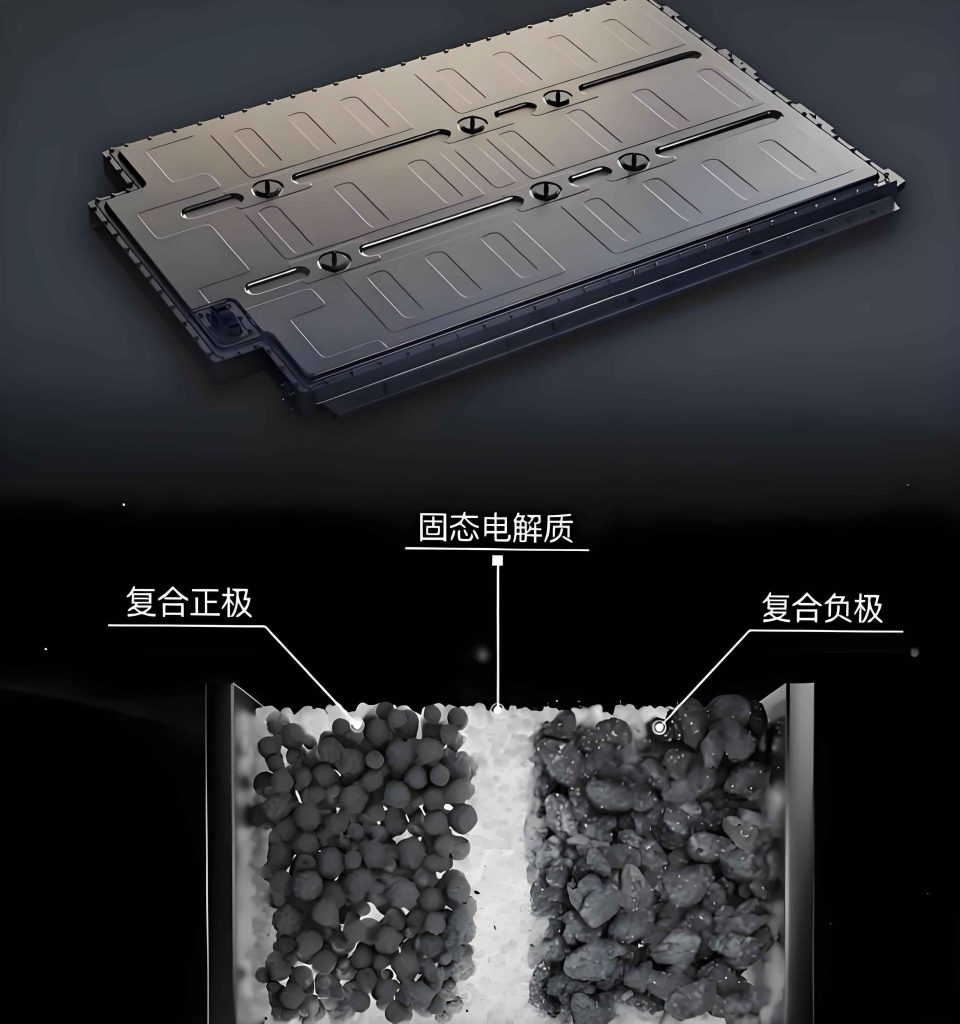
To understand the position of semi-solid-state batteries, it is essential to categorize lithium batteries based on electrolyte composition. Broadly, they can be divided into four classes: liquid, semi-solid, quasi-solid, and all-solid-state batteries. The latter three are often grouped under the umbrella term “solid-state batteries,” but distinctions in electrolyte content dictate their performance and feasibility. The following table summarizes these categories:
| Battery Type | Electrolyte Composition | Liquid Electrolyte Content | Typical Energy Density (Wh/kg) | Safety Profile |
|---|---|---|---|---|
| Liquid Lithium-ion | Liquid organic solvents | ~20% by mass | 250-300 | Moderate (risk of leakage, thermal runaway) |
| Semi-Solid-State | Mixed solid and liquid electrolytes | <10% by mass | 300-400 | High (reduced flammability) |
| Quasi-Solid-State | Predominantly solid with minimal liquid | <5% by mass | 350-450 | Very High |
| All-Solid-State | Entirely solid electrolyte | 0% | 400-500+ | Excellent (no leakage, stable) |
This classification highlights that semi-solid-state batteries occupy a middle ground, offering a balance that is technologically accessible and economically viable. The core advantages of semi-solid-state batteries can be distilled into three pillars: energy density, safety, and production cost. Let me unpack each of these in detail.
First, energy density—the amount of energy stored per unit mass—is a critical metric for electric vehicles, directly influencing driving range. Traditional liquid lithium-ion batteries typically achieve energy densities around 250-300 Wh/kg. In contrast, semi-solid-state batteries have demonstrated significant improvements. For instance, some recent prototypes report energy densities approaching 400 Wh/kg, with laboratory samples even hinting at突破s beyond 500 Wh/kg. This leap can be understood through the fundamental relationship:
$$ \text{Energy Density} = \frac{E}{m} $$
where \( E \) is the total energy capacity and \( m \) is the mass of the battery. In semi-solid-state batteries, the use of solid electrolytes allows for higher voltage cathodes and lithium metal anodes, which boost \( E \) without proportionally increasing \( m \). Moreover, the reduction in liquid electrolyte content reduces inert mass, enhancing the specific energy. Compared to leading liquid battery designs like the 4680 cell (300 Wh/kg) or advanced pack architectures (255 Wh/kg), semi-solid-state variants clearly offer a superior energy density profile. This translates to ranges exceeding 1000 km on a single charge, a milestone that has already been validated in real-world tests.
Second, safety is paramount in battery design, given the risks of thermal runaway—a chain reaction leading to fires or explosions. Liquid electrolytes, often composed of flammable organic carbonates, are a primary culprit. In semi-solid-state batteries, the electrolyte content is drastically reduced to below 10% by mass, and the solid components exhibit higher thermal stability. This composition lowers the probability of catastrophic failure. The safety enhancement can be modeled through factors like thermal conductivity and electrochemical stability. For example, the solid electrolyte interface (SEI) in semi-solid-state batteries tends to be more robust, resisting dendrite formation that can cause short circuits. The improved safety profile makes semi-solid-state batteries particularly attractive for automotive applications, where battery integrity under stress is non-negotiable.
Third, production cost is a decisive factor in commercialization. All-solid-state batteries face daunting cost barriers due to immature manufacturing processes and expensive materials like sulfide or oxide solid electrolytes. Semi-solid-state batteries, however, leverage existing lithium-ion production lines with minimal modifications. The overlap in assembly processes—such as electrode coating, stacking, and encapsulation—reduces capital expenditure. To quantify this, consider the cost breakdown for battery cells. A simplified cost model might include:
$$ C_{\text{total}} = C_{\text{materials}} + C_{\text{manufacturing}} + C_{\text{R&D}} $$
For semi-solid-state batteries, \( C_{\text{materials}} \) is slightly higher than for liquid batteries due to solid electrolyte additives, but \( C_{\text{manufacturing}} \) remains low because of production line compatibility. In contrast, for all-solid-state batteries, both \( C_{\text{materials}} \) and \( C_{\text{manufacturing}} \) are elevated, making them prohibitively expensive for mass adoption in the near term. Thus, semi-solid-state batteries offer a cost-effective pathway to next-generation performance.
The momentum behind semi-solid-state batteries is not merely theoretical; it is reflected in aggressive industry movements. Major automotive players are racing to integrate this technology into their fleets. Several companies have announced plans to launch vehicles equipped with semi-solid-state batteries within the next few years, targeting commercialization as early as 2024. These initiatives are driven by the desire to gain a competitive edge in range and safety, which are key purchase considerations for consumers. Moreover, battery manufacturers are equally active, with numerous firms investing in research and development of semi-solid-state systems. This collaborative push spans material science, cell design, and pack integration, indicating a broad-based belief in the technology’s potential.
To further illustrate the performance benefits, let’s examine a comparative analysis of key battery parameters. The table below expands on earlier data, incorporating cycle life and cost projections:
| Parameter | Liquid Lithium-ion | Semi-Solid-State | All-Solid-State (Projected) |
|---|---|---|---|
| Energy Density (Wh/kg) | 250-300 | 300-400 | 400-500+ |
| Cycle Life (to 80% capacity) | 500-1000 cycles | 1000-1500 cycles | 2000+ cycles |
| Safety (Thermal Runaway Risk) | High | Moderate to Low | Very Low |
| Production Cost (per kWh) | $100-$150 | $120-$180 | $200-$300+ |
| Manufacturing Readiness | Mature | Near-term scalable | Long-term R&D |
This table underscores that semi-solid-state batteries offer a sweet spot: they deliver substantial improvements in energy density and cycle life over liquid batteries, while maintaining cost and manufacturability advantages over all-solid-state versions. The cycle life enhancement, for instance, stems from the stable electrode-electrolyte interface, which minimizes degradation. The number of cycles \( N \) can be related to the depth of discharge (DOD) and operating conditions through empirical models like:
$$ N = N_0 \cdot \exp\left(-\frac{E_a}{kT}\right) $$
where \( N_0 \) is a material-dependent constant, \( E_a \) is the activation energy for degradation, \( k \) is Boltzmann’s constant, and \( T \) is temperature. In semi-solid-state batteries, the higher \( E_a \) for side reactions contributes to longer \( N \).
However, the development of solid-state batteries is not without challenges. For all-solid-state batteries, issues such as interfacial resistance, brittle electrolyte materials, and scalability remain unresolved. These technical hurdles delay widespread adoption. Semi-solid-state batteries, by incorporating some liquid, alleviate interfacial problems while still reaping many benefits of solid electrolytes. This pragmatic approach explains why many industry stakeholders view semi-solid-state technology as a critical stepping stone. It allows for incremental innovation, building on existing knowledge and infrastructure.
The strategic implications are profound. As electric vehicle penetration accelerates, battery performance becomes a key differentiator. Automakers are under pressure to offer longer ranges, faster charging, and enhanced safety—all areas where semi-solid-state batteries excel. The collaboration between automotive and battery sectors is intensifying, with joint ventures and memoranda of understanding becoming commonplace. These partnerships aim to co-develop tailored semi-solid-state solutions that meet specific vehicle requirements. Moreover, the supply chain for solid-state battery materials, such as solid electrolytes and advanced electrodes, is evolving, potentially reducing costs over time.
Looking ahead, the trajectory for semi-solid-state batteries appears bright. In the short to medium term, we can expect to see gradual integration into premium electric vehicles, followed by broader adoption as economies of scale kick in. The technology is poised to address range anxiety—a persistent barrier to electric vehicle adoption—by enabling 1000-km drives on a single charge. Furthermore, as safety standards tighten and consumer expectations rise, the inherent safety of semi-solid-state systems will become a marketing advantage. In the longer term, advancements in semi-solid-state batteries may pave the way for fully solid-state versions, creating a continuum of innovation.
To quantify the potential impact, consider the global battery market projections. Analysts estimate that solid-state battery adoption could capture a significant share by 2030, with semi-solid-state variants leading the charge. The growth in demand for high-energy-density batteries will be driven not only by automotive applications but also by aerospace, grid storage, and portable electronics. Each sector will benefit from the unique attributes of semi-solid-state technology.
In conclusion, the rise of semi-solid-state batteries represents a pivotal moment in the energy storage revolution. By harmonizing high energy density, improved safety, and manageable costs, they address the core pain points of current battery systems. As I reflect on the industry’s direction, it is clear that semi-solid-state batteries are more than a stopgap; they are a viable and potent solution that aligns with technological readiness and market needs. The ongoing investments and collaborations signal a collective commitment to harnessing this technology’s potential. For anyone tracking the future of electric mobility, understanding and embracing the shift toward semi-solid-state batteries is essential. The journey toward a solid-state future is underway, and semi-solid-state batteries are lighting the path.