
The pursuit of higher energy density and intrinsic safety in electrochemical energy storage has driven intensive research beyond conventional lithium-ion batteries. In this context, the development of solid-state battery technology represents one of the most promising pathways. Replacing the flammable organic liquid electrolyte with a solid-state ion conductor could fundamentally eliminate leakage and combustion risks, while potentially enabling the use of high-capacity metallic lithium anodes and high-voltage cathodes. The core of this technological leap, however, lies not just in finding a solid electrolyte with high bulk ionic conductivity—a goal where significant progress has been made—but in mastering the complex, often resistive, and dynamically evolving interfaces between the solid electrolyte and the solid electrodes. It is at these buried interfaces where the ultimate performance, rate capability, and longevity of an all-solid-state battery are determined.
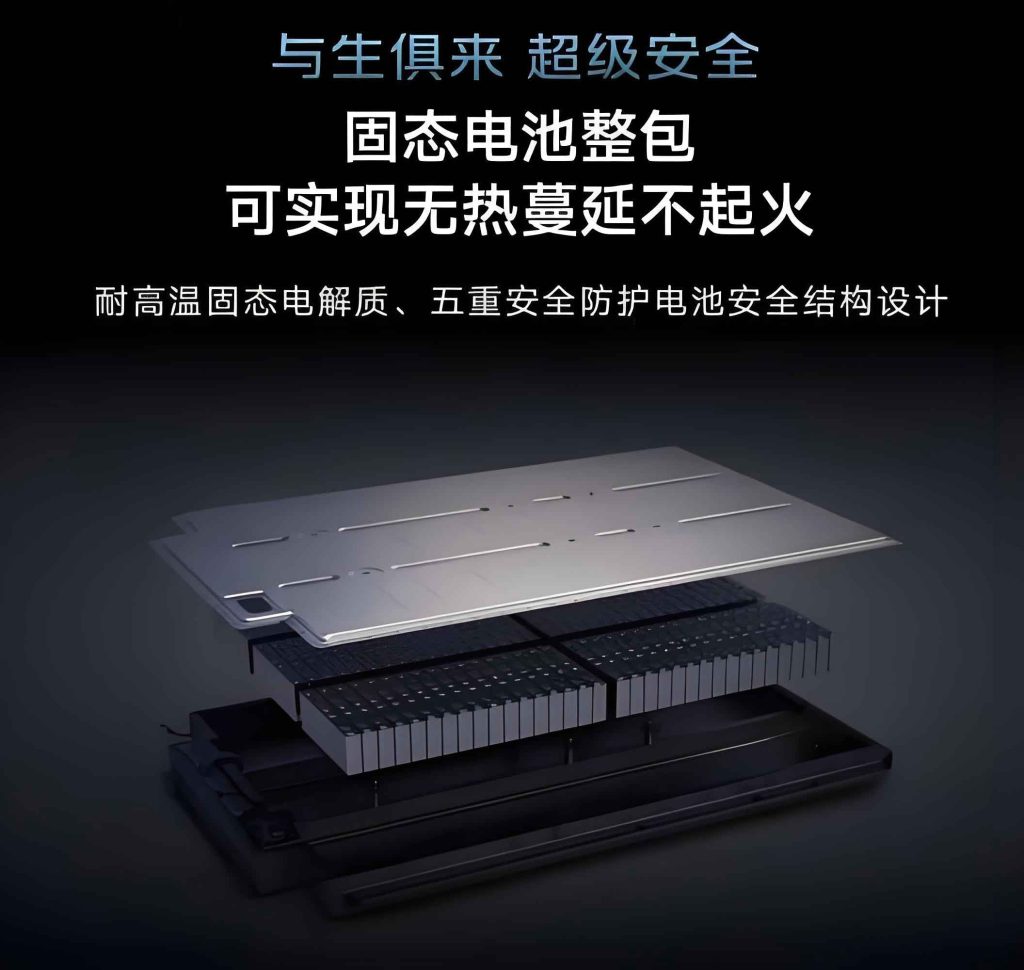
The transition from a liquid to a solid medium introduces a paradigm shift in interfacial electrochemistry. In liquid systems, the electrolyte conforms to the electrode surface, ensuring intimate contact and allowing for the diffusion of reaction products. In a solid-state battery, we are confronted with rigid-rigid contacts, where poor physical adhesion, elemental interdiffusion, electrochemical instability, and mechanical stresses from electrode volume changes converge to create formidable barriers. My focus here is to dissect the current understanding and challenges associated with the interfaces of two leading classes of inorganic solid electrolytes: sulfide-based and garnet-type oxide conductors. Both have demonstrated room-temperature ionic conductivities rivaling those of liquid electrolytes ($\sigma_{Li^+} \sim 10^{-3}$ to $10^{-2}$ S cm$^{-1}$), yet their interfacial stories are distinctly different and equally critical.
Sulfide-Based Solid Electrolytes: High Conductivity Meets Interfacial Complexity
Sulfide electrolytes, with their polarizable sulfur framework enabling wide ionic pathways and weak Li$^+$ binding, have delivered some of the highest Li$^+$ conductivities reported. The evolution from thio-LISICONs to the landmark Li$_{10}$GeP$_2$S$_{12}$ (LGPS) and its derivatives has been remarkable. These materials often crystallize in structures offering interconnected pathways for lithium ion hopping.
| Material Composition | Room-Temperature $\sigma_{Li^+}$ (S cm$^{-1}$) | Key Structural Note |
|---|---|---|
| Li$_{3.25}$Ge$_{0.25}$P$_{0.75}$S$_4$ | $2.2 \times 10^{-3}$ | Thio-LISICON |
| Li$_{10}$GeP$_2$S$_{12}$ (LGPS) | $1.2 \times 10^{-2}$ | 3D framework with 1D channels |
| Li$_{9.54}$Si$_{1.74}$P$_{1.44}$S$_{11.7}$Cl$_{0.3}$ | $~2.5 \times 10^{-2}$ | Highest reported conductivity |
| Li$_{6}$PS$_5$Cl (Argyrodite) | $~1.3 \times 10^{-3}$ | Good stability, processable |
The ionic transport in these frameworks can often be described by an Arrhenius-type relation for conductivity:
$$\sigma T = A \exp\left(\frac{-E_a}{k_B T}\right)$$
where $E_a$ is the activation energy for ion migration, $k_B$ is Boltzmann’s constant, and $T$ is temperature. For best-in-class sulfides, $E_a$ can be as low as 0.2 eV.
Intrinsic Stability: Air and Lithium Metal
A primary practical challenge with sulfides is their hygroscopic nature, reacting with atmospheric moisture to release toxic H$_2$S gas:
$$\text{Li}_2\text{S (in electrolyte)} + \text{H}_2\text{O} \rightarrow \text{Li}_2\text{O} + \text{H}_2\text{S} \uparrow$$
Strategies like halogen (Cl$^-$, I$^-$) or oxide (O$^{2-}$) doping into the sulfide matrix have proven effective in passivating the surface and suppressing H$_2$S generation, a necessary step for practical solid-state battery manufacturing.
More critically, the thermodynamic stability window of most sulfide electrolytes against lithium metal is narrow. Computational studies consistently predict reduction potentials around 1.6–1.7 V vs. Li/Li$^+$. Upon contact with Li metal, decomposition occurs, forming an interphase layer. The composition and properties of this interphase dictate interfacial stability. For example:
$$\text{Li}_{10}\text{GeP}_2\text{S}_{12} + x\text{Li}^+ + x e^- \rightarrow \text{Li}_3\text{P} + \text{Li}_2\text{S} + \text{Li}_{15}\text{Ge}_4$$
The formation of electronically conductive Li-Ge alloys in LGPS prevents a self-passivating, stable solid electrolyte interphase (SEI), leading to continuous interphase growth and rising impedance. In contrast, electrolytes like Li$_3$PS$_4$ or Li$_6$PS$_5$Cl form interphases primarily composed of Li$_3$P and Li$_2$S, which are ionically conducting but electronically insulating, leading to a more stable, passivating layer. This dichotomy highlights a key design rule: sulfide electrolytes for Li metal anodes should avoid reducible cations (Ge, Sn) that form conductive reduction products.
The Cathode Interface: The Space Charge Challenge
The interface between sulfide electrolytes and oxide cathode materials (e.g., LiCoO$_2$, NMC) presents a unique and debilitating phenomenon: the formation of a space charge layer. Due to the large difference in chemical potential of Li$^+$ between the oxide (high affinity) and the sulfide (lower affinity), Li$^+$ spontaneously migrates from the electrolyte into the cathode upon contact. If the cathode is a mixed ionic-electronic conductor (MIEC), electrons in the cathode compensate for the incoming Li$^+$, preventing a compensating space charge in the cathode but exacerbating Li$^+$ depletion in the electrolyte. This creates a high-resistance Li$^+$-depleted zone in the sulfide electrolyte right at the interface.
We can model the resulting potential drop $\Delta \phi$ and depletion layer width $W$ using a simplified Mott-Schottky approach for the electrolyte side:
$$W = \sqrt{\frac{2\epsilon_0 \epsilon_r \Delta \phi}{e N_A}}$$
where $\epsilon_r$ is the dielectric constant, $e$ is electron charge, and $N_A$ is the acceptor-like Li vacancy concentration. This high impedance layer is often the rate-limiting step in a sulfide-based solid-state battery, even with a high bulk-conductivity electrolyte.
The universal mitigation strategy is the introduction of an ultrathin, ion-conducting but electron-insulating buffer layer (e.g., LiNbO$_3$, Li$_4$Ti$_5$O$_{12}$, Li$_2$SiO$_4$-Li$_3$PO$_4$) on the cathode particle surface. This layer acts as a mediator, matching the chemical potentials and preventing direct sulfide-oxide contact and the resultant Li$^+$ transfer. The effectiveness of various coatings is summarized below:
| Buffer Layer | Cathode Material | Key Function |
|---|---|---|
| LiNbO$_3$, LiTaO$_3$ | LiCoO$_2$ | High Li$^+$ conductivity, blocks element diffusion |
| Li$_4$Ti$_5$O$_{12}$ | NMC, LiMn$_2$O$_4$ | Stable “zero-strain” material, good interface stability |
| Amorphous Li$_2$O-SiO$_2$ | LiCoO$_2$ | Conformal coating, low processing temperature |
| Al$_2$O$_3$ (by ALD) | LiCoO$_2$ | Suppresses Co and P/S interdiffusion |
Garnet-Type Oxide Electrolytes: Stability with Integration Hurdles
Garnet-type oxides, with the general formula Li$_7$La$_3$Zr$_2$O$_{12}$ (LLZO), offer a compelling alternative due to their excellent reported stability against lithium metal and a wider perceived electrochemical window. The cubic phase, stabilized by doping with Al, Ga, Ta, or Nb, provides a 3D percolating network for Li$^+$ migration. The ionic conductivity is governed by the concentration and connectivity of Li vacancies, which can be tailored by aliovalent doping:
$$\text{Li}_7\text{La}_3\text{Zr}_2\text{O}_{12} + x\text{Ta}^{5+} \rightarrow \text{Li}_{7-5x}\text{La}_3\text{Zr}_{2-x}\text{Ta}_x\text{O}_{12} + 5x\text{Li}^+_{\text{vacancy}}$$
Optimal doping leads to conductivities in the mid $10^{-4}$ to $10^{-3}$ S cm$^{-1}$ range.
Surface Instability and “Lithiophobicity”
Despite being oxides, garnets are not inert. The surface Li$^+$ is reactive towards both CO$_2$ and moisture in air, forming Li$_2$CO$ _3$ and LiOH/Li$_2$CO$_3$ layers:
$$2\text{LLZO (surface Li)} + \text{CO}_2 \rightarrow \text{Li}_2\text{CO}_3 + \text{LLZO}_{\text{Li-deficient}}$$
This insulating carbonate layer significantly increases interfacial resistance and is detrimental to wetting by molten lithium. The garnet surface is inherently “lithiophobic,” leading to poor physical contact and enormous interfacial impedance in a simple Li|LLZO|Li symmetric cell.
The Lithium Metal Interface: Beyond Thermodynamic Stability
While cyclic voltammetry often suggests exceptional stability up to 6 V, detailed calculations indicate a thermodynamic reduction window starting near 0.05 V vs. Li/Li$^+$. The kinetic stability is good, but the primary issue is physical. The high interfacial resistance from poor contact can lead to localized current hotspots during plating. Furthermore, lithium dendrite propagation through garnet electrolytes has been repeatedly observed. Contrary to early shear-modulus arguments ($G_{\text{electrolyte}} > G_{\text{Li}}$), dendrites primarily propagate along grain boundaries or through interconnected pores. The critical current density $i_{\text{crit}}$ before short-circuit is a function of contact quality, electrolyte microstructure, and temperature:
$$i_{\text{crit}} \propto \frac{\sigma_{\text{GB}}}{\eta} \cdot f(\text{Porosity, Tortuosity})$$
where $\sigma_{\text{GB}}$ is the grain boundary conductivity and $\eta$ is the overpotential.
Solutions focus on creating a “lithiophilic” interface. This involves depositing an ultrathin intermediate layer (e.g., Au, Si, Al$_2$O$_3$, Ge) that alloys with or is wetted by lithium, ensuring intimate contact and homogeneous current distribution. For instance, a Si coating reacts in situ to form a Li-Si alloy, dramatically reducing the contact angle and impedance:
$$\text{Si} + x\text{Li}^+ + x e^- \leftrightarrow \text{Li}_x\text{Si} \quad (\text{lithiophilic, ionically conductive})$$
The Cathode Interface: Interdiffusion and Resistive Phases
The oxide-oxide interface between a cathode like LiCoO$_2$ and LLZO does not suffer from the same space charge effect as sulfides. The main challenges are ensuring physical intimacy and preventing high-temperature interdiffusion during processing. Sintering or depositing cathodes directly on garnet at temperatures >500°C often leads to the formation of high-resistance interfacial layers (e.g., La$_2$CoO$_4$, La$_2$Zr$_2$O$_7$) due to cation interdiffusion:
$$\text{LiCoO}_2 + \text{LLZO} \xrightarrow{\Delta T} \text{La}_2\text{CoO}_4 + \text{ZrO}_2 + \ldots$$
These layers severely impede Li$^+$ transfer.
Integration strategies therefore avoid high-temperature direct contact. Common approaches include:
1. Soft Interlayers: Using low-melting-point lithium salts (Li$_3$BO$_3$, Li$_2$CO$_3$-Li$_3$BO$_3$) that melt during cell assembly to flow and create a conformal, ion-conducting glue between cathode particles and the electrolyte pellet.
2. Composite Cathodes: Blending garnet electrolyte powder with active material and carbon in a polymer-based ionic conductor (e.g., PEO-LiTFSI, PAN-based gel) to create a percolating 3D network at modest temperatures.
3. Diffusion Barriers: Sputtering or ALD of nanoscale Nb, Ta, or LiNbO$_3$ layers on the garnet surface before cathode application to block interdiffusion during mild heat treatment.
Advanced Techniques for Probing Buried Solid-Solid Interfaces
Understanding these complex interfaces demands characterization tools that can provide chemical, structural, and dynamic information across buried boundaries. Recent advances have been pivotal.
- Scanning Transmission Electron Microscopy (STEM) with Electron Energy Loss Spectroscopy (EELS): This combination offers atomic-scale imaging and chemical mapping. It has directly revealed the formation of interfacial decomposition products (e.g., Co-O species at LiCoO$_2$/LiPON interfaces) and the subtle structural transformation from cubic to tetragonal LLZO at the Li metal contact, a change invisible to bulk techniques.
- Time-of-Flight Secondary Ion Mass Spectrometry (ToF-SIMS): With high surface sensitivity and depth profiling capability, SIMS can map elemental distributions across interfaces. It has been used to show Al surface segregation in doped LiCoO$_2$, which naturally creates a protective layer mitigating space charge effects with sulfides.
- In Situ/Operando Solid-State Nuclear Magnetic Resonance (ss-NMR): NMR is unique in probing local Li environments and dynamics. $^7$Li exchange NMR can quantitatively track the rate of Li$^+$ transfer across an interface between two different solid phases (e.g., Li$_2$S electrode and Li$_6$PS$_5$Cl electrolyte), directly measuring the interfacial ionic conductivity and identifying it as the performance bottleneck.
The spectral evolution can be modeled to extract exchange rates $k$, providing kinetic insight:
$$I(t_{\text{mix}}) = I_0 \cdot \left[1 – \exp(-k \cdot t_{\text{mix}})\right]$$
where $t_{\text{mix}}$ is the mixing time. - X-ray Photoelectron Spectroscopy (XPS) with Sputter Depth Profiling: In situ XPS cells allow for the direct observation of interfacial reactions, such as the stepwise reduction of sulfides (P$^{5+}$ to P$^{0}$, S$^{2-}$ formation) upon lithium deposition, distinguishing between stable and growing interphases.
Conclusion and Perspective
The journey towards a practical, high-performance solid-state battery is fundamentally a journey of interfacial engineering. We have moved beyond the simple quest for high bulk conductivity. The landscape now requires a meticulous, material-specific understanding of how solid electrolyte surfaces behave in air, how they react (thermodynamically and kinetically) with extreme electrodes like lithium metal, and how they chemically and electrostatically communicate with cathode particles.
For sulfide-based systems, the path involves designing electrolytes with intrinsic stability against Li (avoiding reducible cations) and against moisture, while universally deploying engineered buffer layers at the cathode interface to annihilate the space charge layer. For garnet oxides, the challenge is one of integration—developing scalable methods to create lithiophilic, low-resistance interfaces with the anode and to bond the cathode with minimal high-temperature interdiffusion. In both cases, the mechanical properties and the need to manage stress from electrode volume changes add another layer of complexity, often requiring external stack pressure for optimal performance.
The future of the solid-state battery will be built on a multidisciplinary approach that combines advanced computational materials design to predict stable interface compositions, innovative thin-film and processing technologies to fabricate these designed interfaces, and a suite of sophisticated in situ and operando characterization tools to validate and understand interfacial evolution in real time. The solid-solid electrochemistry is undoubtedly more complex than its liquid-based counterpart, but the potential rewards—in safety, energy density, and longevity—are transformative. Mastering the interface is the key that will unlock this potential.