
As a key player in the new energy sector, I have witnessed firsthand the transformative potential of solid-state batteries. This technology represents not just an emerging “new track” for the global energy transition but a critical pillar for achieving carbon neutrality goals. Based on practical enterprise development and deep industry insights, I present a comprehensive framework to propel the high-quality development of the solid-state battery industry chain. The solid-state battery, with its superior safety and energy density, is poised to redefine energy storage and electric mobility. Here, I outline five concrete suggestions, enriched with analytical tables and formulas, to chart a path for advancement.
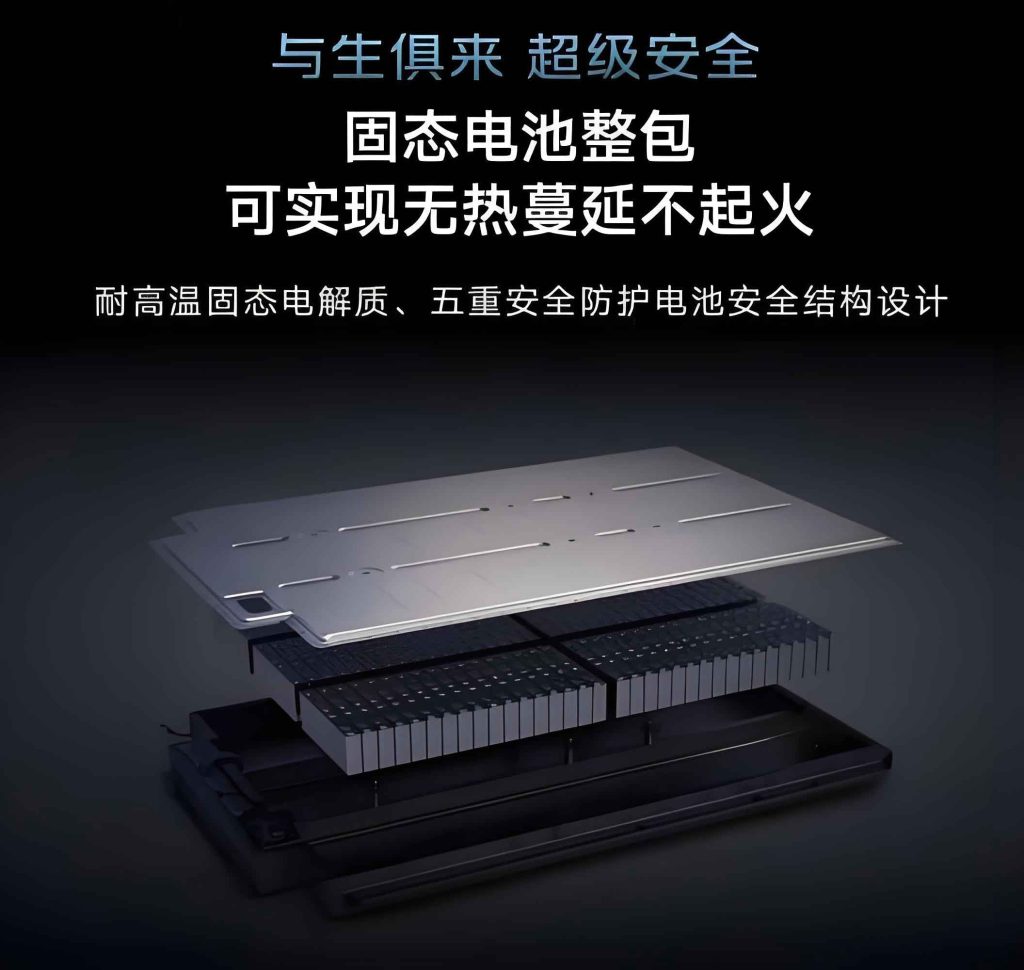
The evolution of the solid-state battery hinges on overcoming fundamental material and engineering hurdles. From my perspective, strategic intervention is needed across the entire value chain. Let’s delve into the specifics.
1. Establishing a Specialized R&D Fund to Tackle Critical Material Bottlenecks
The core challenge in solid-state battery commercialization lies in material science. Key components like solid electrolytes and advanced electrodes present “chokepoint” issues that stifle progress. I propose the creation of a municipal-level solid-state battery专项研发基金 (special R&D fund), focusing on three pivotal directions to accelerate innovation.
First, targeting cost reduction in solid electrolytes. Sulfide and oxide-based solid electrolytes are promising but currently expensive. The fund should support research to slash costs by over 50%. This can be modeled by a cost function. If $C_{current}$ is the current cost per kilogram of electrolyte, the target cost $C_{target}$ after R&D intervention is:
$$ C_{target} = 0.5 \times C_{current} $$
Further, the ionic conductivity $\sigma_{ionic}$ of these materials, crucial for battery performance, often follows the Arrhenius equation, where improvement is key:
$$ \sigma_{ionic} = A \exp\left(-\frac{E_a}{kT}\right) $$
Here, $A$ is a pre-exponential factor, $E_a$ is the activation energy for ion conduction, $k$ is Boltzmann’s constant, and $T$ is temperature. Reducing $E_a$ through material design is a primary R&D goal.
Second, advancing next-generation electrode materials like lithium-rich manganese-based cathodes and lithium metal anodes. The focus should be on engineering stability for mass production. The capacity retention over cycles $Q(n)$ can be expressed as:
$$ Q(n) = Q_0 \times \left(1 – D\right)^n $$
where $Q_0$ is initial capacity, $D$ is the decay rate per cycle, and $n$ is cycle number. R&D aims to minimize $D$ to below 0.05% per cycle for long-life solid-state batteries.
Third, developing novel auxiliary materials such as composite current collectors and dry-process binders to fill local industrial gaps. The table below summarizes the key focus areas and targets for the R&D fund.
| Material Category | Specific Targets | Performance Metric Goal | Cost Reduction Target |
|---|---|---|---|
| Sulfide Solid Electrolyte | Enhance ionic conductivity, air stability | $\sigma_{ionic} > 10^{-2}$ S/cm at 25°C | > 50% from current |
| Oxide Solid Electrolyte | Improve interface compatibility, reduce thickness | Area-specific resistance < 10 Ω·cm² | > 50% from current |
| Li-rich Mn-based Cathode | Achieve structural stability, high voltage | Capacity > 300 mAh/g, $D < 0.05\%$/cycle | N/A (focus on stability) |
| Lithium Metal Anode | Suppress dendrite growth, ensure cycling safety | Coulombic efficiency > 99.5% over 500 cycles | N/A (focus on process) |
| Composite Current Collector | Develop lightweight, high-strength alternatives | Weight reduction > 40% vs. conventional Cu foil | Achieve cost parity |
Additionally, enterprises undertaking national major projects should receive matching funds of 15% of total project investment, fostering breakthroughs in critical technical nodes for the solid-state battery ecosystem.
2. Formulating a Local Procurement Directory to Strengthen “Anchor Enterprise + SME” Collaboration
The current solid-state battery industry chain suffers from fragmented material and equipment suppliers, with local procurement rates below 40%. This inefficiency hampers rapid iteration and cost control. I recommend a two-pronged approach to enhance synergy.
First, compile a “Municipal Solid-State Battery Industry Chain Procurement Recommendation Directory.” This directory should highlight local enterprises specializing in electrolytes, novel conductive agents, and other key components. The goal is to create a visible platform for anchor firms (链主企业) to partner with SMEs through “order + technology” collaborations. The effectiveness of such partnerships can be assessed by the local content ratio $LCR$, which we aim to increase:
$$ LCR = \frac{\text{Value of locally sourced components}}{\text{Total value of components}} \times 100\% $$
The target is to boost $LCR$ from below 40% to over 70% within five years.
Second, establish a “Municipal Solid-State Battery Industry Alliance.” This body would facilitate matchmaking, standard-setting, and打通 (unclogging) the bottlenecks between R&D, pilot testing, and mass production. The alliance would accelerate the local transformation of scientific achievements into commercial solid-state battery products. The table below outlines potential collaboration frameworks.
| Collaboration Model | Role of Anchor Enterprise | Role of SME | Expected Outcome |
|---|---|---|---|
| Technology Licensing & Joint Development | Provide core patent licenses, co-develop tailored materials | Execute focused R&D, scale-up production processes | Faster material iteration for solid-state battery |
| Long-term Supply Agreement | Commit to volume purchases, provide technical feedback | Guarantee supply stability, invest in dedicated capacity | Reduced supply chain risk for solid-state battery |
| Standard Co-creation | Lead industry standard working groups | Contribute niche expertise, test new protocols | Stronger local voice in global solid-state battery standards |
By fostering such ecosystems, we can build a resilient and innovative local supply chain for the solid-state battery industry.
3. Opening Three Major Demonstration Scenarios to Accelerate Market Adoption
The solid-state battery requires real-world validation across diverse applications to drive technological iteration. I propose leveraging our strengths by deploying three flagship demonstration projects.
1. Grid-Side Energy Storage Scenarios: Construct “Solid-State Battery Energy Storage Demonstration Stations” in areas like data centers and urban sub-centers. These stations would showcase the safety and long-life advantages of solid-state batteries for stationary storage. The levelized cost of storage (LCOS) is a key metric. For a solid-state battery system, LCOS can be modeled as:
$$ LCOS = \frac{\text{Total Capital Cost} + \sum_{t=1}^{N} \frac{O\&M_t}{(1+r)^t} + \sum_{t=1}^{N} \frac{\text{Replacement Cost}_t}{(1+r)^t}}{\sum_{t=1}^{N} \frac{E_{discharged, t}}{(1+r)^t}} $$
where $r$ is discount rate, $N$ is project lifetime, $O\&M_t$ is operation & maintenance cost in year $t$, and $E_{discharged, t}$ is energy discharged. Demonstrations aim to prove a lower LCOS for solid-state batteries versus incumbent technologies due to longer cycle life (higher $N$) and lower $O\&M$ from enhanced safety.
2. Low-Altitude Power Scenarios: Launch “Solid-State Battery Low-Altitude Equipment Demonstration Projects” for emergency response, urban inspection, and logistics drones. The high energy density of solid-state batteries is critical here. The flight time $T_{flight}$ of a drone is approximately:
$$ T_{flight} \approx \frac{\eta \times E_{battery}}{P_{power}} $$
where $\eta$ is system efficiency, $E_{battery}$ is the battery’s energy content (in Wh), and $P_{power}$ is average power draw. Solid-state batteries, with potentially higher $E_{battery}$ for the same weight, can extend $T_{flight}$ significantly. Subsidies for local drone firms to procure local solid-state battery packs would stimulate demand.
3. Humanoid Robot Scenarios: Initiate solid-state battery demonstration applications in humanoid robots within industrial parks. The power-to-weight ratio is paramount. Supporting anchor enterprises to co-develop integrated “battery-robot” solutions with manufacturers will close the “technology-product-scenario” loop. The table below details these scenarios.
| Scenario | Key Solid-State Battery Advantage | Performance Metric to Validate | Potential Local Application |
|---|---|---|---|
| Grid Energy Storage | Safety (non-flammable), Long Cycle Life | Cycle life > 15,000 cycles, Round-trip efficiency > 95% | Backup power for data centers, peak shaving for urban grids |
| Low-Altitude Drones | High Energy Density, Wide Operating Temperature | Specific energy > 400 Wh/kg, Operation from -20°C to 60°C | Emergency medical delivery, infrastructure monitoring |
| Humanoid Robots | High Power Density, Compact Form Factor | Volumetric energy density > 1000 Wh/L, Peak discharge > 5C | Manufacturing assistants, elderly care companions |
These demonstrations will create early markets, provide invaluable feedback, and position our region as a leader in solid-state battery applications.
4. Implementing Tiered Policy Support to Reduce Enterprise Development Costs
The initial mass-production phase for solid-state batteries involves massive capital expenditure. Companies face pressures from land, energy consumption, and financing. I suggest a three-fold policy optimization to lower barriers.
Land and Energy Consumption Incentives: Prioritize industrial land allocation for solid-state battery production bases. For energy consumption indicators, apply a “green industry” standard granting a 10% reduction. If the standard annual energy quota is $E_{standard}$, the granted quota $E_{granted}$ would be:
$$ E_{granted} = E_{standard} \times 1.10 $$
This directly cuts operational costs.
Market Development Support: Provide a subsidy of 5% of the purchase amount for local enterprises procuring locally produced solid-state batteries. For example, if a municipal fleet of sanitation vehicles or commuter buses replaces batteries with local solid-state battery packs costing $V_{total}$, the subsidy $S$ is:
$$ S = 0.05 \times V_{total} $$
This stimulates initial demand and helps achieve economies of scale for the solid-state battery industry.
Standards Setting Encouragement: Offer monetary rewards for enterprises leading or participating in international standard-setting for solid-state batteries. This enhances our global influence. The reward structure can be simple: a fixed award for leading ($R_{lead}$) and for participating ($R_{part}$):
$$ R_{lead} = \text{1,000,000 CNY (approx. 100,000 USD)}, \quad R_{part} = \text{500,000 CNY (approx. 50,000 USD)} $$
The table below summarizes this gradient policy framework.
| Policy Area | Specific Measure | Quantifiable Benefit | Objective |
|---|---|---|---|
| Resource Access | Priority land allocation; 10% energy quota increase | Reduced time-to-build; Lower utility costs | Accelerate solid-state battery gigafactory setup |
| Demand Creation | 5% subsidy on local procurement of solid-state batteries | Direct cost offset for early adopters | Jumpstart local market for solid-state battery |
| Competitive Edge | Rewards for leading/participating in international standards | Financial recognition and prestige | Secure intellectual leadership in solid-state battery tech |
Such policies will create a fertile ground for solid-state battery manufacturing and innovation to thrive.
5. Perfecting the Talent Cultivation Mechanism to Fortify the Industrial Foundation
The interdisciplinary nature of solid-state battery R&D—spanning materials science, electrochemistry, and mechanical engineering—creates a talent gap, especially in high-end R&D and mass-production工艺 (process engineering). I propose a “Municipal Solid-State Battery Talent Special Plan” led by human resources authorities.
First,共建 (co-establish) practical training bases with top universities. Enterprises should定向接收 (directly receive) interns annually. The talent pipeline growth can be modeled. If $N_{grad}$ is the number of relevant graduates annually and $p_{retain}$ is the proportion retained by local industry, the annual talent influx $I_{talent}$ is:
$$ I_{talent} = N_{grad} \times p_{retain} $$
The plan aims to increase $p_{retain}$ from a baseline to over 60% through targeted internships and job placements in the solid-state battery sector.
Second, offer attractive packages for overseas high-level talents, including housing subsidies and priority school enrollment for children. The total compensation package $C_{total}$ can be expressed as a sum of base salary $S_{base}$, housing benefit $B_{housing}$, and other perks:
$$ C_{total} = S_{base} + B_{housing} + \sum \text{Other Benefits} $$
Making $C_{total}$ competitive is crucial to attract global experts in solid-state battery technology.
Third, encourage企业与高校联合设立 (joint establishment of) “Solid-State Battery Scholarships” to incentivize young talent. The scholarship fund $F_{scholarship}$ could be a joint contribution from industry and government, awarding $A_{scholar}$ per student to $n$ students annually:
$$ F_{scholarship} = n \times A_{scholar} $$
The table below outlines the multi-channel talent strategy.
| Talent Channel | Key Initiative | Target Group | Expected Outcome Metric |
|---|---|---|---|
| University-Industry Linkage | Establish co-run实训基地 (practical training bases); Mandatory internship programs | Undergraduate & postgraduate students in STEM | > 500 skilled graduates entering solid-state battery field yearly |
| Global Recruitment | Tailored relocation packages (housing, family support) | Overseas experts with 5+ years in battery R&D | Attract 20-30 top-tier international specialists in 3 years |
| Incentivized Education | Joint “Solid-State Battery Scholarship” funds | High-performing MSc/PhD students | Support 50+ scholarship recipients annually, fostering loyalty to the sector |
By investing in people, we build the enduring capability to innovate and scale the solid-state battery industry.
In conclusion, the journey to mainstream solid-state battery adoption is complex but imperative. Through targeted R&D funding, strengthened local collaboration, strategic scenario demonstrations, thoughtful policy support, and a robust talent pipeline, we can collectively overcome the barriers. Each step forward solidifies our position in this vital new energy赛道 (track). The solid-state battery is more than a product; it’s a platform for sustainable innovation. By implementing these suggestions, we can foster a thriving, resilient, and globally competitive solid-state battery industry ecosystem, contributing significantly to a cleaner energy future. The time to act is now, with precision and collective effort.