
As someone deeply immersed in the evolution of new energy vehicles, I have observed firsthand how the industry’s rapid growth hinges on continuous improvements in power battery technology. The current dominance of liquid lithium-ion batteries is increasingly challenged by their inherent limitations: low energy density, safety vulnerabilities, and high costs. These drawbacks have become significant barriers to the widespread adoption of electric vehicles. In this transformative era of electrification, the emergence of solid-state batteries as the “next-generation power battery direction” offers a promising solution to these industry pain points. However, from my perspective, the path forward is fraught with uncertainties, including unclear technological development routes and immature core technologies for solid-state batteries. This article delves into the current state, challenges, and strategic recommendations for solid-state batteries, leveraging data, formulas, and tables to provide a comprehensive analysis.
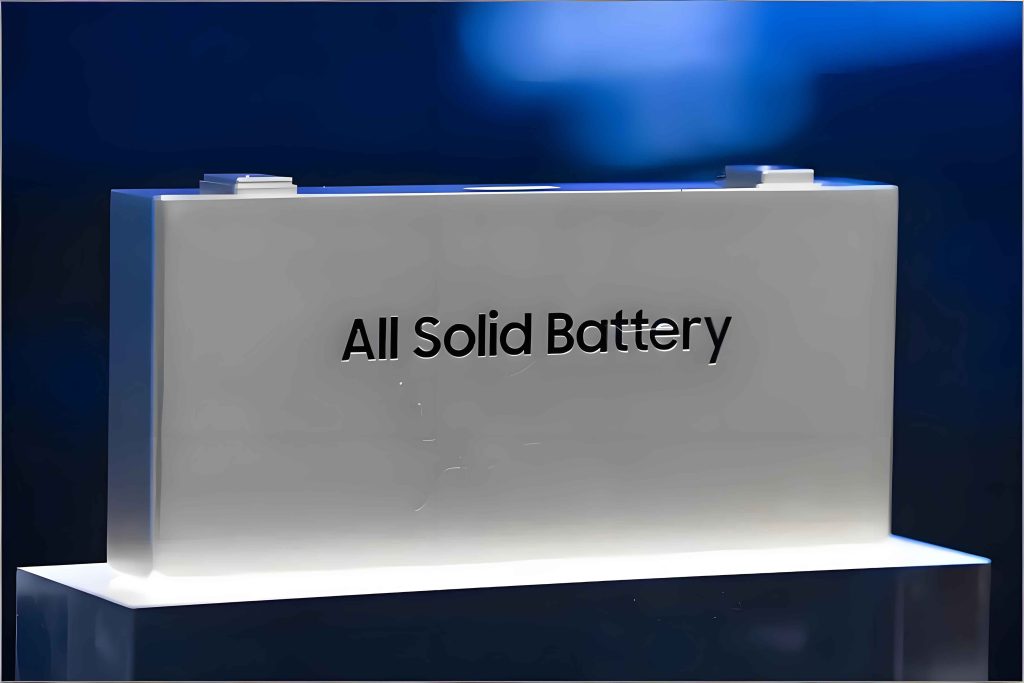
Reflecting on the development trajectory, I see solid-state batteries as a critical evolutionary step for lithium-ion batteries, boasting advantages such as high energy density, broad voltage windows, and enhanced safety. As electric vehicle efficiency demands escalate, traditional liquid lithium-ion batteries reveal growing issues in safety and energy density, making solid-state batteries a potential necessity in the post-lithium era. In terms of energy density, the absence of liquid electrolyte and separators in solid-state batteries reduces mass significantly, allowing for energy densities that can reach 800 Wh/kg or higher, far surpassing the current best liquid lithium-ion batteries at around 300 Wh/kg. This can be expressed mathematically as a comparison: $$E_{\text{d,liquid}} \approx 300 \text{ Wh/kg}, \quad E_{\text{d,solid}} \geq 800 \text{ Wh/kg}$$ where \(E_{\text{d}}\) represents energy density. For voltage applicability, solid-state electrolytes do not participate in chemical reactions, enabling the use of electrode materials with larger voltage differences, thus offering a wider charging voltage range and high voltage characteristics. Safety-wise, solid-state electrolytes are non-flammable, operate across broad temperature windows, and exhibit low corrosiveness and volatility, ensuring high reliability.
Despite these advantages, I note that solid-state batteries remain in the research and development phase, with multiple technology paths centered on electrolyte materials yet to converge. In recent years, solid-state batteries have become a global research focus, but key technological routes are still exploratory, leading to diversified development trends. The core electrolyte materials for all-solid-state systems primarily include polymer, sulfide, and oxide routes, each with distinct limitations. To summarize, I present a comparative table highlighting these technical routes:
| Electrolyte Material | Advantages | Disadvantages | Current Adoption Trends |
|---|---|---|---|
| Polymer | Flexibility, ease of processing, lower cost | Low ionic conductivity at room temperature, limited compatibility with high-voltage cathodes, relies on poly(ethylene oxide) systems | Common among Chinese enterprises |
| Sulfide | High ionic conductivity, good solid-solid interface contact, potential for high performance | Air sensitivity, stringent manufacturing conditions, expensive raw materials, immature mass-production techniques | Preferred by Japanese and Korean firms; also adopted by some欧美 companies like Solid Power |
| Oxide | High stability, wide voltage window, good thermal properties | Difficult to scale for large-capacity power or storage batteries, brittleness issues | Favored by Chinese enterprises and companies like Quantum Scape in the US |
From a global standpoint, I observe that欧美日韩 regions are strategically repositioning to gain a competitive edge in solid-state batteries, aiming to overtake current leaders. In the global power battery landscape, China, Japan, and Korea have been engaged in intense competition, with Chinese firms gaining dominance in liquid lithium-ion battery markets. To shift from a “follower” role,欧美日韩 have intensified efforts in solid-state battery布局, formulating national strategies, increasing governmental and private investments, and forming cross-industry alliances to seize the high ground in next-generation batteries. At the national level, initiatives include Europe’s “2030 Battery Innovation Roadmap,” the US “National Blueprint for Lithium Batteries 2021-2030,” Japan’s third-phase “Electric Vehicle Innovative Battery Development” project with Toyota leading solid-state battery研发, and Korea’s “2030 Secondary Battery Industry Development Strategy.” Corporately, dozens of automotive and battery companies worldwide, such as Toyota, Volkswagen, BMW, and Ford, are accelerating commercialisation of solid-state batteries. This global push underscores the urgency for advancing solid-state battery technologies.
Transitioning to产业化 challenges, I believe that the commercialization of solid-state batteries will likely progress through multiple stages. Despite unprecedented attention and high R&D intensity, numerous technical hurdles persist. All-solid-state electrolyte materials are still in the exploratory phase, with technology尚未成熟, making large-scale commercialization difficult in the short term. Based on electrolyte content, batteries can be classified into liquid, semi-solid (electrolyte content < 10%), quasi-solid (electrolyte content < 5%), and all-solid (no electrolyte), with the latter three collectively termed solid-state batteries. From a production feasibility perspective, all-solid-state batteries may not be achieved overnight but require gradual iteration through semi-solid to quasi-solid to all-solid stages. Currently, semi-solid batteries, with相对成熟的技术 and工艺, offer a快速产业化方案. To quantify the ionic conductivity challenge, a key issue for solid-state batteries, I use the formula for ionic conductivity: $$\sigma = n e \mu$$ where \(\sigma\) is conductivity, \(n\) is charge carrier concentration, \(e\) is elementary charge, and \(\mu\) is mobility. For solid-state electrolytes, \(\sigma\) is often lower than in liquid electrolytes, impacting charging speed. For instance, typical values might be: $$\sigma_{\text{liquid}} \approx 10^{-2} \text{ S/cm}, \quad \sigma_{\text{solid}} \approx 10^{-4} \text{ to } 10^{-3} \text{ S/cm}$$ This reduction necessitates material innovations to enhance performance.
In terms of technical maturity and applicability, I see room for further improvement. From a technology path analysis, whether for the relatively mature polymer route or the more promising sulfide route, technology and cost remain core factors hindering solid-state battery商业化. Solid-state battery technology is currently in the transition from成熟技术 to产业化, i.e., the technology推广 and规模化生产验证 stage. Preliminary estimates suggest that around 2025, solid-state battery technology may achieve commercialization and begin advancing toward next-generation lithium batteries. Regarding applicability, compared to existing liquid battery systems, solid-state batteries offer unparalleled advantages, but issues like low ionic conductivity of solid electrolytes, slow charging speeds, poor solid-solid interface contact and stability, and material sensitivity亟待解决. These can be summarized in a table of key technical challenges:
| Challenge Category | Specific Issues | Impact on Solid-State Battery Performance |
|---|---|---|
| Material Properties | Low ionic conductivity, electrolyte sensitivity (e.g., sulfides to air), limited voltage compatibility | Reduces charging efficiency, increases manufacturing complexity, restricts material choices |
| Interface Engineering | Poor contact and stability at solid-solid interfaces between electrolyte and electrodes | Leads to high impedance, capacity fade, and reduced cycle life |
| Manufacturing | Complex processes, immature production techniques, high material costs | Elevates production costs, lowers yield rates, hinders mass production |
| Thermal Management | 虽宽温窗 but heat dissipation challenges in solid systems | Affects safety and longevity under high loads |
Furthermore, I contend that成熟产业化 conditions are lacking. Solid-state batteries involve significant changes compared to成熟的液态锂电池 technology, requiring a重塑 of the complex lithium battery supply chain. On one hand, manufacturing processes are intricate and immature; uncertain technology paths make it difficult to achieve the成熟 level of current ternary lithium batteries. On the other hand, production costs are high. All-solid-state battery manufacturing is complex, and materials like solid electrolytes are more expensive than current counterparts, making cost reduction a漫长艰巨 journey. Additionally, research on battery material systems often shows a gap between laboratory results and commercial application. At this stage, few tested solid-state batteries have been实际落地, and with existing工艺水平 and equipment capabilities, product yield rates are unreliable, far from大规模量产阶段. To illustrate cost considerations, I propose a simple cost model: $$C_{\text{solid}} = C_{\text{materials}} + C_{\text{manufacturing}} + C_{\text{R&D}}$$ where \(C_{\text{solid}}\) is the total cost of a solid-state battery, often exceeding that of liquid batteries due to higher \(C_{\text{materials}}\) (e.g., sulfide raw materials) and \(C_{\text{manufacturing}}\) (e.g., dry room requirements).
Moving to measures and recommendations, based on my analysis, I propose several strategies to accelerate solid-state battery development. First,加强研发攻关能力 is crucial to突破固态电池技术瓶颈. This involves: (1) Developing action plans, roadmaps, and timelines. Aligned with the “14th Five-Year Plan” power battery technology roadmap (e.g., “Energy-Saving and New Energy Vehicle Technology Roadmap 2.0”),针对2025, 2030, and 2035 as key milestones, conduct technology assessments for different routes and create a panoramic view of solid-state battery technology development. (2) Leveraging national major科技专项 to support前沿技术研发 for solid-state batteries.科学布局 around basic research, key technology攻关, and产业化培育, using重点研发计划, local government科技项目, and产学研合作项目 to advance前沿技术研发. (3) Establishing a national-level manufacturing innovation center for solid-state batteries to突破行业共性技术 and bridge the lab-to-industry gap.联合国家重点实验室 and national power battery innovation centers to build a robust R&D foundation and全方位打通产业化道路.
Second,培育典型应用示范 can营造开放生态 and accelerate product落地. This includes: (1) Gradually piloting semi-solid and quasi-solid batteries in new energy vehicles to lay the application foundation for transitioning to all-solid-state batteries. Amid unclear industry development paths, focus on diversified solid-state battery technology routes and strive for all-solid-state battery商业化 to maintain leadership in the power battery industry. (2) Optimizing配套产业 like power management systems and power electronic devices around solid-state batteries to打造完备的产业链. Survey and梳理产业链技术发展现状, strengthen support, guidance,产学研合作, upstream-downstream collaboration, and市场化产业链建设 to form合力 for key core technology攻关 and enhance overall competitiveness. (3) Exploring financial support mechanisms such as first-batch or first-set (首台套) incentives to分摊风险 for vehicle enterprises innovating with solid-state batteries, boosting their willingness. Promote deep integration of finance and industry,强化金融服务保障 for the solid-state battery sector, and build a完善科技金融服务体系 to better support the industrial ecosystem.
Third,深化对外开放合作 is essential to强化产业链要素支撑与协同. This entails: (1) Establishing交流机制 for industry enterprises domestically and internationally to扩大开放合作力度. Encourage multiple solid-state battery firms, research institutions, etc., to form partnerships, conduct技术交流 through training, observations, and seminars, and jointly攻克固态电池开发难点. (2) Leveraging产业链链主 to integrate resources, promote产业链协同, and提升产业链成熟度. Utilize the advantages of a新型举国体制 to整合创新资源, accelerate要素聚集, and foster deep integration of产业链创新链. (3)制定标准 and完善检测认证 to set uniform norms for the industry. China should expedite顶层设计, standardize aspects like battery dimensions, performance testing, and safety indicators, and引导鼓励企业加强固态电池标准的国际交流与合作, participating in international standard-setting to gradually build a完善的高标准体系 for rapid产业化 and商业化应用.
In conclusion, from my first-person viewpoint, the journey toward widespread adoption of solid-state batteries is both promising and challenging. The potential of solid-state batteries to revolutionize electric vehicles through higher energy densities, improved safety, and broader voltage ranges is undeniable. However, technical hurdles in material science, manufacturing processes, and cost reduction must be addressed through concerted efforts in R&D,示范 applications, and global collaboration. As the industry evolves, continuous innovation and strategic investments will be key to unlocking the full potential of solid-state batteries, ensuring they become a cornerstone of the future energy landscape. Through formulas like $$E_{\text{total}} = \int_{0}^{t} P_{\text{innovation}}(t) \, dt$$ where \(E_{\text{total}}\) represents cumulative progress and \(P_{\text{innovation}}(t)\) is the rate of innovation over time, I emphasize the dynamic nature of this advancement. By embracing these strategies, we can pave the way for a sustainable and efficient era powered by solid-state batteries.