
In my research into next-generation energy storage, the quest for safer, more reliable battery systems has led me to explore the fascinating world of solid-state electrolytes. It is a well-established fact that liquid electrolytes conduct electricity, with ionic conductivities typically in the range of $10^{-2}$ to $10^{-1}$ S/cm. When direct current passes through such an electrolyte, dissociated ions migrate under the influence of the external electric field, leading to electrochemical reactions. However, ordinary solid electrolytes, such as common table salt (NaCl), are essentially insulators with negligible ionic conductivity. Intriguingly, certain solids exhibit a significant increase in conductivity upon heating, with some, like the naturally occurring mineral montmorillonite, demonstrating appreciable ionic conduction even at room temperature. These materials are known as fast ion conductors, solid electrolytes, or superionic conductors.
This class of materials represents a unique state of matter, bridging the gap between solids and liquids, where ions possess liquid-like mobility within a rigid crystalline framework. Broadly, electrical conduction in solids is categorized into two types: electronic conduction and ionic conduction. The latter involves the physical migration of ions, not just charge carriers. Solid electrolytes, characterized by high ionic conductivity, negligible electronic conductivity, and low activation energy, are pivotal for applications in sensors, analytical devices, and, most notably, solid-state battery technology. The origin of fast ion conduction lies in specific structural features of the crystal lattice. Generally, crystals possessing lattice defects, interconnected tunnels, or a high concentration of vacant lattice sites exhibit this property.
The spectrum of solid electrolytes is vast, encompassing both inorganic and organic varieties, and can be classified by the mobile ion: cation conductors (e.g., Ag+, Li+, Na+) or anion conductors (e.g., O2-, F–). Most are synthetically produced. The discovery of ionic conductivity in montmorillonite has significantly broadened the horizons for fast ion conductor research, opening a new avenue for utilizing natural minerals in advanced energy storage.
My focus has been on developing montmorillonite-based solid electrolytes. Montmorillonite is the primary component of bentonite clay. Its ideal structure is layered, with a generally accepted unit formula of (Na,Ca)0.33(Al,Mg)2(Si4O10)(OH)2·nH2O, excluding interlayer water. The actual structural formula can vary significantly depending on the deposit, but the key is the presence of structural channels or interlayer spaces that facilitate ion movement. Naturally occurring montmorillonite is classified based on its dominant interlayer cation, such as sodium-type or calcium-type. To render it suitable as an electrolyte, a modification process is essential.
This treatment is highly sensitive to temperature, reagent concentration, and pH. Excessive temperature degrades its properties; overly high concentrations can clog the crystalline pores; a pH that is too low (high acidity) risks destroying the layered structure, while a pH that is too high (high alkalinity) can severely deteriorate performance by blocking the ionic channels. Therefore, alkaline treatments are generally unsuitable for preparing conductive montmorillonite electrolytes.
| Property | Liquid Electrolyte (Typical Aqueous) | Synthetic Solid Electrolyte (e.g., Li-based) | Montmorillonite-Based Solid Electrolyte |
|---|---|---|---|
| Ionic Conductivity (S/cm, 25°C) | $10^{-2}$ to $10^{-1}$ | $10^{-4}$ to $10^{-3}$ | $10^{-5}$ to $10^{-4}$ |
| Electronic Conductivity (S/cm) | Negligible | Very Low ($<10^{-7}$) | Very Low ($\sim 10^{-9}$) |
| Activation Energy, Ea (eV) | Low | 0.3 – 0.5 | 0.2 – 0.4 |
| Key Advantage | High conductivity | Wide voltage window, stability | Natural abundance, low cost, processability |
Performance Characterization of the Solid Electrolyte
Before assembly into a solid-state battery, the synthesized electrolyte must be rigorously characterized, with ionic conductivity being the primary figure of merit. The total conductivity ($\sigma_{total}$) is measured by pressing the electrolyte powder under approximately 5 tons/cm² into a pellet (e.g., ~1 mm thick). Graphite blocks are used as ionically blocking electrodes, and the resistance is measured using an impedance analyzer. The conductivity is calculated using the formula:
$$ \sigma_{total} = \frac{d}{R \cdot A} $$
where $d$ is the pellet thickness, $A$ is the electrode area, and $R$ is the measured resistance. For a usable montmorillonite-based electrolyte, the room-temperature conductivity typically falls between $10^{-5}$ and $10^{-4}$ S/cm.
However, the total conductivity is the sum of ionic ($\sigma_{ion}$) and electronic ($\sigma_{elec}$) contributions: $\sigma_{total} = \sigma_{ion} + \sigma_{elec}$. For an ideal solid electrolyte, $\sigma_{elec}$ should be vanishingly small. The ionic transference number, $t_{ion} = \sigma_{ion} / \sigma_{total}$, should approach 1. The electronic conductivity can be measured using the DC polarization method with electronically blocking electrodes (e.g., graphite). A constant DC voltage is applied, and the initial current peak (due to ionic polarization) decays to a steady-state current ($I_{ss}$) carried solely by electrons. The electronic conductivity is then derived from:
$$ \sigma_{elec} = \frac{I_{ss} \cdot d}{V \cdot A} $$
where $V$ is the applied DC voltage. For the optimized montmorillonite electrolyte, $\sigma_{ion}$ is on the order of $10^{-5}$ S/cm while $\sigma_{elec}$ is around $10^{-9}$ S/cm, confirming its predominant ionic character. The temperature dependence of ionic conductivity follows the Arrhenius equation:
$$ \sigma T = A \exp\left(\frac{-E_a}{k_B T}\right) $$
where $E_a$ is the activation energy for ion migration, $k_B$ is Boltzmann’s constant, and $T$ is the absolute temperature. The low $E_a$ (0.2-0.4 eV) for montmorillonite indicates a favorable ion transport mechanism within its structure.
Battery Assembly and Construction
Given that the ionic conductivity of solid electrolytes is several orders of magnitude lower than their liquid counterparts, the resulting solid-state battery is best suited for micro-power devices. Coin-cell configurations are ideal for applications like analog quartz watches, LCD displays, and calculators. The assembly process is remarkably straightforward. The cathode active material (e.g., a MnO2-carbon composite), the solid electrolyte (processed montmorillonite), and the anode material (zinc powder) are separately pressed into thin pellets. These three layers—cathode, electrolyte, anode—are then integrated into a single stack and housed in a standard coin-cell casing (e.g., 11.6 mm diameter, 5.4 mm height).
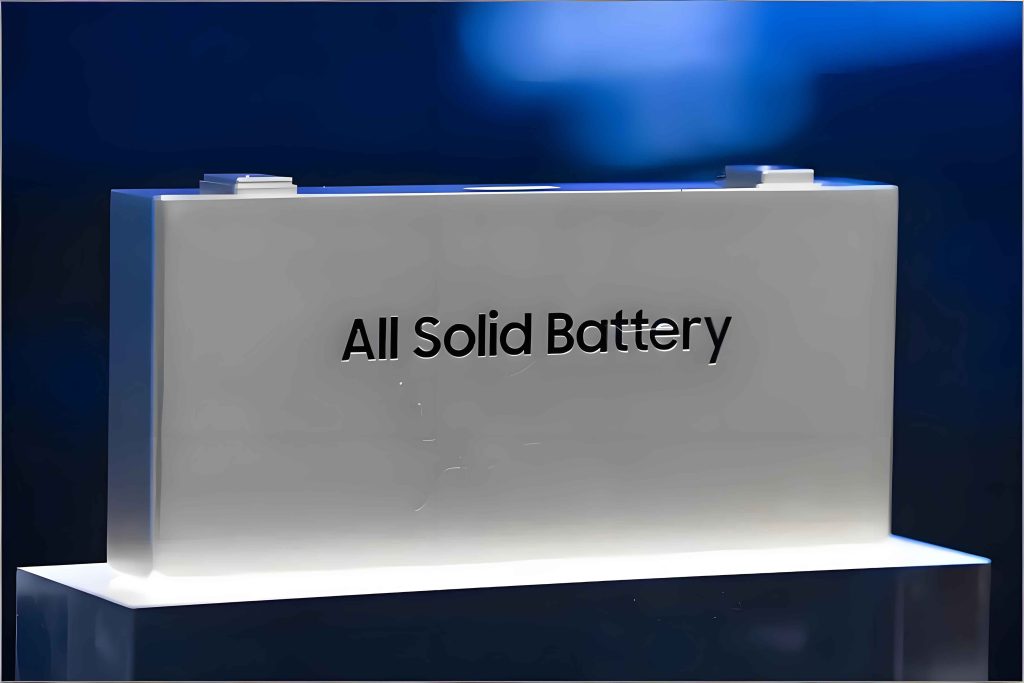
Performance of the All-Solid-State Battery
The performance of the assembled Zn-MnO2 solid-state battery was evaluated under various conditions. The discharge performance at a constant temperature (25°C) under different loads is summarized below. The utilization efficiency of the cathode material (MnO2) is a critical parameter.
| Load (kΩ) | Open-Circuit Voltage (V) | Load Voltage (V) | Discharge Capacity (mAh) | MnO2 Utilization (%) | Specific Energy (Wh/kg) | Specific Power (mW/kg) |
|---|---|---|---|---|---|---|
| 100 | 1.55 | 1.40 | 28.5 | 85.2 | 88 | 0.42 |
| 220 | 1.55 | 1.45 | 30.1 | 90.0 | 93 | 0.19 |
| 470 | 1.55 | 1.48 | 31.0 | 92.7 | 96 | 0.09 |
*Note: Cut-off voltage was 1.0V; Battery weight was ~0.5g.
The cathode utilization is also highly dependent on temperature, as shown in the following table for a constant 220 kΩ load.
| Temperature (°C) | -10 | 0 | 25 | 40 |
|---|---|---|---|---|
| MnO2 Utilization (%) | 72.5 | 80.1 | 90.0 | 94.5 |
A key advantage of the solid-state battery is its excellent shelf life due to the absence of liquid leakage or parasitic side reactions common in liquid systems. The capacity fade after one year of storage at room temperature was found to be minimal.
| Load (kΩ) | Initial Capacity (mAh) | Capacity after 1 Year (mAh) | Capacity Fade Rate (%) |
|---|---|---|---|
| 100 | 28.5 | 27.8 | 2.5 |
| 220 | 30.1 | 29.6 | 1.7 |
The temperature coefficient of the battery’s electromotive force (emf) was determined by measuring the open-circuit voltage from -10°C to +50°C. The linear relationship $E = aT + b$ yielded a slope $a \approx -2.5 \times 10^{-4}$ V/°C, indicating a very small and stable thermal voltage coefficient, which is beneficial for consistent device operation.
Application in Quartz Analog Watches
The inherent characteristics of the solid-state battery—leak-proof construction, low self-discharge, and stable performance—make it particularly suitable for electronic watches. While simple LCD watches with low current draw (1-5 µA) can be powered for about a year, the more demanding application is in quartz analog watches.
In an analog quartz watch, the hands are driven by a stepping motor, which requires high-current pulses. The pulse current ($I_{pulse}$) can be several tens of microamperes, significantly higher than the average current ($I_{avg}$). To assess compatibility, one must measure the watch’s average current and understand the battery’s internal resistance ($R_{int}$) evolution during discharge. The average current can be measured using a circuit with a large capacitor to smooth the pulse current for a microammeter. Knowing the integrated circuit’s specifications (pulse period $T$, width $\tau$, and quiescent current $I_q$), the pulse current can be calculated if the average current is known:
$$ I_{avg} = I_q + \frac{\tau}{T} I_{pulse} $$
$$ \therefore I_{pulse} = \frac{(I_{avg} – I_q) \cdot T}{\tau} $$
For example, with $I_q = 0.5 \mu A$, $T = 1 s$, $\tau = 7.8 ms$, and a measured $I_{avg} = 3.0 \mu A$, the pulse current calculates to approximately $320 \mu A$.
| Parameter | Symbol | Typical Value |
|---|---|---|
| Quiescent Current | $I_q$ | 0.5 µA |
| Pulse Period | $T$ | 1.0 s |
| Pulse Width | $\tau$ | 7.8 ms |
| Measured Average Current | $I_{avg}$ | 3.0 µA |
| Calculated Pulse Current | $I_{pulse}$ | ~320 µA |
The internal resistance of a solid-state battery is inherently higher. If $R_{int}$ is 10 kΩ, the internal voltage drop during a pulse would be $V_{drop} = I_{pulse} \cdot R_{int} = 3.2 V$. This is substantial and underscores why the discharge current density must be kept very low (µA/cm² scale) for successful operation. By discharging the battery under a simulated load and periodically measuring its open-circuit voltage and internal resistance, a performance curve is generated. Superimposing the watch motor’s minimum starting voltage requirement on this curve defines the usable discharge range of the battery in that specific application. Through extensive optimization of the montmorillonite treatment, cathode composition, and cell assembly, this mineral-based solid-state battery has been successfully integrated into commercial analog quartz watches, demonstrating stable operation over the expected battery life, as evidenced by the flat discharge profile under the watch’s operating load.
Future Perspectives
The exploration of mineral-based electrolytes represents a compelling direction in the broader field of solid-state ionics. The development of solid-state battery technology is driven by the demand for enhanced safety and energy density. Utilizing naturally occurring materials like montmorillonite offers potential advantages in cost, resource sustainability, and simplified processing. The absence of free liquids not only eliminates leakage but also enables novel form factors, such as ultra-thin, flexible cells or simplified multilayer stacked batteries. As the power requirements of microelectronics continue to decrease, the niche for reliable, long-lasting, and safe solid-state power sources expands. This research not only advances solid-state battery technology but also opens new, high-value application avenues for abundant silicate minerals, bridging the gap between geology and cutting-edge energy science.