
Since their commercialization in the 1990s, conventional lithium-ion batteries (LIBs) have become ubiquitous in consumer electronics, electric vehicles, and grid storage. However, the inherent flammability of liquid organic electrolytes and the thermal instability of polymeric separators pose significant safety risks, particularly as the demand for higher energy density pushes cells to their operational limits. This safety-performance trade-off has catalyzed the global pursuit of all-solid-state batteries (ASSBs), which replace volatile liquid components with non-flammable, mechanically robust solid-state electrolytes (SSEs). This paradigm shift promises not only enhanced safety but also the potential for higher energy densities through the direct integration of high-capacity metallic lithium anodes.
The performance of an ASSB is fundamentally governed by its solid components: the cathode, the anode, and the SSE that separates them. Among the various families of SSEs—including polymers, oxides, and sulfides—halide-based SSEs have emerged as a particularly promising class for next-generation solid-state batteries. Their general formula is often represented as LiaMClb (where M is a metal or metalloid cation, and Cl can be substituted by other halides like Br, I, or F). They offer a compelling combination of properties: high room-temperature Li+ conductivity (often exceeding 1 mS cm-1), excellent electrochemical oxidative stability (up to ~4.3 V vs. Li+/Li), and good compatibility with high-voltage oxide cathodes like LiCoO2 (LCO) and LiNixMnyCozO2 (NCM). Furthermore, their relatively low Young’s modulus compared to oxides facilitates better interfacial contact under moderate stack pressure.
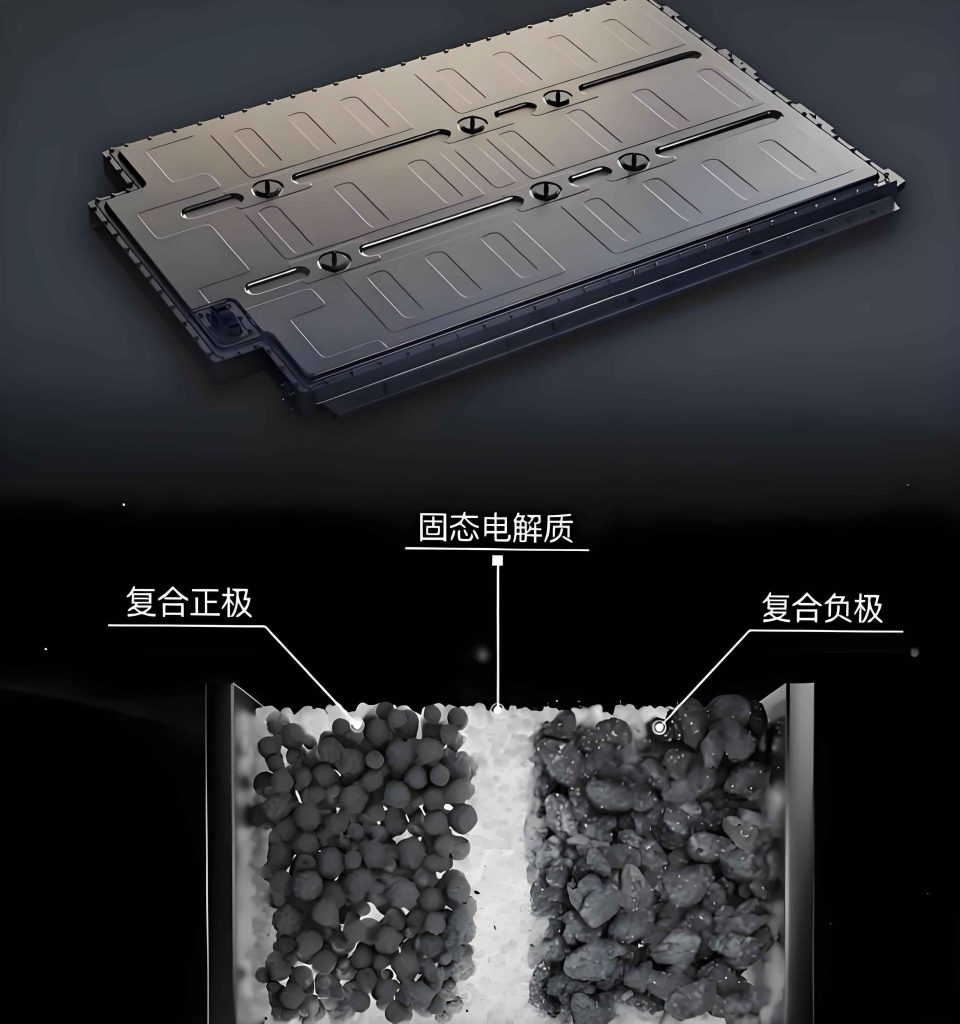
Despite these advantages, the path to commercializing halide-based solid-state batteries is obstructed by critical interfacial challenges, especially at the composite cathode. The composite cathode is a heterogeneous mixture of cathode active material (CAM) particles, SSE particles, and electronic conductive additives (e.g., carbon black). Unlike liquid electrolytes that can permeate pores and maintain contact, solid-solid interfaces are static and prone to degradation. The performance of this composite electrode hinges on maintaining intimate, stable, and ionically/electronically conductive interfaces throughout its lifetime. Failures at these multiscale interfaces lead to rapid capacity fade, increased impedance, and limited rate capability, which are among the most pressing issues in solid-state battery development.
This article provides a comprehensive review of the interfacial challenges specific to halide SSE-based composite cathodes. We first deconstruct the primary failure mechanisms, including mechanical contact loss, space-charge layer effects, and detrimental interfacial reactions. Subsequently, we systematically elaborate on the corresponding mitigation strategies, categorizing them into material-level modifications (for both SSE and CAM), interfacial engineering, and composite electrode structural design. Finally, we offer perspectives on future research directions aimed at realizing the full potential of halide-based solid-state batteries.
1. Failure Mechanisms at the Halide SSE/Cathode Interface
The stability and kinetics of the CAM/SSE interface are paramount for a functioning solid-state battery. Three intertwined mechanisms primarily contribute to its degradation.
1.1 Mechanical Contact Failure and Microcracking
During charge and discharge, Li+ extraction and insertion cause significant anisotropic volume changes in layered oxide cathodes (e.g., 2-6% for NCM811). In a liquid cell, the electrolyte readily fills any emerging gaps. In a solid-state battery, however, the rigid solid-solid contact cannot self-heal. Repeated cycling leads to:
- Particle Decoupling: Loss of physical contact between CAM particles and surrounding halide SSE particles, breaking Li+ transport pathways.
- Microcrack Formation: Intra-granular cracks within secondary CAM particles disconnect primary grains, rendering inner material electrochemically inactive (“dead zones”). This is exacerbated in polycrystalline CAMs compared to single-crystal counterparts.
This contact loss directly increases interfacial impedance and causes active lithium inventory loss, manifesting as irreversible capacity fade. The problem is severe in high-nickel NCM cathodes and under high current rates where strain rates are higher.
1.2 Space-Charge Layer (SCL) Effects
When two different solid ionic conductors (the CAM and the SSE) come into contact, a difference in Li+ chemical potential ($\mu_{Li^+}$) drives Li+ diffusion across the interface until electrochemical equilibrium is established. This creates localized charge separation and an internal electric field, forming a space-charge layer.
For a typical oxide cathode (high $\mu_{Li^+}$) in contact with a halide SSE, Li+ tends to diffuse from the SSE into the cathode. This depletes Li+ in the SSE region near the interface, creating a Li+-depleted zone with high ionic resistance. The potential distribution $\phi(x)$ and Li+ concentration $c_{Li}(x)$ can be described by the Poisson-Boltzmann distribution for a dilute solution approximation:
$$ \frac{d^2 \phi}{dx^2} = -\frac{\rho(x)}{\varepsilon_r \varepsilon_0} $$
where $\rho(x) = F \sum z_i c_i(x)$ is the charge density, F is Faraday’s constant, $z_i$ is the charge number, $\varepsilon_r$ is the relative permittivity, and $\varepsilon_0$ is the vacuum permittivity. The resulting SCL acts as a kinetic barrier for Li+ transfer, especially critical at the first cycle. The thickness of the SCL ($\lambda$) is related to the Debye length:
$$ \lambda = \sqrt{\frac{\varepsilon_r \varepsilon_0 k_B T}{2 F^2 c_0}} $$
where $c_0$ is the bulk Li+ concentration in the SSE, $k_B$ is Boltzmann’s constant, and T is temperature. For halides with high $c_0$, $\lambda$ is typically 1-10 nm, but its impact on impedance can be significant.
1.3 Interfacial (Electro)Chemical Reactions
This is arguably the most complex degradation mode. It encompasses both chemical reactions due to thermodynamic instability and electrochemical oxidation/reduction during operation.
a) Chemical Instability: Many halide SSEs are thermodynamically unstable when in direct contact with high-voltage oxide cathodes. For instance, Li3InCl6 can react with delithiated Li1-xCoO2:
$$ \text{Li}_{3}\text{InCl}_{6} + x\text{Li}_{1-x}\text{CoO}_2 \rightarrow \text{In-containing oxides/chlorides} + \text{LiCl} + \text{Co-containing species} $$
These reactions form interphase layers rich in LiCl, transition metal chlorides/oxides, and reduced In/Sc/Y species. While some interphases (like LiCl) can be Li+-conductive and act as a passivation layer, others are electronically insulating and block ion transport.
b) Electrochemical Oxidation: Upon charging, the cathode potential rises. If the highest occupied molecular orbital (HOMO) level of the halide SSE lies above the Fermi level of the charged cathode, electron transfer from the SSE to the cathode occurs, leading to SSE oxidation. The oxidation potential is often tied to the halide anion (Cl– → Cl2, ClOx–). This process is exacerbated at high voltages (>4.3 V) and elevated temperatures, generating resistive decomposition products and gaseous species that further degrade contact.
The mutual interaction of these three mechanisms—mechanical decohesion increasing local impedance, which promotes localized electrochemical decomposition—creates a vicious cycle that rapidly degrades the performance of halide-based solid-state batteries.
2. Mitigation Strategies: From Materials to Interfaces and Architecture
Addressing the aforementioned challenges requires a multi-faceted approach. Strategies can be coarsely categorized into: (1) modifying the halide SSE itself, (2) engineering the CAM surface, and (3) designing the composite cathode architecture.
2.1 Halide Solid-State Electrolyte Modification
The goal is to enhance the intrinsic electrochemical stability and mechanical properties of the SSE.
2.1.1 Cation/Anion Doping and High-Entropy Design: Substituting elements in the LiaMClb lattice can widen the electrochemical window.
- Anion Doping (F, Br): Partial substitution of Cl with F increases bond dissociation energy, raising the oxidation onset potential. For example, Li2.5ZrCl5F0.5O0.5 shows stability up to ~4.9 V. Br substitution (e.g., Li3YBrxCl6-x) can increase ionic conductivity but may slightly lower oxidation stability.
- Cation Doping (Ta, Zr, Hf): Introducing high-valence cations (e.g., Ta5+, Zr4+) strengthens the metal-halide bond and modifies the electronic structure, lowering the HOMO level. Li2.6In0.8Ta0.2Cl6 exhibits an oxidation onset >5.1 V.
- High-Entropy SSEs: Incorporating multiple cations (e.g., Li2.2In0.2Sc0.2Zr0.2Hf0.2Ta0.2Cl6) creates configurational entropy, which stabilizes the lattice and suppresses halogen oxidation kinetics, effectively broadening the voltage window.
2.1.2 Surface Coating/Passivation: To mitigate surface reactivity with air/moisture and cathode materials, thin protective layers can be applied to halide SSE particles.
– Oxide Coatings: Ultrathin Al2O3 or Li3BO3 coatings via atomic layer deposition (ALD) or solution processes can significantly improve moisture stability without severely impacting ionic transport.
– Carbon Nitride Coatings: Materials like g-C3N4 have been used to coat Li3YCl6, improving interfacial stability with LCO.
The effectiveness of different doping strategies is summarized in Table 1.
| Strategy | Example Composition | Key Effect | Benefit for Cathode Interface | Potential Drawback |
|---|---|---|---|---|
| Anion Doping (F) | Li2.5ZrCl5F0.5 | Increases M-X bond strength | Higher oxidation stability (>4.8V), forms LiF-rich stable CEI | May slightly lower bulk conductivity |
| Cation Doping (High-Valence) | Li2.6In0.8Ta0.2Cl6 | Lowers HOMO level, stabilizes lattice | Superior high-voltage (≥4.6V) cycling stability | Cost of dopants (Ta, Hf) |
| High-Entropy Design | Li2.2(In,Sc,Zr,Hf,Ta)1Cl6 | High configurational entropy stabilizes structure | Suppresses Cl oxidation, excellent interfacial stability | Complex synthesis, reproducibility |
| Surface Coating | Al2O3@Li3InCl6 | Physical barrier against reactions | Improves air stability, reduces side reactions | Adds processing step, may increase interfacial resistance if too thick |
2.2 Cathode Active Material Surface Engineering
Applying a functional coating on CAM particles is the most direct and widely used method to stabilize the interface in halide-based solid-state batteries.
2.2.1 Conventional Coatings: Thin, ion-conductive but electron-insulating layers are applied.
– Oxide Coatings: LiNbO3, Li2SiO3, Li3PO4, Al2O3. These coatings act as a physical barrier, preventing direct contact between the charged cathode and the halide SSE, thereby suppressing oxidative decomposition. LiNbO3 is particularly popular due to its good Li+ conductivity and stability.
– Halide Coatings: Coating CAMs with the same halide SSE used in the composite (e.g., Li3InCl6 on NCM) ensures perfect chemical compatibility and improves Li+ transport across the interface.
2.2.2 Advanced Surface Reconstruction: Moving beyond simple coatings, surface doping and reconstruction create gradient layers.
– Lattice-Doped Epitaxial Layers: For example, an AlPO4 coating on LCO that reacts during sintering to form an Al3+-doped disordered rock-salt surface layer with embedded Li3PO4 nanoparticles. This layer raises the surface Li chemical potential, inhibiting SSE oxidation, while Li3PO4 aids Li+ transport.
– In-situ formed LiF-rich CEI: Pre-treating CAMs with fluorine-containing agents or using F-doped SSEs can promote the formation of a thin, stable, and Li+-conductive LiF-dominated interphase during the first charge, which effectively passivates the interface.
2.3 Composite Cathode Architecture Design and Optimization
The macroscopic and microscopic structure of the composite cathode dictates the percolation networks for ions and electrons and the mechanical integrity during cycling.
2.3.1 Component Optimization: The volumetric ratios of CAM, SSE, and conductive carbon are critical.
– CAM Fraction: Typically optimized between 70-80 wt.% to balance energy density and ionic percolation. Too high a fraction leads to isolated CAM particles; too low reduces capacity.
– SSE Fraction and Morphology: Sufficient halide SSE (20-30 wt.%) is needed to form continuous Li+ pathways. Using nano-sized SSE particles improves wrapping and contact with CAM. The ionic conductivity of the composite ($\sigma_{comp}$) can be estimated by percolation theory:
$$ \sigma_{comp} = \sigma_{SSE} (\phi – \phi_c)^t $$
where $\phi$ is the SSE volume fraction, $\phi_c$ is the percolation threshold, and $t$ is a critical exponent.
– Conductive Additive: A hybrid network of carbon black (for point contacts) and carbon nanotubes/fibers (for long-range wiring) is often optimal. Excessive carbon can promote SSE decomposition at contact points.
2.3.2 Particle Engineering:
– Single-Crystal vs. Polycrystalline CAM: Single-crystal NCM particles eliminate grain boundaries, reducing microcrack formation and providing more stable contact with the SSE, leading to superior long-term cycling in solid-state batteries.
– Core-Shell Composite Particles: Pre-fabricating particles where a CAM core is uniformly encapsulated by a shell of halide SSE (and sometimes carbon) ensures ideal interfacial contact and protects the CAM during electrode processing.
2.3.3 Manufacturing Process:
– Dry vs. Wet Processing: Halides are often sensitive to polar solvents. Dry powder processing (e.g., dry spraying, electrostatic spinning) avoids solvent-induced degradation. When wet processing is necessary, non-polar solvents like heptane or ethanol with careful moisture control are used.
– Stack Pressure: Applying and maintaining an optimal stack pressure (tens of MPa) is crucial to maintain interfacial contact, especially for softer halide SSEs, mitigating mechanical contact failure.
3. Conclusion and Future Perspectives
Halide-based solid-state batteries represent a frontier in energy storage technology, offering a compelling blend of safety, potential high energy density, and material processability. The central challenge lies in constructing and maintaining a stable, low-resistance, and kinetically efficient interface within the composite cathode. As reviewed, the degradation is multi-mechanistic, involving mechanical, electrochemical, and chemical pathways.
Significant progress has been made through a synergistic combination of strategies: enhancing the intrinsic stability of halide SSEs via doping and high-entropy design; applying engineered coatings or reconstructed surfaces on cathode particles; and meticulously designing the composite electrode’s composition, particle morphology, and manufacturing process. These approaches collectively work to suppress side reactions, maintain intimate contact, and ensure smooth percolation of both ions and electrons.
Looking forward, several key research directions are poised to further advance halide-based solid-state batteries:
- Fundamental Understanding with Operando Tools: Deeper insights are needed into the dynamic evolution of the buried solid-solid interface under operating conditions. Advanced operando techniques—such as synchrotron X-ray tomography, neutron depth profiling, and electrochemical pressure monitoring—will be crucial to visualize contact loss, strain, and interphase growth in real time.
- Rational Interface Design Guided by Computation: High-throughput DFT calculations and machine learning can accelerate the discovery of novel, stable coating materials and dopant combinations with optimal ionic conductivity and band alignment to minimize SCL effects and oxidative decomposition.
- Scalable and Robust Manufacturing: Translating lab-scale successes to practical cell manufacturing is paramount. This involves developing cost-effective, scalable processes for coating CAMs, synthesizing halide SSEs, and assembling composite cathodes that are tolerant to ambient processing conditions.
- Holistic Cell Integration: The cathode interface cannot be optimized in isolation. Its design must be compatible with the chosen anode (e.g., Li-In alloy, bare Li metal) and the SSE separator layer. The interplay between stack pressure, cell geometry, and thermal management will define the ultimate performance and safety of the solid-state battery pack.
In conclusion, while challenges remain, the systematic approach to understanding and engineering the cathode interface in halide-based solid-state batteries is paving a clear pathway forward. Continued interdisciplinary efforts in materials science, electrochemistry, and engineering are essential to unlock the full potential of this promising technology, ultimately enabling safer, longer-lasting, and higher-energy-density batteries for future applications.