
As we stand on the brink of the electric vehicle (EV) revolution, the heart of these innovative machines—the power battery—directly dictates their range, charging speed, and overall safety. In my years of research and observation, I have witnessed the rapid evolution of battery technology, from traditional liquid lithium-ion cells to the promising frontier of solid-state batteries. The latter, with its superior energy density, enhanced safety, smaller footprint, and extended range, is poised to unlock the full potential of EVs. In this article, I will delve into the global landscape, technical intricacies, and future prospects of solid-state battery technology, emphasizing why it is considered the golden key to addressing critical safety and performance challenges in the automotive industry.
The transition to electric mobility is accelerating worldwide, driven by environmental concerns and technological advancements. However, conventional liquid lithium-ion batteries, whether based on lithium iron phosphate (LFP) or ternary lithium-ion chemistries, are approaching their theoretical limits in energy density. More importantly, safety issues such as thermal runaway, leakage, and flammability persist, posing risks to consumers and hindering broader adoption. This is where solid-state batteries come into play. By replacing the liquid electrolyte with a solid counterpart, these batteries offer a paradigm shift: they minimize fire hazards, enable higher energy storage, and facilitate faster charging. From my perspective, the race to commercialize solid-state batteries is not just a technological competition but a strategic imperative for nations and companies alike.
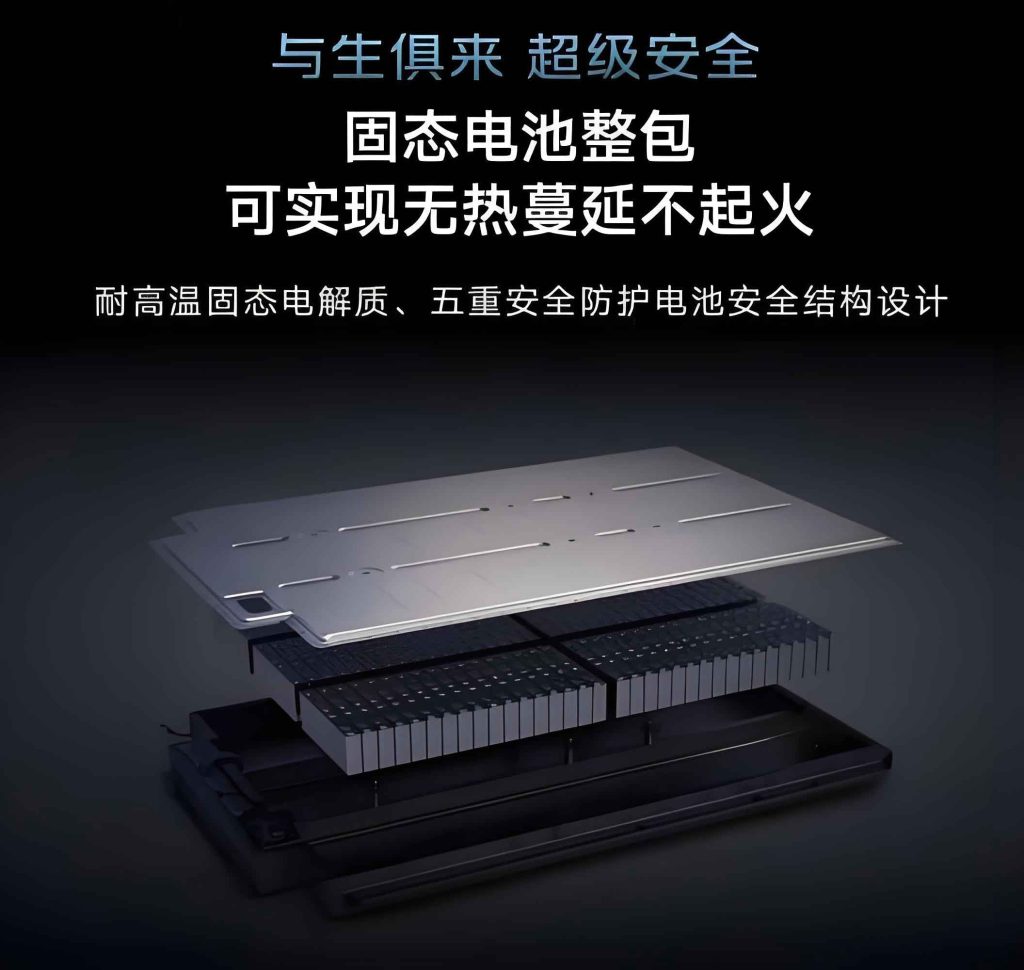
Globally, the pursuit of solid-state battery dominance has intensified. Japan, for instance, through its New Energy and Industrial Technology Development Organization (NEDO), initiated a collaborative project in 2018, uniting enterprises and academic institutions to develop all-solid-state lithium batteries for EVs within five years. Similarly, the United States has allocated significant funding, with the government investing $9.1 million in General Motors, of which $2 million is explicitly earmarked for solid-state battery research. In Europe, automotive giants like Volkswagen are partnering with startups such as QuantumScape, injecting hundreds of millions of dollars to accelerate innovation. China, too, has woven solid-state batteries into its national strategies, as seen in the “New Energy Vehicle Industry Development Plan (2021-2035),” which calls for accelerated R&D and industrialization. This global fervor underscores the transformative potential of solid-state battery technology.
To better understand the competitive landscape, I have compiled a table comparing key national initiatives and corporate efforts in solid-state battery development. This highlights the collaborative dynamics and targeted timelines for mass production.
| Country/Region | Key Policies/Initiatives | Leading Companies | Target for Mass Production |
|---|---|---|---|
| Japan | NEDO project (2018), 100 billion JPY investment | Toyota, Panasonic | 2025-2030 |
| United States | DOE funding, startup support | SES, Solid Power, QuantumScape | 2025-2028 |
| European Union | Green Deal, battery alliance | Volkswagen, BMW | 2027-2030 |
| China | National R&D plans, industry guidelines | CATL, BYD, WeLion | 2025-2030 |
In my analysis, the downstream automakers are playing a pivotal role in driving solid-state battery innovation. For example, Toyota has consistently led in patent filings for solid-state battery technologies, while Volkswagen’s partnership with QuantumScape culminated in a public listing valued at $3.3 billion, dubbed the “first solid-state battery stock.” These alliances are not mere investments; they represent a fundamental shift toward securing supply chains and achieving technological sovereignty. I believe that such collaborations will shorten the path to commercialization, but they also highlight the urgent need for coordinated efforts to overcome shared technical hurdles.
Turning to China, the progress in solid-state battery research and industrialization is noteworthy. Companies like WeLion, Qing Tao Energy Development, and Ganfeng Lithium have made strides in prototyping and pilot production. WeLion, for instance, has successfully developed lithium metal solid-state battery prototypes and plans a 380 billion RMB industrial base in Hangzhou. Similarly, Qing Tao aims to build a 10 GWh solid-state battery production facility. On the automotive side, NIO unveiled a 150 kWh solid-state battery pack in 2021, promising over 1,000 km range in its ET7 sedan. These developments signal China’s ambition to carve out a significant share in the global solid-state battery market. However, as I will elaborate, several challenges must be addressed to sustain this momentum.
From a technical standpoint, solid-state batteries rely on solid electrolytes, which can be classified into oxide, sulfide, and polymer types. Each category has distinct properties affecting ion conductivity, stability, and manufacturing feasibility. The ionic conductivity, a critical parameter, can be expressed by the Nernst-Einstein relation: $$ \sigma = n e \mu $$ where $\sigma$ is the ionic conductivity, $n$ is the charge carrier concentration, $e$ is the elementary charge, and $\mu$ is the mobility. For solid electrolytes, achieving high $\sigma$ at room temperature remains a challenge; for instance, sulfide-based electrolytes may reach $$ 10^{-2} \, \text{S/cm} $$, while oxides often fall below $$ 10^{-3} \, \text{S/cm} $$. This directly impacts the power density and charging rates of solid-state battery systems.
Moreover, the interface between solid electrodes and solid electrolytes poses significant obstacles. Unlike liquid electrolytes that conform to electrode surfaces, solid-solid contacts lead to high interfacial resistance, often described by the equation: $$ R_{\text{int}} = \frac{\delta}{\sigma_{\text{eff}}} $$ where $R_{\text{int}}$ is the interfacial resistance, $\delta$ is the interfacial layer thickness, and $\sigma_{\text{eff}}$ is the effective conductivity. This resistance can degrade battery capacity and cycle life. To illustrate the performance gaps, I have created a table comparing key metrics between traditional liquid lithium-ion batteries and solid-state batteries.
| Parameter | Liquid Lithium-Ion Battery | Solid-State Battery (Projected) |
|---|---|---|
| Energy Density (Wh/kg) | 250-300 | 400-500 |
| Safety | Moderate (risk of leakage/fire) | High (non-flammable) |
| Cycle Life (cycles) | 1000-2000 | >3000 |
| Operating Temperature Range (°C) | -20 to 60 | -40 to 150 |
| Fast Charging Capability | Limited by ion diffusion | Potentially faster |
In my view, the development of solid-state battery technology hinges on material innovations. For the cathode, high-capacity materials like lithium nickel manganese cobalt oxide (NMC) or lithium-rich layered oxides are being explored, with capacities exceeding 250 mAh/g. The anode, conversely, may shift from graphite to lithium metal, offering a theoretical capacity of 3860 mAh/g. The solid electrolyte must balance conductivity and stability; for example, garnet-type oxides (e.g., Li7La3Zr2O12) show promise due to their wide electrochemical window. The overall cell energy density can be approximated by: $$ E_{\text{cell}} = \frac{V \times C}{\text{mass}} $$ where $V$ is the average voltage and $C$ is the capacity. For a solid-state battery targeting 500 Wh/kg, innovations in all components are essential.
Despite the optimism, I have identified three major issues plaguing the industrialization of solid-state batteries in China. First, there is a lack of synergistic R&D and insufficient academia-industry linkage. Research efforts are often fragmented, with universities focusing on publications and companies guarding proprietary knowledge. This disconnection leads to duplicated investments in共性 technologies and hampers breakthroughs in critical areas. Second, technical bottlenecks persist, particularly in materials and manufacturing. The ionic conductivity of solid electrolytes, as mentioned, is inferior to liquids, complicating fast charging. Interface compatibility issues result in high internal resistance, reducing effective capacity. Additionally, production processes are complex and costly; for instance, thin-film deposition techniques for solid electrolytes require stringent environmental controls and capital-intensive equipment. Third, policy guidance and industry standards are inadequate. Without robust regulatory frameworks and standardized testing protocols, product quality varies, and market adoption slows. These challenges, if unaddressed, could delay the widespread deployment of solid-state battery solutions.
To quantify some of these challenges, consider the cost breakdown of a solid-state battery pack. Current estimates suggest that material costs account for over 60%, with solid electrolytes and lithium metal anodes being major contributors. The manufacturing cost, driven by precision engineering, adds another 30%. In contrast, liquid lithium-ion batteries benefit from mature supply chains and economies of scale. A simplified cost model can be expressed as: $$ C_{\text{SSB}} = C_{\text{materials}} + C_{\text{manufacturing}} + C_{\text{R&D}} $$ where $C_{\text{SSB}}$ is the total cost of a solid-state battery. Achieving cost parity with conventional batteries requires innovations that reduce $C_{\text{materials}}$ and $C_{\text{manufacturing}}$ through scalable processes.
Furthermore, the performance degradation of solid-state batteries over cycles is a concern. The capacity fade can be modeled using empirical equations, such as: $$ Q(t) = Q_0 \times e^{-\alpha t} $$ where $Q(t)$ is the capacity at time $t$, $Q_0$ is the initial capacity, and $\alpha$ is the degradation rate. For solid-state batteries, $\alpha$ is influenced by interfacial reactions and volume changes in electrodes. Improving longevity is crucial for commercial viability.
In response to these issues, I propose several actionable strategies. First, strengthening policy guidance and industrial planning is paramount. Governments should integrate solid-state battery R&D into national key projects, offering tax incentives and credit support to spur innovation. Public-private partnerships can facilitate pilot projects and demonstration applications in EVs and smart grids. Second, focused technological攻关 is needed to overcome material and process hurdles. Through national research programs and industry alliances, we can prioritize fundamental studies on interface mechanisms, such as space charge layers and stability dynamics. Developing high-performance solid electrolytes, high-capacity cathodes, and nano-composite anodes should be accelerated. The evolution of solid-state battery designs can be summarized in stages: from hybrid systems with 20% liquid electrolyte to all-solid configurations with 0% liquid, and from graphite anodes to lithium metal anodes, ultimately achieving energy densities above 500 Wh/kg and expanded operational temperature ranges. Third, accelerating standard system construction and international collaboration is vital. Establishing uniform standards for performance, safety, and testing will foster industry consensus and streamline supply chains. Engaging in global standard-setting bodies will ensure Chinese innovations are recognized worldwide. Moreover, attracting top talent and fostering cross-border exchanges can inject fresh ideas into the solid-state battery ecosystem.
To illustrate the potential impact of these strategies, I have prepared a table outlining key research priorities and expected outcomes for solid-state battery development.
| Research Priority | Key Challenges | Expected Outcomes | Timeline |
|---|---|---|---|
| Solid Electrolyte Development | Low ionic conductivity, stability issues | Conductivity > 10-2 S/cm, wide voltage window | 2023-2027 |
| Interface Engineering | High resistance, degradation | Stable interfaces, low $R_{\text{int}}$ | 2024-2028 |
| Manufacturing Scalability | High cost, complex processes | Cost reduction by 50%, high-yield production | 2025-2030 |
| Cell Integration | Energy density limits, safety validation | 500 Wh/kg cells, passed safety tests | 2026-2032 |
Looking ahead, the future of solid-state batteries is bright but fraught with challenges. In my estimation, the transition from liquid to solid electrolytes will redefine energy storage paradigms, enabling not only safer EVs but also advancements in aerospace, grid storage, and portable electronics. The global competition will likely intensify, with nations vying for technological leadership. For China to secure a dominant position, a concerted effort involving government, industry, and academia is essential. By addressing the issues of R&D fragmentation, technical bottlenecks, and standard缺失, we can accelerate the commercialization of solid-state battery technology.
In conclusion, as an advocate for sustainable transportation, I firmly believe that solid-state batteries represent the golden key to unlocking a safer, more efficient EV era. Their superior energy density and safety profile address the core limitations of current lithium-ion batteries. While hurdles remain, the collective progress worldwide—from policy support to corporate investments—signals a irreversible shift toward solid-state solutions. By fostering innovation, collaboration, and standardization, we can harness the full potential of solid-state battery technology, paving the way for a cleaner and more secure energy future. The journey is complex, but the rewards—a revolution in mobility and energy—are well worth the effort.
To further elaborate on the technical aspects, let’s consider the kinetics of ion transport in solid-state batteries. The diffusion coefficient $D$ of lithium ions in a solid electrolyte can be described by the Arrhenius equation: $$ D = D_0 \exp\left(-\frac{E_a}{k_B T}\right) $$ where $D_0$ is the pre-exponential factor, $E_a$ is the activation energy, $k_B$ is Boltzmann’s constant, and $T$ is the temperature. Lowering $E_a$ through material design is crucial for enhancing performance at ambient conditions. Additionally, the overall cell resistance $R_{\text{cell}}$ in a solid-state battery can be modeled as a series combination: $$ R_{\text{cell}} = R_{\text{elec}} + R_{\text{int}} + R_{\text{ct}} $$ where $R_{\text{elec}}$ is the electrolyte resistance, $R_{\text{int}}$ is the interfacial resistance, and $R_{\text{ct}}$ is the charge transfer resistance. Minimizing each component is key to achieving high power densities.
Another critical area is the mechanical properties of solid electrolytes. They must withstand stresses during cycling, as volume changes in electrodes can induce cracks. The strain energy release rate $G$ can be approximated by: $$ G = \frac{K^2}{E} $$ where $K$ is the stress intensity factor and $E$ is the Young’s modulus. Designing robust, flexible solid electrolytes is essential for durability.
In terms of market adoption, I anticipate a phased rollout of solid-state battery technology. Initially, hybrid systems with partial liquid content will enter niche applications, followed by all-solid-state batteries in premium EVs by 2030. The cost trajectory, as per learning curve theory, may follow: $$ C(x) = C_0 \times x^{-b} $$ where $C(x)$ is the cost after cumulative production $x$, $C_0$ is the initial cost, and $b$ is the learning rate. With sustained investment, solid-state batteries could achieve cost competitiveness within a decade.
Ultimately, the success of solid-state batteries hinges on a holistic approach. From fundamental research to large-scale manufacturing, every step must be optimized. As we navigate this transformative period, I urge stakeholders to embrace collaboration, invest in talent, and prioritize safety and sustainability. The solid-state battery is not just a technological marvel; it is a cornerstone of the future energy landscape, and its development deserves our utmost attention and resources.