
The global shift towards electrification, driven primarily by the new energy vehicle (NEV) revolution and the emerging low-altitude economy, has placed unprecedented demands on energy storage technologies. Conventional lithium-ion batteries, while foundational, are approaching their theoretical limits in energy density and face inherent safety concerns due to flammable liquid electrolytes. This context has propelled the solid-state battery to the forefront of next-generation energy storage solutions. By replacing the liquid electrolyte and separator with a solid-state electrolyte, solid-state batteries promise a transformative leap in safety, energy density, and longevity. This article, from my analytical perspective, delves into the global patent landscape of solid-state battery technology, examining innovation trends, competitive dynamics, key technological pathways, and strategic implications for stakeholders.
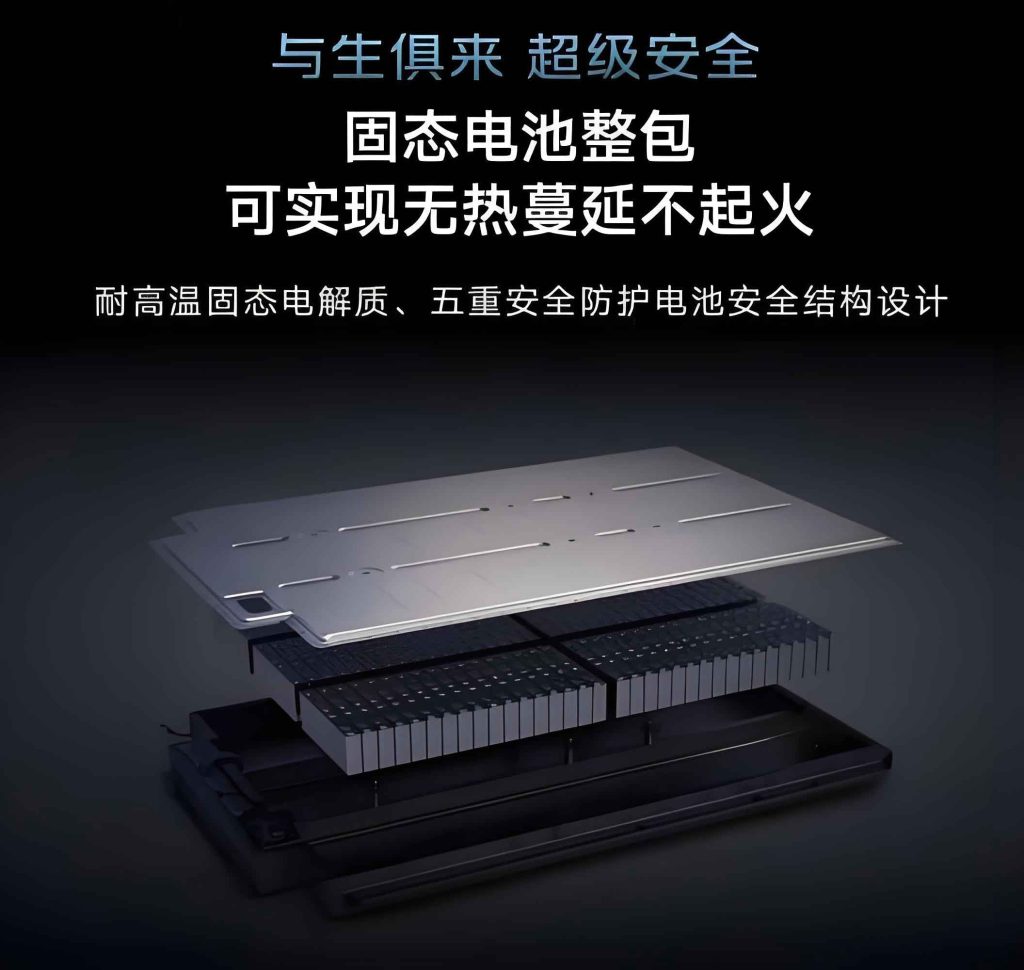
The fundamental appeal of the solid-state battery lies in its core architectural change. The solid electrolyte eliminates the risk of leakage and combustion, directly addressing a critical safety flaw. Furthermore, it enables the use of high-capacity lithium metal anodes, which are incompatible with liquid electrolytes due to dendrite formation. This combination theoretically allows for a dramatic increase in energy density, a metric crucial for extending EV range and enabling feasible electric aviation. The general energy density advantage can be conceptually framed by comparing the volumetric and gravimetric energy densities of a system. While actual values are design-specific, the potential superiority stems from the simplified cell structure and higher-capacity materials. The total energy \(E\) of a battery can be expressed as:
$$ E = \int V(t) \cdot I(t) \, dt $$
where \(V(t)\) is voltage and \(I(t)\) is current. The solid-state battery aims to maximize this integral by enabling higher average voltage (through stable high-voltage cathodes) and sustained high current (through improved safety), while also reducing inactive material volume.
Recognizing this potential, major economies have launched strategic initiatives. Japan’s roadmap targets the commercialization of all-solid-state batteries around 2030. The United States aims for the scaled production of frontier batteries, including solid-state batteries, with energy densities reaching 500 Wh/kg by 2030. South Korea focuses on commercialization of next-generation batteries. In China, policy directives explicitly call for accelerated R&D in solid-state battery technology and the establishment of a supporting standard system. These national strategies have catalyzed intense global R&D activity, which is vividly captured in the patent domain.
Global Patent Trends and Competitive Landscape
Analysis of global patent filings from 2015 to 2024 reveals a rapidly accelerating innovation ecosystem. The total number of patent families (consolidating duplicate filings) in the solid-state battery domain stands at several thousand, with a compound annual growth rate significantly outpacing the broader battery sector. The following table summarizes the annual filing trend, highlighting the surge in recent years and China’s dominant role as a source of innovation.
| Year | Global Patent Families (Estimated) | Patent Families from Chinese Applicants | China’s Share of Global Filings (%) |
|---|---|---|---|
| 2015 | ~80 | ~80 | ~100 |
| 2016 | ~180 | ~180 | ~100 |
| 2017 | ~290 | ~290 | ~100 |
| 2018 | ~500 | ~500 | ~100 |
| 2019 | ~560 | ~560 | ~100 |
| 2020 | ~790 | ~790 | ~100 |
| 2021 | ~880 | ~880 | ~100 |
| 2022 | ~1,200 | ~1,200 | ~100 |
| 2023 | ~1,310 | ~1,150 | ~88 |
| 2024 (Partial) | ~630 | ~630 | ~100 |
Note: Figures are approximate and based on analysis of global patent databases. The apparent 100% share for many years prior to 2023 reflects China’s overwhelming publication volume in recent years; global filings include these Chinese applications. The data for 2023-2024 is subject to publication lag.
China has emerged as the epicenter of patent filing activity. Chinese entities, including corporations, universities, and research institutes, account for the vast majority of global patent applications in recent years. This reflects substantial national investment and a highly competitive domestic market pushing technological boundaries. However, patent concentration remains low, with the top ten applicants globally holding only about 20% of the total filings, indicating a diverse and fragmented innovation landscape.
The competitive map is international. Japanese and Korean conglomerates, particularly automotive OEMs and established battery giants, are key players with deep, long-standing R&D programs. For instance, Toyota Motor Corporation has one of the largest and oldest patent portfolios in sulfide-based solid-state batteries. Korean groups like LG Energy Solution, Samsung SDI, and Hyundai Motor Group are also major holders. In China, leaders include battery cell manufacturers like CATL and BYD, specialized startups, and prominent academic institutions. The table below lists some of the most active global entities.
| Rank | Applicant | Country/Region | Entity Type | Primary Technical Focus (from patent analysis) |
|---|---|---|---|---|
| 1 | Toyota Motor Corporation | Japan | Automotive OEM | Sulfide Electrolytes, Cell Stacking, Manufacturing |
| 2 | LG Energy Solution | South Korea | Battery Manufacturer | Polymer & Sulfide Electrolytes, Composite Electrodes |
| 3 | Contemporary Amperex Technology Co. Limited (CATL) | China | Battery Manufacturer | Sulfide Electrolytes, Interface Engineering |
| 4 | Samsung SDI Co., Ltd. | South Korea | Battery Manufacturer | Sulfide & Oxide Electrolytes |
| 5 | Chinese Academy of Sciences (various institutes) | China | Research Institution | Oxide & Polymer Electrolytes, Fundamental Materials |
| 6 | BYD Company Ltd. | China | Automotive OEM / Battery Manufacturer | Sulfide Electrolytes, Cell Integration |
| 7 | Hyundai Motor Group | South Korea | Automotive OEM | Solid-State Battery Systems, Manufacturing |
| 8 | University/Institute A (China) | China | Academic | Polymer Electrolytes |
| 9 | Startup Company B (China) | China | Battery Startup | Oxide Electrolyte Integration |
| 10 | Panasonic Holdings Corporation | Japan | Electronics/Battery Manufacturer | All-solid-state cell design |
From a patent protection strategy viewpoint, China is not only the largest source but also the most critical target market. A significant portion of patents from Japanese, Korean, and other international entities are filed in China, seeking to protect their inventions in the world’s largest NEV and battery production base. This creates a dense and complex patent thicket in the region.
Analysis of Core Technology Pathways
The heart of the solid-state battery challenge lies in the solid-state electrolyte. Patent activity clusters around three primary material families: oxides, sulfides, and polymers. Each presents a unique set of trade-offs between ionic conductivity, electrochemical stability, mechanical properties, and manufacturability. The choice of electrolyte dictates much of the subsequent cell design and manufacturing process. The global patent distribution across these pathways is roughly: Polymer-based > Sulfide-based > Oxide-based, though all see vigorous activity.
1. Oxide-Based Solid Electrolytes
Oxide electrolytes, such as garnets (e.g., \(\text{Li}_7\text{La}_3\text{Zr}_2\text{O}_{12}\) or LLZO), perovskites, and NASICON-type materials, are known for excellent electrochemical stability and high mechanical strength. However, they typically suffer from higher interfacial resistance and brittleness. The ionic conductivity \(\sigma\) of a ceramic oxide electrolyte is governed by Arrhenius-type behavior:
$$ \sigma = \frac{A}{T} \exp\left(-\frac{E_a}{k_B T}\right) $$
where \(A\) is a pre-exponential factor, \(E_a\) is the activation energy for ion migration, \(k_B\) is Boltzmann’s constant, and \(T\) is temperature. Research and patents focus on doping to lower \(E_a\) and improve room-temperature conductivity, and on engineering soft interfaces to reduce cell resistance. Garnet-type LLZO garners the most patent attention within this category. Chinese academia and some battery firms have a strong presence in oxide electrolyte innovation, though the overall patent volume is slightly lower than for other pathways.
2. Sulfide-Based Solid Electrolytes
Sulfide electrolytes (e.g., \(\text{Li}_2\text{S}\text{-}\text{P}_2\text{S}_5\), \(\text{Li}_6\text{PS}_5\text{Cl}\)) currently offer the highest room-temperature ionic conductivity, often exceeding \(10^{-3}\) S/cm, rivaling liquid electrolytes. This is a key metric for power performance:
$$ R_{\text{ionic}} = \frac{d}{\sigma \cdot A} $$
where \(R_{\text{ionic}}\) is the ionic resistance of the electrolyte layer, \(d\) is its thickness, \(\sigma\) is its ionic conductivity, and \(A\) is the cross-sectional area. Lower \(R_{\text{ionic}}\) enables faster charging/discharging. However, sulfides are sensitive to moisture, releasing toxic \(\text{H}_2\text{S}\), and can have narrower electrochemical windows. This pathway is dominated by Japanese and Korean corporations, with Toyota’s portfolio being particularly extensive and globally deployed. Their patents cover not only the sulfide materials themselves but also critical adjacent technologies: atmospheric-controlled manufacturing processes, interface stabilization layers, and specialized cell stacking methods. Chinese giants like CATL are also heavily invested in this high-potential but challenging route.
3. Polymer-Based Solid Electrolytes
Polymer electrolytes, primarily based on poly(ethylene oxide) (PEO) complexes with lithium salts, offer superior flexibility, good interfacial contact, and easier manufacturing processes. Their main drawback is low ionic conductivity at room temperature and poor oxidation stability at higher voltages. Patent activity here is prolific, especially from Chinese universities and companies. Research focuses on creating composite polymer electrolytes (CPEs) by incorporating ceramic fillers (\(\text{LiAlO}_2\), \(\text{TiO}_2\), etc.) or ionic liquids to enhance conductivity and mechanical strength. The patent landscape in this area is characterized by a high degree of diversification across polymer hosts (PEO, polycarbonates, polysiloxanes) and composite strategies.
The following table contrasts the three main technology pathways based on patent analysis and technical attributes:
| Parameter | Oxide Electrolytes | Sulfide Electrolytes | Polymer Electrolytes |
|---|---|---|---|
| Typical Ionic Conductivity (RT) | ~\(10^{-4}\) to \(10^{-3}\) S/cm | ~\(10^{-3}\) to \(10^{-2}\) S/cm | ~\(10^{-5}\) to \(10^{-4}\) S/cm |
| Mechanical Property | Hard, Brittle | Soft, Ductile | Soft, Flexible |
| Air Stability | Excellent | Poor (Moisture Sensitive) | Good |
| Electrochemical Window | Wide (>5V vs. Li/Li+) | Moderate (~3-4V) | Narrow (<4V vs. Li/Li+) |
| Key Patent Holders | Chinese Academia, LG, Startups | Toyota, Samsung SDI, CATL, Panasonic | Chinese Academia & Firms, LG |
| Manufacturing Challenge | High-Temperature Sintering, Brittle Layer Handling | Dry Room Processing, Interface Control | Scalable Film Casting, Stability |
Strategic Implications and Recommendations
The patent analysis reveals a global race where China leads in application volume but faces strategic challenges in concentration and foundational IP in certain key pathways like sulfide electrolytes. To translate patent activity into sustainable industrial leadership, several strategic pillars are essential.
1. Fostering a Cohesive Innovation Ecosystem: Policymakers should move beyond general encouragement to create targeted, mission-oriented R&D programs. These should focus on overcoming specific roadblocks such as solid-solid interface impedance, which can be modeled as an additional resistance \(R_{\text{interface}}\) in series with the bulk electrolyte resistance, degrading cell performance:
$$ R_{\text{total}} = R_{\text{ionic}} + R_{\text{interface}} + R_{\text{electronic}} $$
Public-private partnerships should be incentivized to build pilot lines and shared characterization facilities, reducing the barrier for startups and academia to test and scale ideas. Developing a comprehensive standards framework for solid-state battery testing, safety, and performance is crucial to guide industry development and ensure product quality.
2. Elevating Patent Quality and Strategic Portfolio Creation: The focus must shift from quantity to quality. Entities should conduct thorough prior-art landscape analyses before initiating R&D to avoid redundancy and identify whitespace opportunities. Patent filings should be strategically crafted to protect not just a single material composition, but synergistic systems: e.g., a specific electrolyte paired with an interfacial coating and a compatible cathode material. For Chinese entities, conducting thorough freedom-to-operate (FTO) analyses, particularly in the sulfide domain where dense foreign patent networks exist, is critical to de-risk future commercialization. Investing in high-value patents that cover enabling manufacturing equipment or unique cell architectures can create powerful competitive moats.
3. Executing Global IP Strategy for Market Access: A domestic patent portfolio is insufficient for global ambition. Companies must develop a deliberate overseas filing strategy, prioritizing jurisdictions key to the future automotive and aerospace supply chains (e.g., Europe, North America, Southeast Asia). Leveraging tools like the Patent Cooperation Treaty (PCT) is essential. Furthermore, exploring cross-licensing opportunities with established foreign players can be a faster route to market access and technology integration than purely adversarial approaches. For the industry as a whole, establishing patent pools for certain foundational or standard-essential manufacturing techniques could reduce transaction costs and accelerate adoption.
Conclusion
The patent landscape for solid-state batteries is dynamic and competitive, mirroring the technology’s strategic importance. China’s explosive growth in patent filings demonstrates its commitment and capacity to be a primary innovation hub. However, global leadership requires more than volume. It demands deep, foundational innovation in core electrolyte chemistries and cell engineering, the construction of high-quality, defensible international patent portfolios, and the development of a robust supply chain and standards ecosystem. The transition from liquid to solid-state is not merely a material substitution but a systemic re-engineering of the battery. The entities and nations that can best integrate materials science, electrochemistry, manufacturing engineering, and strategic intellectual property management will be poised to power the next phase of the electrification revolution, from extended-range electric vehicles to viable electric aircraft. The race for the solid-state battery is, in essence, a race to define the future of energy storage itself.